How to resolve AdBlock issue?
Refresh this page
How to resolve AdBlock issue?
Refresh this page
Lake County News,California
  • Home
    • Registration Form
  • News
    • Education
    • Veterans
    • Community
      • Obituaries
      • Letters
      • Commentary
    • Police Logs
    • Business
    • Recreation
    • Health
    • Religion
    • Legals
    • Arts & Life
    • Regional
  • Calendar
  • Contact us
    • FAQs
    • Phones, E-Mail
    • Subscribe
  • Advertise Here
  • Login
How to resolve AdBlock issue?
Refresh this page

News

Space News: From a new flagship space telescope to lunar exploration, global cooperation – and competition – will make 2026 an exciting year for space

Details
Written by: Grant Tremblay, Smithsonian Institution
Published: 18 January 2026

The U.S. is planning a crewed flight around the Moon in 2026. AP Photo

In 2026, astronauts will travel around the Moon for the first time since the Apollo era, powerful new space telescopes will prepare to survey billions of galaxies, and multiple nations will launch missions aimed at finding habitable worlds, water on the Moon and clues to how our solar system formed.

Together, these launches will mark a turning point in how humanity studies the universe – and how nations cooperate and compete beyond Earth. Coming from one of the world’s largest astrophysical research institutes, I can tell you, the anticipation across the global space science community is electric.

Mapping the cosmos at unprecedented scales

Several of the most ambitious missions slated for launch in 2026 share a common goal: to map the universe on the largest possible scales and reveal how planets, galaxies and the largest cosmic structures evolved over billions of years.

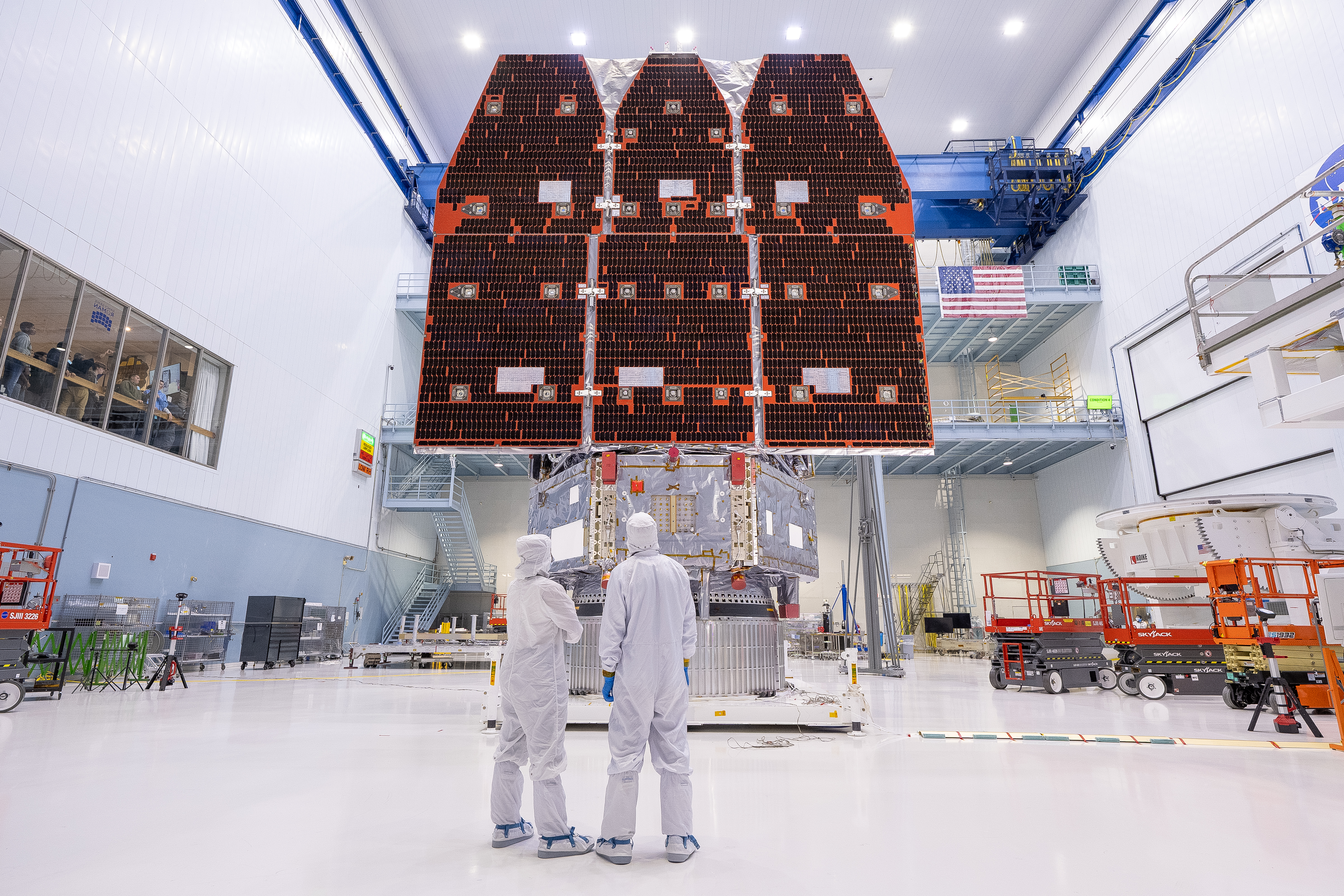
The centerpiece of this effort is NASA’s Nancy Grace Roman Space Telescope. Construction completed on the Roman telescope in December at NASA’s Goddard Space Flight Center, and if all goes well, it could launch as early as fall 2026.

What makes Roman more special than NASA’s other flagship space telescopes is not just what it will see, but how much of the sky it can see at once. Its 300-megapixel camera can capture regions of sky about 100 times larger than the Hubble Space Telescope’s field of view while maintaining comparable sharpness – like switching from studying individual tiles to surveying the entire mosaic at once.

During its five-year primary mission, Roman is expected to discover more than 100,000 distant exoplanets, map billions of galaxies strewn across cosmic time and help scientists probe dark matter and dark energy – the invisible scaffolding and mysterious forces that together account for 95% of the cosmos.

Roman also carries a coronagraph, a pathfinder instrument that can block out a star’s blinding light to directly photograph planets orbiting around it. The technology could pave the way for future missions, like NASA’s planned Habitable Worlds Observatory, capable of searching for signs of life on Earth-like worlds.

Two engineers in a clean room wearing protective suits looking at the mirror of the assembled Roman space telescope
NASA’s Nancy Grace Roman Space Telescope is now fully assembled following the integration of its two major segments on Nov. 25, 2025, at the agency’s Goddard Space Flight Center in Greenbelt, Md. The mission is slated to launch by May 2027, but the team is on track for launch as early as fall 2026. NASA/Jolearra Tshiteya

Over in Europe, the European Space Agency’s PLATO mission, short for PLAnetary Transits and Oscillations of stars mission, is scheduled to launch in December 2026 aboard Europe’s new Ariane 6 rocket. PLATO will monitor about 200,000 stars using an array of 26 cameras, searching for small, rocky planets in their stars’ habitable zones, while also determining the stars’ ages.

For China, 2026 is expected to mark a milestone of a different kind: the launch of its first large flagship space telescope dedicated to astrophysics. The Xuntian space telescope, also known as the Chinese space station telescope, is currently expected to launch in late 2026. Xuntian will survey enormous regions of the sky with image quality comparable to Hubble’s, but with a field of view more than 300 times larger.

Like NASA’s Roman Space Telescope, Xuntian is designed to tackle some of modern cosmology’s biggest questions. It will hunt for dark matter and dark energy, survey billions of galaxies and trace how cosmic structure evolved over time. Uniquely, Xuntian will co-orbit with China’s Tiangong space station, allowing astronauts to service and upgrade it and, potentially, extending its life for decades.

An illustration of a space telescope, which looks like a metal cylinder with two solar panels attached to either side.
A recent rendering of China’s Xuntian space station telescope, which is on track to launch in late 2026. China National Space Administration

Together with the new Vera C. Rubin Observatory on the ground, which will repeatedly scan the entire southern sky to capture how the universe changes over time, the Roman, PLATO and Xuntian space telescopes will study the cosmos not just as it is but as it evolves.

Global milestones in human spaceflight

While robotic observatories quietly expand our view of the cosmos, 2026 will also mark a major step forward for human spaceflight.

NASA’s Artemis II mission, now readying for launch as early as April 2026, will send four astronauts on a 10-day journey around the Moon and back. It will be the first time humans have traveled beyond low Earth orbit since Apollo 17 in December 1972.

Across the globe, India is preparing to reach a similarly historic milestone. Through its Gaganyaan program, the Indian Space Research Organisation is planning a series of uncrewed test flights in 2026 as it works toward sending astronauts to space. If that happens, India would become only the fourth nation to achieve human spaceflight on its own – a significant technological and symbolic achievement.

Meanwhile, China will continue regular crewed flights to its Tiangong space station in 2026, part of a broader effort to build the experience, infrastructure and technologies needed for its planned human missions to the Moon later in the decade.

In parallel, NASA is relying increasingly on commercial spacecraft to carry astronauts to and from the International Space Station, freeing the agency to focus its own human spaceflight efforts on deep-space missions beyond Earth.

Together, Artemis II, Gaganyaan and China’s ongoing crewed space station missions reflect a renewed global push toward human exploration beyond Earth orbit – one in which governments and commercial partners alike are laying the groundwork for longer missions and a sustained human presence in space.

The origin and geology of the Moon and Mars

Another set of 2026 missions focuses on a more grounded question: how rocky worlds – and the resources they contain – came to be.

Japan’s Martian Moons eXploration mission, slated to launch in late 2026, will travel to Mars, spend three years studying both of its small, potato-shaped moons – Phobos and Deimos – and collect a surface sample from Phobos to bring back to Earth by 2031.

Scientists still debate whether these moons originated as captured asteroids or debris from an ancient giant impact with Mars. Returning pristine material from Phobos could finally settle that question and reshape our understanding of how the inner solar system evolved.

China’s Chang'e 7 mission, expected to launch in mid-2026, will head to the Moon’s south pole, a region of intense scientific and strategic interest. The mission includes an orbiter, lander, rover and a small flying “hopper” designed to leap into permanently shadowed craters, where sunlight never reaches. These craters are thought to harbor water ice, a resource that could one day support astronauts or be converted into rocket fuel for deeper-space missions.

The Chinese and Japanese missions both highlight how planetary science and exploration are becoming increasingly intertwined, as understanding the geology of nearby worlds also informs future human activity.

It’s the Sun’s solar system, we’re just living in it

In 2025, powerful solar storms forced airlines to reroute and ground flights, disrupted radio communications and pushed vivid auroras far beyond their usual polar haunts – lighting up skies as far south as Florida. These events are reminders that space is not a distant abstraction: Activity on the Sun can have immediate consequences here on Earth.

Not all of 2026’s major missions look outward into deep space. Some are focused on understanding the dynamic space environment that surrounds our own planet.

In a notable example of international cooperation, the solar wind magnetosphere ionosphere link explorer, SMILE – a joint mission between the European Space Agency and the Chinese Academy of Sciences – is scheduled for launch in spring 2026.

SMILE will provide the first global images of how Earth’s magnetic field responds to the constant stream of charged particles flowing from the Sun. That interaction drives space weather, including solar storms that can disrupt satellites, navigation systems, power grids and communications.

Understanding those interactions is critical not only for protecting modern infrastructure on Earth but also for safeguarding astronauts and spacecraft operating beyond the planet’s protective magnetic shield.

At a time of growing geopolitical tension in space, the mission also stands out as a rare and consequential example of sustained scientific cooperation between Europe and China.

The global stakes

These missions unfold against a complex geopolitical backdrop. The United States and China are both racing to return humans to the Moon by the end of the decade.

Yet for all the competition, space science remains profoundly collaborative. Japan’s Martian Moons eXploration mission carries instruments from NASA, ESA and France. International teams share data, expertise and the sheer wonder of discovery. The universe, after all, belongs to no one nation.

Having spent my career studying the universe, I see 2026 as a year that reflects both the rivalries and the shared ambitions of space exploration today. Competition is real, but so is cooperation at a scale that would have been hard to imagine a generation ago. From the search for habitable worlds around distant stars to plans for returning humans to the Moon, the work is global – and the sky is shared by all.The Conversation

Grant Tremblay, Federal Astrophysicist and External Relations Lead at the Smithsonian Astrophysical Observatory, Smithsonian Institution

This article is republished from The Conversation under a Creative Commons license. Read the original article.

Clearlake sewer spill impacted area significantly expands as key questions remain unanswered

Details
Written by: Lingzi Chen
Published: 17 January 2026
The county of Lake provided this new map of the area impacted by the spill, which began on the morning of Sunday, Jan. 11, 2026. The purple outline represents the initial spill area of about 40 acres. The total size of the overall area is estimated at 357 acres. 

LAKE COUNTY, Calif. — The county of Lake on Friday reported a significantly expanded area affected by the Robin Lane sewage spill and announced a work plan for the weekend. 

Meanwhile, key questions about contamination, mitigation and assistance remain unanswered.

A new map included in the county’s Friday multi-departmental update shows the affected area stretching east of Smith Lane, west of Old Highway 53, south of Pond Road and north of Bowers Avenue — enclosing roughly 357 acres, according to calculations using Google Maps. 

That expanded area is over eight times larger than the area previously marked based on this calculation conducted by Lake County News. 

The report that came at 6 p.m. on Friday, right before a three-day holiday starts, included a new map of impacted areas, and three separate contributions from the Environmental Health, Special Districts and the Public Health Officer. 

The impact area map was revised “due to [water] test results received,” said the Environmental Health section of the update.

However, the update did not disclose any well or water testing data or provide any interpretation of the results that would indicate the level or extent of contamination, nor did it provide any kind of timeline or data in terms of mitigation and recovery work. 

Guidance advising affected residents to temporarily relocate remains in effect for all areas included in the newly drawn map, according to Public Health Officer Dr. Robert Bernstein in the update. 

The Robin Lane sewer spill began on Sunday morning with the rupture of a 16-inch force main operated by the Lake County Sanitation District.

Lake County Special Districts was notified at around 7:30 a.m. Sunday, and the flow was finally stopped at 9:55 p.m. Monday, according to Lori Baca, the agency’s customer service supervisor. 

The spill was initially reported to have impacted 58 properties in the area south of Pond Road and north of Rumsey Road, east of Pamela Lane and west of Robin Lane in and around the city of Clearlake.

With the significant expansion of the impact area, the county did not provide an updated number of properties affected. 

Lake County News followed up on Friday evening. 

“Unfortunately, I don’t have an immediate answer,” said Chief Deputy County Administrative Officer Matthew Rothstein, who is also a county spokesperson, in an email. “But will ensure that is discussed and an update is provided tomorrow.”

A text message was also sent to Clearlake City Manager Alan Flora with the same question on the number of affected properties.

“It would be more but I don’t have a number,” he replied. 

Cleanup work continues while well testing pauses during long weekend

Lake County Special Districts reported that ongoing cleanup work has occurred at “most area properties, with lime treatment applied and decontamination of properties and driveways affected by sewage.”

Meanwhile, seven properties have reported experiencing “periodic ponding,” according to the Special Districts section on the Friday update. “Those properties have been pumped throughout the day.”

Work will continue on Saturday to disinfect driveways — in the affected area that have not been treated to date — with Decon30, a disinfectant cleaner used in water damage restoration and general cleaning, the statement said.

The Special Districts section said “Residents unable to access their properties due to health and safety concerns have been placed in hotels.” It did not indicate how many residents — out of all living in the impacted area who are under a public health advice to relocate — were placed in a hotel and how long the stay would last. 

Environmental Health reported that their teams conducted water testing on Thursday, “blanketing the entire area affected by the spill.” 

“A small number of parcels have not yet been sampled due to lack of owner approval to access the property,” the Friday report said, adding that no testing will be conducted over the long weekend through Monday as the lab will not be able to process samples during the period. 

The update said wells are currently undergoing the “shock stage,” meaning they are being sanitized with chlorine. Wells can only be retested 24 to 48 hours after the shock process is completed. But it did not mention the number or percentage of wells that have been tested and “shocked.”

Key questions left unanswered 

The county provided “door-to-door notices on status regarding affected wells,” according to the update. But it did not publicly provide any data indicating overall progress or preliminary results from the testing conducted so far.

Questions that remain unanswered involve how many wells have been tested so far, the severity of any contamination detected, how many households have temporarily relocated, what assistance the county’s local emergency proclamations made residents eligible for and when impacted households can expect that help to become available.

These were among the questions that Lake County News posed to county officials on Thursday and Friday, with the most recent one sent out at 4:17 p.m. Friday. 

None of them was addressed by the update released later in the evening, and no additional replies were received. 

The next town hall is expected to be held on Wednesday, Jan. 21, at 6 p.m. at Clearlake City Hall. 

Editor’s note: The county released an update in which the date of the town hall was corrected from Jan. 22 to Jan. 21.

Email staff reporter Lingzi Chen at This email address is being protected from spambots. You need JavaScript enabled to view it.. 

CDPH urges vaccination and timely treatment as influenza cases rise

Details
Written by: LAKE COUNTY NEWS REPORTS
Published: 17 January 2026

The California Department of Public Health, or CDPH, is alerting health care providers and the public that influenza activity and hospital admissions are increasing across the state. A newly emerged influenza A strain, H3N2 subclade K, is circulating globally and has been detected in California.

“Current seasonal flu vaccines remain effective at reducing severe illness and hospitalization, including the currently circulating viruses,” said Dr. Erica Pan, CDPH director and state Public Health officer. “It is important for families to know that flu vaccines, tests, and treatments remain widely available for all Californians and that it is not too late to get a flu vaccine. As a pediatrician, parent, and daughter, I have made sure that my own family is protected with this season’s flu vaccine."

CDPH has also confirmed the second pediatric flu-associated fatality in California this season. Young children and older adults remain at highest risk for severe flu complications, and there are several ways for families to take action to protect their health.

Take action

• Vaccinate now: Everyone 6 months and older who has not yet received the 2025–26 influenza vaccine should get vaccinated as soon as possible. Vaccination is the best defense against severe influenza and hospitalization. To schedule your vaccine appointment, contact your health care provider, local pharmacy, or visit myturn.ca.gov.
• Test promptly: Individuals with flu symptoms at risk for serious disease should check with their doctor to see if they should be tested in case they may benefit from treatment. At-home combined influenza/COVID-19 tests can be used when available.
• Start antivirals immediately: High-risk and hospitalized patients with suspected flu should receive antiviral treatment without delay, even before test results are confirmed. Recommended treatments include oseltamivir or single-dose baloxavir, which reduce the risk of serious illness and hospitalization.

Coverage and availability

Despite changes in federal recommendations, CDPH’s recommended vaccines will continue to be covered by health care insurers regulated by the state of California and can be received at your local pharmacy, from your health care provider, or through other authorized vaccine providers at no cost. 

To schedule your vaccine appointment, contact your health care provider, local pharmacy, or visit myturn.ca.gov. 

Clearlake Animal Control: ‘Winkie’ and the dogs

Details
Written by: Elizabeth Larson
Published: 17 January 2026
“Winkie.” Photo courtesy of Clearlake Animal Control.


CLEARLAKE, Calif. — Clearlake Animal Control has many great dogs waiting for their new families.

The shelter has 56 adoptable dogs and puppies listed on its website.

This week’s dogs include “Winkie,” a 1-year-old male Doberman Pinscher mix with a short black coat.

The shelter is located at 6820 Old Highway 53. It’s open from 9 a.m. to 6 p.m. Tuesday through Saturday. 

For more information, call the shelter at 707-762-6227, email This email address is being protected from spambots. You need JavaScript enabled to view it. or visit Clearlake’s adoptable dogs here.

This week’s adoptable dogs are featured below.

Email Elizabeth Larson at This email address is being protected from spambots. You need JavaScript enabled to view it.. Follow her on Twitter, @ERLarson, and on Bluesky, @erlarson.bsky.social. Find Lake County News on the following platforms: Facebook, @LakeCoNews; X, @LakeCoNews; Threads, @lakeconews, and on Bluesky, @lakeconews.bsky.social. 


  1. Deep reading can boost your critical thinking and help you resist misinformation – here’s how to build the skill
  2. Space News: Astronomers surprised by mysterious shock wave around dead star
  3. Clearlake City Council ratifies sewer spill emergency declaration
  • 30
  • 31
  • 32
  • 33
  • 34
  • 35
  • 36
  • 37
  • 38
  • 39
How to resolve AdBlock issue?
Refresh this page