How to resolve AdBlock issue?
Refresh this page
How to resolve AdBlock issue?
Refresh this page
Lake County News,California
  • Home
    • Registration Form
  • News
    • Education
    • Veterans
    • Community
      • Obituaries
      • Letters
      • Commentary
    • Police Logs
    • Business
    • Recreation
    • Health
    • Religion
    • Legals
    • Arts & Life
    • Regional
  • Calendar
  • Contact us
    • FAQs
    • Phones, E-Mail
    • Subscribe
  • Advertise Here
  • Login
How to resolve AdBlock issue?
Refresh this page

News

Windows are the No. 1 human threat to birds – an ecologist shares some simple steps to reduce collisions

Details
Written by: Jason Hoeksema, University of Mississippi
Published: 25 May 2025


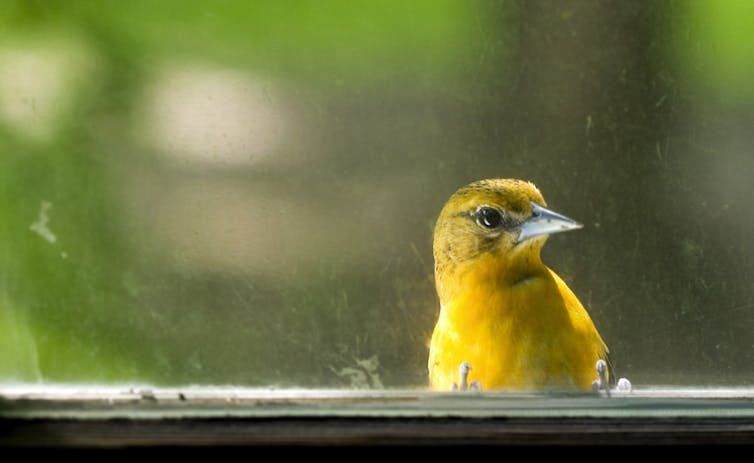
Birds are drawn to the mirror effect of windows. That can turn deadly when they think they see trees. CCahill/iStock/Getty Images Plus

When wood thrushes arrive in northern Mississippi on their spring migration and begin to serenade my neighborhood with their ethereal, harmonized song, it’s one of the great joys of the season. It’s also a minor miracle. These small creatures have just flown more than 1,850 miles (3,000 kilometers), all the way from Central America.

Other birds undertake even longer journeys — the Swainson’s thrush, for example, nests as far north as the boreal forests of Alaska and spends the nonbreeding season in northern South America, traveling up to 5,600 miles (9,000 kilometers) each way.

These stunning feats of travel are awe-inspiring, making it that much more tragic when they are cut short by a deadly collision with a glass window.

A wood thrush singing. Shared by the American Bird Conservancy.

This happens with alarming regularity. Two recent scientific studies estimate that more than 1 billion birds – and as many as 5.19 billion – die from collisions with sheet glass each year in the United States alone, sometimes immediately but often from their injuries.

In fact, window collisions are now considered the top human cause of bird deaths. Due to window collisions and other causes, bird populations across North America have declined more than 29% from their 1970 levels, likely with major consequences for the world’s ecosystems.

These collisions occur on every type of building, from homes to skyscrapers. At the University of Mississippi campus, where I teach and conduct research as an ecologist, my colleagues and I have been testing some creative solutions.

Why glass is so often deadly for birds

Most frequently, glass acts as a mirror, reflecting clear sky or habitat. There is no reason for a bird to slow down when there appears to be a welcoming tree or shrub ahead.

These head-on collisions frequently result in brain injuries, to which birds often succumb immediately.

In other cases, birds are stunned by the collision and eventually fly off, but many of those individuals also eventually perish from brain swelling.

Other injuries, to wings or legs, for example, can leave birds unable to fly and vulnerable to cats or other predators. If you find an injured bird, contact a local wildlife rehabilitator.

Which windows are riskiest

Some windows are much worse than others, depending on their proximity to bushes and other bird habitats, what is reflected in them, and how interior lighting exacerbates or diminishes the mirror effect.

On our campus, some buildings with a great deal of glass surface area kill surprisingly few birds, while other small sets of windows are disproportionately deadly.

A small brown bird on the ground in front of a large wall of windows.
A stunned Swainson’s thrush sits on the ground in front of a window on campus. The bird, which likely hit the window, eventually recovered and flew away. Jason Hoeksema/University of Mississippi

One particular elevated walkway with glass on both sides between the chemistry and pharmacy buildings is a notoriously dangerous spot. The glass kills migratory birds each spring and fall as they try to pass between the two buildings on their way to The Grove, the university’s central-campus park area with large old oak trees.

During the pandemic in 2020, student Emma Counce did the heart-heavy work of performing a survey of 11 campus buildings almost daily during spring migration. She found 72 bird fatalities in seven weeks. Five years later, my ornithology students completed a new survey and found 62 mortalities over the course of five weeks in 2025, demonstrating that we still have a lot of work to do to make our campus safe for migratory birds.

Thrushes, perhaps due to their propensity for whizzing through tight spaces in the shady forest understory, have been disproportionately represented among the victims. Others include colorful songbirds – northern parulas, black-and-white warblers, prothonotary warblers, Kentucky warblers, buntings, vireos and tanagers.

How to make windows less dangerous

The good thing is that everyone can do something to lower the risk.

Films, stickers or strings can be added on the exterior of windows, creating dots or lines, 2 to 4 inches apart, that break up reflections to give the appearance of a barrier.

Exterior screens and blinds work great too. Just adding a few predator silhouette stickers is not effective, by the way – the treatment needs to span the whole window.

A photo of a window looking from the outside in. The windows has dots on it.
Putting film with dots on windows, like this one at the University of Mississippi, can help birds spot the glass and stop in time. Without the dots, the reflection can look like more trees are ahead instead of glass and a hallway. Jason Hoeksema/University of Mississippi

When applied properly, window treatments can make a huge difference. An inspiring example is McCormick Place in Chicago, the country’s largest convention center, which notoriously killed nearly 1,000 birds in a single night in 2023. After workers applied dot film to an area of the building’s windows equivalent to two football fields, bird mortality at the lakeside building has been reduced by 95%.

The Bird Collision Prevention Alliance provides information on options for retrofitting home or office windows to make them more bird friendly.

Options for new windows are also becoming more common. For example, the new Center for Science & Technology Innovation on my campus, which features many windows, mostly used bird-friendly glass with subtle polka dots built into it. This spring, we found that it killed only four birds, despite a very high surface area of glass.

How you can help

When trying to make a difference on your home turf, I suggest starting small. Make note of which specific windows have killed birds in the past, and treat them first.

Use it as an opportunity to learn what approach might work best for you and your building. Either order a product or make something yourself and get it installed.

How to make your windows safer for birds. Shared by Audubon New York and American Bird Conservancy.

Then do another, and tell a friend. At the office, talk to people, find others who care and build a team to make gradual change.

With some creative solutions, anyone can help reduce at least this major risk.The Conversation

Jason Hoeksema, Professor of Ecology, University of Mississippi

This article is republished from The Conversation under a Creative Commons license. Read the original article.
Celebrate Memorial Day safely and responsibly in California’s State Parks

Details
Written by: LAKE COUNTY NEWS REPORTS
Published: 25 May 2025
California State Parks invites Californians and visitors from around the world to kick off Memorial Day weekend, the unofficial start of summer, safely and responsibly. 

With California’s diverse landscape, State Parks offers a wide variety of activities for adventurers of any skill level, from swimming, hiking, camping, boating to off-highway vehicle recreation. 

The Golden State’s 280 parks have something for everyone wanting to escape the hustle and bustle for some fun and relaxation in nature. 

Two of those parks — Clear Lake State Park and Anderson Marsh State Historic Park — are located entirely within Lake County.

State Parks is honoring the service of veterans, and active and reserve military members, by offering free admission to 142 participating state park units on Memorial Day – May 26. Clear Lake State Park and Anderson Marsh State Historic Park are both participating in that event.

The list of participating park units can be found here.

As you head out to your favorite destination, following simple safety precautions such as wearing a properly fitted life jacket or proper riding gear, avoiding alcohol, and knowing one’s limits while engaged in aquatic activities, can help save lives and ensure a memorable outing.

To help ensure a safe and enjoyable holiday weekend for all, State Parks reminds visitors of the following tips.

Plan ahead

Know before you go: Check parks.ca.gov for conditions, hours and local guidelines. 

Check the weather: Dress appropriately, stay hydrated and use sun protection. 

Prepare an Itinerary: No matter what type of recreational activity you are planning, leave an itinerary of your trip with a family member or friend with information such as the names and ages of all participants, your travel destination, and your expected return date. This will provide law enforcement personnel with essential information if an emergency response may be needed. 

Learn the rules of recreating in boats and OHVs: There are laws specific to operating OHVs on public lands and boats on California’s waterways. For boating laws, please visit BoatCalifornia.com. OHV regulations are also available to review online. 

Be Water-Wise 

Wear a life jacket: Water-related accidents can happen suddenly and rapidly. If you are going in or near the water, make sure you and everyone with you, especially children, wear properly fitting, U.S. Coast Guard-approved life jackets. Wearing a life jacket is the best way to increase your chances of survival during an incident. View locations where public agencies and private organizations offer to loan life jackets to the public. 

Supervise children: Appoint a designated “water watcher,” taking turns with other adults. Never assume someone is watching your children. 

Know your limits: Swimming in a lake, ocean or river is different from swimming in a pool. Waves, tides, strong rip currents and other water hazards can appear quickly and provide little time to act. 

In an emergency: Seek help from a lifeguard or call 911. 

Ocean rip currents: If you get caught in a rip current, stay calm and do not fight the current. Swim or float parallel to the shore until you are out of the current and then swim toward the shore. 

Avoid alcohol 

Operating a recreational vehicle, including a boat or an off-highway vehicle (OHV), with a blood alcohol concentration (BAC) of 0.08% or more is against the law. Impaired boaters can be arrested even with a lower BAC if the conditions are not safe and your boat can be impounded.  

Some parks do have alcohol bans. Check each specific park website to determine if there are local ordinances concerning alcohol. 

Practice fire safety 

Build an open campfire. Select a clear area away from fuels such as logs, brush or decaying leaves and needles. 

Never leave a fire unattended and fully extinguish it before leaving. Keep water and a shovel nearby. 

Do not build the fire larger than necessary. 

Respect the land and leave no trace 

Pack it in, pack it out. Leave no trace behind by bringing a trash bag. Put food waste, napkins, single-use food wrappers, and other waste in the bags until it can be properly disposed of. For human waste, the use of waste alleviation gel bags or other portable toilet options is recommended. 

Please haul back large broken items, such as pop-up canopies, beach chairs, and coolers, and dispose of them properly at a local garbage site. Leaving these items on the beach or park or ‘near’ a trash bin can be considered illegal dumping.

Enhance your park experience  

Download the what3words and OuterSpatial apps to help ensure safety and stay up to date on park happenings.  

what3words: Visitors can now use the what3words tool, an innovative location technology app, that provides users with a simple way to communicate precise locations in emergency situations or provide directions to family and friends in any of the 280 state parks. what3words allows dispatchers with state-of-the-art technology to assist visitors in the event they become lost, stranded or who otherwise need help from emergency services.  

OuterSpatial: Experience a safer outdoor adventure with the OuterSpatial app — your ultimate guide to California State Parks. Navigate through a user-friendly interactive map, receive accurate directions, and stay updated in real-time for secure park exploration. 

With 280 state parks encompassing over 340 miles of coastline, 970 miles of lake and river frontage, and 5,200 miles of trails, California offers something for everyone, and these public lands belong to us all. Let’s work together to keep them clean, safe, and accessible. 

You can find additional safety tips and information on backpacking, biking, camping, horseback trails, and laws at parks.ca.gov/SafetyTips. To find a state park near you, visit parks.ca.gov.

Space News: Devil is in details in selfie taken by NASA’s Mars Perseverance rover

Details
Written by: Jet Propulsion Laboratory
Published: 25 May 2025
marsroverselfie.jpg

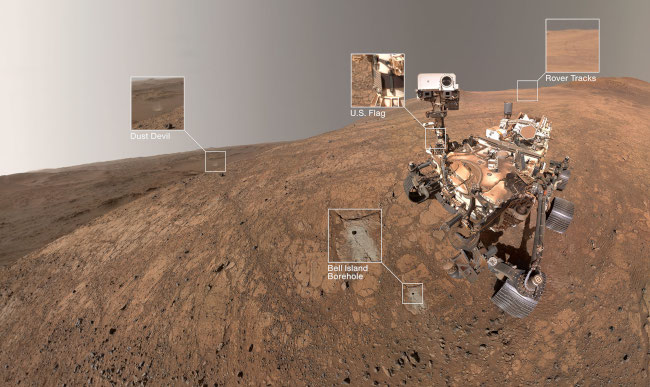
NASA’s Perseverance took this selfie on May 10, 2025. The small dark hole in the rock in front of the rover is the borehole made when Perseverance collected its latest sample. The small puff of dust left of center and below the horizon line is a dust devil. Photo credit: NASA/JPL-Caltech/MSSS.


A Martian dust devil photobombed NASA’s Perseverance Mars rover as it took a selfie on May 10 to mark its 1,500th sol (Martian day) exploring the Red Planet. At the time, the six-wheeled rover was parked in an area nicknamed “Witch Hazel Hill,” an area on Jezero Crater’s rim that the rover has been exploring over the past five months.

“The rover self-portrait at the Witch Hazel Hill area gives us a great view of the terrain and the rover hardware,” said Justin Maki, Perseverance imaging lead at NASA’s Jet Propulsion Laboratory in Southern California, which manages the mission. “The well-illuminated scene and relatively clear atmosphere allowed us to capture a dust devil located 3 miles to the north in Neretva Vallis.”

The selfie also gives the engineering teams a chance to view and assess the state of the rover, its instruments, and the overall dust accumulation as Perseverance reached the 1,500-sol milestone. (A day on Mars is 24.6 hours, so 1,500 sols equals 1,541 Earth days.)

The bright light illuminating the scene is courtesy of the high angle of the Sun at the time the images composing the selfie were taken, lighting up Perseverance’s deck and casting its shadow below and behind the chassis. Immediately in front of the rover is the “Bell Island” borehole, the latest sampling location in the Witch Hazel Hill area.

How Perseverance did it

This newest selfie, Perseverance’s fifth since the mission began, was stitched together on Earth from a series of 59 images collected by the WATSON (Wide Angle Topographic Sensor for Operations and eNgineering) camera at the end of the robotic arm. It shows the rover’s remote sensing mast looking into the camera. To generate the version of the selfie with the mast looking at the borehole, WATSON took three additional images, concentrating on the reoriented mast.

“To get that selfie look, each WATSON image has to have its own unique field of view,” said Megan Wu, a Perseverance imaging scientist from Malin Space Science Systems in San Diego. “That means we had to make 62 precision movements of the robotic arm. The whole process takes about an hour, but it’s worth it. Having the dust devil in the background makes it a classic. This is a great shot.”

The dust covering the rover is visual evidence of the rover’s journey on Mars: By the time the image was captured, Perseverance had abraded and analyzed a total of 37 rocks and boulders with its science instruments, collected 26 rock cores (25 sealed and 1 left unsealed), and traveled more than 22 miles (36 kilometers).

“After 1,500 sols, we may be a bit dusty, but our beauty is more than skin deep,” said Art Thompson, Perseverance project manager at JPL. “Our multi-mission radioisotope thermoelectric generator is giving us all the power we need. All our systems and subsystems are in the green and clicking along, and our amazing instruments continue to provide data that will feed scientific discoveries for years to come.”

The rover is currently exploring along the western rim of Jezero Crater, at a location the science team calls “Krokodillen.”

Ely Carriage House Hoedown to raise funds for Historical Society project

Details
Written by: LAKE COUNTY NEWS REPORTS
Published: 24 May 2025
elybarn.jpg

A previous event at the Ely Stage Stop in Kelseyville, California. Courtesy photo.


KELSEYVILLE, Calif. — An upcoming event will raise funds for the Lake County Historical Society’s Ely Stage Stop Carriage House project.

The Ely Carriage House Hoedown will take place from 4 to 9 p.m. Saturday, June 7.

Step back into the 1880s for a big tri-tip dinner, an evening of music and dancing, yard games, hay rides, silent auction, raffle baskets, and a chance to see many of Lake County's historic carriages. 

Join a party for a good cause. Lake County's biggest collection of historic horse-drawn wagons and carriages need a home so the public can enjoy them. 

The Hoedown Party will raise funds for the construction of a new carriage house on the grounds of the Ely Stage Stop Museum located at 9921 Soda Bay Road, just north of Kitt's Corner off Highway 29.
 
The Ely Museum's Oak Grove will be the place for a tri-tip dinner by Smokin S BBQ (vegetarian option available), music by the Fargo Brothers, blacksmith demonstrations and much more.


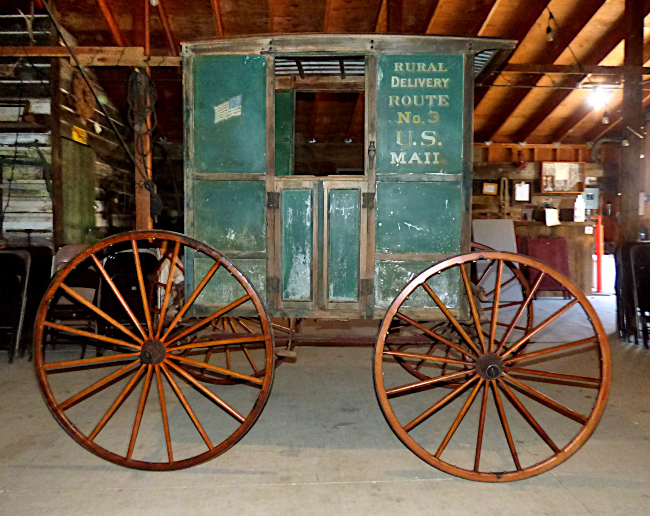
elymailwagon.jpg

A mail carriage at the Ely Stage Stop. Courtesy photo.


Tickets are $80/person and can be purchased online at Carriage House Hoedown, or in person at the Ely Museum.  

To sponsor a table and receive eight tickets (depending on the level), fill out the form here.

The Ely Stage Stop is an all-volunteer, all-donation run public museum operated by the Lake County Historical Society since 2011.  

The grounds contain the 1860s Jamison and Ely Family ranch house and stage stop, two display barns, the restored 1890s Kelseyville jail, a 1906 San Francisco Cable Car, displays of historic Lake County farm machinery, tractors and much more.

For more information visit the Hoedown Fundraiser Dinner event page or call Event Committee Chair Bill Lane at 707-349-3453.


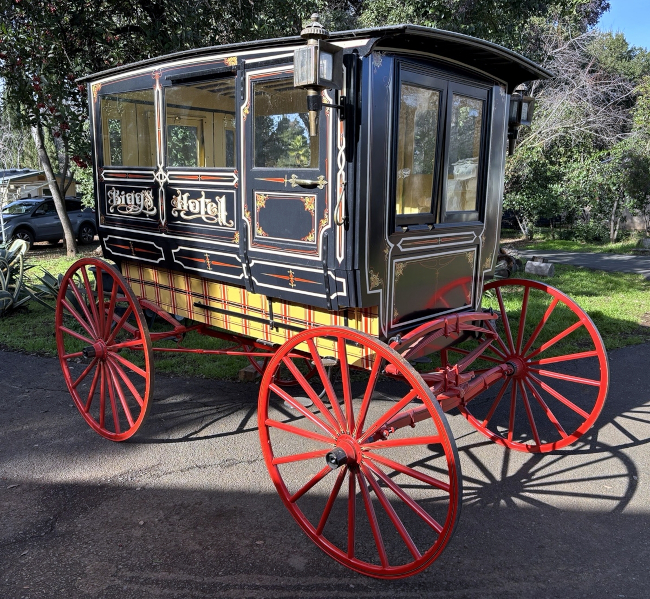
elybiggshotel.jpg

One of the historic carriages at the Ely Stage Stop. Courtesy photo.

  1. Seat belts save lives: CHP ramps up holiday roadway patrols ahead of Memorial Day weekend
  2. Clearlake Animal Control: ‘Caesar’ and the dogs
  3. Estate Planning: On being a representative payee
  • 279
  • 280
  • 281
  • 282
  • 283
  • 284
  • 285
  • 286
  • 287
  • 288
How to resolve AdBlock issue?
Refresh this page