 How to resolve AdBlock issue?
Recreation
- Details
- Written by: Editor
Visitors to state ecological reserves should be aware of the property rules and report illegal activities to the California Department of Fish and Wildlife (CDFW).
The primary purpose of ecological reserves is to protect sensitive species and habitats. Many properties contain unique native plants and animals found nowhere else in the world.
Users must stay in designated areas, observe usage rules posted at each site and respect the property.
Activities will vary from property to property and it is the visitor's responsibility to know what is permissible.
Those who witness vandalism such as vegetation removal, dumping of trash and other questionable activities that are detrimental to the habitat can anonymously report it to (888) 334-CalTIP (2258).
"Many wildlife areas or ecological reserves not only provide public enjoyment and education regarding natural resources, but also protect habitat for a variety of threatened and endangered plant and wildlife species," said CDFW Senior Environmental Scientist Julie Horenstein. "In many cases, unique reserve habitats support rare species. We owe it to future generations to protect these properties."
According to state law (California Code of Regulations Title 14, section 630,), CDFW is obligated to protect and maintain designated ecological reserves, which includes enforcing the rules. Failure to comply could result in a $1,000 fine and up to a year in jail.
Reserves open to the public have hours from sunrise to sunset. On all state properties, it is illegal to feed wildlife, operate motorized vehicles outside of designated areas, disturb bird nests, release any fish or animal, start any fire or light fireworks or other explosive or incendiary devices, disturb habitat, alter the landscape or remove vegetation.
Starting July 1, 2015, nonlead ammunition is required on all CDFW lands where regulated hunting is allowed. Additional information on the use of ecological reserves is included in the booklet titled, Waterfowl, Upland Game and Department Lands Public Use. See page 68 for a complete description.
Lastly, when visiting California's ecological reserves, remember to pack out what you pack in and leave behind the treasures you find for others to discover. This will ensure the ecological reserves will continue to protect sensitive species and habitats and be there for future generations to enjoy.
For more information on CDFW's ecological reserves, www.wildlife.ca.gov/lands/places-to-visit .
California Outdoors: Wildlife officers and badges, rifle silencers, ab in a cab, fishing rod numbers
- Details
- Written by: Carrie Wilson
Shouldn’t wildlife officers display badges?
Question: During the 2015 Eastern Sierra Trout Opener, I was checked three times by California Department of Fish and Wildlife (CDFW) wardens for license and barbless hooks. I was in compliance each time.
On the three contacts the wardens were wearing jackets and hats that did not have any CDFW insignias or badges on them.
On two occasions the wardens stated that they were wardens and I could see radio and gun holsters sticking out from under their jackets. They did not show me any credentials or badge. On the other contact the warden pulled open his jacket collar and showed me his lieutenant bars.
My question is what citizen rights do I have to ask to see a badge or credential during a contact, and what is the policy of CDFW for displaying and showing proper credentials when making a contact, not just telling me he's a warden?
I understand the need to be “undercover” before making a contact, but once the contact is made I think more than just saying you are a warden would be necessary.
After the third contact where the warden showed me lieutenant bars, this lack of identification was getting a little old and I believe unprofessional. I had no way of identifying these wardens by name or badge number. (Michael M.)
Answer: You have every right to ask to see their credentials.
As I’m sure you know, the Eastern Sierra Trout Opener is a very popular event that draws tens of thousands of anglers to the area during that weekend, and you were fishing in a high contact area, so it’s not unusual that you were contacted by wildlife officers, even multiple times.
And because that area is so open and highly visible, and because people are easily seen from a long distance away, wildlife officers often wear a cover shirt over their uniforms and a fishing hat to better blend in and look like another angler so that they can more easily watch everyone without being immediately detected.
Our goal is to encourage compliance even when anglers don’t see a wildlife officer in the area.
However, if you were uncomfortable with the contact(s) because you could not be sure the person really was a wildlife officer, by all means, you have the right to ask them, or any peace officer who is contacting you in a law enforcement capacity, for their identification.
That is definitely a reasonable request and the wildlife officer should not mind showing you their credentials upon request.
By the way, I spoke to the wildlife officer who likely contacted you (at least one of the times!). He welcomed your comments and wanted me to encourage you to request to see his credentials next time and he will be happy to show them to you.
Rifle silencers for a hunter with substantial hearing loss?
Question: I have substantial hearing loss and my doctor recommended surgery to correct my problem.
The issue is that my hearing will be very sensitive to noise afterwards and so shooting a rifle could actually damage it greatly.
I am wondering if, when hunting, can an exception be made to allow me to use a silencer on my rifle? (Carlos)
Answer: Unfortunately, the answer is no. It is a felony to possess silencers, except for law enforcement and military purposes (California Penal Code, section 33410).
Your best bet is to wear hearing protection while hunting.
There are many choices out there and some actually enhance your ability to hear ambient noise while minimizing any loud noises, such as gunshots.
Wildlife officers use this type of hearing protection during firearms training.
Ab in a cab?
Question: I found a sub-legal abalone shell in the stomach of a legally caught cabezon. Is a small abalone shell like this legal to possess?
My wife likes it and I want her to know it’s legal to possess. (Ken K.)
Answer: Yes!
How many fishing rods in possession at one time?
Question: How many fishing rods can be in one’s possession? I have a second rod stamp but want to know if I can carry more than two rods with me?
Although I may be on foot fishing from the bank, I see anglers on the bass tourney TV shows fishing while still having several rods on their boats. What advice do you have? (Joe P., Red Bluff)
Answer: The number of rods in your possession is not the issue, it is the number of lines that you have in the water fishing at one time.
You may have as many rods as you wish in your possession – just make sure to use only the number allowed for the species of fish or for the particular waters that you’re fishing.
Carrie Wilson is a marine environmental scientist with the California Department of Fish and Wildlife. While she cannot personally answer everyone’s questions, she will select a few to answer each week in this column. Please contact her at
- Details
- Written by: Editor
UPPER LAKE, Calif. – The Lake County Land Trust offers nature walks every Saturday at 8 a.m. at the Rodman Preserve.
The public is invited to come out and enjoy summer with an early morning cool walk along the slough.
The month of July offers some excellent hikes. Plants, grasses, birds, wildlife are in full summer flourish. Participants should meet at the Rodman Preserve and Nature Education Center.
The guided walks at Rodman Preserve offer visitors an opportunity to enjoy wildlife and the beauty of Lake County. Each Saturday walk is led by a different Land Trust volunteer.
Visitors often enjoy returning for walks and learning from the diverse guides for each walk. The July 4 walk was led by Roberta Lyons, who usually leads walks on the first Saturday. Roberta is a board member of the Land Trust who enjoys birding, sharing about the land and identifying wild grasses.
Saturday, July 18, provides visitors the opportunity to hike with Michael Friel a local attorney and president of the Land Trust, who shares his land protection insights and humor with visitors.
The month of July rounds out with Valerie Nixon guiding the hike on July 25. Nixon, a retired park ranger, has a wealth of observations and information to share with visitors.
The preserve is located at 6350 Westlake Road, Upper Lake. To get there take the Nice-Lucerne Cut-off from Highway 29, between Lakeport and Upper Lake. Turn east onto the Nice-Lucerne Cut-off, then left on to Westlake Road. The preserve entry is to the immediate right after turning on to Westlake Road.
The preserve is owned and operated by the Lake County Land Trust, a local, nonprofit organization directly involved in protecting important land resources, wetlands, wildlife habitats, parks, forests, watersheds, riparian stream corridors, lakeside areas and trails.
For more information about the Lake County Land Trust, go to www.lakecountylandtrust.org or “like,” the Land Trust’s Facebook page.
- Details
- Written by: Editor
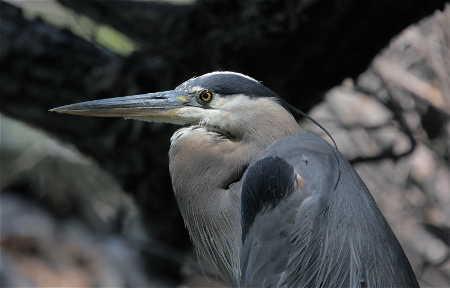
KELSEYVILLE, Calif. – Come and enjoy summer in Clear Lake State Park Saturday, July 18, with retired California State Park Ranger Val Nixon.
The two-hour walk will begin at 8 a.m. at the visitor center parking lot and will be a slow walk along Cole Creek, Kelsey Creek and Kelsey Creek Slough.
The walk will cover about 1 mile of paved road and established trails.
Participants should wear sturdy shoes and bring binoculars, mosquito repellent and water.
Clear Lake State Park is located at 5300 Soda Bay Road, Kelseyville.
Entry into the park is free for those participating in the walk.
Anyone having special needs should contact the Clear Lake State Park Sector Office Tuesday through Thursday between 8 a.m. and 5 p.m. at 707-279-2267.
For further information on California State Parks visit www.parks.ca.gov .