How to resolve AdBlock issue?
Recreation
- Details
- Written by: California Department of Fish and Wildlife
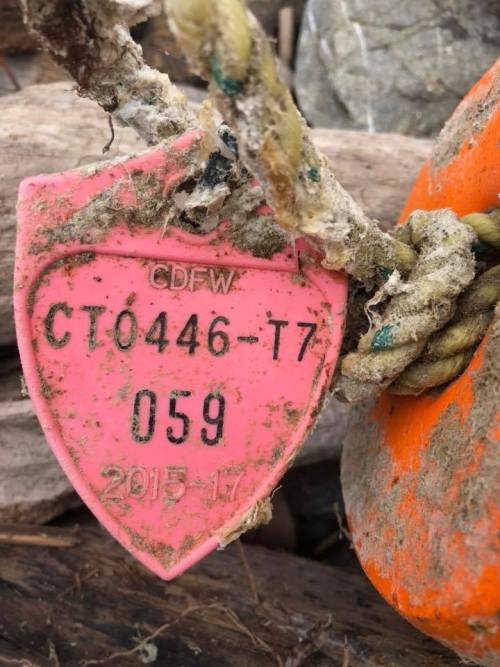
Mystery tag washed ashore
Question: My Boy Scout troop was recently hiking at Pirate's Cove in the Marin Headlands, and we found this tag washed ashore. We packed it out, but we're still wondering what it is. Do we need to return it to the department, or report that we found it? (Hunter Pinkstaff, Boy Scout Troop 227)
Answer: What you've found is a buoy tag issued by the California Department of Fish and Wildlife. Permit holders in the Dungeness crab commercial fishery use these tags to mark the buoy of each of their traps to show that they are fishing within their trap limits. The tags can be used for up to two seasons and mark the buoy of each of their Dungeness crab traps. Permit holders are issued the total number of tags that are in their trap limit tier, ranging from 175 to 500 traps.
When a tag expires at the end of the two seasons, the permit holder will purchase a whole new set of tags and switch out the expired tags for newly issued ones. Commercial fishermen are not required to return the expired tags at the end of the validation period.
Tags and fishing gear can get detached or dislodged from the trap for a variety of reasons, such as rough ocean conditions or vessel propellers. Since these are expired commercial tags and not research tags, there is no need to report your find to the department. But we appreciate and applaud your troop's efforts to keep the beaches clean of garbage and litter. We are glad to have the opportunity to solve your mystery!
Fishing with a youth angler
Question: My 15-year-old wants to go fishing. I want to take him, but I cannot afford a fishing license for myself. Do I have to have one for my boy to fish? (Traci)
Answer: We thank you for taking the time to take your son fishing. We think it is one of the best activities families can do together – it's great bonding time and generates lasting memories. Any child or young adult 15 years of age or younger does not need a fishing license to fish. All other regulations still apply, such as bag and possession limits. If fishing for sturgeon, abalone, lobster or steelhead (which all need additional report cards), then they will have to purchase those.
To answer your question, you may assist your son with things like setting up gear and teaching how to use the rod and reel but you must be careful to distinguish that you are not actively fishing by avoiding acts like reeling in fish (for that, you would need a fishing license yourself).
If you would like to try your hand at fishing alongside your son, you might consider a one-day sport fishing license, which is a less-expensive alternative to an annual license. A one-day license is $15.69, while an annual license is $48.34.
You could also take him to a public pier (where you would not need a license) or fish with him on one of CDFW's two Free Fishing Days (July 7 and Sept. 1 this year). Read more about this below. Enjoy your fishing trip and good luck to you and your son!
There's a typo on my license!
Question: The license agent who sold me my fishing license entered my birthday incorrectly. When I tried to correct him, he refused to change it, so now I'm stuck with a fishing license with the wrong birthday on it. What can I do? (Anonymous)
Answer: You shouldn't have any problem getting your license corrected if you go through a CDFW license sales office, and there is no charge to correct information. You can find a list of offices online. To fix an incorrect birthday, all you need is a state ID showing your birth date. Name changes require a marriage certificate or court documentation of the name change.
If you have a question for the California Department of Fish and Wildlife, email
- Details
- Written by: Anderson Marsh State Historic Park
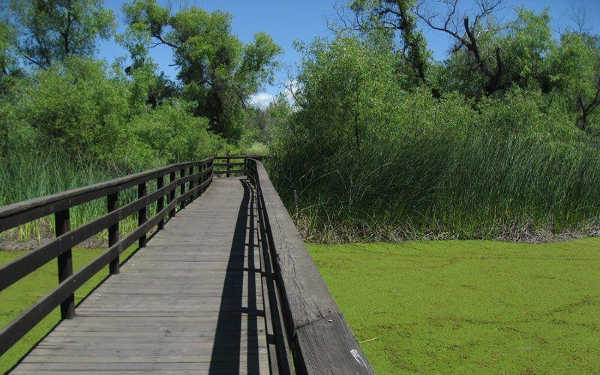
LOWER LAKE, Calif. – Anderson Marsh State Historic Park continues to hold monthly guided nature walks.
The first guided walk of summer is scheduled for Saturday, July 14.
Participants are asked to meet in the parking lot at 8:15 a.m. to have time to experience the early morning wildlife to be found in the ranch house and barn complex yard.
The walk begins at 8:30 a.m.
Led by Park Docent Lisa Wilson and California Naturalist and Park Docent Nicola Selph, this walk will cover the Cache Creek Nature Trail.
Along with a general history and description of the Park, come and view the birds, dragonflies, butterflies and other wildlife and wildflowers that can be found in the park this time of year.
The walk should take between one and a half and two hours.
There is no fee for those attending.
There will be a guided tour of the ranch house after the July walk.
Anderson Marsh State Historic Park is located on Highway 53, between Lower Lake and Clearlake.
For more information about the walks, email
For more information about the park, you may also visit www.andersonmarsh.org and click on park brochure on the home page.
- Details
- Written by: Tahoe Fund
The projects include Tahoe Rim Trail restoration in Desolation Wilderness that will improve usability and safety; transformation of the Kings Beach Trail into a multi-feature trail; and the planting of 10,000 sugar pine seedlings around Lake Tahoe.
“It’s never been more critical to help fund key environmental projects that have a real impact on the Basin,” said Tahoe Fund Board Chair Katy Simon Holland. “It’s exciting to see these projects come to life through the passion and support of people who care deeply about this area.”
Desolation Wilderness, one of the most scenic hiking and backpacking destinations on the Tahoe Rim Trail, has been severely impacted from increased use combined with extreme weather events.
Donations to this Tahoe Fund project will benefit the Tahoe Rim Trail Association to rehabilitate a section of the trail, improve safety for trail users and reduce the flow of sediment into alpine lakes and streams.
Every dollar given to this unique project will be matched up to $40,000 through the end of 2018.
The Tahoe Fund has a goal to raise $15,000 to benefit the Kings Beach Trail project, which aims to transform a current Off-Highway Vehicle trail with major erosion issues into a multi-feature trail for use by mountain bikes, motorbikes, hikers and equestrians.
In partnership with the Tahoe Area Mountain Bike Association, the U.S. Forest Service, the Truckee Tahoe Airport and the North Tahoe Public Utility District, the newly designed trail will help prevent the flow of sediment from the eroding trail into Griff Creek and Lake Tahoe.
The Tahoe Fund’s third Signature Project will help bring new life to the forest, with a goal of raising $15,000 for the Sugar Pine Foundation in an effort to plant 10,000 seedlings around the Basin.
Volunteer plantings are scheduled at the Emerald Fire and Angora Fire scars as well as Spooner Summit, Sand Harbor, Tahoe Vista and along the new Incline Village bike path.
To learn more about the Tahoe Fund and how you can get involved in their projects, please visit www.tahoefund.org.
- Details
- Written by: Arthritis Foundation
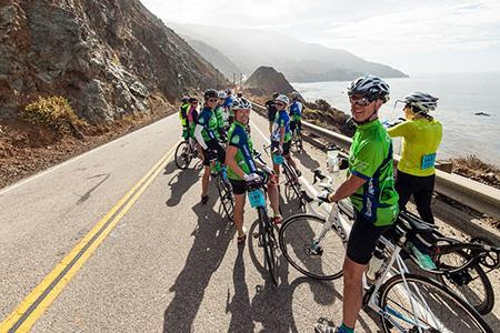
LOS ANGELES, Calif. – Following June’s unexpected California Transportation Department announcement that a stretch of Highway 1 will reopen months ahead of schedule, organizers of the California Coast Classic Bike Tour presented by Amgen have rerouted the eight-day flagship fundraising ride for the Arthritis Foundation.
The ride will return to its “traditional” coastal route this Sept. 22 to 29.
“It’s a dream come true,” said Shannon Marang Cox, ride director for the CCC Bike Tour. “Not only are we returning to our beloved route, our participants will have the once-in-a-lifetime distinction of being among the very first cyclists to ride 13 acres of brand new California coastline!”
Marang Cox continued, “Registration for the ride is still open, but only sixty spots are left. We expect that this unique development for 2018 will help us sell out and reach our goal to raise over a million dollars for the Arthritis Foundation. There’s still plenty of time for training and fundraising and we encourage everyone to consider joining us.”
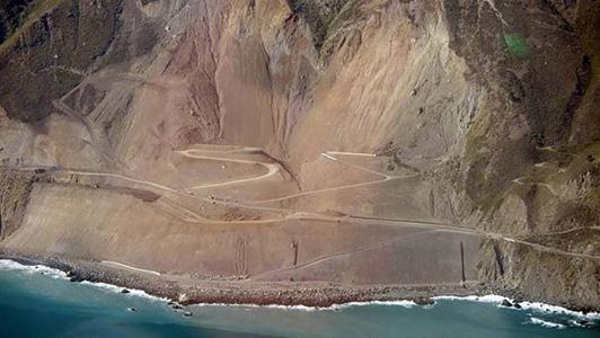
Heavy winter storms in 2017 compromised the Pfeiffer Canyon Bridge in Big Sur, resulting in its closure and rebuilding.
The subsequent Mud Creek landslide in May 2017 obliterated a swath of Highway 1. Both events caused the CCC Bike Tour to detour inland through King City and Paso Robles last year, and organizers announced last month that the 2018 ride would follow a similar route.
However, in the wake of the surprise CalTrans announcement, the group acted swiftly to secure lodgings in Big Sur and Cambria and reroute back to the coast.
The new itinerary for the California Coast Classic Bike Tour, which covers 533 miles from San Francisco to Los Angeles, will include overnight stops in Santa Cruz, Carmel, Big Sur, Cambria, Oceano, Buellton, and Ventura.
Participation in the California Coast Classic, named one of “The 30 Best Road Biking Trips” by Outside Magazine, is open to beginner and experienced cyclists who register and commit to a $3,500 fundraising goal.
The eight-day, full-service, fully supported ride from San Francisco to Los Angeles raises funds to support the research, advocacy, and programs of the national Arthritis Foundation.
More information including a training calendar, fundraising resources, and a map of the 2018 route is available at www.californiacoastclassic.org.