How to resolve AdBlock issue?
Recreation
- Details
- Written by: Nadine Strauss

ANDERSON, Calif. – The North State Modified Series, presented by Protect the Harvest, will run its 2019 grand finale at Shasta Speedway this Saturday night.
It will be the final points race for the NSMS drivers. They will be competing for $1,500 to win in the fourth annual “Lloyd Burton Against the Wind Modified Challenge” plus a custom designed wooden eagle trophy courtesy of Burton’s brother-in-law, Mort Houston.
The event is co-sponsored by Kaleidoscope Coffee, Northern California Auto Racing Alumni, Mort Houston and the Burton family.
Lloyd Burton, a long-time supporter of auto racing in the Redding-Chico area, was the head official at Shasta Speedway when the facility was promoted by Bob Carrel in the 1990s.
He also served as head official at Lakeport Speedway for five years and officiated at several other race tracks in Northern California.
A native of Shasta County, Burton was involved in racing and promoting his entire adult life, He was also the founder of the Northern California Auto Racing Alumni, or NCARA.
Burton's nephew and past Shasta Speedway track champion, Randy Houston of Medford Oregon, will be piloting his #9 NSMS modified in this event in memory of his uncle.
This memorial event first ran in 2016 with Jason Philpot of Sacramento the winner. In 2017 Darrin Sullivan of Kelseyville took home the first place money and the trophy. 2018 saw Kris Price of Sacramento come out on top. These driver's names are engraved on the four foot tall hand-caved custom perpetual trophy and resides in the North State Modified Series office in Lucerne, California.
The North State Modified Series is presented by: Protect the Harvest, Lucas Oil, Hoosier Tire West, Sunoco Race Fuels, Naake Suspension, Five Star Bodies, Racer Bling, Keyser Racing Products, Scribner Plastics, and Franks Radios.

- Details
- Written by: California Department of Fish and Wildlife
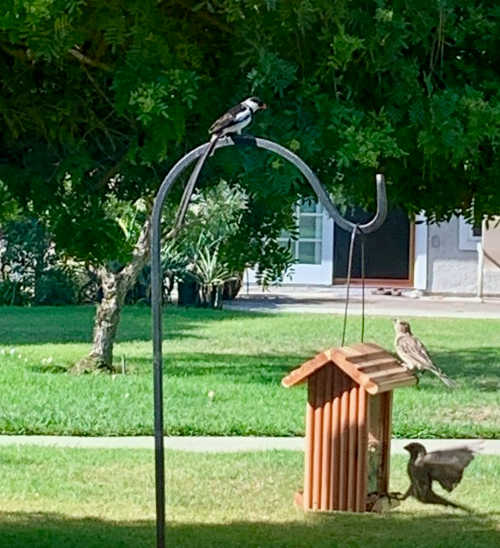
Question: We have been trying to reach someone to respond to our concern for a whydah bird on our property. It first appeared early in the morning when we were awakened with repeated knocking on the picture window.
Once blinds were open, we watched in amazement as this beautiful bird repeated the same routine over and over. It stationed itself atop the bird feeder pole, and every two to three minutes, it would take off with a strong force, accelerating quickly to cover the 15-20 feet directly into the window.
It would then return to its spot atop the pole. We have several video clips of the exact same routine – all ending with the hit on the window.
Occasionally, this bird would drop down to the ground directly below the bird feeder and eat from the food that had fallen from the perch. We purchase the food specifically for the smaller songbirds.
In researching exactly what type of bird this is, we determined it was a whydah bird. The information we found stated that any sightings should be reported as soon as possible to the California Department of Fish and Wildlife (CDFW).
We are concerned about the number of times this bird has forcefully impacted the window. There is also a very large black crow that has been "bullying" it somewhat on the bird feeder. If this bird is not a concern for you, we hope you will still provide us some direction as to what to do. (Randy and Kiki T.)
Answer: We showed your photo to CDFW Avian Specialist Krysta Rogers, and she agreed that it looks like a pin-tailed whydah.
These birds, which are native to Africa, have been observed in Southern California (Los Angeles, Orange and San Diego counties) in increasing numbers over the past few decades. They are most likely former caged pet birds that were released or escaped into the wild, and it's possible that they are breeding.
The whydah is a nest parasite, which means it does not raise its own young, but lays its eggs in the nest of other birds (much like the brown-headed cowbird). This is why a growing population could be of particular concern for native birds.
CDFW has not conducted any studies on whydahs in California, but it is known that in its native range, the whydah parasitizes the nests of only a specific group of finches (estrildid finches) that do not occur naturally in North America.
If the whydah is reproducing in the wild in Southern California, it may be parasitizing the nests of non-native Scaly-breasted Munias (formerly known as Nutmeg Mannikin).
Although the native range of the munia does not include Africa, it is the only species of estrildid finch that is known to breed fairly widely in Southern California.
CDFW does track sightings of invasive species, including the whydah. You can report your sighting (and drop a pin on our map!) on our website, or email us at
Regarding the behavior, one of the most likely reasons this bird is hitting the window repeatedly is that it can see its reflection so it thinks it's a possible competitor for food or mates (birds don't understand the concept of windows; they just see the reflection of another bird).
Rogers says that she's periodically had reports of American robins doing the same thing, usually in the spring before trees have leafed out and the reflection is more obvious.
The simplest way to discourage this behavior is to stop using a bird feeder. Intentionally attracting the wild birds may heighten the social interaction among them, resulting in aggressive behaviors and contributing to disease transmission. Even if you stop feeding for a few weeks, the whydah may leave your yard.
You could also try moving the bird feeder away from the window, temporarily cover the window (from the outside) or disrupt the reflection with decals so the whydah cannot easily see itself. Hopefully that will curb the behavior.
Children fishing with two rods?
Question: Would a child younger than 16 who is not required to have a fishing license be able to legally fish with a second rod, or would they need some kind of additional second rod stamp? (Anonymous)
Answer: No additional stamp would be needed. As per the California Freshwater Sport Fishing Regulations (page 15 in this year's booklet): "Anglers in possession of a valid two-rod stamp and anglers under 16 years of age may use up to two rods in inland waters which regulations provide for the taking of fish by angling, except those waters in which only artificial lures or barbless hooks may be used."
A second pole validation does not apply to fishing in ocean waters. In the ocean, any number of poles may be used with a few exceptions:
Regardless of age, when fishing for, or in possession of, rockfish, lingcod, greenlings or cabezon, only one line with no more than two hooks may be used (see section 28.65(c) in the current Ocean Sport Fishing regulations booklet).
Also, when fishing for or in possession of salmon north of Point Conception, only one line may be used (section 28.65(e)). When taking sturgeon in ocean waters only one line may be used, as well (section 27.90(d)). In the San Francisco Bay, only one line with not more than three hooks may be used (section 28.65(a)).
If you have a question for the California Department of Fish and Wildlife, please feel free to ask via email at
- Details
- Written by: California Department of Fish and Wildlife
President Richard Nixon signed the first proclamation of National Hunting and Fishing Day in 1972. It is annually held on the fourth Saturday in September to promote outdoor sports and conservation.
Shortly after this proclamation was signed, participation in hunting and fishing started to steadily decline in California and nationwide.
Because of the important financial and volunteer contributions that hunters and anglers make to conservation and wildlife management activities, the decline in participation poses an ever-increasing threat to our natural resources.
As a result, CDFW is leading the effort in California to increase participation through its involvement with the nationwide campaign to recruit, retain and reactivate, or R3, hunters and anglers.
The California R3 effort is engaging diverse hunting and fishing stakeholder groups to turn barriers to hunting and fishing into opportunities for participation.
California is the third-largest state in the nation and approximately half of its land is publicly owned. That translates into millions of acres of huntable public property on which CDFW offers varied hunting opportunities.
In 2018, 269,277 licensed hunters contributed approximately $26.2 million toward wildlife management and conservation activities in the state. Wildlife management and conservation activities have resulted in many success stories for various species around the state, including the Tule elk, wild turkeys, Desert Bighorn Sheep, Aleutian Canada Goose, numerous ducks, among others, over the years in California.
Fishing opportunities also abound in the more than 30,000 miles of rivers and streams, 4,172 lakes and reservoirs and 80 major rivers in California. The state features more than 1,100 miles of coastline that is home to hundreds of fish and shellfish species.
CDFW offers two “free fishing” days each year in the state, and this year prospective anglers received those opportunities on July 6 and Aug. 31. Fish production is also an important CDFW activity which in 2018 produced millions of pounds of trout for recreational angling.
Last year, CDFW issued 1.77 million fishing licenses and those licenses (including report cards and validations) generated $66.9 million in funding for fisheries management and protection.
Fisheries management and conservation activities have also resulted in numerous success stories over the years in California for various species around the state, including wild trout, landlocked salmon, Largemouth Bass and the Alabama Spotted Bass.
These management activities are funded by hunting and fishing dollars. In order to help increase the number of success stories and contribute to these important conservation and wildlife management activities, consider helping by signing up to take a hunter education course, visit the CDFW Web site to learn more about participating in fishing and hunting opportunities, or reach out to your local CDFW office or the statewide R3 coordinator to seek guidance on getting started.
Many hunting and fishing seasons are currently open and provide opportunity to acquire lean, antibiotic-free protein sources such as wild trout and other fish, deer, bear, dove, tree squirrel, rabbit and other upland game.
For more information on hunting and fishing opportunities in the Golden State, please visit www.wildlife.ca.gov.
For information on hunter education, please visit www.wildlife.ca.gov/hunter-education. For information on how to purchase a hunting or fishing license, please visit www.wildlife.ca.gov/licensing/online-sales.
For more information on National Hunting and Fishing Day, please visit www.nhfday.org.
- Details
- Written by: California Department of Fish and Wildlife
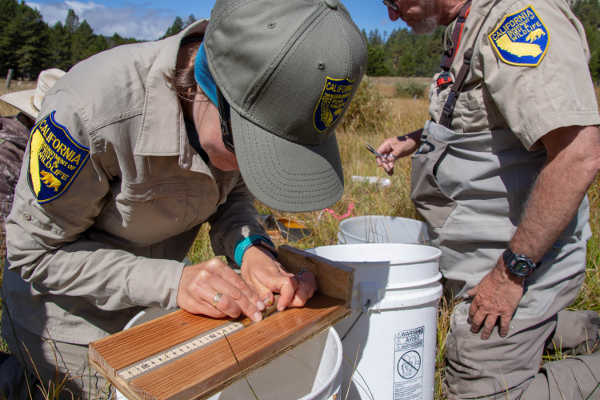
California's native Paiute cutthroat trout, the rarest trout in North America, swims once again in its high Sierra home waters for the first time in more than 100 years.
California Natural Resources Secretary Wade Crowfoot, California Department of Fish and Wildlife Director Charlton H. Bonham and representatives from the USDA Forest Service, U.S. Fish and Wildlife Service, Golden Gate Chapter of Trout Unlimited and Little Antelope Pack Station joined biologists to release 30 Paiute cutthroat trout of varying sizes into Silver King Creek in Alpine County on Sept. 18.
"You've got to celebrate good times. That's what we're doing here today," said CDFW's Bonham from the banks of Silver King Creek within the remote Carson-Iceberg Wilderness area of the Humboldt-Toiyabe National Forest. "If you forget to celebrate, you're overlooking a remarkable success story - bringing these fish back home and celebrating a better California."
Not since the early 1900s have genetically pure Paiute cutthroat trout occupied the 11-mile stretch of Silver King Creek between Llewellyn Falls and Snodgrass Creek that represents almost the entirety of the fish's historic range.
"This is a lifetime achievement for those working to recover the rarest trout in North America," said Lee Ann Carranza, acting field supervisor for the USFWS Reno office. "This remarkable partnership has allowed Paiute cutthroat trout to be returned to their entire native range without threat from non-natives."
The Paiute cutthroat trout was one of the first animals in the nation listed as endangered in 1967 under the federal Endangered Species Preservation Act of 1966, now known as the Endangered Species Act. In 1975, the species was downlisted to federally threatened to allow for a special rule that would facilitate management of the species by the State of California.
A small native range, habitat degraded by historic sheep and cattle grazing, and competition from and hybridization with non-native trout introduced into Silver King Creek threatened the species with extinction.
Only a fortuitous turn of events saved the species from disappearing altogether. In the early 1900s, Basque sheepherders moved some of the fish outside of their native range, upstream of Llewellyn Falls. The waterfalls served as a barrier to the non-native trout below and safeguarded a genetically pure population of Paiute cutthroat trout above the falls, providing government agencies and advocates the chance to recover the species in the future.
Efforts to save and restore the species have spanned several decades and involved removing non-native fish and restocking Paiute cutthroat trout from source populations. Recreational fishing was closed within the Silver King Creek drainage in 1934. Later, grazing allotments were administratively closed so habitat could be restored.
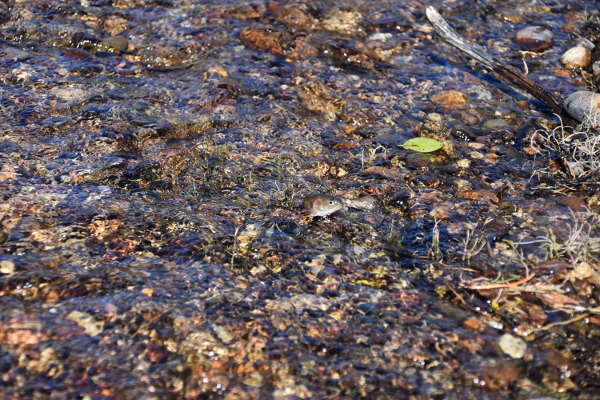
At one time, only two small tributaries above Llewellyn Falls held genetically pure Paiute cutthroat trout. CDFW, the Forest Service and USFWS transferred some of these fish to other fishless, protected streams within the Silver King Creek watershed as well as four watersheds outside of the basin to create additional refuge populations to stave off extinction.
The effort to reintroduce Paiute cutthroat trout back into their historic home – the 11-mile main reach of Silver King Creek – began in 1994 when CDFW biologists explored Silver King Canyon and identified a series of waterfalls that served as historic barriers to upstream fish migration, isolating the Paiute cutthroat trout. The barriers could once again insulate Paiute cutthroat trout from encroachment from non-native trout if the non-native trout in Silver King Creek could be removed.
Wildlife officials prevailed over a decade of legal challenges to treat Silver King Creek and its tributaries with rotenone, a natural fish poison, to eliminate non-native trout and prepare Silver King Creek for the eventual return of Paiute cutthroats.
Silver King Creek and its tributaries were chemically treated from 2013 to 2015. State and federal partners monitored the creek for three years following the treatment to make sure all non-native fish were removed. Wildfires, floods and drought over the decades further complicated recovery efforts.
"The commitment of Forest Service, CDFW, USFWS, Lahontan Regional Water Quality Control Board, Trout Unlimited Golden Gate Chapter and Little Antelope Pack Station to move this project forward in the face of numerous challenges has been incredible," said Bill Dunkelberger, Humboldt-Toiyabe National Forest supervisor. "A project of this magnitude that took over several decades could not have been completed without state, federal and other partners working tirelessly together."
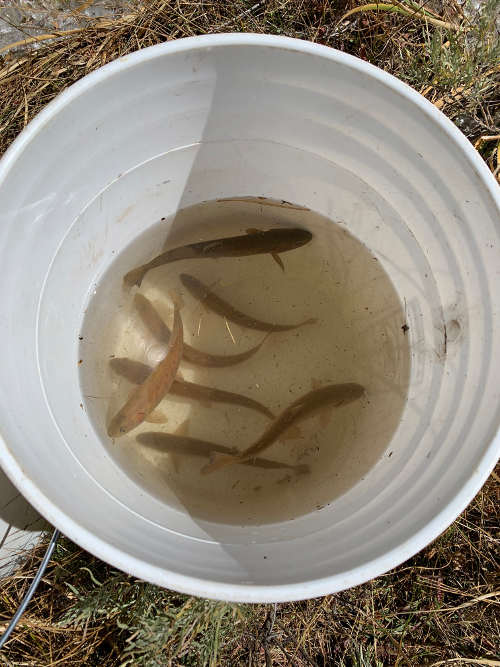
The fish reintroduced into Silver King Creek on the afternoon of Sept. 18 were collected that morning from a source population in Coyote Valley Creek about 2 miles away and transported by mules to the banks of Silver King Creek. The fish were deposited into buckets filled with water from Silver King Creek to acclimate for several minutes before being released among cheers and applause - and a few tears - by biologists and others, some of whom have spent decades working toward the historic homecoming.
Restoring Paiute cutthroat trout to their native Silver King Creek nearly doubles the amount of habitat available to the fish and is considered key to their long-term survival and potential delisting.
Monitoring of the reintroduced fish and additional restocking of Paiute cutthroat trout into Silver King Creek from other refuge populations is planned in future years to aid genetic diversity and introduce different age classes into the creek to help natural reproduction.