 How to resolve AdBlock issue?
Health
- Details
- Written by: Editor
.JPG "Image")
LAKEPORT – sutter Lakeside Hospital and Center for Health’s Wellness Center is hosting its Winter Well Check and Open House event on Wednesday, Jan. 14, from 5:30 p.m. to 8 p.m.
It's that time of year again when many people resolve to improve their health. The problem is that most good intentions get derailed within a few weeks. With that in mind, this year’s theme is “Hardwiring Wellness.”
Whether your goal is to lose weight, exercise regularly or stop smoking, the Wellness Center provides resources to maintain your motivation and avoid common pitfalls. This event gives community members the opportunity to:
Explore the facilities including the Fitness Center and Integrative Healing House.
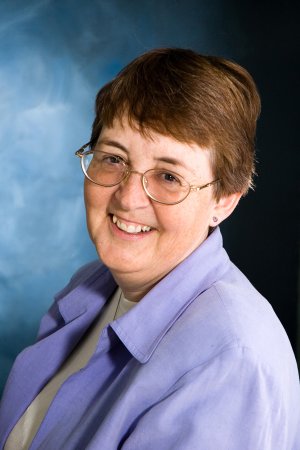
Hear a dynamic wellness presentation from Dr. Diane Pege, medical director, Sutter Lakeside Hospital.
Experience wellness coaching with Leslie Lovejoy, Ph.D.
Get tips on getting well and staying well.
Learn about the many services offered at the Wellness Center.
Meet the wellness staff and integrative health practitioners.
Attendees are encouraged to wear comfortable, loose-fitting clothing to participate in some healthy movement through interactive demonstrations.
Visit the Winter Well Check event and find out how you can hardwire healthy habits and make 2009 the year you make good on your New Year's resolutions.
Call the Wellness Center at 262-5171 for more information.
{mos_sb_discuss:2}
- Details
- Written by: Editor
SACRAMENTO – California Attorney General Edmund G. Brown Jr. on Tuesday joined with 32 other state attorneys general in announcing a landmark $7 million settlement with Airborne Inc. that forces the company to stop advertisements that “dramatically misrepresented” its dietary supplements as cold remedies.
“Airborne dramatically misrepresented its products as cold remedies without any scientific evidence to back up its claims,” Attorney General Brown said. “Under this agreement, the company will stop advertisements that suggest that its products are a cure for the common cold.”
Airborne began selling its products as a cold remedy on the Internet around July 2000 and on television in 2004. In its advertisements, Airborne featured people suffering from cold and flu symptoms and made unsupported statements suggesting its products were a cure for the common cold. This included:
• “Airborne Cold Remedy”
• “A Miracle Cold Buster!”
• “Sick of Catching Colds?”
• “Take at the first sign of a cold symptom.”
The company also requested that retailers sell Airborne products in the cold/cough aisle.
To substantiate their claims, Airborne relied upon studies that claimed the major ingredients in their products – Vitamin C, Vitamin E, Selenium, and Zinc – prevent colds. However, subsequent definitive studies found that these ingredients do not have any discernable effect to prevent colds. Despite the information, Airborne continued to market its products as cold remedies.
Investigators also raised concerns about the levels of Vitamin A in Airborne products. In older formulations, Airborne contained 5,000 International Units of Vitamin A. If the product was taken as instructed, consumers would ingest up to 15,000 International Units of Vitamin A daily.
This amount of Vitamin A poses potential health risks to vulnerable populations, including children and pregnant women. During the negotiation process, Airborne reformulated its product to contain only 2,000 International Units of Vitamin A.
Under today’s agreement, Airborne Inc. agreed:
• Not to make any claim concerning the health benefit, performance, efficacy or safety of its dietary supplements.
• Not to make any claims that imply that Airborne can diagnose, mitigate, prevent, treat, or cure colds, coughs, the flu, an upper respiratory infection or allergies.
• Not to require, demand, or otherwise influence where a retailer places Airborne Inc. products, such as in the cold and cough aisle.
• Not to market any product that contains directions for use that would, if followed, result in an individual ingesting 15,000 International Units of Vitamin A per day.
• Pay a total of $7 million to 33 states.
Today’s settlement covers all Airborne products including:
• Airborne- Original
• Airborne- Pink Grapefruit
• Airborne- Lemon Lime
• Airborne- Nighttime
• Airborne- Jr. On-The-Go
• Airborne- Seasonal Relief
• Airborne- Sore Throat Gummi Lozenges
• Airborne- Soothing Throat Gummi Lozenges
• Airborne- Power Pixies
Victoria Knight-McDowell, founder and chief executive officer of Airborne Health Inc., said the product continues to be used and trusted by millions of Americans from all walks of life. The agreement, she said, will have no impact on our products or on the ability of consumers to buy them, because it deals with language that had already been dropped from advertising and labeling.
“What hasn't changed is the simple fact that the key ingredients in Airborne have been shown to help support the immune system,” she said. “Airborne continues to be the number one selling product of its kind in America and we appreciate the loyalty of our customers.”
Knight-McDowell added, “Even though we believe the legal claims against Airborne were unjustified, we wanted to close the book on these legal and regulatory issues. The agreement lets us focus again on what led us to start this labor of love more than 10 years ago: making great products people want and count on. We will continue to talk about the important benefits that Airborne can provide.”
The states involved in today’s settlement include Alaska, Arkansas, Connecticut, Delaware, The District of Columbia, Florida, Idaho, Illinois, Indiana, Iowa, Kansas, Kentucky, Maine, Maryland, Michigan, Mississippi, Missouri, Montana, Nebraska, Nevada, New Jersey, New Mexico, Ohio, Oregon, Pennsylvania, Rhode Island, South Carolina, Tennessee, Texas, Vermont, Washington, and Wisconsin.
California will receive $460,000 under the settlement.
{mos_sb_discuss:2}
- Details
- Written by: Editor
The program is designed to help participants gain an understanding of the reasons behind overeating, build a realistic and effective exercise program into their lifestyle, develop a successful life long plan for weight management, and learn how to shop for, plan, and prepare healthy menus.
Participants will receive handouts and exercises for each topic discussed and will be encouraged to actively participate in exploring methods for improving mental, emotional and physical health in a supportive and safe environment.
The class will participate in some form of exercise during the last twenty minutes of each meeting. Participants will also meet with a coach to create customized goal and action plan to insure that each participant meets individual program goals.
“Lighten Up” meets ten consecutive Mondays beginning Jan. 5 from 5 p.m. to 6:30 p.m., in the Healing House, located below the Wellness Center on the Sutter Lakeside Hospital campus in Lakeport. The class will be facilitated by Leslie Lovejoy, RN, Ph.D., Holistic Wellness Coach. Additional speakers will include experts in nutrition and exercise.
To register or for more information call the Wellness Center at 707-262-5171.
{mos_sb_discuss:2}
- Details
- Written by: Editor
The UC Davis Proposition 1D Telemedicine Equipment Loan Program will provide videoconferencing units and peripheral medical equipment, such as specialized cameras, to health-care sites located within the health system's 33-county service area, which reaches from the Oregon border south to Merced County. To be eligible, partner sites must be a public or non-profit entity and provide care to underserved populations.
Interested health-care providers should submit a letter of interest and complete an online informational survey at www.ucdmc.ucdavis.edu/cht/proposition_1D between Dec. 9, 2008 and Jan. 6, 2009, at 5 p.m. PST.
The loaned equipment will be available to health-care sites and the communities they serve for an extended period of time. If, for some reason, a site no longer uses or needs telemedicine, or if the site’s status as a health-care provider changes, the equipment-loan program would enable UC Davis to redistribute equipment to other appropriate sites.
Telemedicine uses high-speed data lines linked to video units to connect large urban medical centers with community hospitals and clinics, allowing medical specialists to consult with community physicians and their patients via live, interactive videoconferencing.
The telemedicine program at UC Davis Medical Center in Sacramento, for example, provides direct clinical care to patients at a distance, giving clinics and hospitals throughout the state access to more than 40 medical specialties not readily available in most smaller communities. Since it was established in 1996, UC Davis’ telemedicine program has conducted more than 20,000 telehealth consultations.
Telemedicine technology overcomes the lack of specialty medical care in rural and remote communities by providing a wide range of expertise, from pediatric critical care and radiology to infectious disease, dermatology and psychiatry. UC Davis is one of five UC medical campuses now assessing regional needs and accepting applications from interested health-care providers in its service area.
“We certainly need to produce more doctors, nurses and other health-care providers who are dedicated to practicing medicine in smaller communities,” said Thomas Nesbitt, executive associate dean for UC Davis Health System and director of its Center for Health and Technology, which is coordinating the equipment loan program. “But we also need to take advantage of the innovations in telecommunications so that highly trained specialists at academic medical centers like UC Davis can share their expertise with other clinics and hospitals. By approving Proposition 1D in 2006, California voters helped ensure that the most advanced health-care expertise eventually will be able to be delivered anywhere, at anytime, in the state.”
Following the close of the application process in January, UC Davis plans to review each submission and make recommendations to the UC Office of the President, which will make the final determination about equipment distribution to each site. It is anticipated that by the end of 2009 as many as 25 sites will receive a telemedicine equipment loan, along with installation support and training from UC Davis technical experts.
{mos_sb_discuss:2}