 How to resolve AdBlock issue?
Health
- Details
- Written by: Lake County News Reports
The organization’s work in over 50 communities across America has been credited with double-digit drops in obesity, smoking and body mass index, achieving millions of dollars of savings in health care costs.
This move by Adventist Health comes at a time when public attention is especially focused on the interconnectedness of our health to that of our friends and neighbors in the face of the coronavirus crisis.
Post-pandemic, a focus on improving and strengthening community and public health will be more critical than ever as communities across the nation and globe navigate recovery.
“Adventist Health has always believed in creating environments of belonging and easy access to healthy lifestyles, and we also know that the future of health care goes beyond the role of traditional hospitals by investing in our communities to improve people’s overall well-being,” Adventist Health CEO Scott Reiner said. “Adventist Health’s work with Blue Zones represents the future of health care and is a major component of our plan to redefine the role of health organizations across America and strengthens our commitment to inspiring health, wholeness and hope.”
Blue Zones infuses healthy choices, enhances connections, instills purpose and fuels hope to impact communities where people live, work and play.
This includes leveraging the Blue Zones Power9 lessons of longevity through a comprehensive model for transformational change called the Life Radius, a focus on people, places and policy.
Rather than relying solely on individual behavior change, Blue Zones focuses on optimizing environments to improve health by design.
“Blue Zones is proud to pioneer the advancement of the health of entire cities by systematically improving living environments, so the healthy choice is the easy choice,” said Dan Buettner, Blue Zones founder and National Geographic Fellow and Explorer. “Adventist Health shares our values and its vision for community well-being aligns perfectly with our work. We believe that Blue Zones can have an even bigger impact as part of a strong and proven health organization.”
At a time when America is spending significantly more on health care than other countries without that investment translating to better health outcomes, this kind of model can improve the health of individuals and communities, and in turn, make care more affordable.
This transformational move is especially powerful as our society seeks to rebuild and find solutions to restore the health of the nation once the current coronavirus crisis passes.
Adventist Health’s vision to improve individual well-being by investing in healthier communities is rooted in the Seventh-day Adventist cultural heritage.
Since its inception in the 1840s, the Seventh-day Adventist tradition has encouraged a lifestyle of health and wellness.
These practices are infused into Adventist communities across the country, including Loma Linda, California.
The average life expectancy in America is 78, but in Loma Linda, the average male lives to 89 and female to 91.
Dan Buettner identified Loma Linda as one of the world’s five blue zones longevity hotspots in a National Geographic cover story in 2005.
Scott Reiner added, “In addition to our acquisition news, through Blue Zones, we have also concurrently completed an early renewal to continue collaborating to provide Blue Zones Project by Sharecare.”
Jeff Arnold, founder, chairman and CEO of Sharecare commented, “We are excited to extend our partnership with Blue Zones, and now Adventist Health, to advance and grow our market-leading solution for community-driven health."
- Details
- Written by: Lake County News Reports
Virtual visits can be vital to cope with the growing surge in demand for medical services – and to keep health workers and patients safer.
So, instead of sitting in a waiting room, patients can see their doctor using video from their computer or device from home.
Providers are using virtual visits to screen for COVID-19 cases, handle routine visits and the chronically ill. They are proving to provide comfort for those patients who are anxious about coming to a clinic, especially as the COVID-19 outbreak intensifies.
Virtual visits also save masks, gowns and key supplies, which are in high demand for dealing with the pandemic.
“Virtual care makes accessing doctors and providers even easier with technology-enabled, easy to use tools to connect patients with providers. Patients’ can access care from the comfort of their home with less risk of exposure,” said David Santos, president of Adventist Health Clear Lake. “Our hope is that by making care more accessible and creating fewer barriers, more people will seek care, especially those who may be worried about COVID-19 and those who do not have transportation.
Patients are eagerly embracing this approach, in part to avoid going to clinics and waiting rooms. Limiting face-to-face encounters also helps protect health workers and support staff who are concerned about their exposure to infected patients who may be visiting clinics.
So, how does it work? To participate in a virtual visit, a patient just needs a smartphone, tablet or computer with a working camera and microphone.
The provider sends an email with a link for the scheduled visit which utilizes Microsoft Teams, a technology-enabled, easy-to-use secure platform, which is available as a downloadable app or web-based app. It’s simple and easy to use.
Adventist Health asks patients to log in 20 minutes prior to the scheduled visit so they can answer some intake questions regarding medications and health history. Once the visit begins, the provider and patient can see and hear each other as if they were in the same room.
“There are other medical needs besides COVID-19 and our community needs to know they can see their doctor safely from their home without having to go to a clinic,” said Santos.
Adventist Health’s clinic staff is reaching out to patients to reschedule appointments as virtual visits if possible. Patients who have a scheduled in-person appointment with a provider can also request to have their appointment rescheduled as a virtual visit by contacting their doctor’s office.
Virtual visits are covered by most insurance plans. To learn more about virtual visits, go to www.AdventistHealth.org/VirtualVisits or contact your local provider.
- Details
- Written by: Lake County News Reports
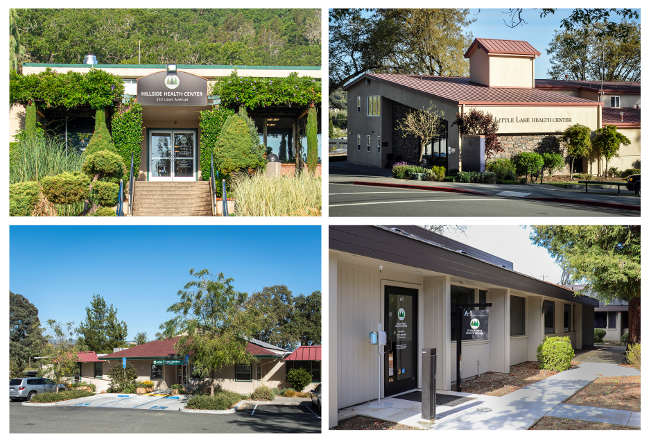
NORTH COAST, Calif. – MCHC Health Centers continues to provide essential healthcare to people in Ukiah, Willits and Lakeport, while fighting to slow and ultimately stop the spread of the COVID-19 virus.
“As the situation unfolds, we are adapting our care so people can get the services they need. Our hardworking staff and dedicated providers remain here and ready to care for patients,” said acting Chief Executive Officer Jill Damian.
In collaboration with Lake and Mendocino County Public Health and other local healthcare providers, MCHC is doing everything possible to protect patients and healthcare workers from the novel coronavirus, said Damian.
Phone consultations
One way MCHC is doing this is by replacing in-person visits with phone consultations when appropriate.
Chief Medical Officer Dr. Jerry Douglas said, “We want to offer as much healthcare to as many people as we can without increasing their risk of exposure to COVID-19. We minimize staff and patient exposure by continually disinfecting our health centers and providing care remotely when we can. I’m incredibly proud of our hard-working staff and medical team who are adapting quickly to a difficult situation.”
Regular business hours with screening
Although many patient visits will be done via phone consultations, some care must be provided in-person.
MCHC is open during regular business hours with modified services at all four sites: in Ukiah at Hillside Health Center and Dora Street Health Center, in Willits at Little Lake Health Center, and in Lakeport at Lakeview Health Center.
When patients call for any type of appointment, they will be asked whether they are exhibiting COVID-19 symptoms (e.g., fever, cough, shortness of breath). They will also be informed as to whether they qualify for a phone visit or need to be seen in person.
Regardless of symptoms, all patients will be screened for COVID-19 symptoms when they arrive at any MCHC site before receiving care.
Services currently available
The following services are currently available:
· Medical services including urgent care, primary care, and Care for Her are available in-person and via phone. Please call to schedule an appointment. If you are seeking care for COVID-19 symptoms, the medical team will explain how to proceed.
· Dental services will remain open for emergency care.
· All Behavioral Health services will be done via telephone visits.
These services are currently suspended:
· All group visits and classes are on hold.
· All MCHC Care-A-Van services have been suspended.
Dr. Douglas said, “To ensure the safety and well-being of our patients and staff, we request that friends and family wait in their cars unless they are an essential caregiver or accompanying a minor. Thank you for understanding in this challenging time.”
Health experts agree that the prevalence of the virus is likely to increase dramatically in the coming weeks, and that the best way to prevent overwhelming local healthcare facilities is for all people to stay at home unless they absolutely must go out, for example, to get food or medical care.
For the latest announcements from Public Health, visit www.mendocinocounty.org/community/novel-coronavirus or www.lakecountyca.gov/Government/PressReleases .
To contact MCHC for an appointment, call 707-468-1010. For more information about MCHC services, visit www.mchcinc.org .
- Details
- Written by: Lake County News Reports
Specifically, the letter outlines a need for a contingency plan to provide immediate assistance for rural communities as they prepare for a potential surge in patients as more positive COVID-19 cases are identified nationwide.
As part of their letter to the vice president, the members wrote, “Rural areas are already struggling to efficiently manage the current public health crisis as it unfolds. As a result of distance to testing laboratories, residents in some rural areas face wait times of several days for results of COVID-19 tests. Additionally, physicians at rural clinics – already operating on low resources – are reporting shortages of personal protective equipment such as masks and gloves.”
Explicitly, Huffman, Torres Small, and Kuster drew attention to the need to not leave rural communities and their vulnerable populations behind at the peak of this public health crisis, with heightened attention to the following issues:
– Does the taskforce have a contingency plan for when rural hospitals become overwhelmed with COVID-19 patients?
– Will the administration instruct the Centers for Medicare and Medicaid Services to develop patient surge protections?
– As rural hospitals stretch their resources and increase bed capacity, how can the taskforce support necessary increases in medical professionals to staff additional beds?
– As the administration utilizes the Defense Production Act to quickly increase critical medical supplies, how will the taskforce ensure supplies are appropriately delivered to both urban centers and rural areas?
– The Army Corps of Engineers stated its intent to use dormitories, hotels and convention centers as emergency treatment centers. Is there a plan for rural areas that do not have these facilities?
“During the limited time we have to prepare for a surge in COVID-19 cases in the United States, we urge you to develop a contingency plan to assist rural communities,” the members continued. “Such a plan must take a whole-government approach and stand ready to use all available federal resources such as medical personnel and facilities of the Department of Veteran Affairs, transportation and logistical resources of the Department of Defense, and the intra-agency coordination and temporary medical facility construction experience of the Federal Emergency Management Agency (FEMA).”
In addition to Representatives Huffman, Torres Small, and Kuster today’s letter to the Vice President was signed by Abigail Spanberger (VA-07), Juan Vargas (CA-51), Peter DeFazio (OR-04), Terri Sewell (AL-07), Henry Cuellar (TX-28), Deb Haaland (NM-01), TJ Cox (CA-21), Ro Khanna (CA-17), Joe Neguse (CO-02), Sanford Bishop, Jr. (GA-02), Mark Pocan (WI-02), Jim Costa (CA-16), Daniel Kildee (MI-05), G. K. Butterfield (NC-01), William Keating (MA-09), Cheri Bustos (IL-17), Derek Kilmer (WA-06), Abby Finkenauer (IA-01), and David Trone (MD-06).
The full letter can be found below.
Dear Vice President Pence,
We write to express concerns regarding the ability of rural medical providers to cope with a potential surge of positive Coronavirus (COVID-19) cases in rural areas and to ask what actions the White House Coronavirus Taskforce (the Taskforce) has planned to take under such circumstances. It is essential for our rural hospitals and all rural medical facilities to have certainty that in the case of an overflow of patients, the federal government will be ready to provide immediate assistance.
Rural America’s existing challenges with healthcare access and workforce capacity are being intensified by the spread of COVID-19. For 115 million Americans, the nearest medical facility is over an hour away by ground transportation. Since 2005, 161 rural hospitals have had to close their doors, a trend that has only intensified in recent years. 2018 saw a record number of rural hospital closures, with a total of 18 closures in one year. As rural Americans prepare for the worst of the COVID-19 pandemic, we must work to keep rural hospitals open to face this challenge.
Today, experts estimate that in the case of a surge in the number of COVID-19 cases within individuals 60 and older, only eight states would have sufficient hospital beds to provide care. According to recent studies, states such as Oregon, California, and New Mexico would need as many as 20 times their current hospital bed capacity to be able to treat the projected influx of patients. Even in a scenario where there are enough beds available to treat patients during the epidemiological peak of this pandemic, rural areas already grappling with provider shortages may not have enough health care professionals to treat a significant increase in patients.
Rural areas are already struggling to efficiently manage the current public health crisis as it unfolds. As a result of distance to testing laboratories, residents in some rural areas face wait times of three to four days for results of COVID-19 tests. Additionally, physicians at rural clinics are reporting shortages of personal protective equipment such as respirator masks and gloves.
During the limited time we have to prepare for a surge in COVID-19 cases in the United States, we urge you to develop a contingency plan to assist rural communities. Such a plan must take a whole-government approach and stand ready to use all available federal resources such as the medical personnel and facilities of the Department of Veteran Affairs, transportation and logistical resources of the Department of Defense, and the intra-agency coordination and temporary medical facility construction experience of the Federal Emergency Management Agency (FEMA).
To ensure rural areas nationwide and their vulnerable populations are not left behind at the peak of this public health crisis, we ask that you provide a response to the following questions no later than April 6:
Does the Taskforce have a contingency plan for when rural hospitals become overwhelmed with COVID-19 patients? If so, please describe an overview of the plan. If not, why not?
Will the Administration instruct the Centers for Medicare and Medicaid Services to develop patient surge protections, such as a plan for periodic interim payments, specifically for Critical Access Hospitals and Rural Health Clinics?
As rural hospitals stretch their resources and increase bed capacity, how can the Taskforce support necessary increases in medical professionals to staff additional beds?
As the Administration utilizes the Defense Production Act to quickly increase critical medical supplies, how will the Taskforce ensure supplies are appropriately delivered to both urban centers and rural areas?
The Army Corps of Engineers has stated its intent to use dormitories, hotels, and convention centers as emergency treatment centers. Is there a plan for rural areas that do not have these facilities?
Understanding that FEMA is now taking the lead in the national COVID-19 response, what is FEMA doing to ensure its resources are easily accessible to rural hospitals, which often have less administrative staff and resources?
Is FEMA actively working to help states procure needed hospital supplies? If so, please detail the steps that are being taken. If not, why not?
Sincerely,
Jared Huffman
Member of Congress
Xochitl Torres Small
Member of Congress
Ann McLane Kuster
Member of Congress