 How to resolve AdBlock issue?
Education
- Details
- Written by: Lake County News Reports
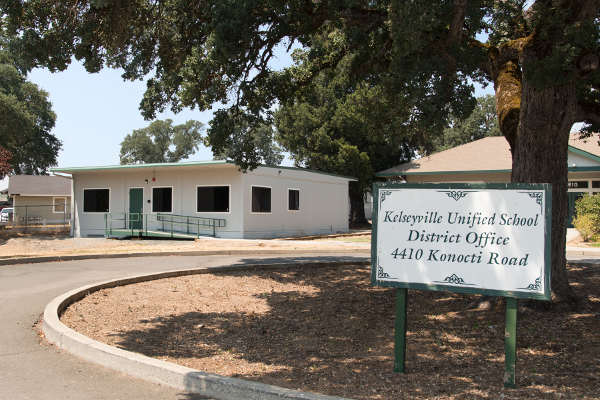
KELSEYVILLE, Calif. – For those interested in homeschooling and independent study, Kelseyville Unified School District now offers the Kelseyville Learning Academy, or KLA, for grades K-12.
The new school works with families to create a tailored schedule and curriculum for each student that can be completed online or via a home-classroom environment – or a blend of the two.
KLA high school students who want to participate in extracurricular activities or select classes at Kelseyville High School are free to do so, including sports, career technical education, band, and more.
Kelseyville Unified Director of Student Support Services Tim Gill said, “At the Kelseyville Learning Academy, families get the support of a credentialed teacher who can develop coursework and help students stay on track.”
Teacher Rena Roush has 17 years’ experience teaching independent study and says she looks forward to working with students and families to create the educational experience that works best for them.
Gill continued, “Kelseyville Learning Academy is not a watered-down version of school. Students must complete the same number of credits to graduate as they would attending Kelseyville High School. However, it does provide families with the flexibility to design their child’s educational experience.”
He noted that KLA will provide students with the rigorous academic foundation they need to attend University of California or California State University schools, if that is their goal.
Although a traditional classroom education works well for many students, it does not work well for all, according to Roush.
“A one-size-fits-all approach doesn’t always provide the best fit. Parents know their children better than anyone, so I listen to their needs and concerns and help them build a program that’s right for them,” she said.
Roush meets with students and families at the new KLA building adjacent to the Kelseyville Unified Office on Konocti Road in Kelseyville.
Like everything else about the program, the meeting schedule is based on the needs of students and their families.
During those meetings, Roush supports homeschool parents and independent study students in many ways.
She partners with parents to develop individualized learning plans; assists with teaching strategies, coaching and assessment; and offers guidance on curriculum choices and planning.
With students, she provides academic support as well as assistance in goal-setting and planning for the future.

“With parents, we mostly collaborate on ideas, strategies, and planning. Parents of elementary school students often have fantastic ideas for learning activities, for example, and I can help align those activities with academic standards,” she said. “I worry that some homeschool parents think I’ll judge their efforts. Not at all. The homeschool parents I’ve met are deeply committed to their children and want to be involved in their children’s academic pursuits. I’m just here to help and provide resources.”
For high school students interested in pursuing a career, KLA offers a hybrid academic/work-study program.
Several local businesses in the trades and other industries have expressed a willingness to work with students to provide real-world experience in their areas of interest.
For high school students interested in attending college, KLA recommends a dual-enrollment approach that includes high school and college courses.
This allows KLA students to earn an associate’s degree for transfer so they can take advantage of agreements like the one between Mendocino College and Sonoma State University (SSU), whereby students with an associate’s degree are automatically accepted at SSU.
Roush said, “The associate’s degree doesn’t require students to adhere to the strict A-G requirements set forth by the College Board. It shows they’ve gained the knowledge a different way.”
Students who live in Lake County or any adjacent county can enroll in KLA, including Mendocino, Sonoma, Napa, Colusa, Yolo and Glenn counties.
Those who reside outside the Kelseyville Unified School District simply need to apply for an inter-district transfer.
Roush said, “There are many ways to achieve a goal. At Kelseyville Unified, we are committed to making sure that all students have a chance to succeed.”
For more information about KLA, contact Tim Gill, Kelseyville Unified director of Student Support Services at 707-279-1511 or via email at
- Details
- Written by: Lake County News Reports

BERKELEY, Calif. – After years of sagging funding and rising enrollment, the University of California system is nearing a “tipping point” where it cannot continue to grow with California’s population and labor needs without seeking new revenues and state reinvestment, according to a new report from UC Berkeley’s Center for Studies of Higher Education.
“Approaching a Tipping Point: A History and Prospective for Funding the University of California,” published this week, provides the first detailed historical analysis of the 150-year-old, 10-campus UC system’s funding model, which was once based on enrollment workload. A stable source of state funding provided the foundation for UC’s growth in students, research, and public service programs.
“Look, California is the fifth-largest economy in the world and our pioneering public higher education system is a big reason for this,” said John Aubrey Douglass, one of the paper’s authors and a senior research fellow at the center, which is affiliated with the Goldman School of Public Policy. “UC has been a terrific engine for socio-economic mobility.”
The 47-page paper provides a picture of a university that has navigated state funding cuts while enrolling increasing numbers of students, maintaining its research productivity and serving California’s economy and social life.
Among the findings are the successes of UC system assets:
– UC awards 33 percent of the state’s bachelor degrees, and 85 percent of students graduate within six years, compared to the national average of 59 percent;
– The UC system produces 75 percent of California’s life science Ph.D.s, 65 percent of the state’s engineering and computer science Ph.D.s and roughly half of the state’s medical students and residents;
– Forty-two percent of undergraduates are from households where neither parent has a college degree.
– Just four of the 10 UC campuses enroll more low-income students than all the Ivy League universities combined. These students graduate at the same rates as their wealthier peers and earn more than their families soon after graduation.
– UC researchers generate an average of five new inventions a day, and roughly 500 patents a year
And the changing financial picture:
– While state support for the UC system shrank dramatically beginning in 1990, the UC system continued to expand enrollment in line with California’s population growth, from 166,500 in 1990 to nearly 273,000 today.
– Tuition hikes have not fully replaced cuts in state funding, and 33 percent of all tuition increases are returned to students in the form of financial aid.
– California residents have not borne the brunt of tuition hikes. At UC Berkeley, nonresident undergraduates make up roughly 19 percent of the student body and pay almost 40 percent of the tuition the school collects.
– Roughly 57 percent of UC undergraduates from California pay no tuition.
– Compared to the size of California’s economy, the government’s per-student contribution to the UC system has fallen by 66 percent since 2000.
And while the report also found that there is little statistical evidence to suggest the quality of a UC education has declined as state funding has shrunk, Douglass and his co-author Zachary Bleemer, who directs the UC ClioMetric History Project at the higher education study center, argued that that trend is unlikely to last.
“We may be at the end of California’s once coherent effort, from 1910 to approximately 1990, to provide resources for UC to grow with California’s population and help meet the state’s labor and research needs and desire to mitigate inequalities in our society,” they wrote.
Such a trend could leave UC leaders faced with difficult choices: limit enrollment and undermine the UC system’s mission to serve Californians, or continue to expand enrollment as California’s population grows and sacrifice educational quality, according to the paper.
Douglass and Bleemer go on to examine possible – and sometimes controversial – ways the UC system could adapt to an unpredictable future with limited state funding, including charging higher tuition for prestigious campuses like UC Berkeley or UCLA, cutting the amount of financial aid offered to students, charging higher tuition for lucrative degrees like computer science or offering online degree programs.
And while those changes may be necessary even with increased state support, Douglass and Bleemer conclude that the only sustainable solution is increased government support.
“The resources are there, and the total investment needed to allow UC, and CSU, to grow and maintain access to future Californians are relatively small compared to the state’s GDP,” Douglass said. “California’s knowledge-based business are already clamoring for more people from UC, and more people with Bachelor’s and Ph.D.s.”
- Details
- Written by: Ukiah Unified School District
Sen. McGuire authored Senate Bill 138, the Universal Meal Service bill, that Gov. Jerry Brown signed into law on Oct. 12, 2017.
UUSD Food Service Director Jim Stuart said, “The most important change is that we’ll get to feed more hungry students breakfast and lunch. However, we’re also happy that we won’t have to bear the administrative burden of tracking meal charges and dealing with bad debt.”
Students will still be allowed to purchase individual a la carte items, but all students, regardless of their economic status, will be offered a full meal at no cost, so no one has to go to class hungry.
Last year, the State of California conducted a Universal Meal Service pilot program that resulted in 60,000 additional students becoming eligible for free school meals and $33 million in additional federal meal reimbursements to those school districts.
The California Department of Education estimates that with the passing of Senate Bill 138, the statewide program will feed an additional 500,000 hungry students with increased federal funding.
Part of the reason the SB 138 pilot was successful is because it uses a more effective method to identify low-income students by ensuring the use of verified Medi-Cal income data.
A concurrent program called the Community Eligibility Provision lowers the application burden for families from once a year to once every four years, and it does not require the use of social security numbers.
SB 138 provides maximum federal reimbursement for schools with poverty rates higher than 62.5 percent as certified through Medi-Cal, Temporary Assistance for Needy Families, Migrant Education Program, McKinney-Vento Homeless Education Assistance Improvement Act, and other means.
UUSD has two schools that meet that requirement: Nokomis Elementary and Oak Manor Elementary.
However, based on the Federal Reimbursement Estimator, if all UUSD sites operate a Universal Meal Service, UUSD can expect approximately $20,000 more in federal reimbursement in an average month, which is enough to cover the cost for students at all schools to have access to free meals.
“Thanks to Sen. McGuire, we can afford to offer free meals to all students without a financial loss to our Food Service program. As long as we receive a completed Educational Benefit Form for each student, regardless of whether they participate in the meal service, we’ll be in good shape financially,” UUSD Chief Business Official Penny Lauseng explained.
“We’re really excited to be able to provide free meals to all students. When kids have enough to eat, they do better – academically, socially and emotionally,” Lauseng said.
- Details
- Written by: California Community Colleges
“We are excited to welcome Ms. Zaragoza to the Board of Governors,” said Chancellor Oakley. “She is one of the two student representatives on the board tasked with voicing the perspectives and challenges of our more than 2.1 million students, and we look forward to working with her in this important role.”
Zaragoza, 20, of Patterson, has been a student at Modesto Junior College since 2016, where she has held several positions for the Associated Students of Modesto Junior College since 2016, including director of political development, director of student relations, senator of community relations and vice president.
She was a field organizer for Josh Harder’s congressional campaign in 2018. Zaragoza is a member of the Modesto Junior College Freedom Forum, Modesto Junior College Honors Program and the Patterson Progressive Alliance.
This position does not include Senate confirmation and the compensation is $100 per diem.
The California Community Colleges is the largest system of higher education in the nation, composed of 72 districts and 114 colleges serving 2.1 million students per year.