 How to resolve AdBlock issue?
Education
- Details
- Written by: California Community Colleges
The proposed reforms, included in the California Community Colleges 2019-20 Budget and Legislative Request, would alter rules to California’s largest source of state-funded student financial aid.
The request approved by the Board of Governors, meeting at Southwestern College in San Diego County, now goes to the Department of Finance and the next governor for consideration for the 2019-20 budget.
The existing Cal Grant standards favor traditional-aged students who meet academic and need thresholds, excluding a significant percentage of community college students who are non-traditional or returning students. More than 4 in 10 California community college students are 25 years old or older, and more than 2 in 10 are 35 or older.
Just 9 percent of the 2.1 million California community college students received a Cal Grant in 2017-18, compared to nearly 40 percent of undergraduate students at the University of California and approximately 36 percent of students at the California State University system.
“Expanding financial aid for California community college students is critical if we are to achieve the goals outlined in our Vision for Success,” said Board of Governors President Tom Epstein, referring to a set of systemwide goals to improve student success. “Studies show additional financial aid improves the likelihood of students staying in school and achieving their educational goals.”
The 2019-20 Budget and Legislative Request includes Cal Grant eligibility reforms that would:
• Link awards to the total cost of attendance, rather than tuition.
• Entitle students to Cal Grant awards based on their financial need, rather than how old they are, how recently they graduated from high school, or what their grade point average was.
• Extend the Cal Grant program to all certificate and degree programs offered at community colleges, regardless of whether the programs are oriented toward those transferring to four-year colleges or universities.
During the 2017-18 legislative session, the Legislative Analyst’s Office, the Washington, D.C.-based Century Foundation and the nonprofit Institute for College Access and Success all recommended infusing additional resources into the Cal Grant program directed specifically toward community college students.
Instituting the changes would require an additional $1.5 billion for support of the Cal Grant program.
The 2019-20 Budget and Legislative Request comes on the heels of a new Student Centered Funding Formula that also is designed to help achieve the goals of the Vision for Success. The budget request approved by the Board of Governors asked for a 5 percent increase in funding, or $345 million, for the Student Centered Funding Formula.
Other requests include an additional $15 million for a pilot program to improve faculty diversity, an additional $25 million for college-wide professional development and an additional $50 million to further support faculty.
The California Community Colleges is the largest system of higher education in the nation, composed of 73 districts and 115 colleges serving 2.1 million students per year.
- Details
- Written by: California Community Colleges
“It is an honor to serve on the board with such dedicated colleagues and to lead a team keenly focused on student success,” President Epstein said. “I look forward to working with the faculty, students and staff of California’s community colleges to achieve our mutual goals.”
Following Epstein’s shift to board president, the Board of Governors confirmed the appointment of Pamela Haynes to interim vice president Monday at its board meeting held at Southwestern College in Chula Vista.
Epstein and Haynes will serve in their new roles until the board’s annual elections in November. Appointed by the governor, the board nominates and elects a president and vice president every November.
Epstein, who was appointed to the Board of Governors in 2014, recently retired after 15 years as vice president of public affairs of Blue Shield of California, where he led government relations, corporate communications, philanthropy and corporate social responsibility.
Prior to joining Blue Shield, Epstein was vice president of communications for the Public Broadcasting Service and served in the Clinton White House as a special assistant to the president for political affairs. Previously, he was deputy commissioner of the California Department of Insurance.
Epstein earned a J.D. from University of California, Los Angeles School of Law and a Bachelor of Science in Economics from the Wharton School of the University of Pennsylvania. He serves on the board of the Coalition for Clean Air and is a senior fellow at the University of California, Los Angeles Luskin School of Public Affairs.
Gov. Jerry Brown appointed Haynes to the Board of Governors in 2016. Haynes served on the Los Rios Community College District Board of Trustees for more than 17 years, including three terms as board president. She also sits on the Board of Trustees for the Community College League of California and the Los Rios Foundation Board.
Before retiring from state service in 2012, she served for eight years as a deputy director and senior consultant for the California State Assembly, Speaker’s Office of Member Services. Prior to that, she was the legislative director for the Capitol Office of Assemblymember Mark Ridley-Thomas. Haynes has also worked for the California Labor Federation, AFL-CIO; the City of Sacramento; the Bureau of State Audits; and Department of Health Services. A Santa Monica College transfer student, she has a bachelor’s degree from University of California, Los Angeles and a master’s degree in Public Administration from Harvard University.
The California Community Colleges is the largest system of higher education in the nation, composed of 73 districts and 115 colleges serving 2.1 million students per year.
- Details
- Written by: Jan Cook
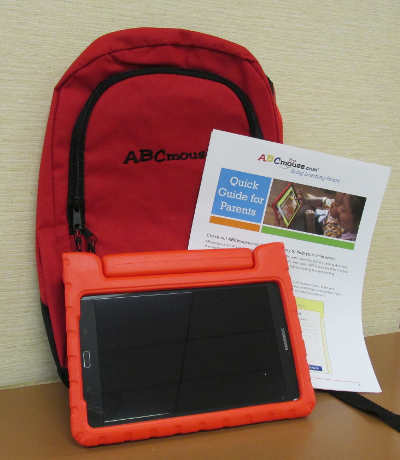
LAKE COUNTY, Calif. – The Bring Learning Home Initiative is expanding to Lake County, providing families around the county with free home access to ABCmouse Early Learning Academy via the library.
ABCmouse is the leading educational Web site and app for children ages 2 to 8, with more than 10,000 learning activities, including books, games, songs, puzzles and animations.
As of Sept. 14, families can “check out” ABCmouse accounts for three weeks at a time from the Lake County Library.
For people who don’t have mobile devices for their children to use at home, each Lake County Library location has five mobile-broadband tablets pre-loaded with the ABCmouse app that library patrons can check out for three weeks at a time.
When patrons check out an ABCmouse account from the library, they get full access to the research-validated ABCmouse curriculum, including more than 10,000 learning activities (hundreds available in Spanish), several stand-alone mobile apps that can be used without internet connectivity, and digital assessments that help track your child’s progress in key early literacy and math skills over time.
The program is designed to increase school readiness and reading proficiency and can be used by up to three children per family.
Bring Learning Home is a nationwide initiative that helps children prepare for and succeed in school by bringing effective early learning resources to families at no cost.
According to The Nation’s Report Card, two out of every three children in the U.S. are not proficient in reading by the time they reach fourth grade.
Bring Learning Home seeks to change that by partnering with libraries that play a critical role in serving at-risk children and by providing effective educational resources that build on classroom instruction at home.
Children using ABCmouse through this program are averaging significant growth in literacy and math skills after just one month. Research shows that regular weekly usage of ABCmouse helps prevent the “summer slide” in reading and can drive significant gains in early literacy and math skills.
Jan Cook is a library technician with the Lake County Library.
- Details
- Written by: Mendocino College Sustainable Construction program
Each workshop will deliver an overview of the presented topic, including the right questions to ask when weighing options, and an opportunity for a Q&A with experienced professionals.
Potential attendees should RSVP soon to lock in seats for these educational and inspiring home building workshops.
The first workshop, “Pre-Fabricated vs. Custom Built Homes: Weighing Your Options” will take place on Saturday, Sept. 29, from 9 a.m. to 1 p.m. in Room 4210, at Mendocino College (Library Building).
Participants will learn from building professionals including a local contractor, prefabricated home manufacturer, panelized building kit provider, and tiny homes builder.
Discussions will include what to consider when making choices, an overview of each building type, and steps for getting started.
This workshop requires a $5 materials fee, and participants are strongly encouraged to RSVP early by registering at https://buildingoptions.brownpapertickets.com .
“Energy Rebates for the Home” will take place on Wednesday, Oct. 17, from 5:30 to 7:30 p.m. in Room 4210, at Mendocino College (Library Building).
Participants will hear from local renewable energy professionals Chandra Apperson of Apperson Energy Management and Richard Silsbee of Radiant Solar Technology to learn about energy rebates and opportunities available.
This workshop is free, but participants are strongly encouraged to RSVP early by registering at https://energyrebates.brownpapertickets.com .
The final workshop in the series, “Building FireWise: Construction Design, Materials & Landscaping,” will take place in November on a date to be announced.
This workshop will bring together fire safe professionals to lead participants through what it means to build FireWise, fire safe construction design and materials, as well as fire safe landscaping techniques and materials to protect your home from future fires. More details to come.
The Mendocino College Sustainable Construction and Energy Technology Program is dedicated to training locals through their three certificate programs – construction, renewable energy, and building efficiency and performance.
This dedication extends to serving the community to educate and inspire residents in Mendocino County and beyond to find the best pathway to home building.
The program hopes the workshop series will be especially beneficial to fire survivors who are considering rebuilding, but all are welcome and encouraged to attend.
To learn more contact Jen Riddell at