 How to resolve AdBlock issue?
Education
- Details
- Written by: Editor
The average scores of California students tested on the 2011 NAEP were statistically unchanged from 2009, but higher than in 2005 or 2007 in both subjects, continuing a long-term trend of steady progress.
NAEP scores fall into four categories: Advanced, Proficient, Basic, and below Basic.
Average scores for California as well as the nation continue to place at the Basic achievement level, which denotes partial mastery of fundamental skills, although California's average scores were lower than the national average.
“Our students are still making progress, even as they swim against a riptide of crowded classrooms and deep budget cuts to our schools,” Torlakson said. “Asked to do more with less, students, teachers, school employees, and administrators have delivered. Imagine how much more they could accomplish—and how many more students would share in this progress—with the resources they deserve.”
The NAEP reading and mathematics assessments take place every other year and provide states with trend data that can be compared over time.
Because California is much more demographically diverse than the nation as a whole, assessment experts also look at the performance of student subgroups in making comparisons.
On the Grade Four Reading assessment, the average score for many student groups in California was comparable to those at the national level, and the average score for the male and African American student groups moved up to the NAEP Basic achievement level for the first time.
Several grade four student groups have made gains in reading since 2005, including African American, Hispanic, Asian, and economically disadvantaged students.
On the Grade Eight Reading assessment, the average scores for most student groups in California were lower than those of their peers at the national level, although the African American student group scored comparably to their peers at the national level.
Since 2009, economically disadvantaged students had a gain in average score, and their average score moved into the NAEP Basic achievement level for the first time.
Similar results were found for the Hispanic student group, which has had a significant improvement in average score since 2007 and, for the first time, scored at the NAEP Basic achievement level.
The African American student group scored at the NAEP Basic achievement level for the first time in 2009, and scored at that same level in 2011.
Grade eight female students in California have also shown significant improvement in their average score since 2007.
On the Grade Four Mathematics assessment, white, African American, and Asian students in California scored comparably to their peers at the national level while the Hispanic student group scored lower.
The average score for English language learners (ELLs) moved up to the NAEP Basic achievement level, and the average score for white and non-economically disadvantaged students moved from the NAEP Basic achievement level to the NAEP Proficient achievement level.
Additionally, there have been score gains for many student groups since 2007, including male, female, Hispanic, economically disadvantaged and non-economically disadvantaged students.
Fewer gains were seen on the Grade Eight Mathematics assessment. The 2011 average score for most student groups in California was lower than at the national level, although the white student group scored comparably to their peers at the national level.
While gains have been made by several grade eight student groups since 2005, the average score for ELLs has dropped.
In both subjects and at both grades, despite steady progress for many student groups, a significant achievement gap persists between white students and their Hispanic and African American peers.
There have been no recent changes in California's White-Hispanic gap, which in most instances continues to be larger than the national gap. Results from the grade four mathematics assessment show an increase in this gap since 2005. The large percentage of ELLs that California schools serve compared to the nation as a whole might be a factor in these differences.
For example, at grade four approximately 28 percent of the Hispanic students that participated in the NAEP in California were ELLs compared to 9 percent nationally.
For both grades and subjects, the score gap between California's white and African American student groups is comparable to those at the national level. Results from the NAEP grade four reading assessment have shown a reduction in the gap between white and African American scores since 2005, with both student groups making score gains.
NAEP, also known as “The Nation's Report Card,” is a national assessment that tests a representative sample of students in grades four, eight, and twelve in various subjects including reading, writing, mathematics, and science.
NAEP provides a common yardstick for measuring student achievement nationwide, allowing for state comparisons. Results are released for the nation, states, and certain large urban school districts.
There are no student- or school-level results. Reading and mathematics results for certain large urban districts are expected to be released later this year. Results from the 2011 science assessment are expected to be released in spring 2012.
Complete results for the 2011 NAEP reading and mathematics assessments are available online http://nces.ed.gov/nationsreportcard/.
- Details
- Written by: Editor
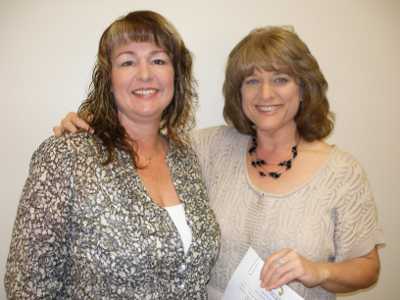
UKIAH, Calif. – The Mendocino College Foundation has received a generous gift from Mrs. Catherine Gregg and daughter Leslie Gregg Banta in memory of their late husband and father, longtime Ukiah restaurant owner Les Gregg.
The new scholarship, which is in perpetuity, will be awarded to students enrolled in the Culinary Arts Management Program at Mendocino College.
Gregg owned and operated the beloved House of Garner Restaurant in Ukiah for more than 26 years.
According to daughter Leslie, “Dad’s love of cooking started out early on and continued to grow while he served his country during World War II.”
Gregg ran the mess hall during his tour of duty in Ardennes and later would own and operate The White Cottage restaurant in Willits during the early 1950s and 1960s.
In 1958, he bought the House of Garner in Ukiah and with wife Catherine by his side, they owned and operated one of the most successful and popular restaurants in all of Mendocino County.
Gregg loved to cook for people and believed in everyone having a good meal. He was an accomplished chef who trained every employee that stepped into his immaculate kitchen.
Gregg encouraged his employees to learn every aspect of the restaurant business and move on to more increasingly responsible positions within the restaurant.
The Culinary Arts Management program at Mendocino College, led by newly hired faculty member Nicholas Petti, consists of a majority of the students enrolled in the program working toward their culinary arts certificate.
Students electing to complete the certificate will possess the skills necessary to succeed in jobs in the food service industry. The two-semester program covers everything from local foods to advanced pastry making.
“The Mendocino College Foundation thanks Catherine and Leslie for their generosity and desire to honor Les Gregg. This gift has the potential to create an entire generation of Les Gregg restaurateurs,” stated Executive Director Katie Wojcieszak.
“In perpetuity scholarships are established with a gift of $25,000 and provide an annual $1,000 scholarship based on the Foundation’s investment policy,” according to foundation Vice President Gary Smith.
The Mendocino College Foundation is a 501 (c) (3) nonprofit organization and charitable donations are tax deductible.
For more information about the Mendocino College Foundation Scholarship Program, please contact the Foundation Office at 707-467-1018 or visit http://foundation.mendocino.edu.
- Details
- Written by: Chrissie Greene and Jade Fox

Senior Raina Golden delivered her phenomenal portfolio to staff, friends and family on Thursday, Oct. 27. Carlé congratulates her!
Annette Fender received a special present made by Raina Golden. Raina designed and produced for Annette a mug to thank her for taking time to come up to Carlé and serve breakfast and lunch to all the students! Annette has done a great job over the years and the student body wanted to let her know how much she means to the school.
The mug contest is now over! Carlé's students designed and produced some incredible mugs.
On Wednesday, Oct. 12, students from Carlé took the ASVAB test (as written about in a previous article). Students received their scores and got their results interpreted on Wednesday, Oct. 26.
Teesha Greer will deliver her portfolio on Thursday, Nov. 3. Best of luck to her!
In Carlé's attempt to show everyone how much they mean to them school senior Chrissie Green designed and produced a key chain for the school bus driver Roland Cram for driving Carlé's afternoon bus and taking care of students day after day.
Carlé will like to thank Vince Weldy, Lower Lake's postmaster, for donating some great science fiction books to the school.
Carlé also thanks Dr. Harry Lyons for coming to Carlé and talking with the Interact Crew.
Harry Lyons is professor at Yuba College and is highly respected in the community. He came to Carlé and talked about how the lake was formed, the algae in the lake, and ways to remove the algae.
The Interact Team is very interested in helping clean the lake and is very grateful to Dr. Lyons for coming and speaking to them. Senior and student body president Desiree Bauer is designing a thank you plaque to show Dr. Lyons the school's appreciation.
On Monday, Oct. 31, Carlé will have their its Harvest Fest. In the Harvest Fest the whole school dresses up, plays games, compete in activities through advisories. Senior Ashley Ables has put together a spooky plaque for the winning advisory that will have all the advisories names on it and will stay at Carlé in perpetuity.
The student council members and Mr. To came together to plan this year's activities. They will include the individual costume contest, advisor's mask contest, pumpkin carving, door decorating, clue, what's under the bucket, musical chairs, the exploding hearse relay, and Fear Factor pie eating. Great thanks go to counselor Kim Van Horn for organizing the library and all the decorations with a crew who stayed late on Friday to get it all done.
The results of the fest will be the heart of the next article.
Have a great week!
Chrissie Greene and Jade Fox are students at Carlé Continuation High School in Lower Lake, Calif.
- Details
- Written by: Tammy Serpa
Tyson teaches Intro to Health Careers, ROP Health Tech I and ROP Health Tech II as part of the Health Pathway.
She has worked as a teacher for many years but just recently joined Clear Lake High School part way through last school year.
The students within the Health Pathway are learning a variety of skills within the medical field with a focus on career exploration.
Tyson is revamping the existing program to expose students to wide variety of opportunities including the possibility of job experience.
The students enrolled in the ROP classes have a wide range of career interest that include psychologist, plastic surgeon, doctors and nurses just to name a few.
Tyson encourages students to think beyond themselves as they explore the world of medicine. During a recent lesson on vaccinations where they leaned the pros and cons on this controversial issue, one student shared his battle with meningitis at the age of 6 despite being immunized. Students were encouraged to share their thoughts, opinions and experiences on the topic.
The medical pathway at Clear Lake High is a valuable program that will assist students in their ambition to be a part of the growing medical field.
According to the Bureau of Labor Statistics, “Healthcare will generate 3.2 million new wage and salary jobs between 2008 and 2018.”
ROP Health Careers will allow students to discover their field of interest amongst the many possibilities.
Soon students in the health pathway will also have the opportunity to be a part of the Health Occupations Students of America (HOSA).
Tyson is exploring the return of HOSA which is a national student organization dedicated 100 percent to health care.
Their mission is to “enhance the delivery of compassionate, quality health care by providing opportunities for knowledge, skill and leadership development of all health science technology education students, therefore, helping students to meet the needs of the health care community.”
With more than 120,000 members nationwide, HOSA will be a valuable addition once again to the curriculum and leadership development of the pathway.
Past participants of this program have been extremely ambitious in their medical interest with some becoming licensed certified nurses assistants, phlebotomist or medical assistants while still in high school.
A majority of students completing the sequence of courses have also gone on to pursue the medical field upon graduation making this pathway one of the most successful at the school.
Although the Health Pathway at Clear Lake High is well supported by the administration, Tyson is looking for more support from the medical community.
She is working on scheduling industry guest speakers, is seeking job shadowing opportunities, and looking for medical supplies and equipment.
Tyson feels that the ability for students to see and touch medical supplies and equipment is an instrumental part of learning regardless of working order or expiration date.
For more information on this program, to become a guest speaker or to make a donation to the Health Pathway at Clear Lake High, please contact Peggy Tyson at 707-262-3010 or