 How to resolve AdBlock issue?
Education
- Details
- Written by: Editor
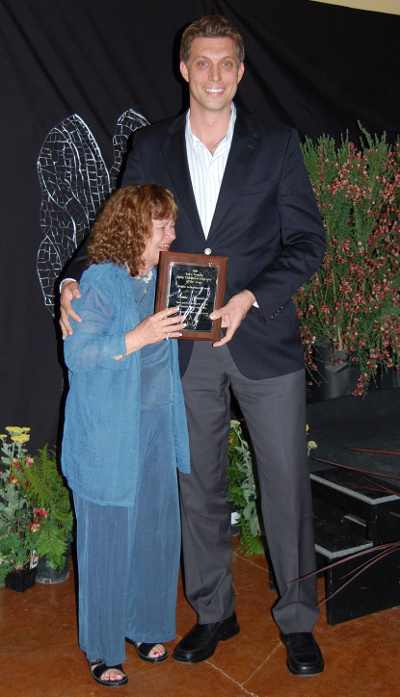
LAKE COUNTY, Calif. – The Lake County Child Care Planning Council, along with many other Lake County agencies, organizations and individuals, are uniting once again to honor Early Childhood Educators through the fourth-annual ECE Award program.
Nomination forms are available at Lake County Office of Education, North Coast Opportunities and child care programs throughout the county, or an online submission form is available to make nominating a professional as convenient as possible.
Winners will be selected based on a detailed interview and evaluation process that considers education, commitment to their profession, and effectiveness in their role as educators.
To nominate a child care provider online, please visit www.lakecountychildcareplanning.com .
Nominations must be received by April 6, 2012.
“Early Childhood Educators contribute significantly to our communities. Quality early childhood education dramatically impacts high school graduation rates, keeps our communities working, and helps Lake County develop productive, effective citizens of the future,” said Shelly Mascari, of the Lake County Child Care Planning Council.
“Many of these educators have dedicated decades to their profession; their education in many cases equals that of the K-12 educator; and yet we were lacking a forum to recognize excellence in their field,” Mascari said. “The goal of the Early Childhood Educator award program is to do just that.”
The winners will be honored at an award dinner held at The Lodge at Blue Lakes on May 4, and will receive an award package that includes scholarships to our local community colleges, gift certificates for classroom materials, press recognition, award plaques and more.
Awards will be presented in the following categories:
- Provider of the Year (Family Child Care)
- Provider of the Year (Infant/Toddler-Center Based)
- Provider of the Year (Preschool-Center Based)
- Provider of the Year (After School-Center Based)
- Outstanding Special Needs Inclusion
- Leading the Field
To find out how to be involved in this program or support this important work financially, contact the Lake County Child Care Planning Council, 707-262-4162, www.lakecountychildcareplanning.com .
- Details
- Written by: Jade Fox

Last week was the end of the fourth grading period, and report cards were put together and sent out by super secretary Barbara Dye.
The students who earned 15 credits or more and received gold level were Tucker Barnett, Leticia Bowman, Cameron Carrillo, Chelsea Cherney, Jade Fox, Jr. Garcia, Shania Jones, Anthony Montalvan, Chantilly Pannell, Kyle Scott, Monique Throop, Charles Trujillo and Trevor Wilson.
The students who made 12 credits or got silver level were Cody Beers, Saffron Blue, Brandon Cruz,
Sabrina Farnan, Ashley Gravlee, Zach Grey, Ray Green, Jesse Harrell, Mayra Pantoja, Corissa Schoonderwoerd, Tonya Smith, Austin Weldon and Erica Woods.
Now that the gold and silver level students have been announced people will soon be receiving Sustainability awards.
The awards are created in Alan Siegel's media class and they get better every grading period or the longer students can sustain high levels of achievement.
The Student of this week was James Mora. He is a phenomenal student, kind and hard working and was chosen by the staff for all he does.
Last Tuesday March thirteenth teacher Angie Siegel and Principal Dennis To took part in the Dennis Parker Strategic Schooling Training.
During this training many teachers from different schools came and observed how different classes are run.
On March fifteenth, students Jerry Stahlman and Martinique Throop showed their portfolios. At this point they are done with all of their credits and are fully graduated.
Last week all of the students who didn't take the CAHSEE or didn't pass it last year got a chance to try and take it again.
This week Carlé will be getting a lot of new students. Those students are Jay Brown, Davis Jacob, Anthony DeMaria, Britney Elledge, Shelby England, Thomas Valdez and Jacob Woods. Carlé would like to welcome them and wishes them great success here.
Student Tonya Smith has taken over designing the birthday cards now that the former designer Aimee Bradford has moved.
The Carlé teachers have started planning the graduation plaques for all of this year's graduating seniors.
Once the staff generates the award titles, Siegel's media class students will sit down and design unique and individual plaques for the more than 40 graduates expected.
That is all for now, have a great week!
Jade Fox is a student at Carlé Continuation High School in Lower Lake, Calif.
- Details
- Written by: Tammy Serpa
UPPER LAKE, Calif. – Erica Boomer is a Regional Occupational Program (ROP) Teacher at Upper Lake High School.
She currently is teaching Introduction to Ag Mechanics, Introduction to Ag Science, ROP Advance Ag Mechanics, and ROP Ag and Natural Resources.
This class is part of the Agriculture and Natural Resources Pathway with Career Technical Education (CTE) at ULHS.
A large portion of the ROP program includes hands-on learning that is possible through the creativity and support of staff, community and administration.
The students at Upper Lake are learning a variety of related topics in this pathway program that includes how to work on agriculture machinery, related sciences and research, woodworking and forestry.
The Agriculture and Natural Resource Pathway at ULHS is embarking on a new chapter that includes a campus farm complete with a well and garden partially funded by an Ag Incentive Specialized Grant.
Students will be able to apply their learning to the development and maintenance of the facility through lessons such as soil sampling, raising market animals as well as working on the machinery, constructing farm buildings and fencing.
A large percentage of the students participating in this pathway with Boomer have some type of connection to agriculture.
All students enrolled in an ag class are required to be involved with FFA but participation varies from afterschool meetings, to officers, to raising animals for fair.
The addition of a campus farm will allow those students who otherwise don’t have room to house an animal to participate in future years.
Boomer knows that California is No. 1 in agriculture in our country and therefore it is important for our students to understand it from farmer to consumer.
Students choose to participate in the Agriculture and Natural Resources pathway for a variety of reasons.
While some have a genuine passion and career interest, others are there to help family farms or just because it seems interesting.
Emily Knispel, a 2011 graduate, is majoring in agriculture at CSU Chico.
Students like Knispel feel that it’s natural to take the agriculture pathway living in Upper Lake because it’s something that most have grown up with.
The expansion of the program at Upper Lake High School is definitely a labor of love for Boomer.
She has taught at the school for five years and has an obvious connection with her students and a passion for her field.
She works closely with the other ag programs at Kelseyville and Middletown High and knows that they will be there for support in true ag fashion as she learns the ins and outs of a campus farm.
If you would like to find out more about the program at Upper Lake High School contact Erica Boomer at 707-275-2338, Extension 132, or
- Details
- Written by: Editor
SACRAMENTO – More low-income families will be able to afford healthy meals and snacks for their children in day care under new income eligibility guidelines announced by State Superintendent of Public Instruction Tom Torlakson.
Under the Child and Adult Care Food Program (CACFP), funded by the U.S. Department of Agriculture (USDA), families with children in child care centers can qualify for free or reduced-price meals if their household income is equal to or less than the income eligibility guidelines.
Nearly 5,000 local day care centers and 17,000 sponsored family day care home providers in California participate in the CACFP.
“At the heart of my Team California for Healthy Kids initiative is that a well-nourished child has a better shot at success inside and outside the classroom than a child struggling with hunger,” Torlakson said. “I urge every family to review these new guidelines to see if they qualify to get their children nutritionally balanced meals and snacks. This will help kids develop lifelong habits of healthy eating and set the stage for their academic success in school.”
The CACFP provides nutritious food to infants, children, and adults. All children enrolled in day care homes receive meals at no charge.
Most participating day care centers also provide meals at no charge. In centers that have a separate charge for meals, participants may receive free or reduced-price meals.
Torlakson initiated the Team California for Healthy Kids campaign earlier this year to promote healthy eating and physical activity among children.
Research confirms healthy children are more successful in school, miss fewer days of school, are more attentive and well-behaved, and are more likely to graduate from high school and go to college. Health disparities among students contribute to the achievement gap.
The new income eligibility scales are higher than last year, meaning more families with children in child care centers will be eligible for free and reduced-priced meals.
For example, a family of four that earns $29,055 or less a year (up from $28,665 last year) can qualify for free meals and snacks. Also, a family of four that earns $41,348 or less a year (up from $40,793 last year) can qualify for reduced-priced meals and snacks. The Income Eligibility Scales are attached.
Children who receive California Work Opportunity and Responsibility to Kids, CalFresh (formerly Food Stamps), Food Distribution Program on Indian Reservations (FDPIR), Kinship Guardianship Assistance Payment Program, Head Start, Early Head Start, or the Even Start Program are automatically eligible for free meal benefits. Adults who receive CalFresh, FDPIR, Social Security Income, or Medicaid benefits are also eligible for free meals. Institutions serve meals to all participants regardless of race, color, national origin, sex, age, or disability.
In accordance with federal law and USDA policy, the California Department of Education is prohibited from discriminating on the basis of race, color, national origin, sex, age, or disability.
To file a complaint of discrimination, write to the USDA, Director, Office of Adjudication, 1400 Independence Avenue, S.W., Washington, D.C. 20250-9410; or call 866-632-9992 (Voice).
Individuals who are hearing impaired or have speech disabilities may contact USDA through the Federal Relay Service at 800-877-8339, or 800-845-6136 (Spanish). The USDA is an equal opportunity provider and employer.
To find day care home sponsors, visit the CDE Web site at http://www.cde.ca.gov/ds/sh/sn/cacfpsponsormap.asp and search by county.
For a child or adult day care center, visit http://www.cde.ca.gov/ds/sh/sn/cacfpcentermap.asp and search by county.
For more information on the income eligibility scales, visit http://www.cde.ca.gov/ls/nu/rs/scales1112.asp .