 How to resolve AdBlock issue?
Community
- Details
- Written by: Editor
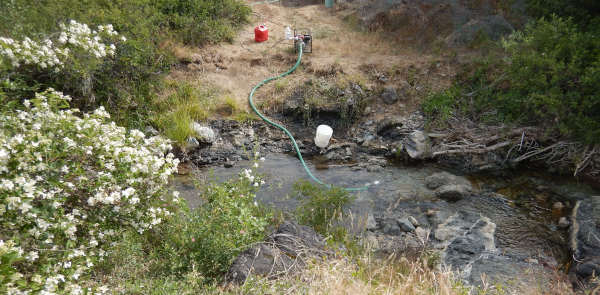
The California Department of Fish and Wildlife, in conjunction with their state and county partners, are preparing for the 2021 cannabis enforcement season.
As authorized by Fish & Game Code section 12029, CDFW, in coordination with the State Water Resources Control Board, or SWRCB, and the state licensing authority, established a watershed enforcement program to address environmental violations associated with unlicensed cannabis cultivation.
The environmental impacts associated with illegal cannabis cultivation can have a detrimental effect on fish and wildlife and their habitats, which are held in trust by the state for the benefit of the people.
“CDFW fully supports the regulated cannabis market and those taking steps to be compliant,” said Jeremy Valverde, CDFW’s Cannabis Program director. “CDFW’s permitting process is designed to reduce environmental impacts, which is more critical than ever, given the drought-like conditions throughout the state.”
County approval and an active state license are required before planting, growing, harvesting, drying, curing, grading or trimming of cannabis. An applicant that may have received local approval but has not received an active license from the state licensing authority is not authorized to begin cultivation.
“Now in our fourth year of legalization amid drought conditions, CDFW and our allied agency partners find our mission more urgent than ever,” said David Bess, CDFW deputy director and chief of the Law Enforcement Division. “No one should be engaging in commercial cannabis cultivation and associated construction activities unless they have a state license, otherwise they may face enforcement actions.”
This year, the multiagency task force is focusing on priority watersheds and areas with sensitive habitat and/or threatened or endangered species. Local partners are also playing a pivotal role in ensuring the success of these objectives.
In Humboldt County, CDFW is closely coordinating with the state licensing authority, State and Regional Water Boards, Humboldt County Planning and Building Department, and Sheriff’s Office to address illegal grows and unpermitted construction activity, all of which can have detrimental impacts to the environment.
“A county permit alone does not allow a cultivator to initiate growing commercial cannabis,” said Humboldt County Sheriff Billy Honsal. “A state license is also required, otherwise one is subject to enforcement by the Sheriff’s Office and its state agency partners. Protecting Humboldt County’s fish and wildlife resources from unregulated cannabis cultivation is a priority for all of us, and the drought makes our work all the more vital.”
In Mendocino County where Gov. Newsom declared a drought emergency, CDFW is also closely coordinating with state and local authorities to address illegal cannabis grows in and around several priority watersheds with historically low flows, which are highly vulnerable to any added pressures.
“Given the extreme drought conditions in Mendocino County’s watersheds, compliance with state and county laws will be a big priority,” said Kristin Nevedal, County of Mendocino Cannabis Program Manager. “There is a zero-tolerance policy for those not following the laws. Numerous state resources are available to those seeking to enter the regulated market.”
For more information about current regulatory requirements, interested parties can view presentations from a recent online permitting workshop at wildlife.ca.gov/cannabis/permitting.
“We will continue to assist cultivators who want to comply with regulatory requirements, while focusing our enforcement efforts on illegal cultivation activity,” said Yvonne West, Director, Office of Enforcement for the State Water Resources Control Board. “With current drought conditions exacerbating the adverse impacts that can result from unregulated cultivation, the State Water Boards will utilize all available resources and authority to address those impacts.“
To learn more about CDFW’s cannabis program, please visit wildlife.ca.gov/cannabis or email
View more details on fines, fees and administrative penalties from the state licensing authority, CDFW and SWRCB.
- Details
- Written by: Elizabeth Larson
Please use the appropriate detour and as always be cautious for workers.
- Details
- Written by: Editor
“We partnered with customers to achieve impressive water savings during the last drought, and we are prepared to do the same this time around,” said Martin A. Kropelnicki, president and CEO. “We have invested in our infrastructure and taken action to increase water supply reliability in our service areas. Now, we are offering even more support for customers who want to reduce their water use as we face increasingly serious drought conditions.”
Cal Water offers:
— Rebates on high-efficiency appliances and devices, with certain rebates recently doubled.
— A smart landscape tuneup program that includes an irrigation system evaluation along with installation of efficient devices and repair of most irrigation leaks at no cost to customers.
— A free conservation kit that includes a garden hose nozzle with shut-off valve, high-efficiency shower heads, faucet aerators and more.
Educational resources
Cal Water is also preparing to launch a drip system conversion rebate this summer and relaunch its turf replacement program, created during the last historic drought.
Additionally, Cal Water reminds customers to continue observing the prohibited uses of water that continue to be in effect. Water-wasting activities include, in part:
— Using water on outdoor landscaping that causes runoff onto adjacent properties or paved areas.
— Using a hose to wash vehicles unless the hose has a shut-off nozzle or similar device.
— Not repairing leaks within five days of notification.
— Irrigating outdoors between 8 a.m. and 6 p.m., unless local ordinances state otherwise.
— Using water in a fountain or other decorative water feature, except where part of a recirculating system.
Customers can visit www.calwater.com/conservation for details on its conservation program along with a full list of prohibited uses of water.
In June, the utility filed its updated Water Shortage Contingency Plan with the California Public Utilities Commission, which included penalties for violating prohibited uses of water.
Cal Water will continue monitoring local conditions in each of its districts and implement any additional actions based on ongoing supply and demand assessments, according to Kropelnicki.
California Water Service serves about 2 million people through 492,600 service connections in California. The utility has provided water service in the state since 1926.
- Details
- Written by: Editor
Persons with an engineering or scientific background are encouraged to apply.
The hearing board meets infrequently and sits to consider permit condition variances, abatement orders, and permit appeals.
Hearings are formal and judicial in nature.
Applications may be obtained from the Lake County Air Quality Management District Hearing Board Clerk at 2617 S. Main St., Lakeport, CA 95453, or call 707-263-7000 for more information.
Resume submittals are encouraged.
Submittals must be received by Aug. 9 for consideration.