 How to resolve AdBlock issue?
Community
- Details
- Written by: Editor
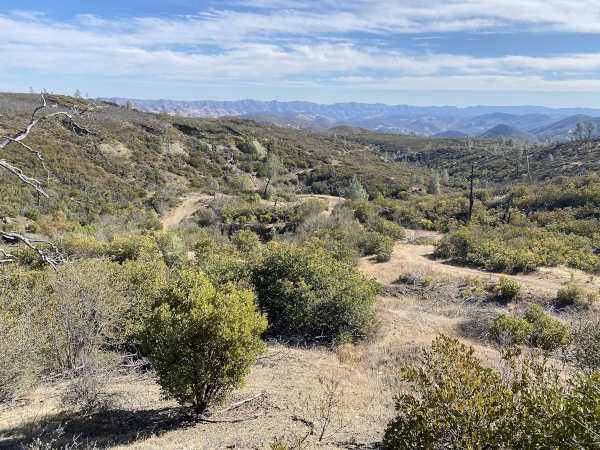
NORTHERN CALIFORNIA — The Bureau of Land Management Ukiah Field Office welcomes public input on the proposed clean-up of the abandoned Clyde Mine in Colusa County.
The proposed remediation, monitoring and maintenance was developed in accordance with the Comprehensive Environmental Response, Compensation and Liability Act and is estimated to cost more than $1.4 million.
The Clyde Mine is one of 14 inactive mines within the Sulphur Creek Mining District, known for gold production in the late 1800s.
The mine is located along a tributary of the Sulphur Creek, north of State Route 20, within the Indian Valley Management Area, a popular site for outdoor recreation.
The proposed plan recommends excavating mercury-impacted material, backfilling trenches, leveling terrain, laying a geo-fabric and soil cover over the site to direct surface water into natural channels to reduce runoff and reseeding with native plants.
More information about the proposed project is available at https://go.usa.gov/xsu7g. Please submit written comments by Wednesday, Sept. 1, electronically to
Hard copies of the draft project proposal are available at the Redbud Library in Clearlake, or by appointment during normal business hours at the BLM Ukiah Field Office.
Before including addresses, phone numbers, email addresses or other personal identifying information in a comment, be aware that the entire comment — including personal identifying information — may be made publicly available at any time. While someone may ask the BLM to withhold personal identifying information from public review, the BLM cannot guarantee that it will be able to do so.
- Details
- Written by: Caltrans
Included are Mendocino County projects that may impact Lake County commuters.
Caltrans advises motorists to drive with caution when approaching work areas and to be prepared to stop at traffic control stations.
The Caltrans Traffic Operations Office has reviewed each project and determined that individual project delays are expected to be less than the statewide policy maximum of 30 minutes unless noted otherwise.
For updates to this list check QuickMap at www.dot.ca.gov or 1-800-GAS-ROAD (1-800-427-7623).
LAKE COUNTY
Highway 20
— Construction near Saratoga Spring Road will continue. One-way traffic control will be in effect from 6 a.m. to 6 p.m. weekdays. Motorists should anticipate 10-minute delays.
Highway 29
— Construction from Spruce Grove Road to Hofacker Lane will continue. One-way traffic control will be in effect. Motorists should anticipate 10-minute delays.
— Construction from Route 281 to Private Road will continue. One-way traffic control will be in effect overnight from 8 p.m. to 7 a.m. Motorists should anticipate 15-minute delays.
MENDOCINO COUNTY
Highway 1
— PG&E has been granted a Caltrans Encroachment Permit for utility work near Ocean View Drive which will occur on Tuesday, Aug. 3. One-way traffic control will be in effect from 8 a.m. to 5 p.m. Motorists should anticipate five-minute delays.
Highway 20
— Slide removal two miles west of Three Chop Road will continue. One-way traffic control will be in effect. Motorists should anticipate 10-minute delays.
– Highway construction east of Three Chop Road began on Thursday, July 29. One-way traffic control will be in effect from 7 a.m. to 5:30 p.m. Motorists should anticipate 15-minute delays.
Highway 101
— Slide removal from Comminsky Station Road to Pieta Creek Bridge will continue. Lane closures will be in effect from 6 a.m. to 5 p.m. Motorists should anticipate five-minute delays.
— Work south of Ridgewood Ranch Road will continue. Lane closures will be in effect in both directions. Motorists should anticipate minor traffic slowdowns.
— Moss Cove Safety Rest Area will be closed through fall 2021.
— Empire Camp Safety Rest Area will be closed through fall 2021.
— Drainage work from Piercy to the Humboldt County Line will continue. One-way traffic control will be in effect weekdays. Motorists can anticipate minor traffic slowdowns.
— Drainage work at the Piercy on and off ramp began on Friday, July 30. Full ramp closures will be in effect weekdays from 7 a.m. to 5:30 p.m. Motorists should use an alternate ramp.
Highway 175
— Pavement work near Buckman Drive will continue. One-way traffic control will be in effect. Motorists should anticipate five-minute delays.
— Shoulder work east of Buckman Drive will continue. One-way traffic control will be in effect weekdays from 6 a.m. to 8 p.m. Motorists should anticipate 10-minute delays.
Highway 271
— Drainage work from Old Route 101 to South Fork Eel River will continue. One-way traffic control will be in effect weekdays from 7 a.m. to 5:30 p.m. Motorists should anticipate five-minute delays.
- Details
- Written by: Editor
This legislation grants authority to the U.S. Fish and Wildlife Service, or USFWS, to collect civil damages to repair and restored damaged wildlife refuges.
“Wildlife refuges represent some of the very best of our nation’s public lands. Sadly, when they are damaged, the USFWS must use taxpayer money to conduct needed repairs instead of holding the responsible parties financially responsible. That’s why I introduced the bipartisan Refuge System Protection Act that would allow USFWS to seek civil damages from people who damage refuges. Those fines will be used to restore our public lands,” said Thompson. “This process is more efficient, saves the taxpayer money, and is already used by agencies like the National Park Service. I’ll work to ensure we pass this important bill to preserve our wildlife refuges.”
“The First District of Virginia is home to unique and special ecosystems. As a former state health official who conducted field research in the Chesapeake Bay, I am aware of the ecological challenges facing Virginia waters, wetlands, and refuges and I know the importance of taking care of our environment for future generations. Providing for the protection and security of these resources is absolutely vital.” said Wittman. “This legislation will help ensure that our nation’s refuges are protected for years to come.”
Wildlife refuges sustain thousands of dollars in damage each year and the USFWS has no way under current law to recover the costs needed to conduct repair.
In fact, between 2014 and 2016, at least 1,787 acts of vandalisms and 127 acts of arson were committed to refuges, which cost more than $395,000.
This bipartisan bill gives the USFWS authority to collect civil damages from those responsible and use those funds to repair damages. Wildlife refuges nationwide host more than 48 million visitors each year and generate $2.4 billion for local economies.
This legislation puts wildlife refuges on par with other public lands that already have such protection.
Thompson represents California’s Fifth Congressional District, which includes all or part of Contra Costa, Lake, Napa, Solano and Sonoma counties.
- Details
- Written by: Rural Association of Northern California Health Officers
Some counties have among the lowest COVID-19 vaccination rates in the state.
The region has consistently shown a lower rate of COVID-19 antibodies, meaning more residents are susceptible to the virus.
“In sum: we are vulnerable. We are entering a summer season that will be affected by the more contagious and more threatening delta variant. And, it is summer with tourism in full force both between counties in our region and travelers from all over the world,” the RANCHO group said in a joint statement.
“A wide range of views about the virus and the pandemic itself exist in our region. The science about the COVID-19 pandemic has become much clearer over time. Despite this increase in knowledge there are some strongly held beliefs about COVID-19 that have not changed. As your regional health officials we view that as extremely concerning and would like to weigh in on some common vaccine myths. We no longer need to wait and see, because the science and the evidence are clear that these vaccines are safe, effective, and are protecting those who have been vaccinated,” the group said.
RANCHO also addressed the following myths about COVID-19 vaccines.
Myth No. 1: “I have had the virus, so I won’t get it again.”
Reinfection is well documented. Infection with the virus creates an immune response for most people, but the response is not consistent from person to person. Some people have to get very sick to get a strong immune response, and some people have almost no symptoms when they are ill. The reality is that we cannot reliably predict who will mount a good immune response from natural infection.
Additionally, many people are assuming that they have had the virus already. But, if you did not get a confirmed test for the virus, research shows you have almost an 80% chance of not having had COVID-19 when you had COVID-like symptoms. The immune response to vaccination is much more safe, predictable, reliable, and shown to create more protective antibodies than infection alone.
Bottom line: The COVID-19 vaccines result in high levels of protection, while immunity from past infection is unpredictable.
Myth No. 2: “Getting the vaccine is worse than getting COVID-19. Plus, I’m young and healthy.”
The vaccine causes a sore arm in most people. Some get other minor aches or feel like they have the “flu.” These symptoms last a few days at the most and are thought to represent the reaction of our immune systems.
If you are vaccinated, you might have some short-term symptoms but there is a greater chance you won’t end up in the hospital and you won’t die from the virus. With rare exceptions, our local data show that the only people getting seriously ill from COVID-19 are the unvaccinated. State and international data is even more compelling with larger numbers to study.
Though quite rare, there have been cases of inflammation of the heart (myocarditis) and/or the lining around the heart (pericarditis) with Pfizer and Moderna vaccines, mostly in young men in their late teens and twenties. Most cases have been brief and self-limited, recovering on their own or with simple treatments like anti-inflammatories, with rare cases requiring hospitalization.
In comparison, COVID-19 infection can and does cause severe myocarditis and pericarditis with the most striking cases associated with MIS-C (Multisystem Inflammatory Syndrome in Children) and MIS-A (Multisystem Inflammatory Syndrome in Adults).
There have been over 4000 cases of this condition reported, mostly in the 12-20 year old age group, with 1-2% resulting in death. COVID-19 can and does kill children and young adults-and COVID-19 is now ranked as the 10th leading cause of death among children in our country.
Bottom line: COVID-19 vaccination is much safer, effective and predictable than the infection, regardless of your age.
Myth No. 3: “The vaccine is experimental — it was rushed into use.”
The vaccines are relatively new technology, but hardly experimental. The Johnson and Johnson vaccine uses vector or “carrier” technology that has been studied and tested previously in a number of vaccines for almost 20 years, including Zika virus, influenza viruses, respiratory syncytial virus, HIV, malaria, and most recently, Ebola virus.
The Pfizer and Moderna vaccines use messenger RNA technology (mRNA). The basic science around this has been studied for nearly a quarter of a century, with the biggest breakthrough discovered in 2005. The mRNA technology has been developed and studied for Zika virus, cytomegalovirus, rabies and influenza.
Was production rushed — yes! Production drew on existing technology and was prepaid so manufacturers were willing to build their facilities before knowing if the vaccine would be approved. A historic success!
Bottom line: The science used to create COVID-19 vaccines is decades old, is not experimental, and hundreds of millions of people who’ve received the vaccine are proof it is safe and effective.
Myth No. 4: “The vaccine will make me sterile.”
There is no data to support this. Sperm counts in males have been reported to be normal both before and after vaccination. Women have delivered healthy babies after vaccination, even becoming pregnant between doses during trials. Birth outcomes are closely monitored and to date there have been no unusual problems reported. In fact, during phase three studies of Pfizer’s and Moderna’s mRNA vaccines, 36 women became pregnant, half in the vaccine group and half in the placebo group with no difference in birth outcomes.
The fertility myth stems from the theory that antibodies against the coronavirus spike protein might attack proteins in placentas and sperm. This is not true. The proteins are immunologically distinct. Saying they are the same would be the equivalent of saying that two people share the same social security number because both contain the number six.
Bottom line: COVID-19 vaccines do not reduce fertility.
Myth No. 5: “The vaccine will mess around with my DNA. Somebody is trying to rewrite our genetic code.”
There is not even a chance that this is the case. mRNA is a temporary copy of the information encoded in DNA molecules (in the nucleus) and then sent out from the cell nucleus to the cell machinery that makes proteins. The mRNA vaccine completely bypasses the nucleus, providing a template for the cell machinery, like a blueprint on a construction project. It is a one-way process, and when the mRNA is done with its protein building work it is digested and recycled. It does not “rewrite” code in one’s DNA.
Bottom line: COVID-19 vaccines can’t change your DNA. Their only long-lasting effect is to protect you from COVID-19 infection in the future.
Myth No. 6: “We don’t know what the long-term consequences of these vaccines are.”
Decades of vaccine safety monitoring show that side effects generally happen within six weeks of vaccination, and long-term health problems are extremely unlikely following any vaccine, including COVID-19 vaccine.
Also, “long-term” is a relative phrase. We are already well past half a year with the Pfizer and Moderna vaccines. The Johnson and Johnson vaccine can trigger a serious but extremely rare clotting problem, mostly in younger women. The Pfizer vaccine is showing a capacity to stimulate inflammation of the heart in some young persons, but this is very rare, usually resolves on its own or responds well to treatment and is clearly less than the risk of the virus itself.
By contrast, we know that persons of all ages and disease severity can develop “long COVID,” a term for ongoing symptoms months after “recovery.”
Some recent studies have shown as many as 70% of hospitalized cases still complain of at least one COVID-19 symptom two months after the acute infection has cleared.
As many as 10% of all COVID-19 survivors, including those who had very mild to no symptoms with their infection, develop long-haul COVID symptoms.
Bottom line: Long-term adverse effects of the vaccine are unlikely, but we are definitely seeing long-term effects from COVID-19 infection itself, even in those who had mild to no symptoms.
Health officials of the RANCHO region are very concerned that even as the nation seems to be pulling out of the COVID pandemic, our corner of the country has some serious hurdles that remain.
The delta variant is on the rise and already has been found in our region, and the COVID-19 vaccines will protect our communities against this variant,” the group said. “And by getting vaccinated, you can help protect our children who are too young to be vaccinated as well as community members who are immunocompromised. The truth for the foreseeable future is that almost all cases with any severe consequence at any age will happen to those who aren’t fully vaccinated. Vaccine is safe, effective, free and widely available, so we hope those holding out will reconsider, and do so as soon as possible. The time to wait and see has passed. It is time to get your COVID-19 vaccine.”