 How to resolve AdBlock issue?
Letters
- Details
- Written by: Jeremy Profitt
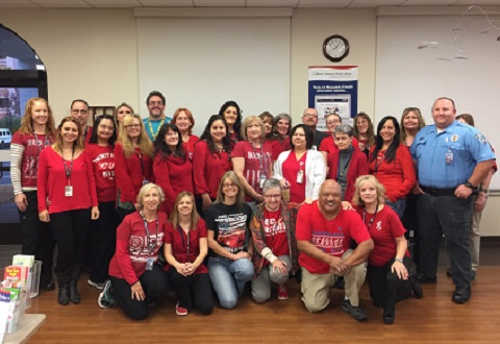
Roughly 22,600 veterans live north of the Golden Gate Bridge in rural areas with 60 percent enrolled in the San Francisco VA Health Care System, or SFVAHCS.
Seventy-three percent of enrolled rural veterans are aged 65-plus and are likely to face complex health care issues that require frequent and ongoing appointments. Eleven percent served in Iraq and/or Afghanistan and 9 percent are women.
Each of these groups face diverse health care needs, and many experience challenges accessing health care while living in rural areas.
Veterans may also experience typical rural health care challenges that are intensified by their combat-related injuries and illnesses.
So how are community partnerships helping the way we serve our rural Veterans?
SFVAHCS is working to improve the service we provide our rural veterans while partnering with our surrounding communities.
SFVAHCS has four community based outpatient clinics, or CBOCs, north of the Golden Gate Bridge: Santa Rosa, Clearlake, Ukiah and Eureka. Each one of these clinics takes tremendous pride serving veterans and their surrounding communities. Community partnerships are fundamental because they allow us to reach more veterans.
Countless staff at various levels collaborate with local community services, hospitals, small clinics and skilled nursing facilities.
“These collaborations allow us to support our Veterans using a holistic approach while sharing information with key community stakeholders and supporting each other,” said Carol Brown, clinic director of the Clearlake CBOC.
Often our veterans’ needs go beyond what we think of as traditional health care.
“A veteran recently moved to the area from out of state. He needed money to register his car so he could apply for a job and find housing, so I reached out to the Lake County United Veterans Council using our emergency veteran support plan. We were able to get his car registered, and a local business provided four new/used tires. With this support, he was able to find a job and get back on his feet,” said Amanda Celli, member services representative at the Clearlake CBOC.
Celli is part of our patient experience/member services team and is often the first person veterans meet when trying to navigate the VA system.
She is deeply rooted in the Clearlake community both as a VA employee and as a community member, serving on the Lake County United Veterans Council as the coalition’s secretary. She is also a Lake County Vet Connect member, providing community services, social networking, benefits and health care resources to our veterans.
“I get to listen to our Veterans with issues or concerns and help set up a game plan to be successful,” said Celli. “Supporting rural veterans is challenging because of the environment and limited resources, but because of our profoundly rooted community partnerships, the community and the VA can work together in supporting our Veterans’ needs.”
These partnerships and passion from staff echo across all our CBOCs. You will often see veterans stopping by their local clinics just to say hello. As much as staff are checking in on our veterans, you will find Veterans are stopping by to check in on our staff. There is no better example of the power of our community partnerships than what happened during the 2017 wildfires.
Within the SFVAHCS - encompassing the Santa Rosa, Eureka, Ukiah and Clearlake VA Clinics - 793 veterans were affected by the fires. Of those, 117 veterans lost their homes or reported fire damage, and 16 SFVAHCS staff members had lost or damaged homes as well.
SFVAHCS staff made more than 5,846 welfare calls to check on veterans throughout the affected communities.
SFVAHCS established phone numbers for veterans to call in for information and to refill medication lost during the evacuations while the Santa Rosa Clinic was closed.
Social workers and mental health staff began moving into the affected fire areas working with county veterans service officers and visited local shelters to provide mental health services, gift cards and information on temporary housing as they assessed the needs of veterans.
Voluntary service began collecting donations and other items needed to help support our evacuated veterans.
“Each time I help our veterans, I’m helping a family member,” said Alta Thurman, a Registered Nurse at the Clearlake VA Clinic.
SFVAHCS would like to thank all of our community partners, including veteran service organizations, community agencies, and the countless community volunteers for their ongoing support.
These collaborations ensures that our rural Veterans receive the help they are looking for when they need it the most.
Jeremy Profitt works for the San Francisco VA Health Care System.
- Details
- Written by: Nicholas A. Pyle
The American Enterprise Institute recently published an analysis of the program in its current state, and the numbers are staggering: " The losses to consumers are large in aggregate for the country, in the order of $2.4 to $4 billion."
This program forces good, American jobs to go overseas, like the moving of the popular Lifesavers candy manufacturing to Canada for cheaper sugar.
It's ironic for Mr. Hayes to speak of "slave labor," especially when the largest sugar producers in Florida are accused of the same thing. The only difference being that this occurred on American soil. The Fanjul sugar barons were brought to court for importing inexpensive migrant workers and "modern-day slavery" to work their sugar cane fields. The Fanjuls, as well as other sugar producers, are known to bank-roll any campaign that is willing to vote in their stead, i.e. Congressman Mike Thompson.
Fortunately, there are still members with integrity, and they introduced the Sugar Policy Modernization Act of 2017, which will produce millions of savings per year for consumers everywhere.
The sugar industry has been coddled since the Spanish-American War, and it’s well past time to stop the American people for footing the bill.
Nicholas A. Pyle is president of the Independent Bakers' Association, based on Washington, DC.
- Details
- Written by: Dr. Dale Morrison
Throughout my decades of practice, people have sought quick, easy remedies to feel better. While modern medicine offers some amazing cures, we still haven’t found the perfect cure for everything.
With the legalization of recreational marijuana going into effect this month, I see people turning to cannabis as a miracle cure for everything and this concerns me.
While there are legitimate uses for cannabis, it is not a cure-all.
Cannabis can help reduce pain and nausea, and it’s proven especially effective for some patients undergoing chemotherapy or receiving palliative treatment for terminal illnesses.
However, marijuana is not the wonder drug some people would have you believe.
There is a sense that because cannabis is a plant, because it is natural and not derived in a lab, that it must be healthy. Not so! Nature creates some potent toxins, and man has modified these plants to make their effects even stronger.
Unlike alcohol, which does not contain any chemicals produced by our brains, cannabis contains THC, a chemical that mirrors a naturally occurring substance in the brain. This allows THC to alter brain activity profoundly.
This effect on the brain is what leads to a decrease in productivity and ambition. Used sparingly as a distraction by adults, cannabis does not appear to do long-term damage. Used regularly by adolescents or pregnant women, the effects can be disastrous and irreversible.
Unfortunately, recent studies have shown that the use of marijuana among pregnant women is increasing. In California, among pregnant women 24 years of age and younger, the rate of marijuana usage is about 14 percent. Among pregnant women of all ages, marijuana usage is about 7 percent.
My concern is that legalizing marijuana makes people believe it is safe when it isn’t. I have other concerns about the effects of marijuana on our community – the increased violence and crime, the pollution of our forests and streams, and the hard feelings between neighbors. But my biggest concern is for the welfare of our children, including the unborn.
If you choose to use marijuana, please protect your children from the negative effects of this drug. The brain only develops once. If that development is impeded by cannabis, there is no fixing it.
Dale Morrison retired from Ukiah Valley Medical Center (now called Adventist Health Ukiah Valley) in Ukiah, Calif., where he served as a cardiologist and chief of staff.
- Details
- Written by: Vicki Miller
I was disappointed to read that the California Department of Fish and Wildlife people were now just "monitoring" the situation. Does that mean just one person walks all the shorelines and looks for the dead birds? Do they not know that this disease doesn't disappear in just a few weeks? We have thousands of waterfowl on our lake right now.
When I read your article on the die-off, I sent an email to Dr. Susan Cannon (Wasson Memorial Vet.) who runs the Wildlife Rescue Center for our county. We offered to assist in picking up the dead waterfowl for as long as she needed us.
To my amazement, Dr. Cannon replied she was not aware of any duck die-off and had not seen it in the news. I sent her the link to your article and she said she was surprised that Fish and Wildlife hadn't contacted her or anyone in her vet's office.
My biggest worry is that people might unknowingly pick up the infected ducks or birds and bring them into veterinary offices where the avian cholera could be spread by curious people in the waiting room that want to see the bird. If Dr. Cannon wasn't advised, did other vets know about the outbreak?
I should think California Dept. of Fish and Game would care enough to do everything possible to get the word out to everyone and to continue to quickly pick up all of the dead ducks/birds.
There were many volunteers that put in lots of hours to assist in the past. All they had to do was ask. Shame on them.
Vicki Miller lives in Kelseyville, Calif.