 How to resolve AdBlock issue?
Opinion
- Details
- Written by: Brett Behrens
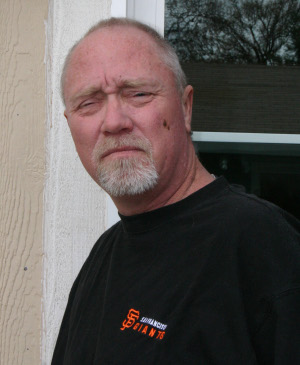
Never having done something like this before, I am not sure where to start.
So I’ll take you back to the beginning of this new beginning of my life written in several entries summarizing the past nine years, including the highs and the lows. Hopefully at that point, I’ll be to my life as it is today.
I’m afraid that if I start from today things that took place in 1999 won’t make much sense. They still might not.
Knowing that dialysis was a reality, I sat down with my dialysis nurse to discuss the possibilities. There were many.
There was, of course, hemo dialysis. This is where you are hooked up to a machine for a period of time determined by your nephrologist, for a machine to filter your blood for waste and excess fluid. Think of it as a large machine doing the work your kidneys would normally. For me that would be about four hours a session, three times a week.
Second, there was peritoneal dialysis. Now this is a little more complicated to explain.
A surgeon places a a peritoneal dialysis catheter in your abdomen. Dialysis occurs when you fill your abdomen with dialysat chemistry. Next the blood pases through the liquids as the travel from one area to another and re-entering your blood vessels. You drain and fill your abdomen four times a day. Each “exchange” takes about 45 minutes. Peritoneal dialysis is much more mobile as you can take the bags of chemisty with you if you are going on a trip.
With hemo, you have to make arrangements with a center close to the area you’re visiting and hope they have room to fit you in. And with more people needing dialysis, being a traveling patient is becoming increasingly more difficult.
Of course there was a third choice, do nothing and die.
This really isn’t what I wanted. I didn’t relish the thought of going to a clinic three times a week. To me, it was just another part of losing my independence. By this time the vision in my left eye was getting worse and I knew my time driving was the next thing that was going to be taken from me.
This was not a good time in my life.
At least I can say that in my 25 years of driving I never had an accident. I had several close calls but never a wreck.
Time went forward and I did lose my driving privileges as well as more sight in the eye I had left. I would have my good days but I knew my vision would never be good enough to get my license back.
Never in my life did I ever think I would follow in my father’s footsteps. But little did I know, that was just what I was doing.
In attempting to get on the kidney transplant waiting list, I was required to get an angiogram done. For those who don’t know, an angiogram is where they run a camera up through your thigh to your heart to see what kind of condition your heart is in.
In my case, the results weren’t good. They found major blockages and said I was in dire need of bypass surgery.
So now a kidney transplant was on hold and I needed some major heart work. The toughest part was going to be finding a surgeon willing to take a chance with a diabetic on dialysis with an injection fraction of about 15 percent. The injection fraction is the percentage of blood pumped out of the heart on the down beat.
But my cardiologist, Dr. James Srebro knew the man for the job, Dr. Ramsey Deeks. Both are doctors in Napa and as far as I’m concerned the best in their fields.
Dr. Deeks said I needed at least two, possibly four bypasses, but he assured me he would not do anything that my body couldn’t take. With that we said it’s what we need to do and let’s get a time scheduled.
He harvested a pair of smaller veins near my heart and about five hours later, I was good as new. I spent a day and a half in ICU and another two and a half hours in a regular room and that was it. I was prepared for five to six days there. The worst of my pain was the day after surgery when they got me out of bed for a walk. I made one lap around the wing and I was pooped.
Actually, the worst pain was once when I sneezed. I thought my chest was going to explode. But I had my heart shaped pillow they gave me to support my chest and all was intact.
In fact the day I was discharged, we went home and I attended a Boy Scout meeting. My wife, Peggy, called me crazy. It was a challenge I gave myself to complete.
It’s those challenges which make me stronger and keep up the spirit to make this second life one that I will make better than the first.
I realize I am tough on myself and I drive myself harder now than I ever have. But as I explain to Peggy, I’m no tougher on others than I am on myself. She tells me I need to settle down and enjoy life. She says I go to extremes at times. Maybe she’s right. But when you’re 46 sometimes it’s hard to change what you’ve always known and done.
My father had triple bypass surgery and came back stronger and he said he felt 25 years younger. Me too.
That was five years ago, the day when President Bush landed on the aircraft carrier and announced the war in Iraq was over.
Since then, I have had many more procedures done, tried to get back on the transplant list three times and am now working to get a part-time job working from home. Heck I even had pneumonia and wound up on a ventilator with a tube run gown my throat for three days. That happened the day after Christmas last year.
There’s so much I could about just in the last nine years of my life, I’d never catch you up to October 2008.
The only reason I tell you these things is I want you to know a bit about my life. My second life.
Brett Behrens is writing a regular column for Lake County News about dealing with serious health problems. Behrens, 46, is a native of Lake County. He has spent most of his life behind the lens as a photojournalist and the owner of a successful portrait photography studio. He continues his image-making activities as his time and eyesight allows.
{mos_sb_discuss:4}
- Details
- Written by: Esther Oertel
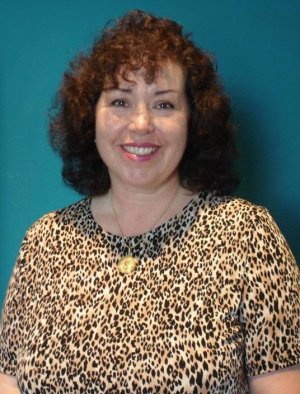
LAKE COUNTY – Our national population is aging on a grand scale, and Lake County is no exception. In fact, we have a higher percentage of retired folks here than many places in our nation.
Many within the elderly population are what might be called “invisible people.” They have lived busy and productive lives, but are now tucked away in their homes with very little contact with others.
While at one time they raised families, worked in jobs, volunteered within our communities or served our nation in the military, they are now mostly alone, living a confined and isolated life. Many rarely see their family; some wait long periods for even the simplest contact with another human being. They are homebound seniors.
Konocti Senior Support Inc. of Clearlake has a program that benefits otherwise isolated homebound seniors: Friendly Visitors of Lake County.
Through weekly one-hour visits by trained volunteers, the outside world is being brought to the lives of those who otherwise have limited contact with it.
The program is currently funded by the Redbud Healthcare District as a means to preserve the health of the isolated elderly by combating depression through friendly visits. Our program currently serves South Lake County, from Clearlake Oaks to Middletown and west to Kelseyville.
Clients of this program are called “Ami’s” – the French word for friend – and trained and supervised volunteers offer friendship, understanding and compassion by visiting seniors’ homes weekly to chat, write a letter or maybe play cards or work a jigsaw puzzle.
Many of our volunteers are seniors themselves, but volunteers can be of any age. We are currently working with local high schools to provide community service hours for teens that are recommended to our program.
Volunteers are given free training on the specifics of aging, communication and other facets of the program and are then matched to an Ami within their community. They arrange with the Ami a mutually beneficial time for a weekly visit. Volunteers attend a monthly meeting for support, advice and camaraderie.
The motto of Friendly Visitors of Lake County is “Two hearts are better than one.” We are always amazed that such a small slice of time – one hour a week – can bring such great benefits.
We have a waiting list of seniors who are waiting to be matched with a friendly visitor and are on the lookout for caring individuals willing to be volunteers.
The requirements for volunteering are simple: reliable transportation, the willingness to be trained and, most of all, the desire to share one’s heart and spirit with someone in need.
And here’s our little secret: Our volunteers are greatly blessed! They often report that our training and their visits with their Ami benefit their lives greatly.
To volunteer, refer a client or to simply ask a question, contact Friendly Visitor Program Director Esther Oertel, at 995-1417 or
{mos_sb_discuss:4}
- Details
- Written by: Wendy Jensen
On Nov. 18, 2007, after a night of heavy drinking at a bar in Martinez, I got into my car and drove onto Highway 4. I was driving in the wrong direction and nearly killed many people. I finally came to rest near the Pacheco exit after colliding head on into another driver who was simply trying to get home to his family for the holidays.
The impact of this crash resulted in this man having severe injuries almost resulting in his death. I suffered a broken back, seven months jail time and three years probation. My license was suspended for a year, plus three months of DUI classes, court fines and restitution.
Up until this collision, I had a clean driving record. I owned a home with my husband of 11 years and our 5-year-old daughter. I had a job I loved for five years at a local school. To most, I seemed like just another working mother and wife except this mother and wife has struggled with alcoholism for 16 years.
I was pretty good at first hiding it, lying about it, denying it, especially to myself. I tried to get help through local alcohol programs, counseling and rehab. The thing was, I did it for everyone else. I did it to make them happy. I wanted to show everyone else that I could do it.
That was the biggest mistake of my life. I should have been doing it for myself all along like everyone was telling me. I never wanted to do it for me. I didn’t like me, I didn’t love me. I was a miserable person who loved alcohol more. And near the end, even more than my own family.
Sound hard to believe? Well that’s the power of alcoholism. It makes you lose interest in all the things you once loved and loved doing. Consuming every ounce of who you are until you decide to change it, beat it, and kill it before it kills you. Or you can wait and do nothing like I did and continue on a path of destruction until you kill yourself or someone else in the process.
Never in a million years would I have ever thought I could cause such a horrible accident, cause the hurt and pain I have put my family and the victim and his family through. But I did and I will be living with that for the rest of my life.
This collision has been a big turning point in my life. It has taught me that sometimes in life, tragic things have to happen to us or someone we love no matter how much it hurts or who it hurts. To give us a reality check and open our eyes a little wider to the fact that someone with a higher authority has complete control over our lives and the power to take everything that means anything to us in an instant. To also help us realize that we are given one last chance to live life the way it was meant to be lived, with a purpose. Do you know what yours is?
I have learned that my ugliest personality trait was selfishness. I am now selfish in a different way. I put myself and my recovery first. I try not to worry so much over the things I have no control over. After all, our most destructive habit is worry. I have also learned that the worst thing I can be without is hope. I had, at one time, given up all hope that I could ever get sober. Now I am full of hope, strength and have the courage to keep up my sobriety and not give up.
Since my release, I have been working very hard to start a new life for myself. Being involved in my recovery is number one. I am looking forward to doing some public speaking and sharing my story with others who may be struggling with alcoholism. I am also starting a new career in the medical field as a CNA. And I am enjoying being a sober mother to my daughter.
Thank you to those who took the time to read my story. I hope that you remember my story and how quickly your life can be affected if your planning to continue to drink and drive.
Wendy Jensen is a member of Team DUI.
{mos_sb_discuss:4}
- Details
- Written by: Andrea Anderson
With the issue of a GE Free Zone ordinance in Lake County being put off time and time again, I thought I would take some time to explore some questions concerning the genetically modified organism (GMO) issue in hopes of raising awareness of the GMO monster which has been slowly and steadily creeping up on us from the shadows.
Biologists classify every living thing into four basic categories – Plantae, Animalia, Protista and Fungi. Since genetically modified organisms (or genetically engineered organisms) more often than not contain genes from several different kingdoms, they do not actually fall into any of these categories and therefore cannot technically be considered an animal, a plant, a protist or a fungi.
Are they simply freaks of nature? Well, that would imply that they were actually of nature. Yet, since nature has never combined the DNA of even two different kingdoms since the history of the planet, they can hardly be considered “of nature” at all. They are no more natural than the Frankenstein monster. Hence, they have been dubbed “Frankenfoods” by many. After examining the facts, I would dare say they are actually less natural than the Frankenstein monster and more accurately compared to the monstrous science experiments of Dr. Moreau which could not be categorized so easily.
So, really, what are they? Well, maybe, we should move on to the next question ...
Why should you care?
Since the government agencies such as the FDA, EPA and USDA have yet to be able to accurately define these GMOs, they have yet to be able to hold them to any standards of accurate research, testing or labeling. Instead, these GMOs are simply treated as “new inventions” which are then patented and passed on to the consumer as if they were just another product of a savvy company. Yet, these broad allowances have made for some fairly interesting developments.
For instance, baccilus thuringiensis (BT) is a bacteria often used as a pesticide. The genes from this bacteria (from the Monera Kingdom) are currently being introduced into food crops (from the Plantae Kingdom) used to create genetically modified food where the pesticide is no longer outside the plant but is now part of this new GMO’s DNA. However, because BT is considered a pesticide, and our foods are not required to be labeled with any pesticide information, this new GMO food is not required to be labeled to contain the genes of a pesticide within it. This creates a huge safety issue for the consumer, because genetic code cannot be scrubbed or washed off like other pesticides and can be consumed internally.
In the same vein, many plants we consider food crops are being genetically engineered to contain Glyphosate, a non specific systemic herbicide which allows resistance to pesticides. This means that our food crops can and very well may be sprayed even heavier with pesticides. Again, these GMOs are not required to be labeled, allowing for the possible consumption of pesticides.
And, even when the genes of the GMOs are simply coming from two sets of gene pools which are similar, there are potential hazards due to lack of a definition. For instance, when crops of soybeans were combined with genes of a brazil nut, the crop was still allowed to be referred to as soybeans, creating an issue for those consumers with nut allergies because the Brazil nut gene did not have to be legally mentioned in any labeling. With the current lack of accountability, biotech companies bear no responsibility towards the consumer concerning these GMOs, even if a consumer went into anaphylactic shock (a type of allergic reaction which can cause death), because legally they are not required to make these distinctions, due to lack of definition.
So, this brings me to the question, once again …
What are GMOs?
Maybe, the question we should be asking is – what purpose do they serve?
Many biotech companies would answer this question by telling you that GMOs are going to someday feed the world and end world hunger by producing “new and improved” genetically engineered crops. However, this could not be further from the truth. In fact, hunger is not a food issue but a political and social issue. When it comes down to it, the hunger problem the world faces is not in the creation of the food but in the systems of delivering the food. We are not having a food shortage, unless you consider the biotech industry’s attempt to patent many food crops as “new inventions” in an attempt to control our food supply through a “pay to plant” system which includes terminator seed which “terminates” (basically creating an unfertile plant) the seed after each season forcing growers to buy new seed every season.
And, in fact, even if you accidentally sow the patented seed or your seed is simply contaminated by their crop and it reproduces their seed, you can be held financially responsible by these companies. Several farmers in the U.S. and Canada have already realized this, thanks to being sued by Monsanto (one of the largest biotech companies in the world) for thousands of dollars.
This issue should weigh heavily, on the minds of many farmers. Particularly, it is a question of great importance, to organic farmers. From a business standpoint, we need to be asking what will become of the reputation of other farmers (as well as other businesses), if contamination occurs?
In the year 2000, many farmers found the answer, thanks to Aventis and their genetically modified Starlink corn.
Starlink corn was actually banned for human consumption in the U.S. because it could trigger symptoms adverse enough to land people in hospitals. Still, somehow, it found its way into the food supply.
In fact, this genetically modified corn was suspected to have contaminated over 300 products and these products had to be recalled.
As a result, farmers and other companies which sold the accidentally tainted products lost enough money to sue for over 10 million dollars. These farmers and other companies didn’t just lose money, though, due to GMO corn which should have never entered the marketplace, they lost their good reputation, as well.
So, again, I ask, what are GMOs, really? I believe it is a question you should care about and be asking. Ask yourself, ask the biotech companies and ask the government. Keep asking, until you get an answer you can believe in.
I believe, it is time we begin to care about GMOs and the motives behind those who support the promotion of GMOs (such as Monsanto, the company who promoted Agent Orange and Aventis who brought you the Starlink Corn fiasco) and the motives behind those who support initiatives like a GE Free Zone in Lake County (such as Organic Farmers and The Coalition For Responsible Agriculture). Let’s not make the mistake of allowing the GMO monster to hide in the shadows and attack indiscriminately without accountability.
For a firsthand look at the newly drafted ordinance concerning the creation of a GE Free Zone in Lake County, please visit www.lakelive.info/cra/draftordinance.pdf and, if you like what you see give, go ahead and show your support by endorsing the ordinance and writing or calling your supervisor to express your support for a GE Free Zone in Lake County.
A supervisorial district map with phone numbers and email addresses for all board members is available at http://www.lakelive.info/bos.htm and don’t forget to join supporters of the GE Free Zone Ordinance at the BOS meeting on Tuesday, Oct. 21!
Andrea Anderson is a writer/photographer for www.butterflygardennews.com, a natural living resource. She lives in Lakeport.
{mos_sb_discuss:4}