 How to resolve AdBlock issue?
Opinion
- Details
- Written by: Howard Glasser
- Details
- Written by: Anthony Farrington
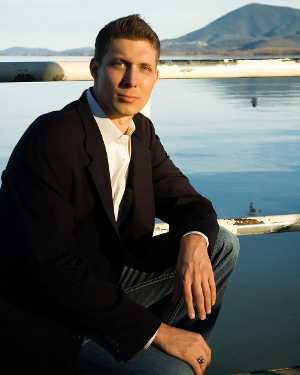
On Tuesday, March 8, at 11 a.m. the Lake County Board of Supervisors will consider the possibility of taking legal action against Pacific Gas & Electric (PG&E) to stop the installation of SmartMeters.
Recently, PG&E representatives came before our board to present the positive aspects of SmartMeters. PG&E representatives stated that with SmartMeters our state will move toward a “Smart Grid,” and that with SmartMeters residents “may” realize a 12- to 20-percent savings in their monthly bill.
The word “may” peaked my attention (pun intended).
PG&E told our board that they have installed over seven million SmartMeters.
During PG&E’s presentation, I asked PG&E to provide my office statistical data that substantiated their claim of a 12- to 20-percent monthly savings.
So far, I have not received any information. In fact, I have had conversations with elected officials in other counties and I have received feedback from residents who have had a SmartMeter installed, and the overwhelming consensus is that their monthly bill has actually increased!
With SmartMeters, PG&E is able to use wireless technology that sends real-time information on a daily basis. With SmartMeters, PG&E is able to bill each customer or peak day usage versus total monthly usage with standard meters. This means an exponential increase in rates to our local residents, businesses and farmers.
On July 26, 2006, the California Public Utilities Commission (CPUC) approved SmartMeters for the customers of PG&E, and authorized PG&E to spend $1.7 billion to deploy SmartMeters.
On Feb. 25, 2010, the CPUC adopted the new rate structures for residential, commercial and agricultural customers that will allow PG&E to bill its customers a higher rate for use during the peak hours. The SmartMeter is necessary to implement this new billing structure.
CPUC members are appointed, and not elected. They are removed from local residents and, in my opinion, beholden to utility companies and special interest groups.
As decision makers, the CPUC can take only one of two sides: either the members stand “for people,” or they stand “for profit.” Unfortunately, time and time again, the CPUC continues to stand “for profit.”
When this discussion came before our board, a number of local residents voiced their concerns about SmartMeters. At that time, I did not understand what all the fuss was about.
Many citizens voiced concerns about rate increases; health risks associated with SmartMeters due to the exposure of electromagnetic field (EMF) emissions; concerns about the loss of privacy due to the sharing and storage of real time information and data; and they voiced concerns about the firing of meter readers throughout the state.
In my research, I have found it true that there are positive aspects of SmartMeters, and the development of a Smart Grid.
With SmartMeters and a Smart Grid users will have to be more frugal with their use of electricity which will result in a decrease in the use of energy, which means a decrease in greenhouse gases.
In addition, people with Internet access will be able to go online and monitor their bill. While this may be a strong selling point, I do not believe that this is PG&E’s motive.
I have also found the concerns about health risks and exposure to EMFs to be a valid concern.
Even though the CPUC looked at studies and concluded that the emissions from an individual SmartMeter “should” not pose a health risk, there are no studies that have looked at the “cumulative” health risks where SmartMeters are installed in dense neighborhoods.
Yes, it may be true that with SmartMeters customers will be able to go online and monitor their usage and attempt to decrease their demand in order to reduce their bills.
Unfortunately, a lot of my constituents do not have Internet access and they are not in a position to decrease their demand.
My constituents are business owners who need power to run their businesses; my constituents are farmers who need power during all hours to water, harvest and package their crops; and my constituents are seniors, and disabled people that have to stay cool in the summer and warm in the winter.
Unlike the CPUC, the choice for me is simple. I will continue to stand “for people.”
Email me your input at
Anthony Farrington represents District 4 on the Lake County Board of Supervisors. He lives in Lakeport, Calif.
- Details
- Written by: Deb Baumann
One argument used to resist genetically modified organism/genetically engineered (GMO/GE) labeling sounds an awful lot like nanny-state thinking: “We must not allow labeling of GMOs because, given a choice, people would make the wrong choice.”
Poor silly foolish misguided consumers!
How lucky we are to have giant corporations and the government making the right choices for us, since we are incapable of deciding for ourselves.
Sorry, but I just don't have that much faith in corporations or the government.
I would rather make my own choices. So would 87 percent of Americans polled.
On Feb. 15 the New York Times published a column calling for GMO labeling, citing the above poll.
A week later, Forbes published a column insisting that we must not have GMO labeling. Why? Because then people would avoid such products.
Take a moment to absorb that interesting proposition, from a magazine which is supposed to be about business and economics. Not merely economics, but free market economics.
Can there be a “free market” when consumers are denied the right to make their own choices?
Can there be a “free market” when taxpayer subsidies are used to shore up a product which consumers don't want to buy?
GMO crops would have no place in an agriculture economy based on sound, free-market principles. As in, cost of production should not exceed market-value of end-product.
Fact: GMO crops cost more to grow than they are worth in the market.
American taxpayers make up the difference, through farm subsidies, most of which are issued to recipients beloved by corporate ag. (Only a tiny percentage of subsidies are paid to organic farmers, one reason why organic costs more.)
Currently, the commodity-crop system is rigged to push the more expensive (more profitable) GMO seeds. And since many GMO crops are designed to encourage increased use of herbicide, GMOs also generate more profit for herbicide sellers (often the same company that sells the seeds).
And that, ladies and gents, is the reason GMOs are being pushed down our unwilling throats.
Everything else (“feeding the world,” “higher yields,” etc) is just smoke and mirrors, created via bazillion-dollar PR campaigns that harken back to the days when Big Tobacco spent umpteen millions to poo-poo the possibility of any link between smoking and cancer.
The rigged commodity-crop system has existed for generations, originally created to channel agriculture profits away from farmers and into the pockets of middle-men and Wall Street.
Today, with the system pushing GMOs, biotech and petrochemical industries are the big winners. Farmers, consumers and the whole concept of free enterprise continue to be the losers.
It's not just here in America that GMO crops cost more to grow than they are worth.
In much of the developed-world, they are worth nothing. Many developed nations bar growing or import of GMO crops. (Farmers in California's Imperial Valley are so afraid of losing their overseas market that they have begged Monsanto to keep GE alfalfa out of their region.)
So, how-what-when-where-why would anyone grow GMO crops, if they really cost more to produce than they are worth?
Remember: Taxpayers make up the difference.
In short, GMO crops are welfare crops.
In a true free market, we'd be growing crops that have higher value, higher consumer demand. That means non-GMO and organic. Don't take my word for it. Search the internet on keywords non-GMO premiums and see for yourself.
High premiums (10 to 20 percent above Chicago Board of Trade) are paid for non-GMOs (even when they are non-organic). And prices paid for organic soy and corn are often twice (or more) what is paid for GMO soy and corn. Why? Because these are products that consumers value the most.
If corporate agriculture were not rigged to be so anti-free-market, no one would plant GMOs.
Eighty-seven percent of consumers polled reject the Nanny-State approach.
Eighty-seven percent want GMOs to be labeled.
Eighty-seven percent want the right to choose.
If that leads to the collapse of the artificially-shored-up, taxpayer-subsidy-reliant GMO industry, so be it.
The free market will have spoken.
Deb Baumann is a health care industry professional who grows GMO-free fruits, nuts and vegetables and raises heritage livestock near Upper Lake, Calif. She is a contributor to Lake County’s community-driven Rural Values Web site, www.ruralvalues.org. Anyone wishing links and citations verifying the information she writes about is welcome to send email to
- Details
- Written by: Anna Rose Ravenwoode
I felt the same jubilation as the people of Egypt when President Mubarak resigned from office. This is a “moment” of perfection for democratically governed nations; and a testament to the organizing grass roots power of the internet.
The United States government and the international media must closely monitor what takes place in the next weeks and months, as the Egyptian Military Council takes over the country. As President Obama stated, “The transition must be an orderly, peaceful and meaningful change toward a true democracy. And it must start now.”
So who gets the credit for millions of people in Egypt peacefully demonstrating for democracy?
First, honors go the people of Egypt who stood up to a dictator.
Second, honors go to American ingenuity for developing the Internet, which become the medium to allow this pro-democracy movement to communicate, expand and succeed.
Third, the international media who reported on this moment in history, have made it possible for us to witness.
Fourth, honors must go to a long-term United States diplomatic policy, initiated over 30 years ago.
This policy established that the U.S. military would train the Egyptian military, thereby keeping close ties, with not only their government, but their military.
Originally, this policy was created to ensure, in the event of an Islamic fundamentalist takeover, a U.S influenced military would be present at the highest level and ready to impact a new Egyptian government.
So who knew … the change would be from young, educated, Internet-influenced youth, who took the time to study a democratic form of government; and thereby be inspired to peacefully overthrow a dictator.
Who was the military advisor or State Department official who crafted this long-term diplomatic policy? Right now, the American public does not know. And we may never know. But I believe we must honor every U.S. President from Carter, Reagan, Bush, Clinton, Bush and Obama who had the intelligence and wisdom to “maintain” this policy over a 30-year period.
I am proud of all the American presidents who preserved this U.S.-Egyptian military connection. It is a testament to the value of looking beyond the short-term and having faith in the power of long-term policies. And a re-affirmation that the people of this world, after all the hardship they endure under dictatorships, will gradually move to democracy as a form of government. People want representative government. They want to elect their officials.
In conclusion, I want our elected government leaders to learn from the Egyptian pro-democracy movement. I want the American people to appreciate and understand the visionary form of government so wisely created by the framers of our Constitution.
I want elected officials (whether Republican, Democrat, Independent or Tea Party members) to start loving their country, more than their party. I want them to work together to make an America other countries continue to emulate.
I want our state and local government officials to speak to the public in a respectful tone of voice, and I want the public to give our elected officials that same courtesy and respect.
America is “the global role model” for democracy. As such, we owe it to the world to act like mature individuals who can more respectfully entertain a difference of opinion and negotiate compromises for the benefit of all Americans. As a leader, we owe this to the world.
Anna Rose Ravenwoode lives in Kelseyville, Calif.