 How to resolve AdBlock issue?
Opinion
- Details
- Written by: Dr. Nicki Thomas
KELSEYVILLE, Calif. — As adults, we sometimes get jaded and cynical. We become impatient and we don’t take the time to focus on the things that really matter. If you ever need a dose of optimism and a reminder about what life is all about, spend some time with young children.
At our schools, while we are in the process of teaching academics and social skills, it’s amazing how often we see our students demonstrate kindness and compassion. As humans, we all need to feel a sense of belonging to a group of people we care about and that cares about us.
Many years ago, I worked in Oregon where the second grade class included an autistic child; I’ll call him Brendon. If you’ve ever spent time with an autistic child, you know it can be challenging. Like so many conditions, there’s a wide range of intensity, but autism is a neurodevelopmental condition that causes people to process social communication and sensory inputs differently than neurotypical folks. Because of this, Brendon occasionally got overwhelmed and struggled to manage his behavior.
One day, the class had a substitute teacher. She was unfamiliar with Brendon’s needs and didn’t realize how upsetting a change in his routine would be. When she moved quickly from one activity to another, it was too much for him and he started to melt down.
Immediately, four classmates went to him and tried to help him calm down. They let the substitute know Brendon had a hard time with transitions and that he just needed a little time. One student asked for permission to come and get me, since I was the school counselor. By the time I arrived a few minutes later, the kids had already supported Brendon through his episode. They were his protectors and his friends.
Later, the substitute asked me, “How did you train those kids to do that?” I let her know the adults at school had never needed to teach any of Brendon’s classmates to do anything. The kids knew what to do. Our job was simply to create an environment–a class culture – where compassion, patience, and helping others were the norms.
In preparation for this column, I asked Kelseyville educators for examples of kindness and empathy from their students. I immediately received emails that made my heart full. A teacher from Kelseyville Elementary, Heather Villalobos, shared these gems:
A student spent most of their recess time helping another student tie their shoes. When a new student joined our class, another student stuck with them all day to show them around, help them find things, and feel welcome at our school. A student comes into class and starts every morning asking me if there’s anything they could do to help me.
Students often jump into action when they notice a fellow student being left out. I loved this story from Ana Cortez, one of our teachers from Riviera Elementary.
I have a very sweet story. This year we did a white elephant exchange in my class before the break, and I was going over my list of students who didn’t bring a gift yet. One student mumbled to himself that he couldn’t bring a gift, but I was close enough to hear him and another student heard him, too.
That other student came to me at the end of the day and said he wouldn’t mind splitting his gift since he had three clumped together, allowing the other student to participate. I told him that was very kind of him, and to talk to the other student just to make sure he was okay with that. Of course, it all worked out. The student said thank you and we had a great time doing our white elephant exchange.
When I was principal at Mountain Vista Middle School, we did candygram sales. A student helping out in the office noticed that only two students in a specific classroom hadn’t received a candygram and asked if she could include a candygram for each because she didn’t want them to feel left out.
Left to their own devices, usually kids are kind and respectful of one another. As they grow up, they see how adults treat each other and they begin to adjust their behavior accordingly. Our kids are always watching. They’ll copy what they see done. If we want kids to be compassionate and thoughtful, we need to model that behavior.
So, the next time you find yourself tempted to unleash your anger on someone else, whether it’s a driver who cuts you off or someone who shares an opinion you don’t like, imagine how you’d want your child to respond. Do you want them to scream at someone, flip them off, and storm away, or would it be better if they took a deep breath, let it go, and stayed safe? Do you want your children to give people a chance, to ask questions so they understand what’s really going on, or would you rather they simply reject anything that bugs them?
In today’s world, if we want to live in harmony with others, it starts with our children. Let’s help them learn how to handle problems in a way that keeps them safe and emotionally healthy. When we are kind and help each other out, our kids will follow suit.
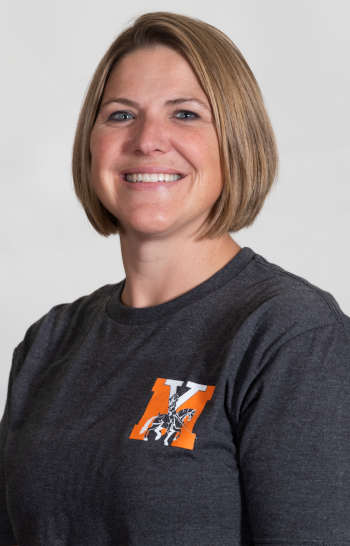
Dr. Nicki Thomas is superintendent of the Kelseyville Unified School District.
- Details
- Written by: Don Amador
Most of my personal life and professional career have been spent recreating and working on public lands in Northern California impacted by the 450,000 acre 2018 Mendocino Complex Fire and the 1 million acre-plus 2020 August Complex Fire and 2021 Dixie Fire.
I hope the following grief-related information that I have gathered since then might help affected parties in some small way cope with, and process, the devastating long-term effects these fires have on displaced families, first responders, business owners, relief workers, and many others.
The American Psychological Association, or APA, states that trauma is an emotional response to a terrible event like an accident, rape or natural disaster. Immediately after the event, shock and denial are typical. Longer term reactions include unpredictable emotions, flashbacks, strained relationships and even physical symptoms like headaches or nausea.
APA goes on to say that accidents or wildfires are typically unexpected, sudden and overwhelming. For many people, there are no outwardly visible signs of physical injury, but there can be nonetheless an emotional toll. As we are seeing, it is common for people who have experienced disaster to have strong emotional reactions.
Health professionals at the Mayo Clinic state that Post-traumatic stress disorder, or PTSD, is a mental health condition that's triggered by a terrifying event — either experiencing it or witnessing it. Symptoms may include flashbacks, nightmares and severe anxiety, as well as uncontrollable thoughts about the event.
The Mayo Clinic also states that most people who go through traumatic events may have temporary difficulty adjusting and coping, but with time and good self-care, they usually get better. If the symptoms get worse, last for months or even years, and interfere with your day-to-day functioning, you may have PTSD.
I have found the posting of stories and pictures of my experiences in the affected areas to be therapeutic. Talking with friends, colleagues, and partners are other important ways that survivors cope with PTSD.
As the LA Firestorm continues, it is important for us to exercise patience until firefighters and other 1st responders complete their assignments and understand they may be in some stage of a post wildfire traumatic stress disorder, or PWTSD.
Also, it is important for family members and friends that are outside of the burn area to understand that they too might be suffering from PWTSD.
Don Amador has been in the trail advocacy and recreation management profession for over 33 years. Amador is president of Quiet Warrior Racing LLC, co-founder and past president/CEO of the Post Wildfire OHV Recovery Alliance and co-founder and past core-team lead on FireScape Mendocino. He writes from his home in Cottonwood, California. Amador may be reached via email
- Details
- Written by: Becky Salato
Our assistant superintendent of instruction, Tim Gill, uses a business analogy to explain the dashboard. He says businesses produce products. School districts produce high school graduates. Our “product” requires a complex system that takes 13 years to complete. Ultimately, we measure the quality of efforts by our students’ ability to graduate and create the life they want for themselves, whether that be going to college or a trade school, going to work, joining the military, or something else.
The California School Dashboard is similar to a company’s quality control program. We measure indicators that let us know whether we are on track. By reviewing academic performance and the other dashboard indicators that influence a student’s ability to learn and grow, we can determine whether we need to change course.
In addition to monitoring students’ proficiency in reading, math and science, the dashboard monitors things like attendance and suspension rates. Specifically, it measures improvement. So, rather than simply looking at a point in time, we are graded on how we’re trending. That’s what determines whether we’re in the red, orange, yellow, green or blue on a scale that moves from poor performance to excellent performance. Although we can see how we compare against state averages, the dashboard is really intended as a tool to help every district focus on how it is doing compared to its own previous achievement.
While we have plenty left to do, this year’s dashboard shows that the work we’re doing is having the desired effect. We are getting better at getting better. When I arrived at Konocti Unified five years ago, I saw a district full of potential but faced with some significant challenges. Working with the team, we created a five-year plan to improve our academic standing. We became laser-focused on implementing new curriculum, investing in our teachers, and holding ourselves to a higher standard. By the time the pandemic hit, our mindset was already geared toward overcoming adversity, which helped us manage the disruption of COVID better than some.
Five years ago, Konocti Unified had the lowest scores of any Lake County public school district for English language arts (reading), math, and science. Now, we are competitive in all three, and more importantly, we’re trending upward.
Some of the measures we’re most proud of are the reduction in chronic absenteeism and the increase in our graduation rates. For the last two years, we’ve decreased chronic absenteeism by 7% per year, and we’ve increased our graduation rates by 7% last year and 8% this year. (Clearly, when kids are not at school, they do not learn as well.) While 7% might not seem like a big number, getting any movement in some of these scores can be really hard. I’m super proud of our team.
Given our trend lines, I’m more dedicated than ever to staying the course, following the goals laid out in our five-year plan. At the elementary level, we’ve adopted the Science of Reading, and the results are impressive. Even teachers who were initially skeptical are saying things like, “In all my years of teaching, I’ve never seen students make progress this fast.”
Literacy affects learning in every subject. Many states are so impressed with the Science of Reading, they are requiring public schools to use it. (It’s not required in California but it has been adopted by many districts with great success.) The approach is based on brain science and years of proven results. Not only does it teach reading based on phonics (the sounds letters make), but we’re no longer teaching to the middle and hoping students at the top and bottom can figure it out.
The Science of Reading curriculum includes grade-level classroom instruction for all students, plus at least 45 minutes per day of individual instruction based on the specific skill gaps of the student. For example, if a second-grader is struggling with how to sound out a certain letter or group of letters, she can get intensive practice on those specific letters and groupings until she masters them.
We’ve had this new curriculum in place for a few years now, so it makes sense that our academic scores are improving. I think they will continue to climb, and quickly, because some of our most intensive work is in the earliest grades (K-3); yet, we don’t start state testing students until third grade. Next year’s third graders will have had three years of preparation with the Science of Reading curriculum.
So, while our overall numbers remain below state averages in many areas, our trend lines fill me with confidence. Change takes time; no one can double or triple their reading proficiency overnight. As long as we keep making significant progress toward our goals, I’ll call that a win.
In spite of challenges like teacher shortages, inadequate budgets, and a growing student population, we remain convinced we can continually improve our “product”--that we can prepare students to be productive and engaged citizens as they mature into adulthood.
As long as we maintain a system that works for students of all skill levels, we can’t go wrong. As a rule, high-performing districts preserve their focus over time, while low-performing districts bounce from program to program looking for quick fixes. (It’s like weight loss: those who reduce their calories and increase their activity over time tend to be able to achieve and maintain a healthy weight. Those who follow fad diets tend to yo-yo up and down and never achieve sustained success.)
During this winter break, I wish everyone a joyful holiday and the team at Konocti Unified looks forward to continuing to support our students when they return to the classroom in January.
Becky Salato is superintendent of Konocti Unified School District.
- Details
- Written by: Dr. Nicki Thomas
We cannot always choose our circumstances, but we can choose how we respond. If you’re looking for a happiness hack, try focusing on gratitude and appreciation.
A stoic philosopher named Epictetus who lived in first-century Rome believed happiness and freedom begin with a clear understanding of one principle: some things are within our control, and some things are not.
Probably the most important thing in our power is our mindset — that is, how we choose to approach life. When we go through life practicing gratitude and showing appreciation, we feel happier (and we often make others happier, too).
Gratitude is a feeling of thankfulness within yourself. Appreciation is something you extend to others. When we consistently focus on the positive aspects in any situation, we train our brains to look for what’s possible instead of what’s not. And when we let others know how they’ve made our lives better, we reinforce those actions and build strong connections with each other.
Turns out that practicing gratitude not only lifts our mood, it can make us physically healthier. According to Harvard University Health, recent research shows that more gratitude leads to greater emotional and social well-being, better sleep quality, lower depression risks, and favorable markers of cardiovascular health.
The holidays are a wonderful time to start a gratitude practice for both kids and adults. Here are some ideas to get you started.
Gratitude jar
Create a regular ritual of having everyone in the family jot down something they are grateful for on a slip of paper and putting it in a mason jar. Every so often, pull the slips and read them together.
Daily dinner-time routine
Before starting dinner, have each person share something from the day that they’re grateful for or share something they appreciate about someone at the table.
Gratitude journal
This could be a bedtime routine, ending the day by writing something good that happened that day or something to be thankful for in general. If children are not old enough to write, parents can write for them. If children have a hard time coming up with things to be grateful for, parents can make a few suggestions (e.g., how good it feels to be in a cozy bed or the wonderful smell of the earth after it rains).
At Kelseyville Unified School District, we encourage students to share their appreciation for each other–and we do the same as adults. In the classroom, some teachers do “shout outs” encouraging students to share their appreciation for each other out loud. And school staff use tokens to acknowledge students. This shows appreciation for students who make good choices and are a positive influence on campus.
For our staff, each month we present a Knight in Shining Armor award to teachers and other employees based on nominations from their coworkers. I feel really lucky to work in this district, where it often feels more like a big family than a workplace.
There are plenty of books and games that teach children (and the rest of us) about gratitude. Visit healthyhappyimpactful.com/gratitude-activities-for-kids for more ideas. If you’re a teacher, check out weareteachers.com/meaningful-gratitude-activities for gratitude activities you can do in the classroom.
Dr. Nikki Thomas is superintendent for Kelseyville Unified School District.