 How to resolve AdBlock issue?
Business News
- Details
- Written by: Editor
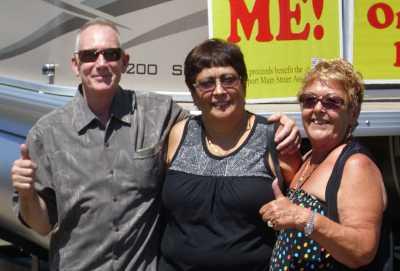
LAKEPORT, Calif. – The Lakeport Main Street Association has announced the winners of its boat raffle.
Paul and Rosa Bergeron of Lakeport were the winners at the drawing, held just before the fireworks at Lakeport’s July 4 event in Library Park.
The Bergerons have resided in Lakeport for over 25 years. They operated Paul’s Footwear and Repair and Lakeport Family Shoe Repair before Paul retired. Rosa works for Safeway.
They were among the original organizers of the Lakeport Main Street Association when it was formed and have spent many years working and serving the community of Lakeport.
“When I bought the tickets for the boat raffle, I told my family that, win or lose, it’s important to support the Lakeport Main Street Association,” Paul Bergeron said.
The Lakeport Main Street Association works to promote a healthy and vibrant downtown.
The association expressed its appreciation to all who purchased tickets for the boat raffle.
- Details
- Written by: Editor
SACRAMENTO – State Controller John Chiang has released his monthly report covering California’s cash balance, receipts and disbursements in June 2013.
Total revenues for the month equaled $13.1 billion, beating the governor’s May Revision estimate by $1.2 billion (10.1 percent).
Total revenues for the fiscal year ending June 30 were $100.1 billion, topping estimates by $2.0 billion (2.0 percent).
“Rising employment, economic expansion and voter-approved tax increases have generated revenues outperforming even the rosiest of projections,” said Chiang. “However, California’s history of boom or bust revenue cycles should be a cautionary tale that informs our spending decisions and incentivizes policymakers to prudently pay down accumulated debt.”
The state ended the 2011-12 fiscal year with a cash deficit of $9.6 billion, and by June 30, 2013, that cash deficit narrowed to $2.4 billion. The cash deficit is being covered by internal borrowing from special funds.
Personal income taxes for June came in $644.6 million above (8.7 percent) monthly estimates outlined in the governor’s May Revision.
Corporate taxes for June were $373.5 million above (21.5 percent) monthly estimates, while sales tax receipts were $70.1 million above (3.5 percent) estimates.
The controller offered a day-by-day accounting of these collections through a new June revenue tracker feature on his Web site, http://sco.ca.gov/june_2013_revenue_tracker.html .
For more news, please follow the Controller on Twitter at @CAController, and on Facebook at California State Controller’s Office.
- Details
- Written by: Editor
As the midway point in the current period of extremely hot weather in Southern California and the hottest days forecast for Northern California approach, state officials urge companies employing people who work outdoors to make sure working conditions are safe.
“As hot as it's been in many areas of Southern California the past few days, forecasters at the National Weather Service say we are in store for at least a few more days with temperatures that are 10 to 20 degrees higher than normal for this time of year and that today and tomorrow will be the hottest days for Northern California,” said California Office of Emergency Services Director Mark Ghilarducci.
Cal OES and its partner agencies continue to implement actions outlined under the “Heat Alert” phase of the state's Contingency Plan for Excessive Heat Emergencies.
“We continue to work closely with our local, state and federal partners, including the National Weather Service, to make sure everyone is aware of the weather conditions throughout California and prepared to support any requests for resources and assistance from local agencies serving the affected communities,” said Ghilarducci.
Ghilarducci and Christine Baker, director of the California Department of Industrial Relations (DIR), emphasized the importance for all employers, particularly those with people working outdoors during the hottest periods of the day, to make workers' safety their top priority.
“It's essential that all employers with outdoor workers continue to ensure that their employees have a safe working environment by providing rest periods, water and shade during periods of extremely hot weather,” said Baker.
Representatives from DIR's Division of Occupational Safety and Health (Cal/OSHA) “will remain out in force and make sure employers are complying with state heat illness prevention regulations,” said Cal/OSHA Chief Ellen Widess. “Employers should take steps to acclimatize their workers to the excessive heat conditions.”
Under current California law, all employers with outdoor workers must take the following actions to ensure the health and safety of employees who work outdoors:
- Train all employees and supervisors about heat illness prevention before work begins.
- Provide plenty of cool, fresh water and encourage employees to drink water frequently.
- Provide a readily accessible shaded area for workers to take a cool down recovery break, and provide rest breaks when workers request them.
- Ensure that workers are given enough time to adjust, or “acclimatize” to the heat. This is especially important for new workers and for all workers during a sudden heat wave. This step can mean the difference between life and death.
- Prepare an emergency heat illness prevention plan for the worksite, with training for supervisors and workers on the steps to take if a worker shows signs or symptoms of heat illness.
Because workers are at higher risk of heat-related illness when the temperature reaches 95 degrees, employers and supervisors are also required to implement the special “High Heat” procedures:
- Observe workers for signs and symptoms of heat illness.
- Remind workers to drink water frequently.
- Provide close supervision of workers in the first 14 days of their employment (to ensure acclimatization).
- Have effective communications systems in place to be able to summon emergency assistance if necessary.
- Ensure effective emergency procedures in place in case workers become ill.
- Employers may want to adjust work schedules to avoid the peak heat times of the day. In all cases, employers need to be extremely vigilant.
Additional information on preparing for heat-related emergencies is available at http://www.calema.ca.gov/PlanningandPreparedness/Pages/Heat.aspx , http://www.bepreparedcalifornia.ca.gov/beinformed/naturaldisasters/extremeheat/Pages/ExtremeHeat.aspx and http://www.dir.ca.gov/dosh/HeatIllnessInfo.html .
- Details
- Written by: Editor
The California State Board of Food and Agriculture will address the status of local fairs at its upcoming meeting on Tuesday, July 9, in Sacramento.
The meeting will be held from 10 a.m. to 3 p.m. at the California Department of Food and Agriculture, 1220 N St., Main Auditorium, Sacramento.
“California’s fairs are an integral part of this state’s agricultural heritage,” said CDFA Secretary Karen Ross. “From the annual exhibitions to year-round community based activities – fairs continue to help educate and entertain. They remain an important and productive part of our local communities.”
In 2011, funding for California’s fairs was eliminated as part of the state’s budgetary savings. This $32 million reduction in funding repositioned how fairs operate.
California’s fair network consists of 80 fair organizations, including District Agricultural Associations, citrus fruit fairs, other local fairs, and the California State Fair.
This meeting provides an opportunity for stakeholders to provide an update on California’s fairs and discuss the changes and initiatives that are occurring at the local level.
Invited speakers include: Stephen Chambers, Western Fairs Association; Becky Bailey-Findley, California Fair Services Authority; Christopher Korby, California Authority of Racing Fairs; Rick Pickering, California Exposition & State Fair; Tim Fennell, Del Mar Fairgrounds; Dannette DePaul, Modoc District Fair; and representatives from the Fresno, Dixon and Calaveras fairs. Additional speakers include representatives from CDFA’s Division of Fairs & Expositions.
“California’s fair season is in full swing and thousands of individuals across this state are seeing livestock exhibits and horse racing while enjoying classic fair food,” said Craig McNamara, president of the California State Board of Food and Agriculture. “California’s fair industry is vibrant and resilient and we look forward to seeing what the future holds for this cultural icon of the Golden State.”
The California State Board of Food and Agriculture advises the governor and the CDFA secretary on agricultural issues and consumer needs. The state board conducts forums that bring together local, state and federal government officials, agricultural representative and citizens to discuss current issues of concern to California agriculture.
Follow the board on Twitter at www.twitter.com/Cafood_agboard .