 How to resolve AdBlock issue?
News
Lake County is among the 13 listed by Ma as being the recipients of the assistance.
The federal credits, carried by Rep. Mike Thompson, D-Napa, and approved by the federal government in December, are intended to finance housing projects in 13 counties struck by wildfires in 2017 and 2018, including the Camp fire, the Tubbs fire, the Thomas fire and the Mendocino Complex.
In addition to Lake, the counties are Butte, Los Angeles, Mendocino, Napa, Nevada, Orange, San Diego, Santa Barbara, Shasta, Sonoma, Ventura and Yuba.
“We want to make it crystal clear that these tax credits are going to help counties that have been devasted by disasters,” said Treasurer Ma. “I salute the resilience, dedication and creativity of these communities and I’m glad we can help them rebuild.”
State Senator Mike McGuire, D-Santa Rosa, thanked Treasurer Ma for her efforts. McGuire represents Lake County in the State Senate.
“This $100 million in tax credits will be a huge shot in the arm for the rebuilding of our communities and desperately needed affordable housing,” McGuire said. “We’re incredibly grateful to Treasurer Ma for moving so fast and ensuring the tax credits will be spent as intended – in the 13 counties devastated by these massive wildfires. We are also truly appreciative of the leadership of Congressmen Thompson and Huffman, who have been fighting to make this allocation a reality for over a year now.”
“It is critically important that our communities that have been hit hard by wildfires have all of the resources they need to rebuild and recover, which is why I carried legislation to provide $100 million in new federal tax credits to help create much needed affordable housing in disaster-stricken counties,” said Rep. Thompson. “I greatly appreciate Treasurer Ma’s commitment to ensuring that this assistance is allocated as Congress intended so that those displaced by wildfires can have access to affordable housing.”
In response to public comments finding the regulations unclear, CTCAC is revising regulations to give projects in the 13 counties two years to seek credits for housing projects.
Under federal regulations, the credits must be used within two years or lost. If there are any unused credits at the end of 2021, to avoid losing them, the new regulations allow projects seeking to house the homeless to apply.
The revised regulations would exempt communities hit by disaster from the typical 9 percent tax credit rules, which reward projects located close to amenities such as shopping, libraries and parks.
CTCAC is also working to develop regulations to ensure that the disaster areas occurring in large or wealthy counties are not given an unfair advantage over disaster areas in smaller counties or in counties with fewer people.
More information is available here.
The company said the plan expands and enhances its comprehensive Community Wildfire Safety Program, which was designed to address the growing threat of extreme weather and wildfires across its service area.
PG&E’s 2020 Wildfire Mitigation Plan is subject to public review and approval by the CPUC.
The 2020 Wildfire Mitigation Plan will continue expanded key safety work including new grid technology, hardening of the electric system, accelerated inspections of electric infrastructure, enhanced vegetation management around power lines, and real-time monitoring and situational awareness tools to better understand how severe weather can impact PG&E’s system.
PG&E’s 2020 plan includes changes to make public safety power shutoff, or PSPS, events smaller in scope and shorter in duration and to lessen the overall impacts of shutoffs while working to keep customers and communities safe during times of severe weather and high wildfire risk.
As part of the plans, PG&E said it is installing 592 automated sectionalizing devices on distribution lines with the aim of reducing the number of communities without power during a PSPS event and adding 23 transmission switches capable of redirecting power and keeping substations and transmission lines energized in some areas during a PSPS event.
The company said it also will work with local communities to operationalize additional microgrids that will allow customers and essential community services to stay energized during a PSPS event, it will expand its ability to provide backup power to some critical service providers, such as major transportation thoroughfares, water systems, medical centers and fire departments, and enhance meteorology technology for more precise PSPS events.
Other plans include increasing its helicopter fleet from 35 to 65 to patrol lines after a weather event has passed, using two fixed-wing aircrafts with infrared cameras capable of inspecting transmission lines at night, deploying additional field crews to patrol, inspect and repair power lines after a weather event has passed, and working closely with local, state and tribal officials to better coordinate for PSPS events.
The company said it will bolster its website and call center resources and continue to make improvements to information and resources available, will improve customer notifications about when power will be shut off for safety and when customers can expect it to be restored, work with local communities to improve the locations, availability and resources provided at community resource centers, and hosting a series of information open houses and webinars to provide information to customers and communities about systematic improvements and PSPS preparedness.
“We know how much our customers rely on electric service. Proactively turning off power disrupts lives and presents its own safety risks, which need to be carefully considered and addressed,” said Debbie Powell, vice president, asset & risk management, Community Wildfire Safety Program. “Turning off power for safety is not how we strive to serve our customers, and we are committed to reducing the impacts without compromising safety.”
PG&E’s 2020 Wildfire Mitigation Plan describes forecasted work and investments that will be executed this year to help further reduce the potential for wildfire ignitions associated with its electrical equipment in high fire-threat areas.
The plan addresses an array of wildfire risk factors through new and ongoing measures.
Among the safety steps and actions to be taken this year include:
– Pruning or removing more than one million trees to keep them away from power lines;
– Installing more than 240 miles of stronger and more resilient poles and covered power lines, along with targeted undergrounding;
– Adding approximately 400 new weather stations this year, which will keep PG&E on track to add a total of 1,300 new weather stations by 2021, a density of one station roughly every 20 circuit-miles in the high fire-risk areas;
– Installing nearly 200 new, high-definition cameras in high fire-threat areas, which will keep PG&E on track to add a total of 600 by 2022, increasing coverage across high fire-risk areas to more than 90 percent of its service area; and
– Coordinating prevention and response efforts by monitoring wildfire risks in real-time from the Wildfire Safety Operations Center.

Scientists have discovered over 4,000 exoplanets outside of our Solar System, according to NASA’s Exoplanet Archive.
Some of these planets orbit multiple stars at the same time. Certain planets are so close to their star that it takes only a handful of days to make one revolution, compared to the Earth which takes 365.25 days. Others slingshot around their star with extremely oblong orbits, unlike the Earth’s circular one. When it comes to how exoplanets behave and where they exist, there are many possibilities.

And yet, when it comes to sizes of planets, specifically their mass and radius, there are some limitations. And for that, we have physics to blame.
I am a planetary astrophysicist and I try to understand what makes a planet able to support life. I look at the chemical connection between stars and their exoplanets and how the interior structure and mineralogy of different sized planets compare to each other.

Rocky versus gaseous planets
In our Solar System, we have two kinds of planets: small, rocky, dense planets that are similar to Earth and large, gaseous planets like Jupiter. From what we astrophysicists have detected so far, most planets fall into these two categories.
In fact, when we look at the data from planet-hunting missions such as the Kepler mission or from the Transiting Exoplanet System Satellite, there is a gap in the planet sizes. Namely, there aren’t many planets that fulfill the definition of a “super-Earth,” with a radius of one and a half to twice Earth’s radius and a mass that is five to 10 times greater.
So the question is, why aren’t there any super-Earths? Why do astronomers only see small rocky planets and enormous gaseous planets?
The differences between the two kinds of planets, and the reason for this super-Earth gap, has everything to do with a planet’s atmosphere – especially when the planet is forming.
When a star is born, a huge ball of gas comes together, starts to spin, collapses in on itself and ignites a fusion reaction within the star’s core. This process isn’t perfect; there is a lot of extra gas and dust left over after the star is formed. The extra material continues to rotate around the star until it eventually forms into a stellar disk: a flat, ring-shaped collection of gas, dust, and rocks.
During all of this motion and commotion, the dust grains slam into each other, forming pebbles which then grow into larger and larger boulders until they form planets. As the planet grows in size, its mass and therefore gravity increases, allowing it to capture not only the accumulated dust and rocks – but also the gas, which forms an atmosphere.
There is lots of gas within the stellar disk – after all, hydrogen and helium are the most common elements in stars and in the universe. However, there is considerably less rocky material because only a limited amount was made during star formation.

The trouble with super-Earths
If a planet remains relatively small, with a radius less than 1.5 times Earth’s radius, then its gravity is not strong enough to hold onto a huge amount of atmosphere, like what’s on Neptune or Jupiter. If, however, it continues to grow larger, then it captures more and more gas which forms an atmosphere that causes it to swell to the size of Neptune (four times Earth’s radius) or Jupiter, 11 times Earth’s radius.
Therefore, a planet either stays small and rocky, or it becomes a large, gaseous planet. The middle ground, where a super-Earth might be formed, is very difficult because, once it has enough mass and gravitational pull, it needs the exact right circumstances to stop the avalanche of gas from piling onto the planet and puffing it up. This is sometimes referred to as “unstable equilibrium” – such that when a body (or a planet) is slightly displaced (a little bit more gas is added) it departs further from the original position (and becomes a giant planet).
Another factor to consider is that once a planet is formed, it doesn’t always stay in the same orbit. Sometimes planets move or migrate towards their host star. As the planet gets closer to the star, its atmosphere heats up causing the atoms and molecules to move very fast and escape the planet’s gravitational pull. So some of the small rocky planets are actually the cores of bigger planets that have been stripped of their atmosphere.
So, while there are no super huge rocky planets or small fluffy planets, there is still a huge amount of diversity in planet sizes, geometries and compositions.
[ You’re smart and curious about the world. So are The Conversation’s authors and editors. You can get our highlights each weekend. ]
Natalie Hinkel, Planetary Astrophysicist, Senior Research Scientist at the Southwest Research Institute and Co-Investigator for the Nexus for Exoplanet System Science (NExSS), Arizona State University
This article is republished from The Conversation under a Creative Commons license. Read the original article.
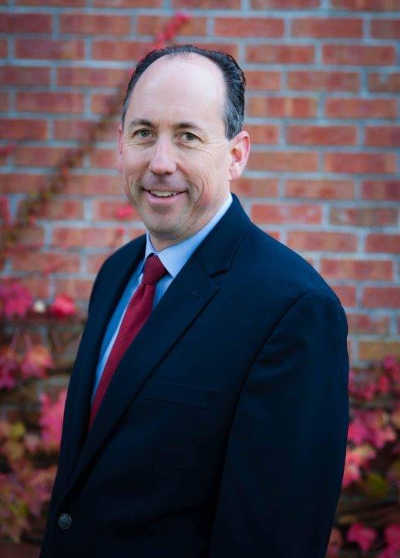
LAKE COUNTY, Calif. – A Lake County Superior Court judge is asking for the community’s support of his election to his first full term this spring, which he’s pursuing as a write-in candidate.
Incumbent Judge J. David Markham is running in the March 3 election to continue serving in the position of Lake County Superior Court judge.
“I want to confirm categorically that I am indeed running to retain my position as a judge,” said Markham.
He serves as assistant presiding judge, with his primary assignment being the felony case calendars.
A well-known Lake County attorney, Markham practiced law for 17 years before he was appointed to the bench by Gov. Brown in 2017 to fill the unexpired term of retiring Judge Richard Martin. He was sworn in at a February 2018 ceremony.
Markham’s seat is up for election on the March ballot. Judge’s seats are elected for six-year terms.
An incumbent judge seeking another term isn’t out of the ordinary, but Markham’s approach as a write-in is different.
“Due to a combination of factors, there was a failure in the filing notification process,” said Markham.
Specifically, with the presidential primary now falling in March, rather than June, filing deadlines are months earlier. Expecting to file early this year, Markham missed the earlier Dec. 6 filing deadline.
“Therefore, even though I am unopposed for the office of Superior Court judge, I am required to conduct a write-in campaign in the March 3 election,” he said.
Running as a write-in candidate has its own unique requirements, according to the California Secretary of State’s Office.
While the declaration of candidacy and nomination paper filing period ended on Dec. 6 for most candidates – with the exception of those in races where the incumbent didn’t file, which was extended several days – write-in candidates have from Jan. 6 to Feb. 18 to submit their statement of write-in candidacy and nomination papers.
Interim Lake County Registrar of Voters Diane Fridley confirmed to Lake County News on Thursday that Markham has fulfilled those requirements.
Write-in candidates such as Markham must also educate the voting public about how the voting process works for them.
Due to no one having submitted papers by the December deadline, no candidates’ names will be printed on the ballot.
So voters need to understand that they must write in the candidate’s name in the blank box next to the office of Lake County Superior Court judge on the ballot and then check the box next to the name.
Markham said he’s already received commitments from dozens of local volunteers to assist with his write-in campaign.
There is precedent for a write-in candidate to win a local race. In fact, the only time it’s been done in decades was when Betty Irwin ran for justice court judge of the Clearlake-Highlands Judicial District in 1982, according to Fridley.
Fridley said Irwin received enough votes in that year’s primary to finish in the top two vote-getters, which earned her a place on the ballot on Nov. 2, 1982. Ultimately, Irwin won the race and took office in 1983.
Markham said he is not accepting any monetary donations. “There are other causes in Lake County that can use your money,” he said, asking instead that people help him by sharing word of his write-in campaign.
For more information about Markham visit his website.
Email Elizabeth Larson at

LAKE COUNTY, Calif. – February is National Children’s Oral Health Month, a time to share and promote the benefits of healthy teeth in children and families.
Implementing healthy habits early in childhood can contribute to healthy behaviors in the future.
The Lake County Health Services Department’s Oral Health Program is kicking off the month by promoting, “Tips to a Healthy Smile,” listing key points to healthy habits:
– Brushing teeth twice a day;
– Flossing daily;
– Eating healthy foods;
– Drinking water; and
– Seeing a dentist regularly all help keep a healthy smile for life.
In Lake County, about two out of five elementary school children have untreated decay, higher than the state average.
In response to this, the Oral Health Program is focusing on improving children’s oral health.
The program is implementing strategies to decrease this rate primarily through prevention and education.
During National Children’s Oral Health Month, program staff will be providing oral health education at various locations across the county.
For National Children’s Oral Health Month, the Oral Health Program will also be distributing free fluoridated toothpaste throughout the county. Using fluoridated toothpaste is one of the ways to prevent tooth decay.
In addition, the Oral Health Program has recently provided Oral Health kits – which include fluoridated toothpaste, toothbrushes and floss – to Lake County AmeriCorps for use in their state preschool health and social-emotional curriculum.
This curriculum was created through partnership between the Lake County Office of Education, First 5 Lake County and the Lake County AmeriCorps program.
This collaboration includes weekly lessons on oral health, nutrition, exercise, hygiene, safety, and kindergarten readiness, and will be continuing for the remainder of the school year.
AmeriCorps members incorporate in-home participation by sending parents/guardians informational flyers to spark conversation with their children on lessons taught in the classroom.
For more information on the Lake County Oral Health Program, please visit http://health.co.lake.ca.us/Community/OralHealth.htm or call 707-263-1090.
The County of Lake’s Oral Health Program is funded by the California Department of Public Health, under contract #17-10696.
To learn more about Lake County AmeriCorps’ commitment to education, visit www.lakecoe.org/AmeriCorps .
This service will provide more rapid results than currently available and help to inform public health action and medical care for people who may have been exposed to novel coronavirus.
Results from the Centers for Disease Control and Prevention currently take between two to seven days.
The Public Health Department lab anticipates it will be able to conduct testing beginning Wednesday, Feb. 12, and report results within two days of specimen receipt.
Meanwhile, CDPH’s local partners are also expected to be able to conduct tests within a couple of weeks.
“The California Department of Public Health laboratory is proud to be a part of this statewide network to provide novel coronavirus testing. This will support state and local public health departments and health care providers that are working to protect the health of the people of California,” said Dr. Sonia Angell, California Department of Public Health director and state health officer. “Providing this test in California will deliver more rapid test results to improve care of persons who may be sick with this new virus.”
To date, based on testing carried out by the CDC, the California Department of Public Health confirms six individuals have tested positive for novel coronavirus 2019 in California: two people in Santa Clara County, two people in San Benito County, one person in Los Angeles County and one person in Orange County.
Currently, the immediate health risk from novel coronavirus 2019 to the general public is low. California is carefully assessing the situation as it evolves.
The California Department of Public Health considers this a very important public health event and we are providing updates to partners across the state to support their preparedness efforts.
CDPH said it is very important that people who have recently traveled and who become ill to notify their health care provider of their travel history. Those who have recently traveled to China or who have had contact with a person with possible novel coronavirus infection should contact their local health department or health care provider.
The California Department of Public Health has been prepared and is continuing with the following actions:
– Providing information about the outbreak and how to report suspect cases to local health departments and health care providers in California.
– Coordinating with CDC personnel who are doing screening of travelers from China at SFO and LAX.
– Assuring that health care providers know how to safely manage persons with possible novel coronavirus 2019 infection.
– Activating the Department of Public Health’s Emergency Operations Center to coordinate response efforts across the state.
As with any virus, especially during the flu season, officials remind people there are a number of steps they can take to protect their health and that of those around them. Such steps include:
– Washing hands with soap and water.
– Avoiding touching eyes, nose or mouth with unwashed hands.
– Avoiding close contact with people who are sick.
– Staying away from work, school or other people if you become sick with respiratory symptoms like fever and cough.
For more information about novel coronavirus 2019, please visit the CDPH website.