 How to resolve AdBlock issue?
News
Dogs available for adoption this week include mixes of Australian Shepherd, bull terrier, fox terrier, Labrador Retriever, pit bull, Rhodesian Ridgeback and terrier.
Dogs that are adopted from Lake County Animal Care and Control are either neutered or spayed, microchipped and, if old enough, given a rabies shot and county license before being released to their new owner. License fees do not apply to residents of the cities of Lakeport or Clearlake.
If you're looking for a new companion, visit the shelter. There are many great pets hoping you'll choose them.
The following dogs at the Lake County Animal Care and Control shelter have been cleared for adoption (additional dogs on the animal control Web site not listed are still “on hold”).

‘Goofy’
“Goofy” is getting top billing this week, as he’s been waiting a long time for a new home – since the start of November, after he was found on the highway in Clearlake.
He is a young male Rhodesian Ridgeback with a short tan and black coat.
Shelter staff said this boy is great with other dogs, although he is high energy and would benefit from obedience training. He would love to go jogging every day, he is very food motivated and willing to learn new things.
He’s in kennel No. 33, ID No. 13210.

Male Australian Shepherd
This young male Australian Shepherd has a tricolor coat and brown eyes.
He is in kennel No. 8, ID No. 13550.

Male pit bull terrier
This male pit bull terrier has a short brindle coat and brown eyes.
He is in kennel No. 10, ID No. 13507.

Female pit bull-Labrador Retriever mix
This young female pit bull-Labrador Retriever mix has a short black coat and brown eyes.
She is in kennel No. 12, ID No. 13555.

Male pit bull terrier
This male pit bull terrier has a short blue and white coat and brown eyes.
He is in kennel No. 15, ID No. 13546.

‘Luna’
“Luna” is a female husky with a medium-length gray and white coat and blue eyes.
She has already been spayed.
She is in kennel No. 16, ID No. 13540.

‘Ricky’
“Ricky” is a male pit bull terrier with a short red coat and green eyes.
He already has been neutered.
He’s in kennel No. 18, ID No. 4850.

‘Hank’
“Hank” is a male bull terrier-Labrador Retriever mix with a short brown and white coat and gold eyes.
He’s in kennel No. 20, ID No. 13510.

Male and female fox terriers
These two fox terriers, one male, one female, have short brown and white coats and brown eyes.
The female is in kennel No. 22a, ID No. 13528; the male is in kennel No. 22b, ID No. 13530.

‘Nook’
“Nook” is a female hound mix with a short tricolor coat and brown eyes.
She has already been spayed.
She is in kennel No. 23, ID No. 11790.

Male husky
This young male husky has a long white coat and blue eyes.
Shelter staff said he was found at Lower Lake High School.
He is in kennel No. 26, ID No. 13529.

‘Butter’
“Butter” is a female terrier with a long tricolor coat and brown eyes.
She’s in kennel No. 31A, ID No. 13534.

‘Chase’
“Chase” is a male husky-pit bull terrier mix with a short tan coat and blue eyes.
He is in kennel No. 32, ID No. 13541.
Lake County Animal Care and Control is located at 4949 Helbush in Lakeport, next to the Hill Road Correctional Facility.
Office hours are Monday through Friday, 11 a.m. to 5 p.m., and 11 a.m. to 3 p.m., Saturday. The shelter is open from 11 a.m. to 4 p.m., Monday through Friday and on Saturday from 11 a.m. to 3 p.m.
Visit the shelter online at http://www.co.lake.ca.us/Government/Directory/Animal_Care_And_Control.htm.
For more information call Lake County Animal Care and Control at 707-263-0278.
Email Elizabeth Larson at

Can the feared anthrax toxin become an ally in the war against cancer? Successful treatment of pet dogs suffering bladder cancer with an anthrax-related treatment suggest so.
Anthrax is a disease caused by a bacterium, known as Bacillus anthracis, which releases a toxin that causes the skin to break down and forms ulcers, and triggers pneumonia and muscle and chest pain. To add to its sinister resumé, and underscore its lethal effects, this toxin has been infamously used as a bioweapon.
However, my colleagues and I found a way to tame this killer and put it to good use against another menace: bladder cancer.
I am a biochemist and cell biologist who has been working on research and development of novel therapeutic approaches against cancer and genetic diseases for more than 20 years. Our lab has investigated, designed and adapted agents to fight disease; this is our latest exciting story.
Pressing needs
Among all cancers, the one affecting the bladder is the sixth most common and in 2019 caused more than 17,000 deaths in the U.S. Of all patients that receive surgery to remove this cancer, about 70% will return to the physician’s office with more tumors. This is psychologically devastating for the patient and makes the cancer of the bladder one of the most expensive to treat.
To make things worse, currently there is a worldwide shortage of Bacillus Calmette-Guerin, a bacterium used to make the preferred immunotherapy for decreasing bladder cancer recurrence after surgery. This situation has left doctors struggling to meet the needs of their patients. Therefore, there is a clear need for more effective strategies to treat bladder cancer.
Anthrax comes to the rescue
Years ago scientists in the Collier lab modified the anthrax toxin by physically linking it to a naturally occurring protein called the epidermal growth factor (EGF) that binds to the EGF receptor, which is abundant on the surface of bladder cancer cells. When the EGF protein binds to the receptor – like a key fits a lock – it causes the cell to engulf the EGF-anthrax toxin, which then induces the cancer cell to commit suicide (a process called apoptosis), while leaving healthy cells alone.
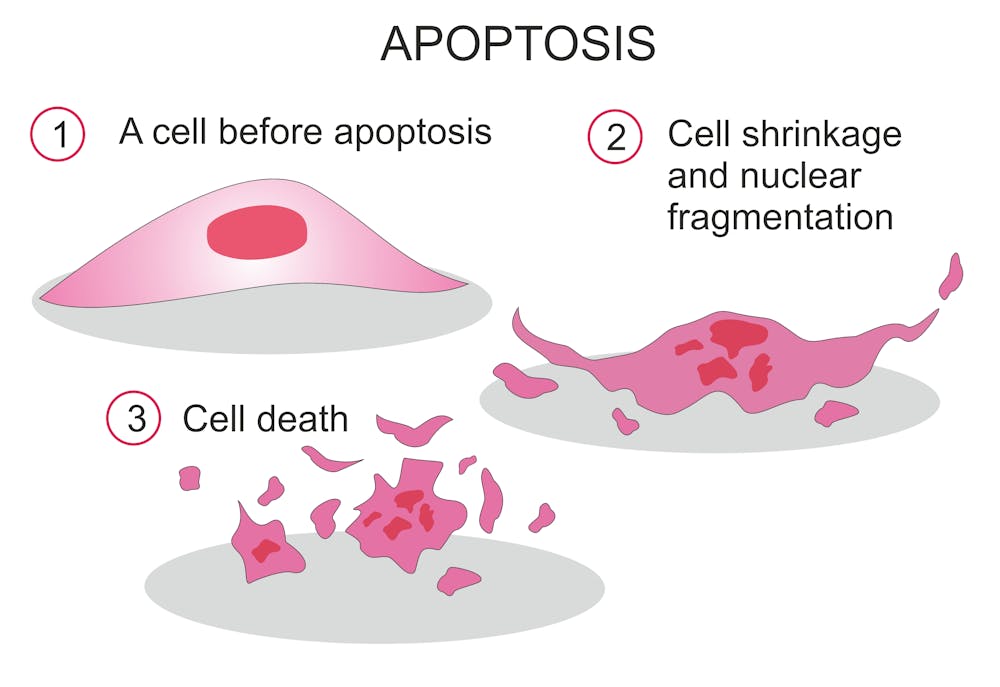
In collaboration with colleagues at Indiana University medical school, Harvard University and MIT, we designed a strategy to eliminate tumors using this modified toxin. Together we demonstrated that this novel approach allowed us to eliminate tumor cells taken from human, dog and mouse bladder cancer.
This highlights the potential of this agent to provide an efficient and fast alternative to the current treatments (which can take between two and three hours to administer over a period of months). I also think it is good news is that the modified anthrax toxin spared normal cells. This suggests that this treatment could have fewer side effects.
Helping our best friends
These encouraging results led my lab to join forces with Dr. Knapp’s group at the Purdue veterinary hospital to treat pet dogs suffering from bladder cancer.
Canine patients for whom all available conventional anti-cancer therapeutics were unsuccessful were considered eligible for these tests. Only after standard tests proved the agent to be safe in laboratory animals, and with the consent of their owners, six eligible dogs with terminal bladder cancer were treated with the anthrax toxin-derived agent.
Two to five doses of this medicine, delivered directly inside the bladder via a catheter, was enough to shrink the tumor by an average of 30%. We consider these results impressive given the initial large size of the tumor and its resistance to other treatments.
There is hope for all
Our collaborators at Indiana University Hospital surgically removed bladder cells from human patients and sent them to my lab for testing the agent. At Purdue my team found these cells to be very sensitive to the anthrax toxin-derived agent as well. These results suggest that this novel anti-bladder cancer strategy could be effective in human patients.
The treatment strategy that we have devised is still experimental. Therefore, it is not available for treatment of human patients yet. Nevertheless, my team is actively seeking the needed economic support and required approvals to move this therapeutic approach into human clinical trials. Plans to develop a new, even better generation of agents and to expand their application to the fight against other cancers are ongoing.

R. Claudio Aguilar, Associate Professor of Biological Sciences, Purdue University
This article is republished from The Conversation under a Creative Commons license. Read the original article.

NASA has selected four Discovery Program investigations to develop concept studies for new missions.
Although they’re not official missions yet and some ultimately may not be chosen to move forward, the selections focus on compelling targets and science that are not covered by NASA’s active missions or recent selections.
Final selections will be made next year.
NASA’s Discovery Program invites scientists and engineers to assemble a team to design exciting planetary science missions that deepen what we know about the solar system and our place in it.
These missions will provide frequent flight opportunities for focused planetary science investigations. The goal of the program is to address pressing questions in planetary science and increase our understanding of our solar system.
“These selected missions have the potential to transform our understanding of some of the solar system’s most active and complex worlds,” said Thomas Zurbuchen, associate administrator of NASA's Science Mission Directorate. “Exploring any one of these celestial bodies will help unlock the secrets of how it, and others like it, came to be in the cosmos.”
Each of the four nine-month studies will receive $3 million to develop and mature concepts and will conclude with a Concept Study Report. After evaluating the concept studies, NASA will continue development of up to two missions towards flight.
The proposals were chosen based on their potential science value and feasibility of development plans following a competitive peer-review process.
The selected proposals are as follows.
DAVINCI+ (Deep Atmosphere Venus Investigation of Noble gases, Chemistry, and Imaging Plus)
DAVINCI+ will analyze Venus’ atmosphere to understand how it formed, evolved and determine whether Venus ever had an ocean. DAVINCI+ plunges through Venus’ inhospitable atmosphere to precisely measure its composition down to the surface.
The instruments are encapsulated within a purpose-built descent sphere to protect them from the intense environment of Venus. The “+” in DAVINCI+ refers to the imaging component of the mission, which includes cameras on the descent sphere and orbiter designed to map surface rock-type. The last U.S.-led, in-situ mission to Venus was in 1978.
The results from DAVINCI+ have the potential to reshape our understanding of terrestrial planet formation in our solar system and beyond. James Garvin of NASA's Goddard Space Flight Center in Greenbelt, Maryland, is the principal investigator. Goddard would provide project management.
Io Volcano Observer (IVO)
IVO would explore Jupiter’s moon, Io, to learn how tidal forces shape planetary bodies. Io is heated by the constant crush of Jupiter’s gravity and is the most volcanically active body in the solar system.
Little is known about Io’s specific characteristics, such as whether a magma ocean exists in its interior. Using close-in flybys, IVO would assess how magma is generated and erupted on Io.
The mission’s results could revolutionize our understanding of the formation and evolution of rocky, terrestrial bodies, as well as icy ocean worlds in our solar system, and extrasolar planets across the universe.
Alfred McEwen of the University of Arizona in Tucson is the principal investigator. The Johns Hopkins University Applied Physics Laboratory in Laurel, Maryland would provide project management.
TRIDENT
Trident would explore Triton, a unique and highly active icy moon of Neptune, to understand pathways to habitable worlds at tremendous distances from the Sun. NASA’s Voyager 2 mission showed that Triton has active resurfacing – generating the second youngest surface in the solar system – with the potential for erupting plumes and an atmosphere.
Coupled with an ionosphere that can create organic snow and the potential for an interior ocean, Triton is an exciting exploration target to understand how habitable worlds may develop in our solar system and others.
Using a single fly-by, Trident would map Triton, characterize active processes, and determine whether the predicted subsurface ocean exists. Louise Prockter of the Lunar and Planetary Institute/Universities Space Research Association in Houston is the principal investigator. NASA’s Jet Propulsion Laboratory, or JPL, in Pasadena, California, would provide project management
VERITAS (Venus Emissivity, Radio Science, InSAR, Topography, and Spectroscopy)
VERITAS would map Venus’ surface to determine the planet’s geologic history and understand why Venus developed so differently than the Earth.
Orbiting Venus with a synthetic aperture radar, VERITAS charts surface elevations over nearly the entire planet to create three-dimensional reconstructions of topography and confirm whether processes, such as plate tectonics and volcanism, are still active on Venus.
VERITAS would also map infrared emissions from the surface to map Venus’ geology, which is largely unknown. Suzanne Smrekar of NASA’s JPL is the principal investigator. JPL would provide project management.
The concepts were chosen from proposals submitted in 2019 under NASA Announcement of Opportunity NNH19ZDA010O, Discovery Program. The selected investigations will be managed by the Planetary Missions Program Office at NASA’s Marshall Space Flight Center in Huntsville, Alabama, as part of the Discovery Program.
The Discovery Program conducts space science investigations in the Planetary Science Division of NASA’s Science Mission Directorate, guided by NASA’s agency priorities and the Decadal Survey process of the National Academy of Sciences.
Established in 1992, NASA’s Discovery Program has supported the development and implementation of over 20 missions and instruments. These selections are part of the ninth Discovery Program competition.
For more information about NASA’s planetary science, visit https://www.nasa.gov/solarsystem.

LAKE COUNTY, Calif. – The 45th Redbud Audubon Christmas Bird Count is in the books.
After reviewing and eliminating possible double-counted birds, the total species remains at 134 species reported on the 2019 Christmas Bird Count held Dec. 14.
This number is a little below average (136) over the last 22 years. The high was 153 species in 2007, and the lowest count was 122 in 2003 and 2018.
There was a reduction in birding hours this year but despite that, the total number of birds seen was 41,666, which is a bit higher than average over the last 16 years of 39,636.
The highest count is still 135,312 in 2003, a year when thousands of Western and Clarke’s grebes were on Clear Lake.
The rare birds seen this year were the tri-colored blackbird, yellow-headed blackbird and great-tailed grackle.
This is the first CBC sighting of the yellow-headed blackbird, the second CBC sighting of the great-tailed grackle, and the eighth CBC sighting of the tricolored blackbird.

Other high numbers included 71 hooded mergansers; nine greater white-fronted geese; 3,355 American white pelicans; 4,510 double-crested cormorants; 77 brown-headed cowbirds; 26 Townsend’s warblers; and three white-throated sparrows.
For the third year in a row, the Western/Clark’s grebes won the prize of the highest number with 11,754, however, this total is the lowest number counted for these species in the last six years.
Other higher-than-usual numbers include 78 ring-necked ducks (high of 61 last year); 1,966 common mergansers (1,217 last year); eight brown creepers; and 507 red-winged blackbirds.
The overall picture shows lower counts for most species.
Species with lower-than-average numbers include the following 36 species: Gadwall, American widgeon, northern shoveler, green-winged teal, canvasback, greater and lesser scaup, bufflehead, ruddy duck, wild turkey, California quail, common loon, white-tailed kite, Cooper’s hawk, American kestrel, killdeer, spotted sandpiper, California gull, herring gull, mourning dove, Nuttall’s woodpecker, northern flicker, Steller's jay, California scrub-jay, oak titmouse, Bewick’s wren, American pipit, spotted towhee, California towhee, song sparrow, white and golden-crowned sparrows, western meadowlark, house finch, lesser goldfinch and house sparrow.
The Redbud Audubon Chapter said it appreciated all the participants and their support and efforts in making the bird count as accurate and complete as possible.
The group invites community members to join in the 121st annual Christmas Bird Count and the 46th Redbud Audubon Christmas Bird Count, which will be held Saturday, Dec. 19.
Kathy Barnwell is a member of the Redbud Audubon Society.

The fire in the 7200 block of Liberty Street in Nice was first reported just before 3:20 a.m. Saturday, according to radio reports.
Northshore Fire personnel arriving at the scene minutes later reported finding a fully involved mobile home with multiple other structures threatened.
Incident command reported that the home’s residents said that everyone was out of the home and accounted for, based on radio traffic.
Firefighters found one person with third-degree burns on both hands and another with smoke inhalation. Incident command requested an air ambulance respond for the burn victim.
A short time later, Cal Fire dispatch reported receiving a request from another unit at the scene for a second air ambulance due to locating a second burn victim.
The air ambulances landed at the Sutter Lakeside Hospital’s helipad, first one from CalStar followed by one from REACH, according to radio reports.
The Northshore Fire ground ambulance with the two burn patients arrived at the landing zone just before 4:30 a.m., just head of incident command reporting that the fire had been knocked down.
Incident command estimated that firefighters would need to do a few hours of mop up.
Also responding to the scene were the Northshore Fire Support Team and Pacific Gas and Electric, according to radio traffic.
Incident command requested Red Cross respond to provide assistance for five adults and two children.
Email Elizabeth Larson at
The students began the Upward Bound program as freshmen and participated in the college preparation program and elective class for all four years of high school.
These low-income, emerging first-generation college students learned how to turn their dreams into a reality.
In fact, 87 percent of the 2019 Upward Bound seniors enrolled in college by August 2019 as college freshmen, with 55 percent being accepted to and attending four-year universities.
Upward Bound is a federally-funded outreach and student services program in the United States designed to identify and provide services for individuals from disadvantaged backgrounds.
The services are administered, funded and implemented by the U.S. Department of Education.
Sonoma State was awarded this federal funding and administers the grant program in Lake County.
The Upward Bound Program in Lake County has undoubtedly changed the college-going percentage at Lower Lake and Upper Lake High Schools.
Upward Bound began at Lower Lake High School in 2008 and, since and, since then, has impacted eight graduating classes.
Program participants are tracked for six years following high school graduation and are expected to earn a degree in that time. In 2019, the first two cohorts of Upward Bound graduated from LLHS had reached that six-year mark.
While only 49 percent of low-income students complete their degree nation-wide (PELL recipients), 57 percent of these Upward Bound students had completed a degree. Program leaders said this is remarkable for Lake County, where the average degree completion rate is 16 percent.
After graduating from schools such as UC Santa Barbara and UC Merced, many students from the 2011 and 2013 cohorts have returned to Lake County as successful social workers, teachers and accountants.
The first cohort of Upward Bound graduates from Upper Lake High School will reach their six-year mark in 2020.
Upward Bound has high expectations for its newest graduates, class of 2019, who are attending schools such as UC Berkeley, UCLA, UC Merced, Sacramento State, Chico State and many more including local community colleges.
Upward Bound program alumni and staff are working to create a nonprofit organization to give scholarships to Upward Bound seniors, for whom the finances of college are a serious barrier.
“These students have worked incredibly hard for four years to be accepted to a four-year university, and we do not want to see a lack of funds hold them back from achieving their dream,” said Program Director Shannon Smith.
For additional information or to donate to the Lake and Mendocino Upward Bound Scholarship fund, please contact Shannon Smith at 707-245-7972 or