 How to resolve AdBlock issue?
News
NASA is naming its next-generation space telescope currently under development, the Wide Field Infrared Survey Telescope, or WFIRST, in honor of Nancy Grace Roman, NASA’s first chief astronomer, who paved the way for space telescopes focused on the broader universe.
The newly named Nancy Grace Roman Space Telescope – or Roman Space Telescope, for short – is set to launch in the mid-2020s. It will investigate long-standing astronomical mysteries, such as the force behind the universe’s expansion, and search for distant planets beyond our solar system.
Considered the “mother” of NASA’s Hubble Space Telescope, which launched 30 years ago, Roman tirelessly advocated for new tools that would allow scientists to study the broader universe from space. She left behind a tremendous legacy in the scientific community when she died in 2018.
“It is because of Nancy Grace Roman’s leadership and vision that NASA became a pioneer in astrophysics and launched Hubble, the world’s most powerful and productive space telescope,” said NASA Administrator Jim Bridenstine. “I can think of no better name for WFIRST, which will be the successor to NASA’s Hubble and Webb Telescopes.”
Former Sen. Barbara Mikulski, who worked with NASA on the Hubble and WFIRST space telescopes, said, "It is fitting that as we celebrate the 100th anniversary of women’s suffrage, NASA has announced the name of their new WFIRST telescope in honor of Dr. Nancy Roman, the Mother of Hubble – well deserved. It recognizes the incredible achievements of women in science and moves us even closer to no more hidden figures and no more hidden galaxies."
Who Was Nancy Grace Roman?
Born on May 16, 1925, in Nashville, Tennessee, Roman consistently persevered in the face of challenges that plagued many women of her generation interested in science. By seventh grade, she knew she wanted to be an astronomer.
Despite being discouraged about going into science – the head of Swarthmore College’s physics department told her he usually dissuaded girls from majoring in physics, but that she “might make it” – Roman earned a bachelor’s degree in astronomy from Swarthmore in 1946 and a doctorate from the University of Chicago in 1949.
She remained at Chicago for six years and made discoveries about the compositions of stars that had implications for the evolution of our Milky Way galaxy. Knowing that her chances of achieving tenure at a university as a woman were slim at that time, she took a position at the U.S. Naval Research Laboratory and made strides in researching cosmic questions through radio waves.
Roman came to NASA in 1959, just six months after the agency had been established. At that time, she served as the chief of astronomy and relativity in the Office of Space Science, managing astronomy-related programs and grants.
“I knew that taking on this responsibility would mean that I could no longer do research, but the challenge of formulating a program from scratch that I believed would influence astronomy for decades to come was too great to resist,” she said in a NASA interview.
This was a difficult era for women who wanted to advance in scientific research. While Roman said that men generally treated her equally at NASA, she also revealed in one interview that she had to use the prefix “Dr.” with her name because “otherwise, I could not get past the secretaries.”
But she persisted in her vision to establish new ways to probe the secrets of the universe. When she arrived at NASA, astronomers could obtain data from balloons, sounding rockets and airplanes, but they could not measure all the wavelengths of light.
Earth’s atmosphere blocks out much of the radiation that comes from the distant universe. What’s more, only a telescope in space has the luxury of perpetual nighttime and doesn’t have to shut down during the day. Roman knew that to see the universe through more powerful, unblinking eyes, NASA would have to send telescopes to space.
Through Roman’s leadership, NASA launched four Orbiting Astronomical Observatories between 1966 and 1972. While only two of the four were successful, they demonstrated the value of space-based astrophysics and represented the precursors to Hubble.
She also championed the International Ultraviolet Explorer, which was built in the 1970s as a joint project between NASA, ESA (European Space Agency) and the United Kingdom, as well as the Cosmic Background Explorer, which measured the leftover radiation from the big bang and led to two of its leading scientists receiving the 2006 Nobel Prize in Physics.
Above all, Roman is credited with making the Hubble Space Telescope a reality. In the mid-1960s, she set up a committee of astronomers and engineers to envision a telescope that could accomplish important scientific goals. She convinced NASA and Congress that it was a priority to launch the most powerful space telescope the world had ever seen.
Hubble turned out to be the most scientifically revolutionary space telescope of all time. Ed Weiler, Hubble’s chief scientist until 1998, called Roman “the mother of the Hubble Space Telescope.”
“Nancy Grace Roman was a leader and advocate whose dedication contributed to NASA seriously pursuing the field of astrophysics and taking it to new heights,” said Thomas Zurbuchen, NASA’s associate administrator for science. “Her name deserves a place in the heavens she studied and opened for so many.”
What is the Roman Space Telescope?
The Roman Space Telescope will be a NASA observatory designed to settle essential questions in the areas of dark energy, exoplanets and infrared astrophysics. The telescope has a primary mirror that is 2.4 meters (7.9 feet) in diameter and is the same size as the Hubble Space Telescope's primary mirror.
The Roman Space Telescope is designed to have two instruments, the Wide Field Instrument and a technology demonstration Coronagraph Instrument. The Wide Field Instrument will have a field of view that is 100 times greater than the Hubble infrared instrument, allowing it to capture more of the sky with less observing time. The Coronagraph Instrument will perform high contrast imaging and spectroscopy of individual nearby exoplanets.
The WFIRST project passed a critical programmatic and technical milestone in February, giving the mission the official green light to begin hardware development and testing. With the passage of this latest key milestone, the team will begin finalizing the mission design by building engineering test units and models to ensure the design will hold up under the extreme conditions during launch and while in space.
NASA’s Fiscal Year 2020 Consolidated Appropriations Act funds the WFIRST program through September 2020. It is not included in the Fiscal Year 2021 budget request, as the administration wants to focus on completing the James Webb Space Telescope.
For a statement from Nancy Grace Roman’s cousins, Laura Bates Verreau and Barbara Brinker, go to https://go.nasa.gov/2WREEtz . For more information about the Roman Space Telescope, go to https://www.nasa.gov/roman .
LAKE COUNTY, Calif. – The impact of COVID-19 on employment and the economy is coming into sharper focus with the release of the latest report on California’s jobless rate, which hit a record high in April, with the latest numbers showing that Lake County’s unemployment rate has more than doubled since the pandemic's shutdown started.
The California Employment Development Department said the state’s unemployment rate rose to a record-high 15.5 percent in April, compared to the 5.5-percent rate reported in March.
California’s unemployment rate for April eclipses the previous record high rate in the current data series of 12.3 percent at the height of the Great Recession – March, October, and November of 2010.
“The unprecedented job losses are like nothing before seen in California history in a current data series that dates back to 1976, and are a direct result of the impacts of the COVID-19 pandemic,” the agency reported.
In Lake County, unemployment rose to 15.2 percent in April, up from 7.3 percent in March and 5 percent in April 2019, based on state records.
That’s not Lake County’s highest unemployment during the three-decade-long data series.
The record so far, based on historical data, is 17.5 percent, which was reached in December 2009.
Data supplied by the Employment Development Department showed that out of Lake County’s 28,320-member civilian workforce in April, there were 4,310 unemployed county residents compared to 2,110 in March, 1,690 in February and 1,460 in April 2019.
Across industry sectors, agriculture in Lake County actually rose by 2.2 percent in April, while the nonfarm sector showed a 10.8 percent drop.
Hardest hit was the leisure and hospitality industry, a key economic contributor in Lake County, which showed a 31.5 percent drop, followed by government, -21.2 percent; other services, -19.6 percent; service producing, -11 percent; and goods producing, -7.9 percent.
Lake County was ranked No. 30 out of California’s 58 counties for its March jobless rate, tying with Sonoma County.
Neighboring county jobless rates and ranks for April are: Colusa, 26.3 percent, No. 57; Glenn, 16.2 percent, No. 38; Mendocino, 14.8 percent, No. 26; Napa, 15.9 percent, No. 36; Sonoma, 15.2 percent, No. 30; and Yolo, 11.9 percent, No. 5.
The lowest unemployment rate in the state was in Marin County, 11.1 percent, while the highest was in Imperial County, which the Employment Development Department said registered a 28-percent rate.
State, nation register record-breaking job losses
California payroll jobs totaled 15,049,300 in April 2020, down 2,344,700 from March 2020 and down 2,324,000 from April of last year.
The state’s month-over non-farm payroll job loss of 2,344,7002 for April is the largest on record, the Employment Development Department reported.
April’s job loss total for California is over one million more than the job loss the state experienced during two and a half years of the Great Recession, when 1,318,400 jobs were lost between July 2007 and February 2010, according to the report.
The Employment Development Department said the number of unemployed Californians rose to almost 2.9 million over just two months, surpassing the previous 2.2 million peak during the recession that took more than two years to reach.
The Bureau of Labor Statistics said Friday that April’s nationwide unemployment rate rose more than 10 percent to 14.7 percent, compared to 4.4 percent in March and 3.6 percent in March 2019.
The agency’s report said nonfarm payroll employment decreased in all 50 states and the District of Columbia in April.
Nevada had the highest unemployment rate in April, 28.2 percent, followed by Michigan, 22.7 percent, and Hawaii, 22.3 percent. The Bureau of Labor Statistics said the rates in 43 states set new highs in a data series that began in 1976.
The report said Connecticut had the lowest unemployment rate, 7.9 percent, followed by Minnesota and Nebraska, 8.1 percent and 8.3 percent, respectively. In total, 27 states and the District of Columbia had unemployment rates lower than the U.S., 10 states had higher rates, and 13 states had rates that were not appreciably different from that of the nation.
Industries impacted across the board
The Employment Development Department said every one of California’s 11 industry sectors lost jobs in April.
The hardest hit was the leisure and hospitality industry, which posted the largest job loss statewide, with a loss of 866,200 jobs, which was more than double that of trade, transportation and utilities (-388,700), the state’s second-largest industry sector loss. Mining and logging posted the smallest job loss, down by 500 jobs.
The number of jobs in the agriculture industry decreased by 94,500 jobs from March to 322,500. The agricultural industry has lost 94,300 farm jobs since April 2019.
Employed Californians and Unemployment Insurance claims
The number of Californians holding jobs in April was 15,682,900, a decrease of 2,432,900 from March and down 2,852,700 from the employment total in April of last year, the state said.
At the same time, the Employment Development Department said the number of unemployed Californians was 2,885,300 in April, an increase of 1,833,100 over the month and up by 2,078,800 compared with April of last year.
In related data that figures into the state’s unemployment rate, the Employment Development Department there were 1,889,250 people certifying for Unemployment Insurance benefits during the April 2020 sample week. This is a sample week that includes the 19th of each month. That compares to 424,645 people in the sample week of March 2020 and 364,431 people in the sample week of April 2019.
Concurrently, the state said 325,516 initial claims were processed in the April 2020 sample week, which was a month-over increase of 139,037 claims from March 2020 and a year-over increase of 281,485 claims from April 2019.
The most recent Unemployment Insurance filing numbers for Lake County only go through the beginning of March. During the first three months of the year, Lake County had actually shown a downward trend in Unemployment Insurance claims, reporting 1,028 claims in January, 914 in February and 836 in March.
Email Elizabeth Larson atThis email address is being protected from spambots. You need JavaScript enabled to view it. . Follow her on Twitter, @ERLarson, or Lake County News, @LakeCoNews.
The California Employment Development Department said the state’s unemployment rate rose to a record-high 15.5 percent in April, compared to the 5.5-percent rate reported in March.
California’s unemployment rate for April eclipses the previous record high rate in the current data series of 12.3 percent at the height of the Great Recession – March, October, and November of 2010.
“The unprecedented job losses are like nothing before seen in California history in a current data series that dates back to 1976, and are a direct result of the impacts of the COVID-19 pandemic,” the agency reported.
In Lake County, unemployment rose to 15.2 percent in April, up from 7.3 percent in March and 5 percent in April 2019, based on state records.
That’s not Lake County’s highest unemployment during the three-decade-long data series.
The record so far, based on historical data, is 17.5 percent, which was reached in December 2009.
Data supplied by the Employment Development Department showed that out of Lake County’s 28,320-member civilian workforce in April, there were 4,310 unemployed county residents compared to 2,110 in March, 1,690 in February and 1,460 in April 2019.
Across industry sectors, agriculture in Lake County actually rose by 2.2 percent in April, while the nonfarm sector showed a 10.8 percent drop.
Hardest hit was the leisure and hospitality industry, a key economic contributor in Lake County, which showed a 31.5 percent drop, followed by government, -21.2 percent; other services, -19.6 percent; service producing, -11 percent; and goods producing, -7.9 percent.
Lake County was ranked No. 30 out of California’s 58 counties for its March jobless rate, tying with Sonoma County.
Neighboring county jobless rates and ranks for April are: Colusa, 26.3 percent, No. 57; Glenn, 16.2 percent, No. 38; Mendocino, 14.8 percent, No. 26; Napa, 15.9 percent, No. 36; Sonoma, 15.2 percent, No. 30; and Yolo, 11.9 percent, No. 5.
The lowest unemployment rate in the state was in Marin County, 11.1 percent, while the highest was in Imperial County, which the Employment Development Department said registered a 28-percent rate.
State, nation register record-breaking job losses
California payroll jobs totaled 15,049,300 in April 2020, down 2,344,700 from March 2020 and down 2,324,000 from April of last year.
The state’s month-over non-farm payroll job loss of 2,344,7002 for April is the largest on record, the Employment Development Department reported.
April’s job loss total for California is over one million more than the job loss the state experienced during two and a half years of the Great Recession, when 1,318,400 jobs were lost between July 2007 and February 2010, according to the report.
The Employment Development Department said the number of unemployed Californians rose to almost 2.9 million over just two months, surpassing the previous 2.2 million peak during the recession that took more than two years to reach.
The Bureau of Labor Statistics said Friday that April’s nationwide unemployment rate rose more than 10 percent to 14.7 percent, compared to 4.4 percent in March and 3.6 percent in March 2019.
The agency’s report said nonfarm payroll employment decreased in all 50 states and the District of Columbia in April.
Nevada had the highest unemployment rate in April, 28.2 percent, followed by Michigan, 22.7 percent, and Hawaii, 22.3 percent. The Bureau of Labor Statistics said the rates in 43 states set new highs in a data series that began in 1976.
The report said Connecticut had the lowest unemployment rate, 7.9 percent, followed by Minnesota and Nebraska, 8.1 percent and 8.3 percent, respectively. In total, 27 states and the District of Columbia had unemployment rates lower than the U.S., 10 states had higher rates, and 13 states had rates that were not appreciably different from that of the nation.
Industries impacted across the board
The Employment Development Department said every one of California’s 11 industry sectors lost jobs in April.
The hardest hit was the leisure and hospitality industry, which posted the largest job loss statewide, with a loss of 866,200 jobs, which was more than double that of trade, transportation and utilities (-388,700), the state’s second-largest industry sector loss. Mining and logging posted the smallest job loss, down by 500 jobs.
The number of jobs in the agriculture industry decreased by 94,500 jobs from March to 322,500. The agricultural industry has lost 94,300 farm jobs since April 2019.
Employed Californians and Unemployment Insurance claims
The number of Californians holding jobs in April was 15,682,900, a decrease of 2,432,900 from March and down 2,852,700 from the employment total in April of last year, the state said.
At the same time, the Employment Development Department said the number of unemployed Californians was 2,885,300 in April, an increase of 1,833,100 over the month and up by 2,078,800 compared with April of last year.
In related data that figures into the state’s unemployment rate, the Employment Development Department there were 1,889,250 people certifying for Unemployment Insurance benefits during the April 2020 sample week. This is a sample week that includes the 19th of each month. That compares to 424,645 people in the sample week of March 2020 and 364,431 people in the sample week of April 2019.
Concurrently, the state said 325,516 initial claims were processed in the April 2020 sample week, which was a month-over increase of 139,037 claims from March 2020 and a year-over increase of 281,485 claims from April 2019.
The most recent Unemployment Insurance filing numbers for Lake County only go through the beginning of March. During the first three months of the year, Lake County had actually shown a downward trend in Unemployment Insurance claims, reporting 1,028 claims in January, 914 in February and 836 in March.
Email Elizabeth Larson at
LAKE COUNTY, Calif. – On Friday, May 15, the Lake County Campus of Woodland Community College held virtual commencement ceremonies online to celebrate the accomplishments of our certificate recipients and graduates.
The virtual certificate ceremony was posted in early afternoon on Friday to celebrate the students receiving career certificates in a variety of disciplines.
The scholarship and award recipients were also announced during the virtual certificate ceremony, which can be viewed in the video above.
The following students received certificates in the following subject areas.
Business
Accounting Certificate of Achievement: Eryck Adam Lee Jr. of Clearlake.
Administrative Assistant Certificate of Achievement: Maryann Alicia-Marie Silsby and Shadae White of Clearlake.
Clerical Assistant Certificate of Training: Leah Taninha Desouza, Andrea Rosaura Rodriguez, Maryann Alicia-Marie Silsby, April Karoline Snyder, Joyce V. Walker, and Shadae White of Clearlake.
Small Business Management Certificate of Achievement: Eryck Adam Lee Jr. of Clearlake.
Culinary Arts Baking Certificate of Achievement: Maria Pizano Griffin of Clearlake; Brandi Jamieshila Maresh of Willits; and Sienna Christine-Gayle Norton of Redwood Valley.
Culinary Arts Certificate of Achievement: Maria Pizano Griffin of Clearlake and Sienna Christine-Gayle Norton of Redwood Valley.
Early Childhood Education
Child Development Teacher Certificate of Achievement: Lydia Lace Amos, Cecilia Cristal Arroyo, Marylou Heptinstall, and Emily Rose Nichols of Clearlake; Kelly Ann Gould of Kelseyville.
Infant and Toddler Certificate of Achievement: Lydia Lace Amos of Clearlake.
Environmental Technology
Drinking Water and Waste Water Technologies Certificate of Achievement: Hector Javier Hernandez. Josh Thomas Moyer, and Michael Anthony Smith of Clearlake; Christopher Yousif Girgis, Dianna Lynn Mann, and Olivia Ryan Mann of Clearlake Oaks; Douglas Davis and Daniel Isaac Rader of Kelseyville; Jessika Lauren Harrison, Wyatt L McCollian, Noah Michael McCollian, and Scott Raymond Schisler of Lower Lake; and Anthony Alexander Casanova of Nice.
Human Services
Human Services Chemical Dependency Counseling Certificate of Achievement: Richard Domanick Occhino of Clearlake.
Scholarships and awards
The following scholarships and awards were announced at the virtual certificate ceremony:
Accounting Student of the Year: Justine Merrill
Business & Management Student of the Year: Juanita Perez
Carla Knuth Culinary Arts Award: Jennifer Dean
Park Study Club Culinary Scholarship: Richard Rodriguez
Zino Mezoui Memorial Scholarship: Diana Partida
Dr. Cornelison Memorial Scholarship: Noah Mitchell
Harold R. Sawtell Scholarship: Andrea Garcia Morales, Nancy Long, Marlena Robaugh and Tiffany Sanders
Lake County Campus Higher Education Scholarship: Madison Naughton
Judith Barr Fairbanks Memorial Osher Scholarship: Noah Mitchell
Dr. Robert Kirk Liberal Arts Scholarship: Madison Naughton
Math Award: Eryck Lee
Osher Scholarship: Candelaria Alanis, Laura Alanis, Brenda Avila, Anasa Lewis, Kali Mulligan and Chloe Seal
Science Award: Kyle Kopp
Stohlman Memorial Scholarship: Heather Jones
Virtual graduation ceremony
The virtual graduation ceremony was posted on YouTube on Friday evening, May 15, to recognize and celebrate the accomplishments of Lake County Campus students who received associate degrees in their chosen fields.
The ceremony was hosted by Executive Dean Steve Wylie, with speeches from Woodland Community College President Dr. Artemio Pimentel and Yuba Community College District Chancellor Dr. Douglas Houston.
Yuba Community College District Trustee Richard “Doc” Savarese conferred the degrees.
The student speaker was Nicholas Kieffer of Clearlake, and the Keynote Address was provided by Mark Cooper, D.D.S. of Clearlake.
Also at the virtual graduation ceremony, Eryck Adam Lee Jr. was awarded the campus’s highest honor, the Lake County Campus Medal.
The students graduating with associate degrees are as follows.
Clearlake
Lydia Lace Amos - Associate in Science, Early Childhood Education
Bobbei Blu Barnes - Associate in Science, Drinking Water and Wastewater Technology
Jonathon S. Benavidez - Associate in Arts for Transfer, Economics
Paul Ray Cook - Associate in Science, Accounting
Christine Yvonne Davis - Associate in Arts, Social & Behavioral Sciences
Christa Michelle Friend - Associate in Arts for Transfer, Anthropology; Associate in Science for Transfer, Business Administration; Associate in Arts for Transfer, Economics
Andrea Garcia Morales - Associate in Science, Natural Science & Mathematics
Rosa Angelica Lopez Guevara - Associate in Science, Administration of Justice: Law Enforcement
Rick Hammond - Associate in Science, Chemical Dependency Counselor
Janet Hernandez - Associate in Science, Administrative Assistant
Tessa Maria Ketchum - Associate in Science, Human Services
Nicholas Cody-Ernest Kieffer - Associate in Arts, Culinary Arts
Eryck Adam Lee Jr. - Associate in Science for Transfer, Business Administration; Associate in Arts for Transfer, Economics; Associate in Science, Accounting; Associate in Science, Small Business Management; Associate in Science, Business Computer Applications; Associate in Science, Business Administration; Associate in Science, General Business Management
Madison Nalani Naughton - Associate in Arts for Transfer, Political Science
Richard Domanick Occhino - Associate in Science, Chemical Dependency Counselor ; Associate in Science, Human Services
Juanita A. Perez - Associate in Science, Administrative Assistant
Vandana Kumari Reddy - Associate in Arts for Transfer, Psychology
Angel Lee Shields - Associate in Science, Natural Science & Mathematics
Jonathan Andrew Silsby - Associate in Science, Drinking Water and Wastewater Technology; Associate in Science, Small Business Management
Maryann Alicia-Marie Silsby - Associate in Science, Administrative Assistant
Michael Anthony Smith - Associate in Science, Drinking Water and Wastewater Technology; Associate in Science, Small Business Management
Angela Lynn Tamagni - Associate in Science, Accounting
Shadae White - Associate in Science, Administrative Assistant
Clearlake Oaks
Amanda Marie Bortoli - Associate in Science, Natural Science & Mathematics; Associate in Science, Business Administration; Associate in Science for Transfer, Business Administration
Andrew Luis O'Reilly-Flores - Associate in Arts for Transfer, Economics
Kimberly Anne Viescas - Associate in Science, Natural Science & Mathematics
Thomas Benjamin Madrid - Associate in Science, Natural Science & Mathematics
Cherylyn Annette Nutting - Associate in Science, Drinking Water and Wastewater Technology
Clearlake Park
Holly Heather Austinson - Associate in Science, Chemical Dependency Counselor
Cobb
Marina Nicola Richner - Associate in Science, Natural Science & Mathematics
Anna Julia Webb - Associate in Science, General Business Management
Hidden Valley Lake
Isabella Renee Quintana - Associate in Science, Natural Science & Mathematics
Terese Anne Caldwell - Associate in Science, Natural Science & Mathematics
Julianne Marie Carter - Associate in Arts, Social & Behavioral Sciences
Katie Sust - Associate in Arts, Social & Behavioral Sciences
Kelseyville
Heidy Carolina Glenton-Cano - Associate in Science, Natural Science & Mathematics
Elsa Ariadna Gonzalez - Associate in Science, Drinking Water and Wastewater Technology
Kyle Russell Kopp - Associate in Science, Natural Science & Mathematics
Ariana Montero Pille - Associate in Science for Transfer, Business Administration
Ellana Michelle Pruitt - Associate in Science, Natural Science & Mathematics
Daniel Isaac Rader - Associate in Science, Drinking Water and Wastewater Technology; Associate in Science, Natural Science & Mathematics
Scott Lamar Sullivan - Associate in Science, Chemical Dependency Counselor
Lakeport
Julianna Marie Yvonne Peters - Associate in Arts, Culinary Arts
Lower Lake
Ryan Scott Campbell - Associate in Science, Accounting
Jessika Lauren Harrison - Associate in Science, Drinking Water and Wastewater Technology
Jennifer Jaime-Aramburo - Associate in Science, Early Childhood Education
Brandi Jamieshila Maresh - Associate in Arts, Culinary Arts
Jamisynn Rose Obryan - Associate in Arts, Culinary Arts; Associate in Science, General Business Management
Samuel Kenneth Peters - Associate in Science for Transfer, Business Administration
Rachel Elizabeth Samuels - Associate in Science, General Business Management
Scott Raymond Schisler - Associate in Science, Drinking Water and Wastewater Technology
Marilyn Suzanne Taylor - Associate in Science, Drinking Water and Wastewater Technology
Nice
Sabrina J Hooper - Associate in Science, Natural Science & Mathematics
Ukiah
Alonzo Frias - Associate in Science, Drinking Water and Wastewater Technology
Vallejo
Eric Gassner-Wollwage - Associate in Science, Drinking Water and Wastewater Technology
LAKE COUNTY, Calif. – The National Weather Service is predicting a warm and dry Memorial Day weekend.
The agency has issued a hazardous weather outlook for Lake County and other parts of northeastern Northern California that’s in effect through the middle of next week due to a warming trend expected to begin this weekend.
The forecast calls for winds of up to 10 miles per hour over the next several days, with afternoon
high temperatures eventually climbing into the 90s starting on Monday.
The Lake County forecast calls for temperatures ranging into the high 80s over the weekend and into the low 90s on Monday, rising into the high 90s in the south county through Thursday.
Conditions are anticipated to be mostly clear and sunny, with partly cloudy skies on Thursday night before clearing again on Friday, forecasters said.
Email Elizabeth Larson atThis email address is being protected from spambots. You need JavaScript enabled to view it. . Follow her on Twitter, @ERLarson, or Lake County News, @LakeCoNews.
The agency has issued a hazardous weather outlook for Lake County and other parts of northeastern Northern California that’s in effect through the middle of next week due to a warming trend expected to begin this weekend.
The forecast calls for winds of up to 10 miles per hour over the next several days, with afternoon
high temperatures eventually climbing into the 90s starting on Monday.
The Lake County forecast calls for temperatures ranging into the high 80s over the weekend and into the low 90s on Monday, rising into the high 90s in the south county through Thursday.
Conditions are anticipated to be mostly clear and sunny, with partly cloudy skies on Thursday night before clearing again on Friday, forecasters said.
Email Elizabeth Larson at
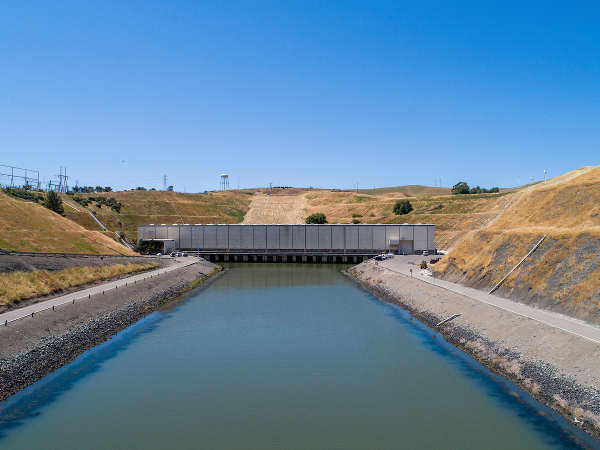
The State Water Project now expects to deliver 20 percent of requested supplies in 2020 thanks to above-average precipitation in May, the California Department of Water Resources announced Friday.
An initial allocation of 10 percent was announced in December and increased to 15 percent in January.
Friday’s announcement will likely be the final allocation update of 2020.
“May storms gave us a boost following a very dry winter and allowed us to increase allocations for communities and agriculture in California,” said DWR Director Karla Nemeth. “It’s another example of our state’s unpredictable precipitation that has been compounded by our changing climate. We must manage our water supply responsibly to not only deliver water now but ensure we have enough in reserves to protect us from future dry years.”
Water from Clear Lake makes its way to the bay delta, which in turn helps source the State Water Project.
Following below-average precipitation most of the winter, May storms delivered 181 percent of average in the Northern Sierra for this time of year.
This year’s snowpack is the 11th driest on record since 1950 while precipitation stands as the 7th driest on record since 1977. Thirty percent of California’s annual water supply comes from snowpack.
A 20 percent allocation amounts to 843,696 acre-feet of water. The SWP provides water to 29 SWP contractors who supply water to more than 27 million Californians and 750,000 acres of farmland.
The Solar and Heliospheric Observatory, a joint mission between the European Space Agency and NASA, was not designed to find comets — its original goal was to study the Sun from its deep core to the outer layers of its atmosphere.
But building new observatories can thankfully bring in discoveries that are entirely unexpected.
Nearly 25 years since its launch, data from this space-based solar observatory has led to the discovery of well over half of all known comets — upwards of 3,950 new comets found.
Though the SOHO team anticipated the spacecraft would discover some new comets, they never expected to find nearly 4,000 of them.
The huge number of SOHO-discovered comets comes thanks to a combination of well-designed instruments, a long lifespan, the hard work of citizen scientists and a little bit of luck.
"SOHO is uniquely placed in space and uniquely designed, and it’s these aspects of the spacecraft that allow it to see and discover so many comets," said Karl Battams, a space scientist at the Naval Research Lab in Washington, D.C.
SOHO carries an instrument called a coronagraph that uses a solid disk to block out the Sun's bright face, revealing the much fainter outer atmosphere, the corona. Scientists use these images of the corona to study how this part of the atmosphere changes and to track occasional explosions of material from the Sun, called coronal mass ejections.
SOHO's vantage point between the Sun and Earth, about a million miles from Earth, gives it a constant view of the Sun's atmosphere.
SOHO's coronagraph, known as LASCO, has both high sensitivity and a wide field of view, which turns out to be perfectly suited to see so-called “sungrazing comets” that fly too close to the Sun's overwhelmingly bright face to be seen from Earth or with most other scientific instruments.
And because SOHO has kept a steady eye on the corona – through which these comets fly — almost continuously for nearly 25 years, its data has revealed thousands of previously unknown comets: 3,953 as of May 2020.
Almost all of SOHO's comet discoveries have come from its coronagraph data, but a small handful of comets have been discovered in images from a different instrument on board: the SWAN instrument, a camera designed to look for interactions between the solar wind and hydrogen atoms in space.
Some comets, including Comet SWAN discovered in April 2020, outgas large amounts of water — of which hydrogen is the main component — as they approach the Sun, making them visible to SWAN.
Around 85 percent of the thousands of comets discovered by SOHO are members of one family of comets: the Kreutz group.
The Kreutz sungrazers are thought to be the remnants of a single giant comet, which, some thousands of years ago, flew close to the Sun and heated up, loosening the ice that bound it together. It fragmented into thousands of tiny comets that we know today as the Kreutz family. These relatively tiny remnants — most are around the size of a house — follow the path of the original Kreutz comet.
SOHO's data has proven a prime hunting ground for previously-undiscovered comets, but that doesn't mean the going is easy. Most of the discoveries have been made through the painstaking work of citizen scientists with the Sungrazer Project, a NASA-funded project managed by Battams that grew out of early citizen science comet discoveries not long after SOHO launched in 1995.
"After word spread that scientists were seeing new comets in the SOHO data, people went to the SOHO website and downloaded the images themselves and found a bunch of comets that the scientists had missed," said Battams. "It got to the point where the project team was overwhelmed with the number of reports, so they created the Sungrazer Project to act as the hub for these discoveries."
If the rate of new comet discoveries continues at its usual pace, SOHO's 4,000th new comet will likely be spotted sometime in summer 2020, according to Battams.
The comets discovered in SOHO's data have given scientists valuable insight into both comets as a whole as well as the environment they fly through.
Because they fly so close to our star, most of the comets seen by SOHO don't survive their trip around the Sun — they disintegrate near their closest approach because of the incredible heating caused by the intense sunlight.
"When SOHO sees a comet, nearly every single one of them is in the process of being destroyed," said Battams. "In that way, SOHO's data has given us a peek into the end of life of a comet."
Beyond that, the comets spotted by SOHO can also act as celestial windsocks, revealing new information about the solar wind and solar atmosphere that they fly through.
As comets approach the Sun, they become enveloped in a tail of gases liberated from the comet by heating caused by the intense sunlight. Some of the gases in this bright tail are ionized and are buffeted by the magnetized solar wind and magnetic fields in the Sun's outer atmosphere, giving scientists the opportunity to measure the conditions in this region that would otherwise be invisible from afar.
"We’ve used these images to validate models of the solar magnetic field and things like electron densities and temperatures," said Battams. "There’s all kinds of unique science you can do by watching these icy bodies travel through this extreme environment."
SOHO is a cooperative effort between ESA and NASA. Mission control is based at NASA Goddard. SOHO’s Large Angle and Spectrometric Coronagraph Experiment, or LASCO, which is the instrument that provides most of the comet imagery, was built by an international consortium, led by the U.S. Naval Research Lab in Washington, D.C.
Sarah Frazier works from NASA's Goddard Space Flight Center in Greenbelt, Maryland.