CLEARLAKE, Calif. – Clearlake Animal Control is starting off the week with four dogs available for adoption.
While the shelter has moved most of its dogs into foster, potential adopters can make appointments to meet and adopt available dogs.
The following dogs are ready for adoption or foster.
“Lady.” Photo courtesy of Clearlake Animal Control. ‘Lady’
“Lady” is a female German Shepherd mix.
She has been spayed.
She is dog No. 3683.
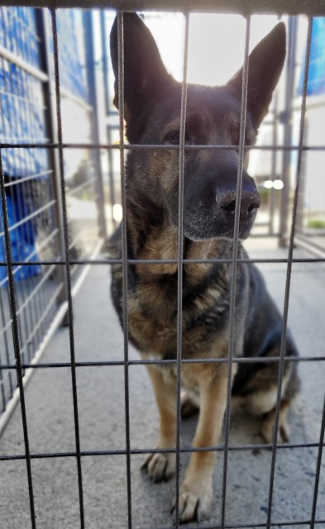
“Princess.” Photo courtesy of Clearlake Animal Control. ‘Princess’
“Princess” is a female German Shepherd with a black and tan coat.
She has been spayed.
Princess is young and energetic. She previously lived around a smaller dog and has been around the office cat. She will benefit from training and attention.
She is dog No. 3669.
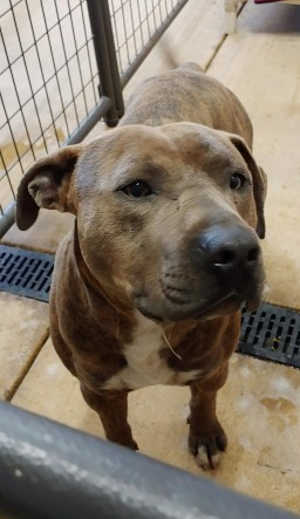
“Spud.” Photo courtesy of Clearlake Animal Control. ‘Spud’
“Spud” is a male American Staffordshire Terrier with a short brindle and white coat.
He has been neutered.
He is dog No. 3733.
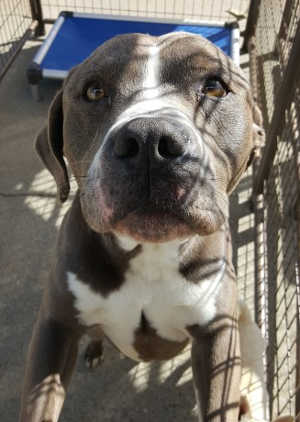
“Tyson.” Photo courtesy of Clearlake Animal Control. ‘Tyson’
“Tyson” is a male American Staffordshire Terrier with a short gray and white coat.
He has been neutered.
He is dog No. 1863.
Clearlake Animal Control’s shelter is located at 6820 Old Highway 53, off Airport Road.
Hours of operation are noon to 4 p.m. Tuesday through Saturday. The shelter is closed Sundays, Mondays and major holidays; the shelter offers appointments on the days it’s closed to accommodate people.
Call the Clearlake Animal Control shelter at 707-273-9440, or email This email address is being protected from spambots. You need JavaScript enabled to view it. to inquire about adoptions.
Visit Clearlake Animal Control on Facebook or at the city’s website.
Email Elizabeth Larson at This email address is being protected from spambots. You need JavaScript enabled to view it. . Follow her on Twitter, @ERLarson, or Lake County News, @LakeCoNews.
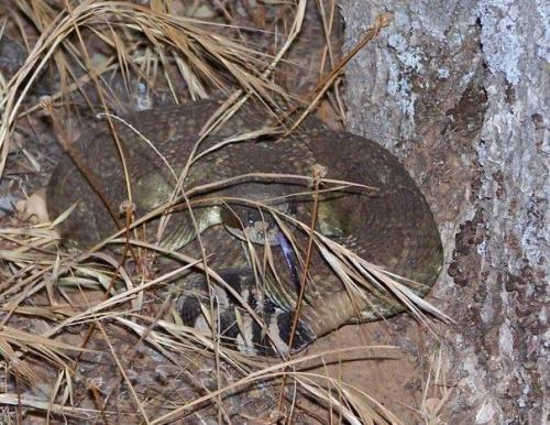
A rattlesnake. Photo courtesy of the California Department of Fish and Wildlife. As stay-at-home rules are relaxed around the state of California, hikers are undoubtedly anxious to take advantage of the opportunity to visit their favorite hills, mountains, paths and trails.
It's important to remember that snakes are enjoying the fine weather this time of year as well.
With the coming of summer, snakes of many species are through hunkering down, making human encounters with these elusive creatures more likely.
Although most native snakes are harmless, the California Department of Fish and Wildlife recommends giving the venomous rattlesnake plenty of space and knowing what to do in the rare event of a bite.
Early mornings and late afternoons are prime times for when snakes come out; they avoid the midday heat. In general, snakes are not aggressive. When people are bitten, it's most often because the animal was surprised.
The most basic but important tip to remember: If you're outdoors, make sure to stay on trails, as you'll be in a better position to see (and avoid) a snake if it's on the path or crossing in front of you.
Rattlesnakes are widespread in California and are found in a variety of habitats throughout the state, from coastal to desert. They may also turn up around homes and yards in brushy areas and under woodpiles.
Rattlesnakes will likely retreat if given room and are not provoked or threatened. Most bites occur when a rattlesnake is handled or accidentally brushed against by someone walking or climbing.
On occasion, rattlesnake bites have caused severe injury – even death. However, the potential of encountering a rattlesnake should not deter anyone from venturing outdoors.
The California Poison Control System notes that the chances of being bitten are small compared to the risk of other environmental injuries.
Most bites occur between the months of April and October when snakes and humans are most active outdoors.
CDFW provides tips for safely living in snake country on its website, as well as tips for keeping snakes out of your yard and what to do (and not to do) in the event of a snake bite.
Additional resources can be found on the "Living with Rattlesnakes" page at www.CaliforniaHerps.com and at www.wildlife.ca.gov/keep-me-wild .
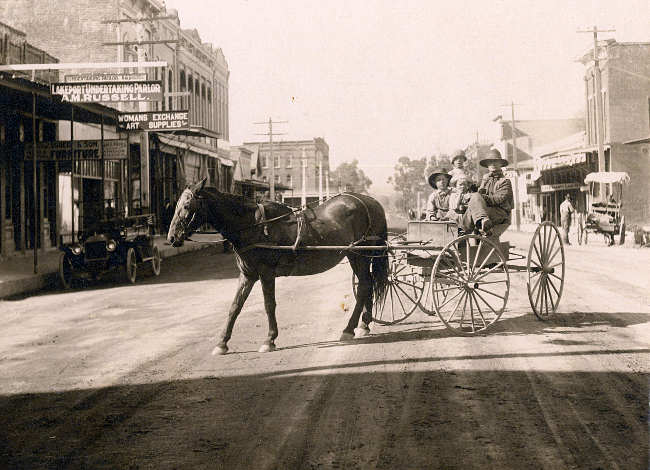
Around 1920 Lake County’s residents were transitioning from horse-drawn to motorized travel. Undertaker A.M. Russell, whose establishment is visible on the left, handled many of the funerals for Lake County’s victims of the 1918 influenza pandemic. Photo courtesy of Lake County Museum. LAKEPORT, Calif. – The “Spanish Influenza” epidemic that enveloped the world in 1918 and 1919 infected about 500 million people and killed an estimated 20 to 40 million worldwide. In the United States, about 675,000 people died.
The age groups that suffered the highest death rates were the very young, the elderly, and people in their 20s to 40s.
October 1918 has been called the deadliest month in American history when 195,000 people died.
Eight Californians died of influenza in September 1918, while 4,420 Californians died of influenza in October 1918, the deadliest month in American history.
Lake County’s first known flu cases showed up in mid-October. Florence Crawford, 18, Gladys Trafts, 26, and Rose Middleton, 27, typical of the pandemic’s many young victims, were among Lake County’s first losses. The flu killed at least eight Lake County people in October and the sorrow had just begun.
Incomplete data make an exact count of Lake County’s flu victims elusive. California’s State Board of Health published only state-level mortality statistics in its Monthly Bulletins and Biennial Reports. Other available sources indicate spikes in mortality in Lake County in 1918.
Lake County’s human stories matter more than do the imprecise statistics, and local newspapers provide those in abundance.
Weekly newspapers, the Lake County Bee and the Clear Lake Press, both published in Lakeport, the Kelseyville Sun and the Lower Lake Bulletin, kept Lake County’s estimated 5,500 residents informed with the hard news and the social news columns.
Lake County’s day to day life unfolds in the antique social media. Routine reports of property sales, cattlemen in town on business, and relatives visiting each other are interspersed with flu cases and flu deaths. Red Cross volunteers reported on making clothing for soldiers in combat and for European refugees, and on making gauze anti-flu masks.
The newspapers convey a sense of Lake County fighting influenza on its own. Relatives, friends, neighbors and nurses cared for patients at home. Overwhelmed caregivers begged for volunteer nurses. Doctors like Walter Fearn, Henry Stipp, J.B. Baker, county health officer Murdock Craig and Calistoga’s Walter Blodgett coped with the crisis as best they could.
Local newspapers printed Surgeon General Rupert Blue’s “Advice on Flu” that recommended avoiding crowds, covering coughs and sneezes, getting fresh air, eating wholesome food and wearing masks.
In October Dr. Craig advised people to avoid public gatherings for a week. Although the moving picture show, churches services and schools closed for a few days, some folks doubted the need for concern.
The Lake County Bee scoffed, “There is no epidemic of influenza here, nor of anything else unless it is fright. The Board of Health acted on the theory that an ounce of prevention is worth a pound of cure and that a majority of the people of Lakeport wanted them to take the action they did.”
The social news tells the other side of the story. People came to Lake County from cities to avoid the influenza. Social customs changed as small unostentatious weddings and outdoor funerals became the norm. Masks became fashionable.
In October concerned citizens urged Lakeport’s Board of Health to close schools and public gatherings. Flu skeptics Percy Millberry, Dr. Stipp and druggist Oscar Meddaugh refused to act and resigned from the board under duress. Dr. Fearn, George Neal and G. E. Nichols replaced them and took action.
At the behest of the new board, Lakeport’s town trustees passed an ordinance that required people to wear masks in public and to avoid groups of three or more while the danger lasted. Fines for violating the ordinance ranged from $5 to $100.
The public generally complied with a request from the local Red Cross to wear masks, but the practice wasn’t universal. The Red Cross succeeded in meeting the demands for gauze masks.
As October wore on, coverage of the town trustees competed for newspaper space with notices of cancelled meetings, Lake County’s influenza deaths, war news and pre-election controversies. The military continued to call Lake County men for war service.
Despite influenza’s spread in Lake County, there is little sense of urgency in the hard news. Perhaps the routine presence of whooping cough, scarlet fever and typhoid in Lake County made officials unconcerned about the new disease.
Officials imposed and rescinded orders that banned gatherings and required masks in public so often it makes your head spin. Orders might expire in a week, then be reinstated a few days later as illnesses increased. In December Lakeport’s Board of Health again banned public gatherings. From the Bee: “The Board did not pass an order making it compulsory to wear masks but advised the wearing of them by those who believe in the efficacy of wearing them.”
Lake County’s doctors sometimes tried unproven treatments to fight the disease. Dr. Baker received some influenza vaccine from the State Hygienic Laboratory of the University of California, and about 20 patients were started on the three-dose vaccine injections.
Dr. Timothy Leary of Massachusetts, whose namesake nephew would become infamous in the 1960s, had perfected the vaccine which was a culture of “influenza bacillus.” Dr. Baker gave out the vaccine for free and eventually administered it to at least seventy patients. An effective vaccine for the Spanish flu was never developed.
Lake County’s case load became so heavy that Dr. Blodgett motored over from Calistoga to attend patients in Middletown. Some Middletown patients went to the Calistoga Sanitarium or even to Napa for care they couldn’t get in Lake County, which had no hospitals before the 1920s.
The Lake County Bee in mid-November noted that the “County Board of Supervisors are holding their regular monthly session this week, but up to the hour of going to press have done nothing of importance except canvass the vote and pass bills. A resolution was passed Wednesday authorizing the erection on the court house square of a monument dedicated to the soldiers who participated in the present war.”
The supervisors passed a resolution on Jan. 14, 1919, recommending that all Lake County citizens wear masks when congregating in schools and churches, and while out in public.
Although Lake County was spared the extreme devastation that big cities suffered, conditions were bad enough here.
The Kurihara family that lived near Sulphur Banks caught the flu in October. Mr. Kurihara and the children all recovered, but Mrs. Toshi Kurihara died. A. M. Russell held Toshi’s embalmed body at his undertaking parlor in Lakeport until he could arrange ship passage to Japan, then escorted her remains to the port of San Francisco.
Among Lake County’s tribal communities Amy Charlie, 42, of Scotts Valley Rancheria, Lorena Fred, infant daughter of Mr. and Mrs. Bob Fred of Mission Rancheria, and Louise Sutherlin, 39, of Fee’s Rancheria near Lakeport died in November and December. The Yee family of Mission Rancheria welcomed a son, Edsel, in November and four months later bade him farewell when the flu killed him.
Perhaps hardest hit was the Brookins family from the south county. In the span of eight days Edwin Brookins, his sister Rosa Copsey, his 5-year-old granddaughter Nina Rannells and his wife’s cousin Mary Mullins all died. For a time the family also feared for the life of Brice Rannells, Edwin’s son-in-law. Abe Brookins, Edwin’s son, was released from the draft because his widowed mother needed him at home.
Influenza killed businesses as well as people. Alonzo and Lavinia Noel ran the Lower Lake Bulletin for eight years, then Lavinia operated it as “owner, proprietress and editor” after Alonzo died in 1893. Lavinia published her last issue in January 1919, not believing her influenza was serious. When she died five days later the Lower Lake Bulletin died with her.
District Attorney H. B Churchill and Superintendent of Schools Minerva Ferguson both caught the flu early on. Churchill recovered quickly, but Miss Ferguson wasn’t able to work again until the following June.
As 1918 gave way to 1919, people began to go out and to mingle even as the flu persisted. In February, “On account of the ‘flu’ epidemic, a much deferred high school party was given last Friday evening at the I.O.O.F. hall [in Upper Lake]. Only the faculty, parents, trustees and their families were bidden to the ‘high jinks.’ The Freshmen came in for their share of ridiculous stunts but took their punishment good-naturedly and gracefully as all freshies do. Games and dancing were the chief amusements after which refreshments were served.”
People started new businesses. Farmers worked on their spring chores. The Red Cross volunteers stopped reporting mask-making. Celebrations honored servicemen home from war. High schools put on class plays and graduations.
Eventually the influenza died out and Lake County life adapted to their changed world. Besides the people mentioned above, other current or former Lake County residents who died of flu-related causes included Pearl Bond, Mary Bonham, Lawrence Dilger, Opal Fields, Claude Harrow, Mary Keesling, David Keithly, William Lane, Lucile McClenden, Thomas Rhodes, Irving Roddie and George Vincent.
The Lake County Library’s collection of microfilmed Lake County newspapers supplied the stories about what happened here. The collection, which stretches back into the 1870s, makes it possible to read a good deal of Lake County’s history as it was happening.
The library’s microfilm collection is available to the public during normal operating hours and short newspaper reference questions can also be submitted through the “Ask A Question” feature on the library website http://library.lakecountyca.gov . Library staff can scan and email articles for researchers. A list of newspapers in the collection is on the website.
Statistical information for the article came from the California State Library, from the Centers For Disease Control, and the US Census Bureau.
Many books, articles and websites cover the influenza pandemic of 1918.
The Lake County Library’s digital resource collection includes eBook titles “Pale Rider: the Spanish Flu of 1918 and how it changed the world” by Laura Spinney, “The Great Influenza” by John M. Barry and “Pandemic 1918” by Catharine Arnold.
The digital collection is accessible while the library is closed for the shelter in place.
Jan Cook is library technician for the Lake County Library and a historical researcher and writer.
LAKE COUNTY, Calif. – Our recent spring showers brought with them a variety of flowering plants with a kaleidoscope of color, along with nearly every shade of green imaginable.
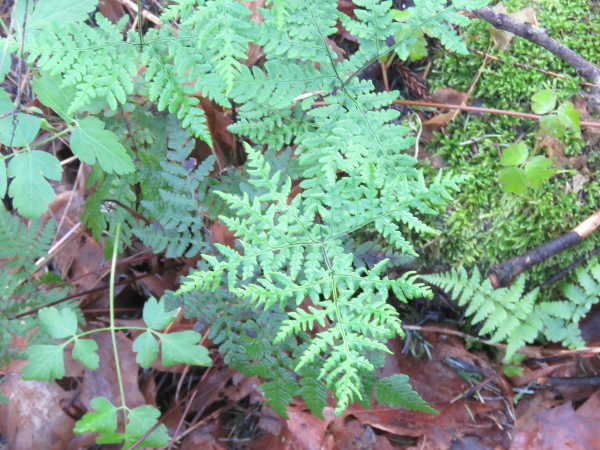
If you find yourself near a creek or wooded area, the fronds of large ferns are often found waving in the breeze.
Then, as you enter the realm where the light splinters and dragonflies hover like helicopters, the intricate beauty of a fern asserts itself.
Ferns have a differing cycle than blooming flora and are found year-round. These fern-tastic plants don't have seeds, so to complete their life cycles ferns use their spores to reproduce. When the wind carries their spores, ferns proliferate in concealed and moist spots to begin their lives as minuscule gametophytes.
These heart-shaped formations create sperm and eggs to create a sporophyte, when they morph into the familiar fern with fronds with which we are familiar. The undersides of the leafy fronds are where the sporophyte stage is seen, you know, those spots or sometimes lines (sporangia) that hold within their sacs the microscopic spores.
According to Bay Nature Magazine there are over 35 native fern species in the Bay Area, and the website of the California Native Plant Society, Calscape lists 113 ferns native to California.
Some ferns, such as the coffee fern, mosquito fern and California maidenhair fern do not have long fronds as a typical fern possesses but sport small, rounded green segments formed into lobes.
Ferns can proliferate in places that we normally associate with ferns, such as shady woods, and also in rock-strewn outcrops and ponds. No wonder ferns are prehistoric in looks – they are known to have been in existence for about 360 million years, according to the fossil record.
While not all ferns are useful beyond their beauty and function in the ecosystem, a few types have been eaten and used for medicine.
Scientists have determined that some types of ferns have been useful in removing soil and air contaminants.
The book, “Kashaya Pomo Plants” by Jennie Goodrich Et al. describes bracken fern root as having been used as a dark material for their basket design.
First, the root was pounded to aid in bark removal, then the dark core was divided into layers. The juice of the plant's young fronds was said to make a serviceable deodorant.
Chain ferns or woodwardia, an especially large fern with fronds reaching 3 to 6 feet in height, were once used to line the native people's earthen ovens while baking acorn bread.
Maidenhair fern was used after drying in the Kashaya Pomo's basket design and its stem was used to keep the pierced ear lobe hole from closing up.
Ferns that were also useful to the Indians were the sword fern, polypody fern and the purple fiddleneck fern.
Fiddlenecks' leaves were crushed then rubbed on the skin for skin problems such as impetigo and cold sores.
As someone once said, "With fronds like these, who need anemones?"
Kathleen Scavone, M.A., is a retired educator, potter, freelance writer and author of “Anderson Marsh State Historic Park: A Walking History, Prehistory, Flora, and Fauna Tour of a California State Park” and “Native Americans of Lake County.”
LAKE COUNTY, Calif. – Lake County reopened additional business sectors on Thursday, and businesses in the cities and unincorporated areas of the county are taking special precautions to provide services while keeping their customers safe, in light of ongoing and serious threats posed by COVID-19.
Accommodations include different use of space, both inside and outside of business facilities, in order to promote public health and safety.
To help local business owners comply with health orders by promoting social distancing while maintaining their operations to the greatest possible extent, Lake County Sheriff Brian Martin, in his capacity at the county’s director of emergency services, has issued a directive authorizing temporary use of county-owned and private properties for modified business operations.
In practice, this means businesses may “spill out” beyond the normal footprint of their facility, under certain conditions.
Martin’s order will be effective Tuesday, May 26, at 8 a.m., and must be ratified by the Board of Supervisors at its special Tuesday meeting.
Interested business owners in Unincorporated Lake County must obtain a no-cost temporary use permit from the Department of Public Works.
The county reported that it is seeking to make this process as pain-free as possible for businesses, but there are some basic requirements, including:
– A description of the proposed use and drawing/depiction of the proposed location and layout must be provided. – Proposed use must not significantly affect the operations of businesses in close proximity. – Additional public or private property used must be kept clean, free of litter and spills. – Businesses must hold a valid seller’s permit from the State Board of Equalization, and comply with local, state and federal laws, industry-specific regulations and licensing requirements, as well as Public Health orders. – No permanent structures can be installed under this temporary use permit. – Businesses will assume liability for any damage to public assets, such as sidewalks and utilities, and name the county of Lake as additional Insured party. – Use of state highways (such as Highway 20) will remain under the purview of state authorities. – The county may suspend or interrupt approved temporary uses for needs such as street repairs. – Vehicle and pedestrian traffic must not be impeded, and properties must remain accessible, in accordance with the Americans with Disabilities Act.
As a consequence of ongoing emergency conditions, the Public Works director, or designee, has been granted the authority to approve and issue these temporary permits without observing customary use permit noticing and hearing requirements.
Determinations regarding proposed uses will be made on a case-by-case basis, and the county may impose conditions of approval, where necessary, to ensure property is safely used, and compatible with surrounding land use requirements.
The Temporary use permit application is available here.
For more information, please contact the Department of Public Works, at 707-263-2341.
NORTHERN CALIFORNIA – Gov. Gavin Newsom on Saturday issued a proclamation declaring May 25, 2020, as Memorial Day in the state of California.
The governor on Friday joined California Secretary of Veterans Affairs Vito Imbasciani, MD, to lay a wreath in honor of fallen service members at the Veterans Home of California, Yountville – the largest veterans home in the nation.
The governor also highlighted the state’s efforts to protect vulnerable residents in California’s veterans homes.
“On Memorial Day, we take time to recognize and remember the service members who died fighting for our freedom,” said Gov. Newsom. “We also honor the veterans who are still with us. CalVet has worked around the clock to put into practice the best science and prevention measures to save as many lives as possible in veterans homes, which can be high-risk settings.”
The text of the governor’s proclamation can be found here.
The governor detailed California’s proactive approach to minimizing potential COVID-19 outbreaks at the state’s eight veterans homes, which house 2,400 veterans.
Three veterans home residents have tested positive for COVID-19 statewide since the start of the pandemic and there are zero active resident cases.
Fourteen staff members have tested positive, with no fatalities, and all but two have fully recovered and returned to work.
State officials are working to keep residents safe in the veterans homes across the state. The state took a proactive approach to COVID-19 and was one of the first to prohibit visits to residents, preventing an early surge in cases.
The California Department of Veterans Affairs sprung into action at the start of the pandemic, initiating infection control measures in February. Led by Secretary Vito Imbasciani, CalVet implemented a 38-point plan to prepare for COVID-19 and stop the spread within veterans homes.
Each veterans home has its own detailed emergency operations plan based on the best science and unique characteristics of the home. Every staff member – not just nurses – receive infection control training and each home has a certified infection control prevention nurse on staff.
At each home, staff have their temperature taken every morning and wear face coverings. Rigorous testing is conducted and approximately one in three residents and staff have been tested since the start of the crisis. Suspected COVID-19 cases are closely monitored around the clock and CalVet is in aggressive coordination with local public health to stem any larger outbreaks.
In Yountville, the governor also called on Californians to practice safety measures this weekend.
He reminded Californians that while Memorial Day weekend is a much-needed break for many of us, we cannot drop our guard against COVID-19.
Even as the economy gradually reopens, people must stay vigilant against COVID-19 by:
– Sticking close to home; – Shopping, hiking or exploring locally; and – Staying safe by avoiding large gatherings, maintaining physical distance and wearing face coverings when we are out.
 How to resolve AdBlock issue?