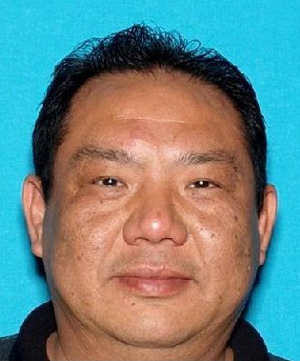
Wing Wo Ma. Courtesy photo. NORTH COAST, Calif. – This week an Oakland man was sentenced to life in prison for killing a Bay Area couple in 2013 in Fort Bragg.
On Wednesday, US District Court Judge Charles R. Breyer sentenced 53-year-old Wing Wo Ma to life in prison for the killings of Jim Tat Kong and Cindy Bao Feng Chen, according to a report from Lt. Andrew Porter of the Mendocino County Sheriff’s Office.
Also known as Mark Ma or Fat Mark, Wing Mo Ma was convicted of the killings in the fall, according to the US Attorney’s Office for the Northern District of California.
Mendocino County Sheriff’s deputies found the bodies of Kong and Chen, his wife, in a minivan in the 31000 block of Highway 20 in Fort Bragg on the afternoon of Oct. 17, 2013, Porter said.
Porter said both were determined to have been killed by gunshots to the backs of their heads.
The Mendocino County Sheriff's Office was assisted by the California Department of Justice Criminalists and the Mendocino County District Attorney's Office, Porter said.
The investigation led Mendocino County Sheriff's detectives to the Bay Area, where Porter said they worked largely in partnership with the Federal Bureau of Investigations’ Asian Organized Crime unit out of San Francisco.
On Oct. 22, 2015, Ma was arrested by Mendocino County Sheriff's Detectives and the FBI outside his home in Oakland, for a federal arrest warrant alleging manufacturing and distribution of a controlled substance, an enhancement for the previous section with more than 100 marijuana plants and conspiracy to commit above charges, Porter said.
Porter said Ma was held without bail in federal custody, and on April 6, 2017, a federal grand jury gave a superseding indictment on Ma for two counts of causing the death of a person through the use of a firearm. Ma also was federally indicted for multiple counts of corruption, bribery of officials and conspiracy.
On Nov. 7, 2019, Ma was found guilty of all counts following a three-week trial in federal court in San Francisco, officials said.
According to the evidence submitted at trial, Ma shot and killed Kong and Chen on Oct. 17, 2013, while the couple was seated in their minivan. Beginning in January of 2013, Ma had borrowed money from Kong for several business ventures including a marijuana grow and a real estate scheme in Mendocino County.
Fearing retribution from Kong upon finding himself unable to repay the money, Ma met with Kong and Chen on Chen’s birthday. While seated in the car, Ma shot each of the victims with a single gunshot to the head and then left their bodies in the minivan parked in a secluded, wooded area in Mendocino County.
The evidence also showed that Ma bribed Harry Hu, an inspector employed by the Alameda County District Attorney and a former lieutenant in the Oakland Police Department.
Ma bribed the inspector with airfare for multiple trips to Las Vegas, free accommodation at high-end suites and hotel rooms at Las Vegas casinos, meals and entertainment in Las Vegas and San Francisco, female hostesses at private room bars in Las Vegas and San Francisco, music concert tickets, use of a new Mercedes Benz, and labor for the remodel of the DA investigator’s personal residence.
Prosecutors said Ma bribed Hu in an effort to protect himself from prosecution and investigation by Hu and other law enforcement agencies. Ma also collected money from criminal associates for the purpose of bribing Hu and represented to criminal associates that Hu was an investor in Ma’s fraudulent investment projects.
As part of the bribery scheme, Ma used Hu’s name and reputation to attract investors to Ma’s fraudulent schemes, officials said.
In handing down Ma’s sentence on Wednesday, Judge Breyer called the murder of Kong and Chen a "cold-blooded assassination."
Porter said the case was prosecuted federally by the United States Attorney's Office in San Francisco due to the far-reaching crimes connected to the murders committed in Mendocino County.
The primary agencies involved in the investigation were the Mendocino County Sheriff's Office, the Mendocino County District Attorney's Office and the Federal Bureau of Investigation, Porter said.
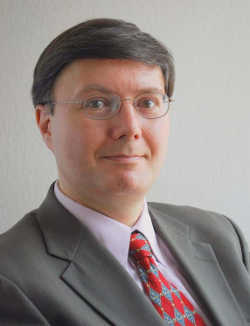
Dennis Fordham. Courtesy photo. In California, if a decedent dies with a “small estate,” the “affidavit procedure” may be used by the decedent’s successor in interest, “… to collect money, receive tangible personal property, to obtain evidence of a debt, obligation, interest, right, security or chose in action.”
Let us discuss some scenarios.
Presently, a small estate in California is one under $166,250 in total value. The value of the decedent’s vehicles, vessels, truck camper, floating home, or manufactured and mobile homes are excluded. Also excluded is up to $16,625 in unpaid salary or other compensation owed the decedent. If the decedent owned assets inside of a trust or assets with designated death beneficiaries these are not part of the estate.
The affidavit procedure may be used by decedent’s successor in Interest once 40 days have passed since the decedent’s death. Successor in interest means the decedent’s beneficiary, or beneficiaries, entitled to inherit the property under the decedent’s will; otherwise, if the decedent had no will, it means the decedent’s heir(s).
To use the affidavit procedure, the successor in interest (claimant) must provide the person in possession with the following: a sworn affidavit/declaration of small estate signed by the successor in interest before a notary, a certified death certificate and an inventory and appraisal (if the decedent owned any real property), evidence of the decedent’s ownership of the property (if relevant), and proof of the claimant’s own identity. The required content of the affidavit/declaration is found in section 13101 of the Probate Code.
As an example consider a decedent who dies owning valuable jewelry in a consignment store. The decedent has a will leaving her estate to her one daughter. Her estate is under $166,250 and does not include any real property.
Forty days after the decedent’s death, the daughter provides the consignment store with the required affidavit/declaration of small estate with the decedent’s certified death certificate attached. The daughter presents the decedent’s consignment store receipt showing the decedent owned the jewelry, and her California driver’s license. The jewelry store then gives her the jewelry.
Sometimes, when dealing with a financial institution (like a bank or brokerage), it is often necessary to include a “hold harmless” provision in the affidavit to induce the financial institution to provide the assets in the decedent’s account.
In California, once the claimant (affiant/declarant) has satisfied the affidavit procedure requirements, the person in possession must transfer title/possession of the property to the claimant. Otherwise, the successor is entitled to bring a lawsuit to recover the property or compel its payment, deliver or transfer. The claimant may also recover reasonable attorney fees if the court finds that the holder acted unreasonably in refusing to pay, deliver or transfer the property.
The affidavit/declaration procedure, however, is not exclusive of other procedures. That is, a probate may still be opened, if necessary, because of competing ownership claims or because the decedent’s creditors want the decedent’s estate to pay debts.
If the decedent’s estate becomes subject to a probate then the affidavit/declaration can only be used with the written permission of the decedent’s court appointed personal representative. Moreover, the personal representative may recover property received earlier by a successor in interest using the affidavit procedure when a probate is later commenced.
Another form of the affidavit procedure is available for the decedent’s successor to claim title to real property when the decedent owned real property appraised by the local probate referee at less than $55,425, presently. The real property affidavit procedure can only be used after six months from the decedent’s death. The affidavit, death certificate and inventory and appraisal are recorded as one document in the county where the property is situated.
The foregoing is a generalized discussion of how California’s affidavit procedure can be used as an alternative to probate for small estates. In addition, there is a small estate petition that applies when the appraised value of the decedent’s real property exceeds $55,425 but the estate is still a small estate under $166,250.
Dennis A. Fordham, attorney, is a State Bar-Certified Specialist in estate planning, probate and trust law. His office is at 870 S. Main St., Lakeport, California. He can be reached at This email address is being protected from spambots. You need JavaScript enabled to view it. and 707-263-3235.
What's up for August? This month brings a bunch of opportunities to see the Moon posing with the planets, plus here come the meteors!
On Aug. 1, the moon made a lovely triangle with Jupiter and Saturn low in the southeast after sunset. The trio was visible all night, rising to its highest point in the south around 11 p.m. local time. If you missed them, there's another chance at the end of the month, on Aug. 28, as the moon swings back around in its orbit to join the planetary pair.
On Aug. 9, Mars will appear super close to the moon before dawn. Look toward the south, high in the sky, and you can't miss it – Mars is the bright, reddish point of light just right of the moon. Weather permitting, this should be a beautiful sky, with the Pleiades, Orion, Aldebaran and Venus to the southeast.
On Aug. 15, in the hour before sunrise, look for Venus in the east, just a couple of finger widths apart from the crescent moon. And if you take a look before the sky gets too bright, you'll see the duo surrounded that morning by a ring of bright stars.
The annual Perseid meteor shower peaks on the morning of Aug. 12. The last-quarter moon will interfere with visibility of most fainter Perseid meteors this year, but you'll still be able to see a few brighter ones, including the occasional "fireball."
The best time to look is in the pre-dawn hours on Aug. 12, but midnight to dawn any morning the week before or after should produce a few meteors.
The Perseids generally appear to radiate from a point high in the north, called the "radiant." But you need only point yourself generally toward the north and look up.
And while we're talking meteors, did you know many of these "shooting stars" come from comets? Most of the annual meteor showers we observe take place as Earth passes through trails of debris left behind by active comets orbiting the sun, casting off little bits of dusty debris in their long tails. The Perseid meteors come from a comet called Swift-Tuttle, which orbits the sun every 133 years.
In July, a comet that was just discovered this spring by NASA's NEOWISE mission made an appearance in our skies, wowing observers on the ground and even in space!
This comet has a nearly 7,000-year orbit around the sun, so it won't be back this way for a long time, but it's possible a meteor you see some night in the future might just be a little reminder of comet "NEOWISE."
Preston Dyches works for NASA's Jet Propulsion Laboratory.
LAKE COUNTY, Calif. – The Clearlake Planning Commission has set aside proposed changes to agricultural rules in the zoning ordinance so the city can engage further with residents who have raised concerns about their ability to raise animals for subsistence under the new rules.
At its monthly meeting on July 28, the commission’s agenda included a discussion of the zoning ordinance update, following a presentation by Gary Price, the city’s consultant.
The main point of concern for numerous community members involved proposed changes to residential and institutional uses allowed by zones in Section 18-18.020.
On page 57 of the document, it addresses livestock density, allowing the raising of livestock, “including but not limited to sheep, goats, horses, mules and swine. The total number of animals shall not exceed one (1) mature animal per acre except in the case of newborns still with their mother. Newborns up to the weaning age still with their mother shall not be considered a part of this calculation.”
It also allows for raising of poultry or fowl providing that there are not more than five birds per half an acre and the total does not exceed fifty birds.
City Manager Alan Flora told Lake County News that the proposed new densities allow for about half as much livestock as currently allowed under city zoning rules.
Many community members submitted comments on those proposed changes on the city’s Town Hall webpage as well as via letters and emails.
On the Town Hall page, Anthony Myrick wrote, “Many people are raising gardens and livestock to get by in this tough economy.” He said chickens are an important part of people’s pantry, with FFA and 4-H being an integral part of the culture in this rural community.
Robin Helton wrote, “Regarding poultry in city limits … in the poorest county something as simple as a few backyard chickens and a garden … can ensure a small but vital food security … as well as being a wonderful learning experience for our youth .... if the poultry does not constitute a clear nuisance … I believe it would behoove the council to allow this .... taking that away from people in such troubling economic and health crisis is counterproductive and contrary to the tradition of lake county strong … allow people this small security .. allow them to stand prouder, more compassionate and self reliant.”
Athena Holbrook posted, “This is a very poor county and many people have chickens and gardens to make ends meet. I've been disabled for over a year and this is how I feed my family. I am teaching my daughter how to be self sufficient by raising and growing her own food. I pay my taxes and I own my home. People can have several cats and dogs but not a few chickens for eggs? … This won't go over well for this rural area. I'm greatly opposed!”
Other comments, some of them coming from writers who did not include their names, talked about having purchased homes in Clearlake because they believed it was farm-friendly, and also offered support for FFA and 4-H.
Support for farm animals in the city wasn’t unanimous. One comment from an anonymous writer noted, “happy healthy chickens do not belong in a city, certainly not any space smaller than 1/2 acre, should be a full acre.”
Tim and Amanda Celli and their three children have raised cattle, pigs, goats, sheep, chickens, and turkeys on their acreage in a rural part of the city, and they registered their opposition to the new rules in a letter to the commission.
Issues they raised included their belief that the limitation would be detrimental to the health and safety of livestock, which are social animals; the impacts on families who are lower on the economic scale; the value of livestock in reducing carbon footprint and promoting a healthy lifestyle for families; and the support that those who raise livestock give to local businesses.
“In addition to self-sustainability, having livestock and poultry/foul provide an educational experience and family time that is not comparable to another experience. Being involved with agriculture animals teaches children at an early age empathy, commitment, patience, responsibility, reliability, and the value of hard work. Animal caretaking is [a] great way to spend time as a family and takes attention away from video games and smart phones,” the Cellis wrote.
Commissioners agree to reconsider proposed changes
After reading and hearing the public input, the planning commissioners made clear they were in favor of doing more work and taking the comments into account. Commissioner Lisa Wilson also said she was in favor of bringing city zoning rules more in line with the county’s.
Commissioner Erin McCarrick, noting the large amount of community input, asked how to get more feedback to staff.
Flora said the city could do more targeted outreach and even have a town hall.
Commission Vice Chair Kathryn Fitts said a lot of residents of the Burns Valley area have livestock and that they needed to look at the matter, noting she felt the proposed rules were “pretty restrictive.”
Commissioner Robert Coker said a lot of people in the city who live in the low-density R1 residential zoning district – which it was reported during the discussion has a minimum lot size of 5,000 square feet – have chickens, and limiting them to four chickens is not enough for a family of four to survive.
Chair Richard Bean asked the staff if the city had sought anyone with expertise to consult on the proposed rules.
Flora said there are many examples based on different cities, and he was looking at an extensive study of such rules by a national planning association, so he didn’t think they needed to bring in an agricultural consultant.
What they did need, he said, is to have a consensus from the commission on whether they wanted it to be an agricultural community.
He said some places give restrictions on chickens, construction standards and setbacks. “We could go down that route but I’m hoping that we don’t,” Flora said, adding that he wanted to trust the community to do it right and follow up with the troublemakers.
Price said the city could have a broadened description of what it had before, which he said was working, with no one complaining about it.
“It sure gets us through it and if it doesn’t work, we’ll go back and revisit it,” he said.
Since it seems to have been working in the past, “for us to come back and try to change it, maybe that wasn’t such a good idea,” Price said.
Bean asked where staff got the draft section. Price said it was based on other areas he’s worked, including San Luis Obispo. “Lake County’s unique,” Price acknowledged.
Bean said he agreed that the existing regulations seem to be working. He asked if existing zoning would be grandfathered in if it were to be changed.
Flora said that, in general, after zoning changes existing situations are considered “legal nonconforming” until people come back for additional use permits, at which point they would have to come into compliance with the new rules.
Ultimately, the commission reached consensus to allow for staff to go back and do some additional work on the zoning ordinance changes, especially animal husbandry, which Flora said needed feedback.
At Flora’s request, the commission continued the public hearing to 6 p.m. Tuesday, Aug. 25.
Flora told Lake County News this week that the city will be circulating a new draft of the zoning regulations and doing some type of virtual town hall.
“We should have something out early next week,” he said.
Email Elizabeth Larson at This email address is being protected from spambots. You need JavaScript enabled to view it.. Follow her on Twitter, @ERLarson, or Lake County News, @LakeCoNews.
LAKE COUNTY, Calif. – The Lake County Sheriff’s Office has identified the man and boy who died after the motorcycle they were riding collided with a vehicle on Highway 20 on Saturday night.
Christopher Lee Knittel, 42, and Suny Marshall Knittel, 8, both of Olivehurst, died of their injuries from the wreck, Lt. Corey Paulich said.
The California Highway Patrol’s Clear Lake Area office said the crash occurred shortly after 10 p.m. Saturday about five miles west of Walker Ridge Road.
Christopher Knittel was driving his 2018 Harley Davidson motorcycle westbound on Highway 20 at an unknown speed, with the boy riding behind him, when he lost control as he approached a right-hand curve in the road, according to the CHP report.
The motorcycle crossed into the oncoming lane and collided head-on with a 2016 Mazda CX5 being driven eastbound at 55 miles per hour by Stockton resident Andrea Bales, the CHP said.
The CHP said Christopher Knittel died at the scene while the child died later at Adventist Health Clear Lake.
Bales had major injuries and also was transported to Adventist Health Clear Lake, the CHP said.
The crash remains under investigation.
Email Elizabeth Larson at This email address is being protected from spambots. You need JavaScript enabled to view it.. Follow her on Twitter, @ERLarson, or Lake County News, @LakeCoNews.
CLEARLAKE, Calif. – Clearlake Animal Control has six dogs this week ready to go to their new homes.
The following dogs are ready for adoption or foster.
“Bella.” Photo courtesy of Clearlake Animal Control. ‘Bella’
“Bella” is a female American Bully mix.
She has a short beige and tan coat.
She is dog No. 3537.
“Diesel.” Photo courtesy of Clearlake Animal Control. ‘Diesel’
“Diesel” is a male border collie mix with a black and white coat.
He is dog No. 4023.
“Isis.” Photo courtesy of Clearlake Animal Control. ‘Isis’
“Isis” is a female American Staffordshire Terrier mix with a brindle and white coat.
She is dog No. 3732.
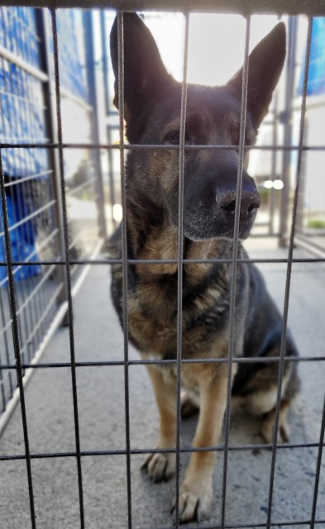
“Lady.” Photo courtesy of Clearlake Animal Control. ‘Lady’
“Lady” is a female German Shepherd mix.
She has been spayed.
She is dog No. 3683.
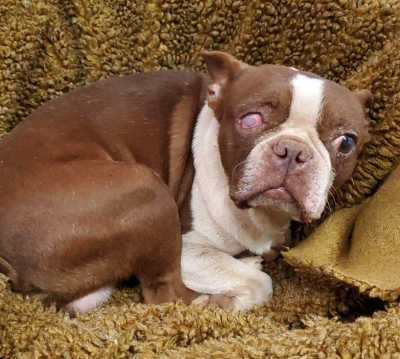
“Popeye.” Photo courtesy of Clearlake Animal Control. ‘Popeye’
“Popeye” is a male Boston Terrier mix with a short brown and white coat.
He is dog No. 4081.
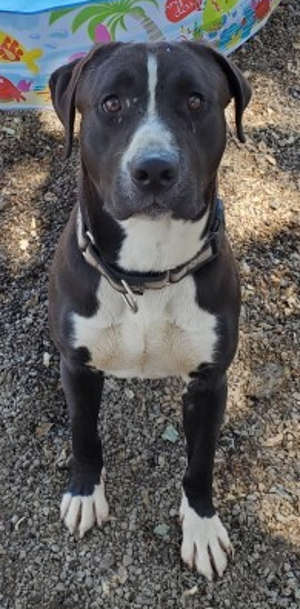
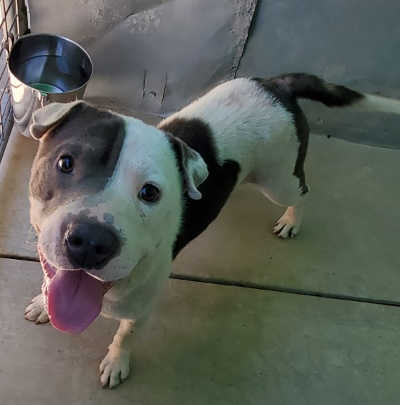
“Wilbur.” Photo courtesy of Clearlake Animal Control. ‘Wilbur’
“Wilbur” is a male American Bully mix with a short gray and white coat.
He is dog No. 3999.
Clearlake Animal Control’s shelter is located at 6820 Old Highway 53, off Airport Road.
Hours of operation are noon to 4 p.m. Tuesday through Saturday. The shelter is closed Sundays, Mondays and major holidays; the shelter offers appointments on the days it’s closed to accommodate people.
Call the Clearlake Animal Control shelter at 707-273-9440, or email This email address is being protected from spambots. You need JavaScript enabled to view it. to inquire about adoptions.
Visit Clearlake Animal Control on Facebook or at the city’s website.
Email Elizabeth Larson at This email address is being protected from spambots. You need JavaScript enabled to view it.. Follow her on Twitter, @ERLarson, or Lake County News, @LakeCoNews.
 How to resolve AdBlock issue?