 How to resolve AdBlock issue?
News
LAKE COUNTY – A San Jose woman who traveled around Northern California earlier this summer – with a stop to visit Clear Lake – has contracted West Nile Virus.
Test results delivered Aug. 2 confirmed the 48-year-old woman had contracted a mild form of West Nile Virus, said Joy Alexiou, Santa Clara County's public information officer.
The woman took a three-week camping trip during the mid to latter part of July, said Alexiou, traveling all around Northern California with some friends.
One of her stops was in Lake County, said Alexiou.
“We don't know exactly where she got it,” Alexiou said of the virus.
Although this is their second human case of West Nile Virus this season – the other was diagnosed shortly before this one – Alexiou said, in the woman's case, “We're confident that she did not get it in our county.”
On July 3, the woman – who just recently had returned from her camping trip – started to feel ill, said Alexiou. But it wasn't until later in the month that doctors began testing for the virus. “My guess is she didn't go to her doctor right away,” said Alexiou.
The symptoms the victim reported included a fever, body aches, fatigue and a body rash, said Alexiou. Health officials aren't sure the rash was related to the case of West Nile, however.
Luckily, the woman's case of West Nile was the mild – not the severe – form, said Alexiou. The severe form, she added, includes severe inflammation of the brain and spinal cord, and can lead to death.
In mild cases, the symptoms match the San Jose woman's, and also sometimes include nausea and vomiting, Alexiou said.
Alexiou said Santa Clara County notified the state but didn't contact Lake County's health officials, which Dr. Craig McMillan, Lake County's public health officer, confirmed.
The reason Lake wasn't contacted, McMillan said, is likely “because the West Nile Virus is everywhere.”
West Nile has symptoms that resemble other diseases, like meningitis, a fact which the county's doctors are aware of, said McMillan.
The Santa Clara West Nile victim “probably thought it was something else” before she finally went to see a doctor, McMillan said.
So far, 2007 has proved to be a heavy year for West Nile cases statewide. So far there have been 64 human cases – more than tripling last year's figure of 20, according to the California West Nile Virus Web site. So far four people have died from the disease.
This year, the disease has been found in 42 counties, versus 43 in 2006. In 2006, there were 13 horse cases 299 dead birds, 349 mosquito samples, 83 sentinel chickens and no cases of squirrels with the virus, the California West Nile Virus Web site reported.
In comparison, this year there have been five horses diagnosed with West Nile, 502 dead birds, 402 mosquito samples, 66 sentinel chickens and seven squirrels, according to the state.
Here in Lake County, there have been no West Nile cases in humans, horses, chickens or squirrels, the West Nile Virus Web site reported. There have, however, been five mosquito samples that tested positive.
McMillan said he's “happily surprised” by those very low numbers. “That doesn't mean it's not out there,” he cautioned.
Alexiou said the woman is recovering but still feeling very tired. “If you get it you're down for a while,” she added, noting victims need weeks, sometimes months, of recovery time.
E-mail Elizabeth Larson at
{mos_sb_discuss:2}
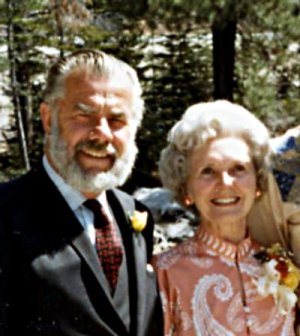
LAKE COUNTY – The Lake County Historical Society is pleased to announce a private donation of $100,000 has been pledged to the Ely Stage Stop and Country Museum.
In August, the Ely Stage Stop and Country Museum Project will receive a donation of $100,000 from the Kettenhofen Family Foundation, a charitable foundation established and funded by the estates of Ernest and Polly Kettenhofen who owned the S-Bar-S Ranch from approximately 1960 to 2000. Ernest died in 1996; Polly died in 2006.
The Kettenhofen Family Foundation called for the donation recipients to be selected by remaining family members, so in looking for a charity in Lake County, the family discovered the Ely Stage Stop Project through the Lake County Historical Society web site.
Randy Ridgel, president of the Lake County Historical Society, expressed gratitude on behalf of the Society to the Kettenhofen family for the very generous donation.
Linda Marshik, daughter of the Kettenhofens, said, "We recognized the building as the one our father had told us used to be the Stage Stop at the Lost Springs Ranch, later called the S-Bar-S."
She said the family had been looking for a charity but hadn't expected to find a project that would be so fitting of the family's past connection to Lake County and be a long-term asset for Lake County.
"We were so pleased to learn about the Beckstoffer family's generous donation of the building and land for the project," Marshik said.
Andrew Beckstoffer of Beckstoffer Vineyards donated both the historic structure, considered by some to be the oldest "stick-built" building in Lake County dating to the late 1850s, as well as the five-acre parcel for the new site.
On July 29, the historic Ely Stage Stop structure was relocated just across Highway 29 to the future site of the museum, at 9921 Highway 281, approximately one mile north of Kit's Corner, in Kelseyville. The site features dramatic views of Mt. Konocti and overlooks the former S-Bar-S Ranch.
Ridgel said the society intends to use the Kettenhofen family funds for physical improvements such as building and foundation work in the early stages of the project, and also for future conservation efforts.
He said these efforts may include "old history" in the form of an operating windmill to pump water to supply the museum, as well as "new history" in the form of solar power to supply the museum with electricity.
Once completed, the Ely Stage Stop and Country Museum will be owned by the county and will provide a permanent home for the Lake County Historical Society. The site will function as a historical and agricultural visitor center with reconstructed old barns, displays of farm equipment, as well as agricultural demonstrations and living history exhibits.
Opportunity to give back
Acknowledging the generosity and hard work of others that had brought the project to this point, Marshik said the family felt fortunate that the timing of the Ely Stage Stop Project gave them a chance to give something back to Lake County.
Marshik said, "Our parents believed you should always give something back" and Lake County was a place they cherished. She said that although family members now reside from San Diego to Vancouver, British Columbia, they each carry warm memories of the beauty of Lake County.
"It was at the center of many years of our family gatherings and the hub of activities," Marshik said.
She recalled memories of hiking, hunting, and birdwatching, blackberry picking, rock collecting and star-gazing, even water-skiing and county fairs.
"My father also had a keen interest in the history of the land and the stories of the people who had been on the land before," Marshik said.
She said the members of the Kettenhofen family agree that their parents, Ernest and Polly, would be truly happy at the chance to help with the Ely Stage Stop Project.
"We know it's a huge undertaking, and it has already taken an impressive amount of work with a great deal more to come," Marshik said. "The donation from our parents' estate comes with our warm wishes for the project's future success."
Monetary contributions as well as donations of farm equipment and old barns are still being sought.
Anyone interested in contributing to the project may contact Greg Dills, chairman of the Ely Stage Stop and Country Museum Project for the Lake County Historical Society at 707-263-4180, extension 12.
For more information, contact Eric Seely at the Lake County Administrative Office at 707-263-2580.
{mos_sb_discuss:2}
INDIAN VALLEY – An afternoon ATV accident on Monday sent one person to the hospital with major injuries.
The California Highway Patrol incident logs reported the accident was called in at 2:09 p.m. in the Indian Valley/Wilbur Springs area.
The ATV rider was transported by private vehicle to the Cal Fire station at Wilbur Springs, where he was life-flighted to the hospital.
A sheriff's deputy was at the scene and gave a statement on the accident, according to the logs.
Further details about the rider's name, the cause of the accident, the exact extent of his injuries and which hospital he was taken to was not immediately available from CHP.
E-mail Elizabeth Larson at
{mos_sb_discuss:2}
ELIZABETH LARSON
LAKE COUNTY NEWS
MENDOCINO NATIONAL FOREST – California's push for cutting down on greenhouse gases emission has led the US Forest Service to become the first federal agency to join the California Climate Action Registry.
The California Climate Action Registry is a non-profit public/private partnership that serves
as a voluntary greenhouse gas registry to protect, encourage, and promote early actions to reduce greenhouse gas emissions, according to the registry's Web site. More than 275 major companies, cities, government agencies and NGOs measure and publicly report their GHG emissions through the registry.
Forest Service officials in Vallejo say that by joining the registry, the agency has committed itself to tracking and reporting greenhouse gas emissions created by its operations in California, with the intent of ultimately reducing those emissions that contribute to climate change.
The Forest Service's Pacific Southwest Region and Pacific Southwest Research Station have approximately 3,500 highway legal vehicles and 7,600 facilities in the state, and officials say the agency has the potential to significantly contribute to the state's effort to reduce greenhouse gas emissions.
The region consists of 18 national forests in California, which cover one-fifth of the state.
Matt Mathes, a spokesman for the regional forest service office, said joining the registry is "a good first step" for the region.
"The whole purpose is to establish a baseline for our emissions," said Mathes, and then to measure against that.
The agency is looking to cut down emissions through adopting electric and hybrid vehicles, said Mathes. He added that the Forest Service wants to set a good example for other federal agencies at work in the state.
The Forest Service's participation with the California Climate Action Registry will be a phased approach, according to the agency, and only emissions resulting from the operations of the Forest Service within the state of California will be registered.
Initial greenhouse gas emission tracking will focus on the non-biological operations of the agency in California and will not include emissions from wildfires, or from management activities such as prescribed fires or fuels treatments, the agency reported.
During this first phase, emissions tracking will focus solely upon vehicle fleet and facility emissions, according to the agency. In the future, a second phase may include the full range of Forest Service activities in California including the tracking of both biological emissions and potential greenhouse gas benefits resulting from management activities.
Phebe Brown, spokesperson for the Mendocino National Forest, said it's too soon to know how emissions calculations will take place on a local level.
But understanding greenhouse gases goes far beyond just vehicle emissions, said Brown. It also involves forest management itself.
Brown said forest officials are taking action to cut carbon the forest's carbon footprint by participating in the Forest Service Ecological Footprint and Sustainable Operations Operations Project this year.
Those activities include recycling a variety of materials, and moving toward "right-sizing" the forest's fleet of vehicles, including acquiring a hybrid vehicle, said Brown.
In addition, the forest has received a Green MicroGrant Award from the region which they are using to focus on energy efficiency and energy awareness for Forest Service employees, Brown said.
Joining the registry accompanies a research effort that the Forest Service is undertaking to understand the wildlife and biological components of the forest and how they influence greenhouse emissions.
That includes trying to quantify how much carbon a healthy forest absorbs. "We're ramping up our research in that right now," said Mathes.
Mendocino Forest's groundbreaking research
Rigorous study of the forest and its influence on climate is necessary, explains Mathes, because anecdotal evidence won't due in this day and age.
"Mendocino," added Mathes, "is actually in the forefront on this one."
Mendocino National Forest is preparing a fuel reduction project at Alder Springs, located in Glenn County. Brown said the project has several different components, such as thinning of trees and removal of biomass, such as brush.
Brown said the forest was taking bids for a stewardship products contract with a company to remove biomass and small diameter materials and take it to a biomass plant. Part of the research will explore the energy costs to remove brush and other materials, which is data the forest doesn't currently have.
That research will go so far as to look at how much carbon it takes for a chainsaw to cut down the materials and the truck to remove it, she said.
The research project is tacked onto a fuels reduction project, said Brown.
Winrock International, a national nonprofit research company, will do research on the energy costs. The work is supported by a Forest Service grant and will be done in concert with Forest Service researchers from Pacific Southwest Research station, said Brown.
Stewardship products contractors bear the responsibility for all costs related to removal, said Brown. In the future this research could lead to those contractors being able to trade those carbon credits.
"We're really excited to be part of this research," said Brown. "It has a lot of potential."
While it has potential, Brown added, "Nobody is able to say at this point what the research will show."
The primary issue in brush removal projects like that at Alder Springs is protecting the community by removing fuel for forest fires, said Brown. "We get a lot of fires in through there."
Alder Springs also will be part of a new hazardous fuel treatment, which removes fuel on a checkerboard or ladder pattern throughout that forest unit. Those fuel removal areas, said Brown, are like "speed bumps" for a fire.
Forests also have to account for emissions from other sources. "When you have a wildfire you have a tremendous amount of carbon dioxide that goes into the air,” said Brown.
Forests properly managed can reduce the amount of carbon going into the air through a major wildfire, and can sequester carbon through growing trees.
Controlling wildfires can be one significant avenue to fighting greenhouse gases, according to the California Forest Products Commission.
The commission reported that Alaskan and Canadian wildfires in two months in 2004 sent as much carbon dioxide into the air as all the cars, factories and human-caused activities in the continental U.S. during the same period.
Donn Zea, the California Forest Products Commission's executive director, gives another example. The August 2001 Star fire in California's Eldorado National Forest, located in the Sierra Nevada, poured two million metric tons of carbon dioxide into the atmosphere, the equivalent of 405,964 passenger cars for one year, said Zea.
On the Web: www.climateregistry.org.
E-mail Elizabeth Larson at
{mos_sb_discuss:2}
LAKE COUNTY – For those interested in serving their community, this Friday is the deadline to sign up for numerous board and commission seats that will be on the ballot this November.
Up for election are seats on boards of education, water and fire protection districts.
The process of signing up is a simple one, said Jim Emenegger, an elections office assistant.
For one, you don't need to go out and collect signatures. “It's just filling out a form,” said Emenegger. “There's no fee or anything.”
The only item that requires a fee is if someone wants to include a candidates statement in the voter handbook, Emenegger added.
The county Registrar of Voters Office reported that the following seats are open and will be elected Nov. 6. All are four-year terms unless otherwise noted, and become vacant on the first Friday in December or when a successor is elected and qualifies for office.
Education
Mendocino-Lake Community College District
Trustee Area No. 1, 3, 4 and 7 (must be filed in Mendocino County)
Trustee Area No. 7, one vacancy, file in Lake County
Lake County Board of Education
Trustee Area No. 1, one vacancy
Trustee Area No. 2, one vacancy
Trustee Area 4, one vacancy, two-year unexpired term
Kelseyville Unified School District
Three vacancies
Lakeport Unified School District
Three vacancies
Upper Lake Union High School District
Two vacancies
Lucerne Elementary School District
One vacancy
Upper Lake Union Elementary School District
Two vacancies
Water Districts
Adams Springs Water District
Three vacancies (two full terms; one two-year unexpired term)
Villa Blue Estates Water District
Three vacancies (three two-year terms)
Buckingham Park Water District
Three vacancies (two full terms; one two-year unexpired term)
Callayomi County Water District
Two vacancies
Clearlake Oaks County Water District
Three vacancies
Cobb Area County Water District
Three vacancies (two full terms; one two-year unexpired term)
Konocti County Water District
Two vacancies
Upper Lake County Water District
Three vacancies
Scotts Valley Water Conservation District
Division 1, one vacancy
Division III, one vacancy
Fire Protection Districts
Kelseyville Fire Protection District
Two vacancies
Lake County Fire Protection District
Three vacancies
South Lake County Fire Protection District
Three vacancies
Anderson Springs Community Services District
Three vacancies (two full terms; one two-year unexpired term)
Butler-Keys Community Services District
Three vacancies
Hidden Valley Lake Community Services District
Three vacancies
Application forms must be submitted by 5 p.m. Friday, Aug. 10.
For more information about filing for any of these elective offices, contact the Lake County Registrar of Voters office, 263-2372; or visit them at the Lake County Courthouse, 255 N Forbes St., Room 209, Lakeport.
E-mail Elizabeth Larson at
{mos_sb_discuss:2}
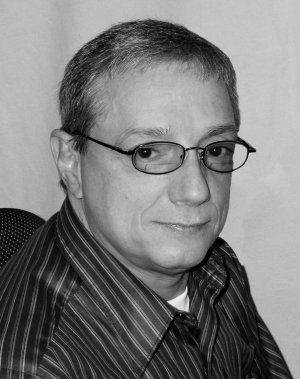
LAKE COUNTY – As Aug. 5 through 11 is National Health Center Week, it a good time to celebrate the efforts of groups like Mendocino Community Health Clinic (MCHC) and its board of directors for their contribution to the health of our local community.
Meaningful service is one of John Pavoni’s fundamental values. The Clearlake Oaks resident works with disadvantaged children and serves on the Lake County’s Maternal Child and Adolescent Health Advisory Board, East Lake Elementary School’s Site Council, Konocti Unified School District Bond Oversight Committee, Clearlake Oaks Manor Senior Housing Project and serves as Liaison Officer for Li'l Acorns Preschool.
Since 2000, he has served on the Board of Directors of Mendocino Community Health Clinic (MCHC). In 2006 and 2007, his peers have elected him to the position of board chair. He holds governance oversight of MCHC’s three community-based health centers: Hillside Health Center, in Ukiah, Lakeside Health Center, in Lakeport and Little Lake Health Center, in Willits.
“I have stayed on the MCHC Board out of a desire to ‘pay it forward,'” Pavoni explained. “As a MCHC consumer and as a citizen, I know that serving MCHC is an opportunity to safeguard the right to health care for others and for my family. It is a way to build a safe and healthy future that will benefit all of us.”
A former nurse, Pavoni has become certified in Health Center Governance through the National Association of Community Health Clinics (NACHC). NACHC certification marks the board’s commitment that MCHC will work with staff to provide quality, competent, cost-effective health care at each of its centers.
He also recently participated in a training at UCLA’s Anderson School of Management/Health Care Executive Program.
“Being a board member requires something more that just showing up to meetings,” Pavoni explained. “Health care is quite complicated and, to be effective as a board member, you must engage in continuous education. This is a must and, for me, it is a passion. The training offered through NACHC helped to familiarize me with the procedural, financial, legal and technical responsibilities of serving a community health center.”
Prior to 1960, before the development of the community health center system of care, distribution of health services was primarily based on a community’s financial ability to support their health care provider. Of course, that left many small and rural communities without services from a doctor or dentist; often, there were not enough people in the community to make the “business” of doctoring pay.
As part of President Johnson’s War on Poverty, the dire health status of our nation’s citizens was improved through creation of a nationwide system of community health centers.
Since the beginning, federally funded health centers have been required to have boards made up of a majority of people who use its services.
“The consumer-based boards of our nation’s community health centers make it possible for each center to meet the unique needs of their community,” Pavoni noted. “Such boards exhibit better responsiveness to the health care needs of their families, friends and neighbors. Having such members gives center's administration a different perspective. We are people who utilize services the clinic provides.
“First and foremost, we are volunteers,” he continued. :”We have no financial incentive for our service. We are involved to demonstrate our commitment, to our communities and to staff as they provide the best health care possible. I am also proud to say that we work hard to ensure that quality healthcare is available.
“The health centers operated by MCHC strengthen the local Web of care in each community,” said Pavoni. “Our centers meet the highest standard of care as demonstrated by recent results from our review by the Joint Commission on the Accreditation of Healthcare Organizations (JCAHO). Their report on our services provides an in-depth look at our system of care, and their accreditation of each of our centers provides strong evidence of excellence.”
Because of his position as board chair, Pavoni also serves as a board member on the Alliance for Rural Community Health (ARCH). ARCH is a consortium of Lake and Mendocino County health centers.
“ARCH helps to give our region’s rural communities a strengthened voice in the growing healthcare debate,” he said. “Through ARCH, we are advancing our strength as patient advocates, locally and regionally.”
As the national health care environment worsens, the local system is feeling the impacts. “The difficulty of recruiting doctors, dentists and nurses into an area where housing prices have gone through the roof is only going to get worse,” said Pavoni.
“New programs are going to be needed to support the health of our aging population but, at the same time, the commitment to caring for these needs is diminishing. I am hopeful that, as health centers work together to advocate for meaningful local solutions though ARCH, we will be empowered to address the health care needs of our community more effectively.”
The federal community health center program is recognized as one of the federal government’s most effective. Designed to have a unique and significant impact, the program is expanding access to health care for underserved populations.
According to ExpectMore.Gov, “A 1998 evaluation found Medicaid health center users experience 22 percent lower hospitalization rates than Medicaid users receiving care from other sources.” In this way, health center patients improved health status is reducing the impacts on local hospitals and other service and law-enforcement agencies.
In addition to John Pavoni, Manuel Ramirez, former staff member of Lake County Environmental Health, represents the interests of Lake County.
From Mendocino County, Directors include Harold Lance, Carlos Frausto, Robert O'Connell, Bill Mergener, Bonnie Carter, Anne Veno Caviglia, Cyril Colonius and John Slonecker.
For more information about how you can make a contribution to Lakeside Health Center by becoming an MCHC Board Member, please contact Kathy MacDougall, administrative assistant to the president, at 472-4511.
Margaret McClure is director of communications for the Alliance for Rural Community Health.
{mos_sb_discuss:2}