 How to resolve AdBlock issue?
News
The tax and accounting arm of Thomson Reuters, the New York-based news organization, analyzed the various versions of the bill and arrived at the following list of tax breaks which survived the negotiations process to make it into the final version.
Jim Seidel, chief tax analyst from the Tax & Accounting business of Thomson Reuters, said were some significant changes in the House and Senate bills.
What follows are some highlights of what survived, which is expected to be signed soon by President Barack Obama.
– AMT patch. Only the Senate bill included the one-year AMT “patch,” without which millions more people would have been hit with the dreaded alternative minimum tax for 2009. This version survived; the patch will be in place for 2009.
– Homebuyer credit. The House provision basically won out over the Senate's; it removes the repayment requirement and bumped up the refundable first-time homebuyer credit to $8,000, unless the home is resold within 36 months of purchase. This would apply for homes bought after 2008 and before Dec. 1, 2009.
– Breaks for new car buyers. For tax years beginning after Dec. 31, 2008, the Recovery Act adds an increased standard deduction for state or local sales or excise taxes imposed on the purchase of a new motor vehicle. Only taxes on up to $49,500 ($24,750 for a married person filing separately) of the purchase price may be deducted. The deduction phases out between modified AGI between $125,000 and $135,000 ($250,000 and $260,000 on a joint return). The deduction is available for the purchase of a new passenger automobile or light truck with a gross vehicle rating of not more than 8,500 pounds, or a motorcycle or motor home.
– New credit for workers. Both bills contained a new refundable tax credit, which in the final version has been reduced to 6.2 percent of earned income up to a maximum credit of $400 for individuals and $800 for working families. The credit starts to phase out at income levels (AGI) above $75,000 ($150,000 for joint filers). (In the earlier versions, the maximum credit was $500 for singles or $1,000 for couples.) The credit, which will apply for 2009 and 2010 only, can be claimed as a reduced amount of income tax wage withholding, or through a credit on a tax return.
Said Seidel, “It is anticipated that taxpayers' reduced tax liability under the provision will be quickly implemented through revised income tax withholding tables produced by IRS.”
– Economic recovery payments. While not technically a tax provision, only the Senate bill had a one-time payment of $300 for retirees, disabled individuals, Social Security beneficiaries, SSI recipients, and veterans receiving veterans' disability compensation and pension benefits. Now, it's $250 instead of $300, with an analogous provision to give the same amount to certain government retirees who are not eligible for Social Security benefits. Any amount received under this provision reduces the amount available under the above workers' credit.
– Expanded earned income tax credit (EITC). Both the Senate and House agreed to expand EITC, and the end result is a temporary increase to the EITC to 45 percent of the family's first $12,570 of earned income for families with three or more children for 2009 and 2010. For example, in 2009, taxpayers with three or more qualifying children may claim a credit of 45 percent of earnings up to $12,570, resulting in a maximum credit of $5,656.50. The Recovery Act also increases the beginning point of the phase-out range for all married couples filing a joint return (regardless of the number of children) by $1,880.
– New education tax credit. Both the Senate and House bills expanded the HOPE education tax credit for 2009 and 2010, making it available for four years of post-secondary education instead of only two at a rate of up to $2,500 of the cost of tuition and related expenses per year (100 percent of the first $2,000 of expenses and 25 percent of the next $2,000). The final version also makes 40 percent of the credit (i.e., a maximum of $1000) refundable. The credit phase-out threshold also has increased to over $80,000 ($160,000 for joint filers), making it more available than before to higher income taxpayers.
– Computers as an education expense. The Senate bill, but not the House bill, allowed computer technology and equipment to qualify as an education expense that can be paid from a Code Sec. 529 plan for 2009 and 2010. This provision survives in the final version.
– Unemployment compensation exclusion. Only the Senate bill provides a temporary suspension of federal income tax on the first $2,400 of unemployment benefits received in 2009. This provision also survived.
– Transportation fringe benefits. Only the Senate bill increased the maximum monthly exclusion for employer-provided transit and vanpool benefits (currently $120) to the same level as the exclusion for employer-provided parking (currently $230). That provision remains in the final version.
{mos_sb_discuss:2}
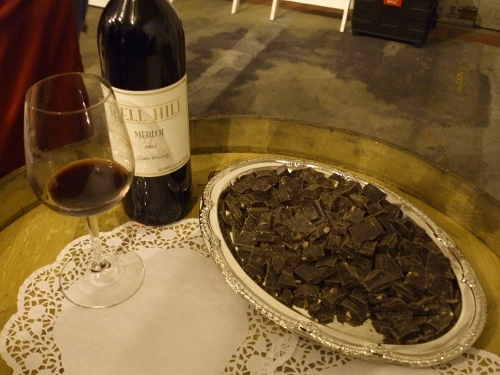
THIS STORY HAS BEEN CORRECTED REGARDING THE NUMBER OF TICKETS SOLD; IT ALSO HAS BEEN CLARIFIED AS TO THE PROVIDERS OF THE CHOCOLATE.
LAKEPORT – A benefit for the Lake Family Resource Center, the third annual Wine & Chocolate fundraising event, held on the second Saturday of February each year, was a roaring success this year.
With between 400 and 500 tickets sold before the event, many more braved the inclement weather and snow-capped mountaintops to pay at the door and enjoy the fruit of Lake County vines masterfully paired with chocolate by sommeiler Stephanie Cruz-Green, owner of Focused on Wine in Kelseyville.
Specialty workshops on food and wine pairing, wine sensory and olive oil tasting also were held.
Mt. Konocti Growers was the venue once again for the event, which supports the programs of the Lake Family Resource Center. This year, however, the event was expanded into two of their buildings instead of just one.
The largest fundraiser for the center, Wine & Chocolate attracts visitors from around California to indulge in delicious wines and decadent chocolates.
Hooper’s Chocolates, a division of Windsor Confections – whose motto is “Gourmet Chocolate with a Mission” – along with Bruno's Shop Smart and other sources provided tasty chocolate treats that were paired with many Cabernets, Zinfandels, Syrahs and other red varietals.
This year, the event also featured a Wine Store, where event-goers could purchase the wines they favored most.
Twenty-eight wineries with grapes grown in Lake County, most with local wineries, poured their varietals for the benefit of “strengthening families.”
The Lake Family Resource Center, founded in 1995, serves more than 4,500 individuals each year in Lake County through violence prevention, intervention and treatment, child and youth development, parenting education and personal development, and health and wellness.
The center also is working to build a new domestic violence shelter in Kelseyville.
E-mail Terre Logsdon at


{mos_sb_discuss:2}
The Greeks traded with many different cultures, and wine was imported from other regions. Greek merchants started marking the earthenware jugs that wine was stored in (called amphorae) with symbols that denoted where the wine came from, and people came to prefer wines from certain regions.
The Hungarians created the idea of systematically designating official “growing regions” in 1730, taking note of the conditions of the soil, sun exposure and the potential to develop disease.
The idea of growing regions slowly became popular throughout Europe, and by 1935 the French officially started the Institut National des Appellations d’Origine and eventually established the Appellation d’Origine Controlee label (AOC) in the 1950s as the official French government brand.
This system is now used worldwide for wine, coffee, tea, cheese, lentils; the French even have an AOC label on a breed of chicken. The French breed of chicken called Poulet de Bresse has a red comb, white feathered body and blue legs which are, of course, the colors of the French flag.
If you remember from my article on the High Valley American Viticultural Area (AVA), there is little difference between an AVA and the French appellation system (AOC). They both designate specific areas based on terrain, climate and soil conditions for growing a particular item.
Probably the world’s most famous appellation is Champagne, which produces the renowned bubbly drink that, if made anywhere else in the world, must by law be called “sparkling wine.” Some winemakers will skirt around this by putting “methode champagniose” on the label, meaning made by the Champagne Method. Many countries have now adopted similar systems of “environmental pedigrees.”
The Red Hills AVA was established in 2004 and contains numerous wineries on more than 31,000 acres. There are many independent vineyards in the AVA that don’t have wineries of their own but grow grapes to sell to wineries within the AVA, throughout the county, and even to neighboring counties.
The most noticeable factor of the vineyards in the AVA is that the soil is predominantly red lava from the area’s dead volcanoes. Although the total acreage of the Red Hills may seem quite large, the amount of acres that are suitable for vineyards is actually rather small.
The climate of the Red Hills AVA is very similar to the Rhone Valley and Bordeaux region of France, so grape varietals from those areas grow really well in the Red Hills AVA. Rhone variety grapes like cooler conditions, while Bordeaux variety of grapes like a warmer situation. The Red Hills AVA provides both.
If you want to have a little giggle at wine advertisements you can have one when they mention the rich soil of the vineyards. The truth is that better wines come from poorer soils compared to farms that grow things like corn, lettuce or similar crops. If the soil is too rich and organic the vines grow too fast and the grapes are too big. Wine tastes better if the grapes are half-starved.
This is why the Red Hills AVA is so good for vines: lava isn’t really a nutrient. The soil of the Red Hills is more like compact sand and porous lava rocks. Water trickles down and sits 3 to 9 feet below the surface, forcing the vine to reach down deep with its roots to get a drink and making a really strong healthy plant in the process.
All sorts of wild life call the Red Hills home. In visiting these various vineyards while researching this column, I personally saw deer, a cougar, jackrabbits and several types of birds of prey. Reports from the vineyards include boar, bears and turkeys making appearances on the properties. The Red Hills has the benefit of plenty of land to share with the wildlife of the area and still have vineyards dotting the landscape. Some of the larger vineyards leave sizable wild areas cutting through their property (called wildlife corridors), which not only gives wildlife a place to survive but cuts down on damage from wildlife in the vineyards by leaving native habitat on which they can forage.
Bryan Kane of Sol Rouge admitted that the deer fence around his vineyard was the single highest cost of his vineyard. Deer fences were a common site as I visited various vineyards. Large wineries that have hundreds of acres of vines can afford to lose some of their crop to wildlife, but smaller ones like those of the Red Hills can’t survive with that kind of damage because every vine matters. In Napa and Sonoma counties, damage from wild pigs on occasion has been so substantial that wineries invite hunters to their properties in order to thin out the populations.
The Red Hills seem to have been anointed with the name “red” in order to color code which wines should be grown there. The red wines of the AVA, in my not-so-humble opinion, are the best I’ve ever tasted. Even people who prefer white wines, like me, will find many red wines from the Red Hills that they will love.
My original idea of mentioning all the awards the Red Hills vineyards and wineries have won for their wines was quickly thrown out since there are so many they would take up too much room of the article. This isn’t to say that white wines from the AVA aren’t great also but the reds steal the spotlight.
Many of the people I spoke to about the Red Hills made a point to mention that the Mayacamas mountain range that passes through Napa is the same mountain range that runs through Lake County. As much as Napa has touted itself as the nation’s absolute superior AVA, you should keep in mind that climate and terrain are not respecters of arbitrarily drawn county line designations.
Being a part of the same mountain range, it simply stands to reason that much of what makes wines grown in Napa of such high quality would also make Lake County wines of a similar quality. But then Lake County has the advantage of having the cleanest air in the state.
The Red Hills vineyards are also at a higher altitude than Napa vineyards, which produces a greater intensity of flavor in the grapes, and they have the benefits of the Red Hills volcanic soil. So conditions in the Red Hills are similar to Napa, plus ... plus ... plus.
Napa valley growers are aware of the superiority of Lake County grapes and are looking north to take advantage of it. Many wineries in Napa buy Lake County grapes to mix with their own wines, and there are some who have started vineyards of their own in Lake County to be able to ship the grapes to Napa to blend with their wines. Some Napa valley wineries have to add tannins and tweak their wines in order produce a flavor similar to how Red Hills wines taste naturally. Buying Lake County grapes allows them to gain the benefits without having to start or market a new label. Nevertheless, Napa is out of land and so when they need more grapes they are looking to Lake County.
I found a common denominator when I spoke to vineyard owners, growers and winemakers in the Red Hills. They all came specifically to the Red Hills to grow their grapes and make their wines there because of the unique characteristics of the place. They didn’t choose the Red Hills because the land was cheap or easy to grow on but purposefully sought out the conditions the Red Hills AVA provides.
They have pride in the fact that their wines are grown in the Red Hills; this is evident when you look around at things that are produced in the AVA. Bottles are marked “Red Hills” while most other wines from in the county don’t mention their AVA or the county at all on their bottles. Gregory Graham sells shirts with his winery’s name and “Red Hills” right along with it. The pride in the Red Hills really shows.
Cougar’s Leap Winery, which started as the Black Frog Ranch/Vineyard, sits at an elevation of 2,300 feet and has 80 acres, 35 of which are planted with two varietals. They are completely off the utilities grid (they produce their own electricity, water, etc.). They chose the name Cougar’s Leap because cougars have been seen on the property. The property is accented with retaining walls made of huge blocks of obsidian which were removed from the ground when the vineyards were planted.
Fortress Vineyards owns 340 acres, 70 of which are planted with six varietals. What sets them apart is that half of the vines are white and the other half red. They are located on Benson Ridge at 2,000 to 2,400 feet in elevation. The large rocks and boulders pulled from the soil during the soil preparation and planting process were placed about the property and give it a fortress-like appearance, giving the vineyard its name.
They are on the way to producing their own wines but some of the grapes are currently being sold to Napa. Barbara Snider is co-owner, and describes the vineyard as being a high altitude, mountain vineyard that gets direct lake influence, since they are actually on Mt. Konocti. She also explained that her musque clone vines grow very well in the climate. They have no immediate plans to expand.
Gregory Graham Winery sits between 1,800 and 2,000 feet above sea level with 35 acres, 27 of which are planted with grapes of four varietals. He waters his vines with well water from two wells on the property. His property gets less fog and clouds than most areas of the county so his vines get more growing time, are faster to go to flower, and are harvested later in the season so they can really pack in the flavor. It should also be noted that all of Graham’s red wines are estate grown, fermented and bottled.
The Moore Family Winery sits right on the edge of the Red Hills AVA. They own 100 acres, 14 being planted with three varietals and more to come in the near future. At 3,000 feet above sea level, their tasting room is reported to be the highest altitude tasting room in California. They have a couple of manmade ponds that are used for irrigation and swimming, and one is stocked with fish. (All of these wineries are mocking me with their personal fishing ponds; it’s like some sort of conspiracy!) They are also in the process of digging a cave/conference center into the side of the mountain they are on.
Obsidian Ridge has 112 acres, 105 of which are planted with four varietals at an elevation of 2,350 to 2,640 feet. Their name is a nod to the fact that, just to plant the vineyard, they had to remove 200 tons of obsidian (aka bottle rock) from the property. Obsidian is still a large component of their landscape, with some pieces weighing a couple of hundred pounds.
Red Lava Vineyards owns 80 acres, with 10 being planted only with Syrah for now. There are plans to expand, which even include a winery in the future. The vineyard is not far from Beckstoffer Vineyards, with a southern exposure overlooking Thurston Lake on a 14- to 16-percent grade. Every morning has a strong lake breeze flowing across the vineyard.
Sol Rouge Vineyards and Winery owns 70 acres, with six planted including nine varietals. They have an irrigation pond left over from when the property was a walnut orchard. Bryan Kane, the owner of Sol Rouge, told me that the Red Hills AVA gets the grape skins to grow thick and this gives you better color, flavors and tannins into the final product. He also mentioned how he searched the entire state looking for where he wanted to grow the best grapes and chose the Red Hills because it had everything he was looking for in order to produce the factors that he wanted in his wines.
Snows Lake Vineyard owns 2,300 acres, 800 of which are planted with seven varietals. All of the varietals are red wine grapes, 75 percent of the acreage going to Cabernet Sauvignon. They are between 1,900 and 2,400 feet in elevation and are owned by the Ladera Management Co.
They not only have their own label of Snows Lake Cabernet Sauvignon called “One” and a Cabernet Sauvignon/Cabernet Franc blend called “Two,” they also sell grapes which are used in 10 to 12 branded products including Cakebread Cellars, Hawkscrest, Dynamite, Cartlidge and Browne, Rosenblum Cellars and Jade Mountain, just to name a few. Listening to John Adriance, the chief operating officer at the vineyard, speak about Snows Lake was a real treat, just watching someone talk about something they are truly passionate about.
Wildhurst Winery, although they have no vineyards of their own in the AVA currently, has one wine, a Syrah, which is made from grapes purchased from an “undisclosed source” in the Red Hills AVA.
Steele Winery also doesn’t have a vineyard in the AVA, but produces a Cabernet Sauvignon from the Beckstoffer Vineyards in the Red Hills.
There are many more wineries and vineyards in the AVA, and I have a list of about a dozen more people I wanted to talk to and visit, but there just wasn’t enough time to get to everybody.
Amusingly, when I first considered writing one column about all of Lake County’s AVA’s, one of the winemakers in the Red Hills said that it would take at least an entire column just to cover the Red Hills and look at that, he was right.
Ross A. Christensen is an award-winning gardener and gourmet cook. He is the author of "Sushi A to Z, The Ultimate Guide" and is currently working on a new book. He has been a public speaker for many years and enjoys being involved in the community.
{mos_sb_discuss:2}
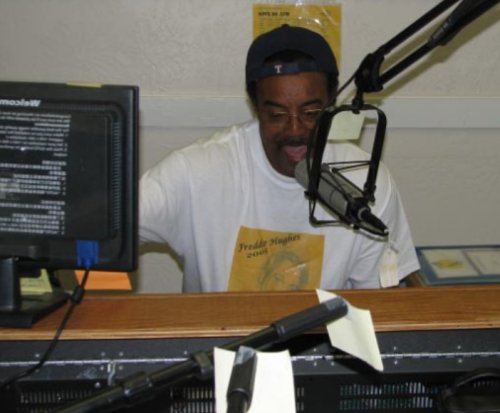
it is no mystery
we makin’ history …
Linton Kwesi Johnson, “Making History” circa 1984
Black History Month is upon us again. Academic Carter G. Woodson, known as the Father of Black History, was responsible for the first Negro History Week celebration in 1926. The week was later expanded into a month and renamed Black History Month.
OK. That was 1926. Separate but equal was the legal status quo, decisioned by the Supreme Court of this land in the 1896 case of Plessy v. Ferguson. The arms of government and its citizenry allowed this purported equal sense of justice to sit on the books unmolested until 1954. In the landmark decision Brown v. Board of Education, public school segregation at the state level was declared illegal. Several later Supreme Court decisions outlawed segregation at the federal level and all race based legal restrictions on marriage.
That, my CyberSoulChildren, is the history of race relations in 145 words. Unfortunately, it’s not so simple. There are those among us who view the election of biracial American President Barack Obama as the fruit of the proof of the success of the all-inclusive American melting pot dream. Still others, far, far to the right on the political spectrum, view Obama’s election as the beginning of the end. (I’m speaking here of our right wing TV and radio hosts who are enjoying lucrative careers magically mixing politics and entertainment.)
The point of all this is that it would be oh so grand if American history were really all-inclusive and told the absolute truth about how this mess we call freedom sits simmering on the cauldron of discontent. There would be no need for Black History Month or American Indian Day or any of the schisms that bind us into the little boxes that Malvina Reynolds wrote about and Pete Seeger made famous in song. Our history, like the God, or whatever you choose to call The Great Entity that made us, is too large to be segmented.
*****
I am by no means an authority on any singular aspect of history. But today I am compelled to tell you of what happened to me the first time I attended a Bloody Island sunrise ceremony.
I moved to Lake County finally in 1999. This is after a trial run at living here led me back to the Bay Area in 1998. In 2001, when I became involved with Lake County Community Radio, I met my brother Clayton Duncan and became intrigued with the story of Bloody Island. I became aware of the ceremony that Clayton and the human tribe held every May commemorating the tragic events that happened in Lake County in 1850. (If you don’t know about it, do the research!)
I told Clayton I would come to the ceremony. I think I overslept the first two years I tried to go. Finally, sometime earlier in this decade, I got myself together and got up before daybreak on the designated Saturday morning to attend the ceremony. This particular year, the attendees were to meet at the Robinson Rancheria Education Center at about 4:30 a.m., then caravan over to the site of Bloody Island.
I was living in Nice at the time and drove over by myself. I encouraged my young son and other friends to come with me but there were no takers. It was a clear, cool, crisp morning. The stars dotted the sky as only they can do in these parts. I was sipping coffee as I traveled on Highway 20 toward the Education Center. When I was maybe 2,000 feet away from the right turn I was to make, I could see a swinging light. As I drove closer, I perceived a human figure waving what appeared to be a lantern or flashlight at the intersection. It looked like a woman. Surprisingly though, as I made the right turn, I glanced over to fully identify who or what was waving the light and, THERE WAS NO ONE THERE!
I think there was a group of about 50 people who turned up for the ceremony. We drove over to the site, parked our cars and walked the last yards to where the rock and plaque commemorate the sad event. As we approached, I noticed a group of horses, huddled together. Suddenly, the horses galloped away at a pretty fast clip. It was if they were saying, “Let’s let these human tend to there spiritual business.”
The events really had an impact on my consciousness. Clayton and his brother spoke on the history of Bloody Island. They told of how they believe that the spirits of the ancestors are yet bound to the site and can’t fully transition to the other side until we here on this side fully forgive and come together. I believe I saw evidence of this. I was stone sober. I had been for years.
After the ceremony I asked Clayton if perhaps he stationed someone at the intersection to guide folks into the Education Center parking lot.
“No, brother,” he answered with a smile. “Sounds like you were blessed with a guide from the other side.”
Keep prayin’, keep thinkin’ those kind thoughts!
Upcoming cool events:
New Orleans Soul Queen Irma Thomas at Yoshi’s San Francisco. Sunday, Feb. 15. Shows at 7 and 9 p.m. 1330 Fillmore St. Telephone 415-655-5600.
Pete Escovedo and Family Feat. Sheila, Juan and Peter Michael at Yoshi’s Oakland. Sunday, Feb. 15. Shows at 7 and 9 p.m. 520 Embarcadero W. Telephone 510-238-9200.
Malo at Cache Creek Casino. Sunday, Feb. 15. 8 p.m. 14455 Highway 16 Brooks. Telephone 800-452-8181.
T. Watts is a writer, radio host and music critic. Visit his Web site at www.teewatts.biz.
{mos_sb_discuss:4}
At approximately 1:40 p.m. 854 customers lost power as the result of a tree going into power lines, said Brandi Ehlers of Pacific Gas and Electric Co.
The first 566 customers had power restored at 3:11 p.m., with the remaining 288 customers regaining power at 3:16 p.m., Ehlers said.
Throughout the day Cobb experienced snow showers and wind, according to Cobb resident Roger Kinney.
The National Weather Service issued a wind advisory for Lake County that remains in effect through noon on Sunday, warning of 35 to 50 mile per hour wind gusts overnight and early Sunday morning.
E-mail Elizabeth Larson at
{mos_sb_discuss:2}

LAKEPORT – Two drivers were injured in an early morning crash on Friday that the California Highway Patrol said appeared to have resulted from an icy roadway.
The collision occurred just after 7 a.m. on Highway 29 just south of Park Way near Lakeport, the CHP reported.
Officer Craig Van Housen said 45-year-old Sherrie Stanley of Upper Lake was driving her 1988 Toyota pickup southbound on Highway 29 when she lost control on the icy roadway.
The pickup slid sideways, going across the center divider and colliding with a 2002 Ford pickup driven by 33-year-old Glenn Greer Jr. of Lakeport, Van Housen said.
Van Housen said Stanley's driver-side door hit the left front of Greer's pickup, which also had three passengers, including two children, inside.
The crash closed the roadway completely for about a half hour, with the northbound lane reopening shortly before 7:40 a.m., the CHP reported.
Rescuers had to work to free Stanley from the wreckage, Van Housen said. “It took a while to get her out.”
Stanley sustained major injuries, with her left side and left arm badly lacerated, Van Housen said. She was transported to Sutter Lakeside for treatment.
She was wearing her seat belt, as was Greer and his passengers. Van Housen said two children in car seats in the pickup were properly secured and suffered no injures.
Greer's pickup, however, caught fire after the collision and was burned. Everyone got out with no problems, according to Van Housen.
Greer, who Van Housen said saw the crash coming, braced himself, and suffered what may be a shattered left wrist.
Although Caltrans has been very diligent about keeping the highways sanded, Van Housen urged drivers to be especially careful in the morning while driving to work, especially if it's between 5 a.m. and 7 a.m., when roads are likely to be very icy.
E-mail Elizabeth Larson at
{mos_sb_discuss:2}