 How to resolve AdBlock issue?
News
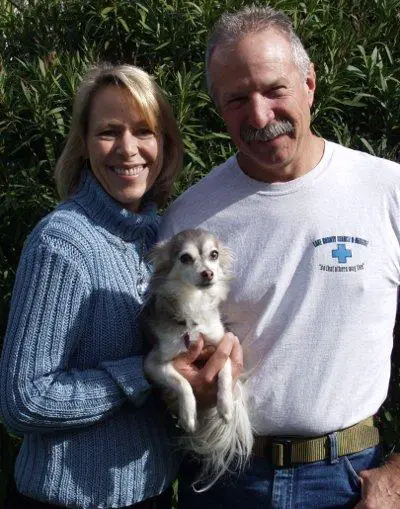
LAKEPORT – Gary Basor is glad to be home.
Basor returned to his Lakeport home late Friday after spending two weeks in Haiti, assisting with the recovery of victims of the Jan. 12 earthquake, a 7.0-magnitude shaker that devastated the country.
The veteran member of the Lake County Sheriff's Office took two weeks of vacation time to make the trip to Haiti, where humidity, mosquitoes, an early rainy season and general resource challenges made the job of recovery even more difficult.
The trip, he said, gave him an even greater appreciation of home.
“When you see people who are surviving with nothing, it definitely humbles you with what we have here,” he said, sitting with wife, Christina, and their faithful Chihuahua, Harley, at their Lakeport home on Saturday.
Basor was with a team from Kenyon International conducting recovery excavations at the Hotel Montana, a major hotel in the city where people from around the world were believed to have been staying when the earthquake hit.
Kenyon International arrived in Haiti shortly after the earthquake, and reported that it has so far recovered 46 bodies, 13 of which have been transferred to US custody, with others transferred to the French, Canadian and Dutch governments. Twenty bodies so far are unidentified.
Mario Gomez, Kenyon's spokesman, said they were surprised by the magnitude of the destruction in Haiti. “It's a very challenging environment.”
A nongovernmental organization hired Kenyon to work at the Hotel Montana, Gomez said. Because of privacy issues, he could not identify the client, who had several people believed to be at that location.
The search for Americans and for people of nations from around the world is continuing.
Last Friday, Assistant Secretary of State Philip J. Crowley said during a press briefing that 15,000 Americans have been evacuated from Haiti, and the State Department has opened cases on about 2,200 Americans who haven't yet been located.
Crowley said 97 Americans are confirmed dead due to the Jan. 12 earthquake, including four US officials – among them a member of the military and a Foreign Service officer – and 93 civilians.
Basor, 55, has been master diver since 1973 and began with Lake County Search and Rescue in 1982, long before he joined the Lake County Sheriff's Office in corrections in 1995. He later became a deputy and in 2006 was promoted to sergeant.
Today, he's a patrol sergeant whose duties cross over into work with the sheriff's Office of Emergency Services. He has been on the scene at critical incidents all over the county, including 2008's Walker Fire near Clearlake Oaks.
Last year, Basor went to a search and rescue conference where he happened to hear Robert Jensen, president of Houston-based Kenyon International, speak about the company.
Kenyon International is a century-old company originally founded in the United Kingdom, according to Gomez.
A company history said Kenyon began in 1906, when the London and South Western Railway boat train jumped its tracks and crashed in Salisbury, England. Nearly all of the casualties in that disaster were American, and they were returned to their families through the efforts of brothers Herbert and Harold Kenyon of JH Kenyon Limited, who deployed from London to work with the coroner and chief constable to prepare and repatriate the deceased.
Later the company began to expand into dealing with other incidents, such as airplane crashes and natural disasters, Gomez said. More recently, the company has been involved in recovery and identification efforts for Sept. 11, 2001, as well as Hurricane Katrina in 2005 and the Asian tsunami in 2004.
Basor was so impressed he decided to join the company, which hired him as an independent contractor. Gomez estimated there are about 1,200 Kenyon team members like Basor around the world, with a variety of skills – from search and rescue to scientific skills involving DNA analysis.
In a disaster, team members from the closest countries are called up, and in Haiti's case many of those responders are coming from the United States, Gomez said.
Getting the call
Shortly after 5 p.m. Jan. 29, just as he was getting off shift at the sheriff's offie, Basor got the call that he was needed in Haiti, and he was packed, ready and on his way to the Sacramento Airport with just a few hours of sleep the next morning. He said Sheriff Rod Mitchell gave him the go ahead to take the leave time for the humanitarian mission.
Christina, 57, a raw foods chef, made sure he had plenty of healthy foods, including lots of dried fruits and nuts, to take with him. Basor, who always travels with all kinds of gear needed in emergency situations, said he took a lot of his own equipment with him.
The trip to Haiti was a long one, about 24 hours of traveling, he estimated. After several layovers including stops in Houston and Miami, Basor arrived in Santo Domingo, capital of the Dominican Republican, Haiti's neighboring country. The Dominican Republic didn't suffer the same impacts as Haiti, he noted.
From Santo Domingo, it was a six hour drive to Port-au-Prince over a rough road with drivers following few if any traffic rules. Basor described it as “Mr. Toad's Wild Ride”; he said he watched people ignore stoplights, fuel trucks pass passenger cars over double-yellow lines with cars simply having to go off the road to avoid collisions. The main road along the way also frequently floods and has to be rebuilt.
Watching the driving from a peace officer perspective, Basor noted, “I could have emptied a ticket book in 30 seconds.”
Once in Port-Au-Prince, Basor met up with other Kenyon staffers, who were housed in a fully-contained camp near the airport, with tents, outdoor showers and restrooms, packaged meals ready to eat and plenty of water, a critical need in Haiti, where the water isn't safe to drink in the earthquake's aftermath.
“It was pretty sparse and we knew that,” he said. “I had taken enough equipment to be pretty self-sufficient.”
He arrived at about 2 p.m. Jan. 31 and spent the rest of the day getting an orientation before being deployed to the recovery scene the next day.
By the time he arrived, live rescues were past. He didn't see bodies stacked in the streets, although one day on the way to the excavation site, they saw a body alongside of the road that had been pulled from rubble and set aflame.
Moving out through the city that first day, Basor recalled, “That was an incredible, eye-opening experience, to see the conditions the people were living in, to see housing and buildings just in total collapse. That first day I didn't see anybody trying to clean up or do anything.”
People were walking shoulder to shoulder through what streets had been cleared, and many of them were begging for food and water. “You could see despair on their faces,” he said.
Many areas still appeared to have not been cleared, and people with using whatever water sources they could find for laundry, drinking and sanitation, he said.
Electricity was online in some areas but appeared to be scattered. Basor said red tape needed to be cleared because the “boots on the ground” people trying to do things like build water purification systems were running into difficulties offering assistance
Basor said he also saw looters – both armed and unarmed – roaming the streets. Those who were armed carried rifles and shotguns.
He also saw signs that world relief organizations were handing out supplies and makeshift tents were being replaced with hundreds of white dome tents. United Nations vehicles also were spotted around the country.
He said he and his team members had little interaction with the people. They were advised not to, and he said they really didn't have the time because of the long days.
After a few hours of sleep at night, Basor and his teammates usually were awakened at around 5 a.m. with C-17 and C-130 planes flying overhead, along with some private aircraft.
On the average day, they were leaving base camp by 6 a.m., and Basor said they often didn't return until as late as 8 p.m. They worked seven days a week.
One day as they headed to the excavation site, they saw people dressed up and headed to church. Basor said it was good to see a sign of some sense of civilization in the midst of so much destruction.
It took about 45 minutes to work through the crowded city, where even police and public safety officers with sirens on found themselves stuck in traffic, Basor said.
Multinational team worked at the scene
Kenyon's team in Haiti included forensic anthropologists, fingerprint specialists, mortuary funeral directors and mortuary services technicians, Basor said.
“The recovery process was difficult at times, especially because of the heat, the humidity and the location of remains,” said Basor.
Excavators from the Dominican Republic were working on scene with recovery teams, which included spotters and structural specialists. Basor said no dogs were part of their operation.
The excavators, Basor said, were trained to remove rubble as carefully as possible.
He said the structure had ceiling to floor collapse, and they were searching for void areas where bodies might exist.
When remains were spotted, the machines would stop and the entire site of about 170 people shut down while the body was removed, he said. The bodies, he said, were treated “with the utmost respect.”
The remains were then sent to a temporary morgue where they were identified in order to return them to their families. Basor said they also attempted to find personal affects to help with identifications.
Basor was working with people from around the world, including a forensic anthropologist who came from Scotland.
Their work was grueling; days were hot – about 90 degrees – with humidity at about 90 percent. He and his team of four went through two cases of water a day, and they were urged to take frequent rest breaks.
The more humid it got, the more the mosquitoes came out, and Basor said even after he returned home he was continuing a round of oral malaria prevention medications.
All of Kenyon's supplies had to either be flown in or come through the “itty, bitty road” from the Dominican Republic. Basor said there was little or no refrigeration, and even though Kenyon was bringing in supplies of fresh fruit, one afternoon an entire shipment spoiled because of the climate.
Christina Basor, who is used to her husband having to drop everything and leave on a rescue mission, said she received some special comfort thanks to the fact that a computer with e-mail capability was at the Kenyon base camp. That meant she got e-mail updates from her husband, which let her know he was OK.
Then the computer went down for a few days. Although she's trained herself not to worry, she got worried anyway. And then someone handed her husband a phone with free minutes from AT&T, and on Feb. 5 she got an unexpected call from him.
Her husband isn't one to complain about hardships, she said, and when she called she could hear in his voice “that he was really satisfied with what he was doing because he felt like he was helping people and making a difference.”
She added, “I just stopped worrying about him after that. This is Gary's calling.”
More work ahead
People were camped near the excavation scene in Haiti, including family members of missing people, Gary Basor said. Some of those people also offered to help.
A few days before the end of his deployment, a woman came to the scene and provided information about her daughter, who she believed had been at the site.
“Through our process and our efforts, the day before I left we were able to return her daughter's remains to her,” Basor said. “It really, for me, gave me that satisfaction through all of the hardship that we were going through, the hard work of our team, made it all worthwhile.”
More problems could be ahead for Haiti. Basor said the rainy season appears to be starting about a month early, and the day after he left there was a huge rainstorm that damaged some of Kenyon's temporary setups.
Basor is used to finding bodies through his work with Search and Rescue and as a deputy coroner. Still, he's never encountered such a large disaster situation, and he and other team members were put through an exit interview to make sure they were OK before they left.
He said he's dealing with his experience in a positive way. “For me it's always been bringing closure to the family.”
On rescue scenes he's encountered family members who tell him, “Don't leave my loved one there.”
Basor added, “For me, that's what drives me to do this.”
That kind of closure allows families to start the healing process, he said.
He also felt there is a greater duty for people like him.
“Those of us in the world that have the ability to respond and help them, I think we have an obligation,” he said.
Recalling what he saw in Haiti, he noted, “No people should have to live that way,” and there's no reason why other nations can't share what they have to make sure Haitians don't stay in those circumstances.
Gomez said Kenyon can't estimate how long they'll be on scene, but based on his experience, Basor estimated that the recovery and identification process could go on for years.
Gomez noted, “It's not a quick process.”
In any kind of mass disaster situation, Gomez said the recovery and response can take months and even years to do, with part of the complexity coming from the paperwork and steps needed to meet the requirements of different countries.
Basor was looking forward to resting up, eating some good food and getting back to work at the sheriff's office on Wednesday.
He's already been asked if he would be willing to return to Haiti in three weeks. He and his wife said they were grateful to Mitchell for letting him go on the deployment, which he realized takes a toll on the small department.
Meanwhile, Basor – reaching out to take his wife's hand – said he came back to Lake County with an added appreciation for family and home.
Christina Basor, whose family has a law enforcement background, is extremely proud of her husband, and she and Harley were glad to have him home safe and sound.
“His life has been dedicated to helping other people,” she said.
E-mail Elizabeth Larson at [email protected] . Follow Lake County News on Twitter at http://twitter.com/LakeCoNews and on Facebook at http://www.facebook.com/pages/Lake-County-News/143156775604?ref=mf .
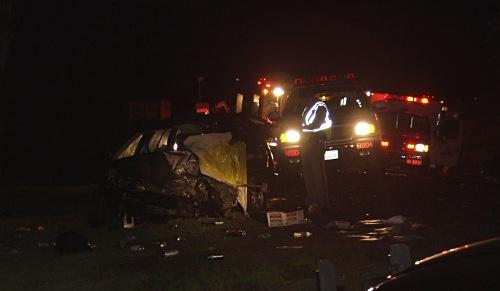
The collision occurred at around 8 p.m. on a curve on Highway 20 between Saratoga Springs and Witter Springs roads.
California Highway Patrol Officer Kevin Domby said a passenger vehicle traveling westbound behind a big rig attempted to pass the truck and collided head-on with a car traveling eastbound.
The driver in the eastbound vehicle died at the scene, while the driver believed to be the cause of the crash had to be extricated, Domby said. The big rig driver was badly shaken but otherwise unhurt.
The highway was shut down and traffic diverted onto Scotts Valley Road or turned back as numerous CHP, Lake County Sheriff's deputies and fire officials worked on scene.
An air ambulance landed at the Half Diamond Ranch a mile and a half to the east of the crash site, and Northshore Fire Battalion Chief Pat Brown transported medical personnel from the helicopter to the scene.
A Northshore Fire ambulance later transported the surviving vehicle driver back to the ranch and the helicopter landing zone.
Domby said the particulars of the incident were still being investigated. Names of those involved were not immediately released.
The inquiry continued late into the night, as CHP officers diagrammed and photographed the scene.
E-mail Elizabeth Larson at
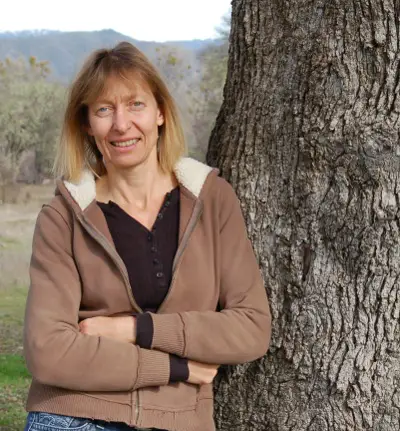
LAKE COUNTY – The Lake County Land Trust is pleased to welcome its new executive director, Catherine Koehler.
After Executive Director Susanne Scholz announced her retirement plans for this March, the trust set about searching for someone to fill her shoes. “Not an easy task!” noted one board member.
But, as it turned out, Koehler with a strong background in science, and most importantly, a love for Lake County, was among the many qualified applicants who applied for the position.
Koehler will take over full responsibilities on March 1.
“We are extremely pleased to welcome Cathy as our new executive director and look forward to her working with us on our many projects,” noted the trust’s president, Pete McGee.
She has a bachelor of science degree in zoology and an master's degree in behavioral ecology.
Koehler currently works as the resident co-director, along with her husband Paul Aigner, for the Donald and Sylvia McLaughlin Reserve in Eastern Lake County. She will continue in this position as both it and the land trust executive director jobs are half-time.
She has an impressive background in the biological sciences and a deep appreciation of the combinations of geology and ecology that comprise the often rare and unique ecosystems of Lake County.
She is proud of her ability to work with diverse groups of people, fostering positive outcomes for common goals.
Koehler currently is chair of the Blue Ridge Berryessa Natural Area Conservation Partnership and has a background in developing and conducting science and natural history based public outreach and education.
She has worked on projects ranging from restoration projects for Inland Coastal Sage Scrub, to bird inventories on U.S. Navy Lands in Southern California and Arizona. She also was involved with an endangered species recovery project for the San Clemente Island Loggerhead Shrike, and developed community outreach programs for Rancho Santa Ana botanic Garden.
Locally, in addition to managing research and land stewardship at the McLaughlin Reserve, Koehler has conducted many outreach programs at the reserve, worked with educators to develop and implement science workshops for grades fourth through sixth, and mentored teachers. She has also been successful in acquiring grants for public outreach and facilities at the reserve.
“Lake County is a wonderful place, with a great mix of cities and small communities, agriculture, natural lands, and intact historical and prehistoric sites. I look forward to playing a part in helping ensure that our county continues to be a great place to live for generations to come,” Koehler said.
The Lake County Land Trust is a private, nonprofit organization dedicated to the preservation of Lake County’s unique natural habitats and open spaces. The group owns and operates the Rodman Slough Preserve at 6350 Westlake Road, Upper Lake, as well as the Rabbit Hill park in Middletown.
For more information about the Lake County Land Trust, go to www.lakecountylandtrust.org .
Follow Lake County News on Twitter at http://twitter.com/LakeCoNews and on Facebook at http://www.facebook.com/pages/Lake-County-News/143156775604?ref=mf .
LAKE COUNTY – What is your vision of Lake County’s future? Did you know that our population is projected to grow by over 50 percent by 2030?
You have the opportunity now to help plan for this growth so that we preserve the character of our communities, provide for needed services, and protect our natural resources.
Lake County 2030, the Region Blueprint Planning Program, asks the question “Where will we live, work, shop and play in 2030?”
The blueprint process uses an extensive community involvement process to develop a set of shared core values and a vision for Lake County’s future growth. The process involves “scenario planning,” where a computerized land-use model is used to show participants the impacts of growth under alternative scenarios. The impacts may involve measures such as how much land is consumed by urban growth, water usage, energy usage, air quality, and impacts to transportation.
Through input received during seven highly interactive community workshops held in early 2009 as apart of Phase 2, the Draft Lake County 2030 Blueprint Vision and Principles were developed that reflect the values of Lake County residents.
In Phase 3 of this process, the vision and principles are used to develop alternative Blueprint Scenario maps. These maps will be commented upon by the public in a series of workshops starting later this month.
The meeting schedule is as follows:
Lakeport: Wednesday, Feb. 24, 6:30 p.m. to 8:30 p.m., Lakeport Senior Center, 527 Konocti Ave.
Lucerne: Thursday, Feb. 25, 6:30 p.m. to 8:30 p.m., Lucerne Alpine Senior Center, 3985 Country Club Drive.
Middletown: Saturday, Feb. 27, 10 a.m. to noon, Calpine Visitors Center, 15500 Central Park Road.
Kelseyville: Thursday, March 4, 6:30 p.m. to 8:30 p.m., Kelseyville Senior Center, 5245 Third St.
Clearlake: Saturday, March 6, 10 a.m. to noon, Best Western El Grande Hotel, 15135 Lakeshore Drive.
The Lake County 2030 Blueprint is coordinated by the Lake County/City Area Planning Council (APC) and participation by a broad range of individuals, agencies and organizations is critical to its success.
The program provides a means for the citizens of Lake County to understand how housing, jobs, transportation and land use combine to impact the quality of life in the region, and how to improve the quality of life through an integrated planning approach.
The values, priorities and needs of the county’s citizens will provide the foundation for the Lake County 2030 Blueprint.
For more information regarding the timeline for the Lake County 2030 Blueprint please view the Blueprint Phase 3 Work Plan and schedule at www.lakeapc.org (and click on “Lake 2030” on the page's righthand side) or call Terri Persons at the Lake APC at 707-263-7799.
For Spanish speakers, please call Jesse Froelich of MIG Inc. at 626-744-9872, for more information and opportunities for input.
Follow Lake County News on Twitter at http://twitter.com/LakeCoNews and on Facebook at http://www.facebook.com/pages/Lake-County-News/143156775604?ref=mf .
This pilot program, funded by the Low Income Home Energy Assistance Program (LIHEAP), is offered at no cost to qualifying homeowners.
Qualification is based on the number of people in the home and current (within the previous six weeks at time of application) income.
Number of people Monthly
in the home income
1 $2,482
2 $3,246
3 $4,010
4 $4,774
In addition to income, the roof of the home must be in good shape and not be flat. Mobile homes are not eligible in this pilot program.
Between Lake and Mendocino counties, 50 homes can be retrofitted with solar electric systems on a first-come, first-served basis.
NCES is a nonprofit organization that provides utility bill assistance and weatherization programs in seven Northern California counties, including Lake and Mendocino.
NCES will utilize two licensed contractors based in Mendocino County for this program, Real Goods and Gaia Energy Systems, to install the solar electric systems and provide home weatherization.
For more information on this program and to request an application, contact Linda McQueen or Glenna Gaches at 707-463-0303, or 966 Mazzoni St., Ukiah.
Follow Lake County News on Twitter at http://twitter.com/LakeCoNews and on Facebook at http://www.facebook.com/pages/Lake-County-News/143156775604?ref=mf .
District 3 Supervisor Denise Rushing invites the public to attend the meeting, which will begin at 5:30 p.m. at the Sons of Italy Hall, 2817 Highway 20.
County staff will provide updates on the redevelopment process, local projects and other issues.
The agenda includes an open forum to discuss issues of interest to the community. Sheriff’s office representatives will be in attendance.
For more information contact Rushing at telephone 707-263-2368 or via e-mail,
Follow Lake County News on Twitter at http://twitter.com/LakeCoNews and on Facebook at http://www.facebook.com/pages/Lake-County-News/143156775604?ref=mf .