 How to resolve AdBlock issue?
News

CLEARLAKE – Ireland is nearly 5,000 miles away from Clearlake, but a little bit of the Emerald Isle can be found nestled in a corner of the city.
That taste of Ireland is courtesy of Will Roll, who owns the Corkman's Clipper Irish Pub.
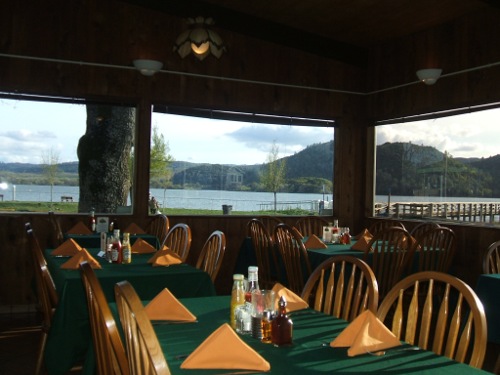
The authentic Irish pub offers music and spirits, a home-cooked meal by a true Irishman and a beautiful view of Clear Lake and its sunsets.
Roll left his home in County Cork, Ireland 45 years ago to come to the United States. He moved to Lake County 10 years ago and currently resides in Hidden Valley.
“We have a real commitment to providing a wonderful experience for everyone, and not just from a culinary standpoint,” said Roll.
Roll makes all of the food from scratch. “I don’t buy anything bagged, boxed or premade,” he said. “We provide our customers with the best of everything.”
He explained, “I learned to cook at the knees of my grandmam and my mam. Everything on my menu is 20 years' worth of dinner parties at my home before ever opening my first pub.”
A wide variety of drafts also can be found at the pub, from the Corkman’s Clipper Irish Pub’s own pale ale to Smithwick’s Authentic Irish Ale, imported from Ireland.
The Black Rose was another pub Roll owned in Santa Rosa which he had to close on March 27 due to health problems and a long commute.
He chose Clearlake for the site of the Corkman’s Clipper because he wanted a beautiful place close to home and Clearlake was the best of the areas he had visited. Plus, Clearlake didn’t have an Irish pub before Roll’s.
Roll opened his doors in May of 2009 in the building that once was Kathy Zinn’s.
“I wanted to stick with a nautical theme for my pub’s name,” said Roll.
He explained that he's a “Corkman” – someone from County Cork – and clippers refer to ships in the 1800s that Irish brought Irish immigrants to America during the famine.
Roll said that his pub has been very well received by the people of Clearlake; he expressed his affection for the town for its support. He feels the best advertising is word-of-mouth between friends, so don’t expect to see any ads for the pub anytime soon.
Even though many people read the word “pub” and immediately think alcohol, an Irish pub is much more than that, said Roll.
“This is a public house, and I am the publican – the owner of the public house,” said Roll. “We offer a very unique experience with family fun, good, hearty food and a place that still feels like home.”
He added, “The whole pub experience is a gathering spot for families to both celebrate ad drown their sorrows as well as share their experiences with their neighbors.”
The pub also has become a performance venue. They regularly host the local band, Uncorked, as well as a recent performance of the Celtic and world music duo, Four Shillings Short, comprised of Roll's friends Christy Martin and Aodh Og O’Tuama, the latter a fellow Corkman.
The Corkman’s Clipper is open every day from 11 a.m. to 11 p.m. and has live, but soft, music every day except for Mondays and Wednesdays.
The pub also has a Web site, http://thecorkmansclipper.com/, where Roll offers this invitation: “Soak up the atmosphere and enjoy the lost art of conversation!”
E-mail Tera deVroede at

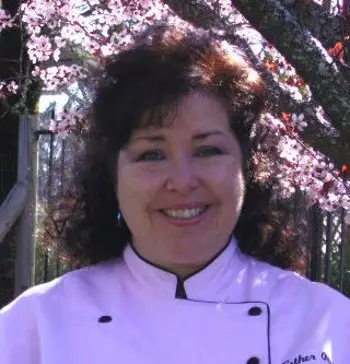
EDITOR'S NOTE: Lake County News is pleased to introduce our newest food column, “Veggie Girl,” written by respected local chef and culinary coach Esther Oertel. She will focus on locally grown foods and how you can best use them. We hope you enjoy it.
Lake County’s climate is similar to that of the Mediterranean region and is ideal for growing olives. An increasing number of local growers are pursuing their own tiny – and extremely delicious! – piece of the worldwide olive oil pie. That’s good news for our county, as well as good news for we who benefit from fresh, locally-available, home-grown health in a bottle.
Many of the people I speak with about olive oil are surprised to hear of the growing number of local labels.
Some wineries have begun producing their own oils, such as Ceago del Lago of Nice, which won the people’s choice award at the recent Kelseyville Olive Festival. Rosa D’Oro Vineyards of Kelseyville has two estate-bottled varieties available in their tasting room and the Kelseyville Wine Co. has at least five types, some of which have brought home silver medals from international competitions.
A number of other producers are dotted about the county, such as The Villa Barone (another silver medal winner) and Olivopolis near Hidden Valley Lake, Loconomi Farms near Middletown, Makiivka Estate of Lakeport and Loassa of Clearlake Oaks.
Each producer is passionate about the trees they’ve planted, their signature blends, the pressing process and their end product.
As with wine, there’s a special language to describe the properties of olive oil. Peppery, fruity and grassy are just a few of the colorful adjectives thrown around at a tasting.
There are seemingly endless varieties of olives; some are as tiny as a fingernail, others are as large as a plum, and varying types are grown in Lake County. The blend of olive varieties, as well as the ratio of ripe to green olives, contributes to each oil’s unique taste. It can be said that the complexity of producing a fine olive oil is akin to producing a fine wine, minus the aging process.
But why use olive oil?
First and foremost, there are positive health benefits. Studies have shown that monounsaturated fats such as olive oil are linked with a reduction in the risk of coronary heart disease. Olive oil has been shown to be effective in lowering cholesterol and blood sugar levels, as well as having a positive effect on high blood pressure. It contains vitamin E and carotenoids, powerful antioxidants that protect our cells from damage.
Secondly, it tastes good! A simple piece of bread is transformed when dipped into it, plain lettuce benefits from its drizzle, and its flavor delights our taste buds in pesto and caprese salad. It’s quite versatile in the kitchen when used as a substitute for other fats. (Onions are delicious when caramelized in it.)
A simple mixed olive tapenade is delightful when made with a flavorful local oil, as is another favorite of mine, bruschetta, which is a mixture of equal parts chopped fresh tomatoes, fresh basil and fresh mozzarella served over toasted baguette slices. Add minced fresh garlic, freshly ground black pepper, salt (all to taste) and a healthy dose of olive oil to the tomato mixture.
Both of these simply-made culinary treats are served on little bread toasts made with olive oil (known as crostini in Italian or crouton in French). To make the little toasts, slice a baguette and brush each piece with olive oil. Toast the slices on a baking sheet in a 400 degree oven for several minutes until the outside is brown and toasty and the inside is soft. (You can test this by pressing lightly with your finger.) For an added treat, rub a fresh garlic clove lightly over the pieces. (My tapenade recipe is below.)
Why buy local olive oil? Aside from supporting our county’s industry and lowering the carbon footprint of the foods we eat, there are other benefits.
For one, the oil is fresher. Because local growers make smaller batches, it’s sure to be fresher than oil transported across miles of ocean or state highways.
Another reason is the taste. Local olive oils are lovingly handcrafted with taste in mind. In some cases, such as at local farmers’ markets or winery tasting rooms, it’s possible to taste before you purchase. This is a nice idea as, like wine, not all olive oils go with all dishes; as well, you may be partial to one oil’s taste over another. All have different flavor components and some are stronger than others.
I also like purchasing local oils because you can be assured of the quality. In Europe, the International Olive Oil Council (IOOC) strictly regulates olive oil (such as what can be considered “extra virgin”), but the U.S. market has no such safeguards. Hence, almost anything can be labeled “extra virgin” and sold in the U.S. Local growers produce ONLY oil that comes from virgin oil production and can truly be called “extra virgin.” This is especially important to me as there have been recent scandals (such as in Italy in 2008) where oils other than olive have been sold as extra virgin olive oil.
For longest shelf life, olive oil should be in dark bottles as clear glass allows light to deteriorate the oil. Be sure not to use oil that has a rancid smell. Store your olive oil in a cool, dark place. Once opened, I store mine in the refrigerator to guarantee freshness, though this is not necessary if you go through your opened bottle in a reasonable amount of time. If stored in the fridge, it will solidify, so I place the bottle in a bowl of warm water to liquefy the oil for use.
Tapenade
1 cup high-quality black and green olives, any combination
1 tablespoon capers
2 cloves garlic
2 tablespoon extra virgin olive oil
1 teaspoon lemon juice
Freshly ground black pepper, to taste
Coarsely chop in food processor fitted with steel blade. (Be careful not to over-process, as tapenade should not be smooth.) If stored in tightly-covered container, tapenade should keep for up to a month in the fridge. Add some extra virgin olive oil to moisten it when needed before serving. Serve on crackers or toasted baguette slices over cream cheese or goat cheese.
Esther Oertel, the "Veggie Girl," is a personal chef and culinary coach and is passionate about local produce. She owns The SageCoach Personal Chef Service and teaches culinary classes at Chic Le Chef in Hidden Valley Lake.
Follow Lake County News on Twitter at http://twitter.com/LakeCoNews and on Facebook at http://www.facebook.com/pages/Lake-County-News/143156775604?ref=mf .
SACRAMENTO – On the heels of late season storms, manual and electronic readings taken during the final snow survey of the year on Friday indicated that water content in California’s statewide mountain snowpack is 143 percent of normal.
“This is good news after three years of drought, but we still face water shortages in many parts of the state,” said DWR Director Mark Cowin. “State Water Project storage is well below average and Delta pumping restrictions to protect native fish species will continue to hamper our ability to deliver water to millions of California homes, businesses and farms. If we are to ensure an adequate water supply for the future, it is critical that we conserve water and develop smarter, more sustainable ways to manage our water resources.”
Lake Oroville in Butte County, the State Water Project’s principal storage reservoir, is still only 59 percent full or 71 percent of normal for the date. Fishery agency mandates to protect Delta smelt, longfin smelt, salmon and other species affect the amount of water that can be pumped from the Sacramento-San Joaquin Delta.
Also benefiting from recent storms is Clear Lake. The US Geological Survey's gage on Clear Lake measured 7.73 feet Rumsey, the special measurement for the lake, late Saturday. The lake is full at 7.56 feet Rumsey.
Indian Valley Reservoir was reported to have 95,022 acre feet of water in it as of Friday; on April 30, 2009, the reservoir had 48,952 acre feet of water, according to Yolo County Flood Control and Water Conservation District.
DWR currently estimates it will be able to deliver only 30 percent of requested State Water Project water to cities and farms in the San Francisco Bay Area, San Joaquin Valley, Central Coast and Southern California.
“Initial results of our final snow survey indicate we may be able to increase the allocation above 30 percent, but nowhere close to the requested amounts,” Cowin said.
The 29 public agencies that purchase State Water Project water this year collectively requested 4,171,996 acre-feet of water. At 30 percent, the current allocation would deliver 1,251,601 acre-feet for approximately 25 million Californians and 750,000 acres of irrigated farmland.
Last year, the State Water Project delivered 40 percent of requests. The average allocation over the past 10 years is 68 percent of the requested amount
After three consecutive drought years, DWR late last year set the initial 2010 State Water Project allocation at only 5 percent of requested deliveries. The allocation rose incrementally to 15 percent, 20 percent, and 30 percent as the snowpack accumulated during winter and early spring.
Snow surveyors from DWR and cooperating agencies manually measure snowpack water content around the first of the month from January through May. In addition, remote sensors electronically report their readings. Manual surveys will continue up and down the state for several more days.
Electronic sensor readings show northern Sierra snow water equivalents at 188 percent of normal for the date, central Sierra at 121 percent, and southern Sierra at 139 percent.
Readings from snowpack water content sensors are posted at http://cdec.water.ca.gov/cgi-progs/snow/DLYSWEQ. Reservoir storage levels can be found at http://cdec.water.ca.gov/cgi-progs/reservoirs/RES.
Snow water content is important in determining water supply. The measurements help hydrologists prepare water supply forecasts as well as provide others, such as hydroelectric power companies and the recreation industry, with needed data.
Monitoring is coordinated by the Department of Water Resources as part of the multi-agency California Cooperative Snow Surveys Program. Surveyors from more than 50 agencies and utilities visit hundreds of snow measurement courses in California’s mountains to gauge the amount of water in the snowpack.
Follow Lake County News on Twitter at http://twitter.com/LakeCoNews and on Facebook at http://www.facebook.com/pages/Lake-County-News/143156775604?ref=mf .
SACRAMENTO – Gov. Arnold Schwarzenegger has declared May 2-8 Wildfire Awareness Week to remind Californians to be prepared for wildfires and vigilant as the state approaches peak fire season.
Cal Fire also will be using the week to highlight the importance of the homeowner’s role in preparing their property and families ahead of time to survive a wildfire.
This year’s Wildfire Awareness Week theme is based on the nationwide fire preparedness campaign “Ready, Set, Go.”
The slogan “Wildfire is coming ... Is your home ready?” focuses on the role homeowners have in being ready for a wildfire. Being ready for a wildfire starts with maintaining an adequate defensible space and hardening homes by using fire resistant building materials.
Fire officials firmly believe that it is the combination of both defensible space and the hardening of homes that give a house the best chance of surviving a wildfire.
To assist homeowner’s preparation for wildfires, Cal Fire plans to launch a new Web site during Wildfire Awareness Week, which provides residents the steps to make their home more resistant to wildfires and to ensure that their family is ready to evacuate early and safely when wildfire strikes.
The Web site is www.ReadyForWildfire.org.
“The first week in May is recognized as Wildfire Awareness Week, but residents need to be aware of the threat wildfire poses every day,” said Chief Del Walters, Cal Fire director. “Wildfires have occurred at all times of year in our state, but wildfire activity historically increases from spring through late fall, threatening lives, property and the environment. We are taking this week to heighten the public’s awareness about the steps they should take to prepare their homes and families for California’s inevitable wildfires.”
Cal Fire will use Wildfire Awareness Week as an opportunity to answer questions about fire safety and how to be better prepared in an emergency situation.
Wildfire Awareness Week schedule will include press events and fire preparedness exercises.
For more information visit www.fire.ca.gov.
Follow Lake County News on Twitter at http://twitter.com/LakeCoNews and on Facebook at http://www.facebook.com/pages/Lake-County-News/143156775604?ref=mf .
The bathrooms are located in a building next to the park, located along Highway 20.
Public Services Director Kim Clymire said the suspects attempted to burn down both the mens' and womens' bathrooms by sticking paper on the walls, stuffing it in the drains and setting it on fire.
Gary Nylander, owner of the Red and White Market next door, sold the restroom building and the land for the park to the county. Clymire said Nylander and his staff have helped secure the restroom facility at night, which has kept it undamaged.
However, he said that on Tuesday night the bathroom wasn't locked due to an oversight, and that gave the vandals their opportunity.
The restrooms didn't burn, said Clymire. However, “We have a lot of smoke damage and we're going to have to repaint,” he said.
Clymire added, “This person who tried to burn it down also took a magic marker and drew hearts on the wall.”
He said the restrooms will remain closed while they're pressure washed, repainted and repaired, which he said should take until the latter part of next week to complete.
About two weeks ago, someone broke a mirror that had been in one of the bathrooms, said Clymire.
The Nylander Park restrooms have only been open since November, he noted.
Clymire said the sheriff's office has indicated it will conduct extra patrol of the area. In addition, Clymire said he's trying to get the word out to area residents.
“We're trying to step up the community patrol as well,” he said.
This is the most significant incident for the county's parks recently, said Clymire. The other issues have involved some graffiti tagging at parks around the lake, and recent complaints at Nylander Park of men sitting and drinking 12-packs of beer at the playground where children are trying to play.
“They're not making it comfortable with the parents to use the parks,” said Clymire, who explained his staff has been approached by concerned parents.
With the Parks Department now in its rush to prepare for the summer tourism season, Clymire said
they're having to set aside time from getting lawns mowed to repair the restroom facilities.
Anyone who spots vandals at work should call 911; those with information who want to leave it anonymously can call the sheriff's anonymous tip line at 707-263-3663.
E-mail Elizabeth Larson at
The crash occurred just before 8 a.m. Thursday on Highway 53, south of Dam Road, according to Officer Steve Tanguay of the Clearlake Highway Patrol.
Marilou Domen, 37, of Clearlake was driving her 2000 Ford Focus southbound on Highway 53 south of Dam Road with a 13-year-old passenger in her vehicle, Tanguay reported.
Tanguay said Domen was driving in the righthand lane when, according to a witness, she attempted to change lanes into the fast lane, where there already was another vehicle. Domen then overcorrected and lost control of her vehicle.
The Ford Focus went to the left and entered the northbound lanes of traffic directly in front of a
2005 Toyota Prius driven by Jerrold Grayson, 69, of Saint Helena. Tanguay said the front of the Toyota struck the right side of the Ford.
After the impact, the Ford rotated around and was struck by a 2003 Mini Cooper driven northbound by Marguerite Swint, 46, of Hidden Valley Lake, Tanguay said.
Domen was transported by Cal Star helicopter to Santa Rosa Memorial Hospital for internal trauma, while Tanguay said that the juvenile passenger was transported by REACH helicopter to Santa Rosa
Memorial Hospital and then later transferred to Oakland Children’s Hospital for internal trauma.
Swint was transported to Saint Helena Hospital Clearlake by South County Fire ambulance for complaint of pain to her back and neck. Tanguay said Grayson refused medical help and was not transported.
The collision is still under investigation by Officer Efrain Cortez, Tanguay said.
Follow Lake County News on Twitter at http://twitter.com/LakeCoNews and on Facebook at http://www.facebook.com/pages/Lake-County-News/143156775604?ref=mf .