 How to resolve AdBlock issue?
News

KELSEYVILLE – Brian Fisher and J.B. Ballesteros, owners of Big Oak Ranch, have added their rustic barn to the Lake County Quilt Trail.
Located at 4595 Gaddy Lane, Kelseyville, the quilt block can be seen from the road as one drives north on Gaddy Lane.
The quilt block, named Big Oak Ranch Blazing Star, is a variation of the traditional Lone Star design.
The ranch was built around the time of the great depression by the Trailor family.
Mr. Trailor was the lead engineer on the Hopland Grade (Highway 175) road construction. The house was built from a kit sold by Sears & Roebuck, the Hollywood version.
The Trailor large family lived on the ranch until just after the barn was built in 1935. The barn is currently used for feed and hay for the cattle that are raised on the ranch.
The quilt block pattern chosen for the Big Oak Ranch barn is in honor of Fisher’s mother, Carolyn Beehe. She gifted many of her handmade quilts to him throughout her life.
“My favorite is a small yellow and white quilt, the Rising Star design,” he said. “Today that quilt adorns the guest room bed.”
Fisher and Ballesteros chose the Blazing Star pattern because it looks like a conglomerate of all the quilts that have been passed down to them.
Like most quilt patterns, this old multi-pieced star block is known by many names with variations of sic points, eight points (the most common design) or even more. Blazing Stars are made with small stars that cover the entire quilt top surface.
For more information about the Lake County Quilt Trail, contact Bethany Rose, 707-263-5744.
Follow Lake County News on Twitter at http://twitter.com/LakeCoNews and on Facebook at http://www.facebook.com/pages/Lake-County-News/143156775604?ref=mf .
Arugula has been a staple in Italian cuisine for centuries, but this peppery green has only been known in the U.S. since the 1970s, when it was imported along with other exotic Mediterranean salad greens like radicchio and Mache.
It achieved culinary fame in the 1990s, when it became a popular component in the California Cuisine cooking style.
If spinach is a somewhat predictable southern gentleman, then arugula is a brash, showy thespian.
It has a taste that’s at once bitter, peppery, mustard-like and somewhat nutty.
Of the six tastes – sweet, salty, bitter, sour, piquant (hot, like chili peppers) and savory (also known as “umami") – bitter is one that is not natural to our North American palate. For that reason, arugula for some may be an acquired taste.
In addition to the leaves, the flowers, young seed pods and mature seeds are all edible. The ancient Romans used its leaves as a salad green, its seeds to flavor oil and made medicinal compounds with the entire plant.
It was once thought to be an aphrodisiac; in fact, there is evidence of its seed being used in aphrodisiac concoctions as far back as the first century A.D.
Arugula, a member of the mustard family, has long stems that open into slender, irregularly shaped leaves. They remind me of dandelion greens, a relative of theirs that shares their bitter taste, but in stronger form.
Watercress, another relative, tastes similarly peppery, and arugula’s spiciness identifies it with its cousin, the radish.
Arugula blossoms add a burst of mild piquancy to salads.
It's a component of mesclun, a salad mix of young greens that originated in the Provence region of France. Originally, mesclun contained chervil, leafy lettuces, arugula and endive, all in equal proportions, but modern versions contain a variety of other greens, as well.
Arugula is native to a wide swath of the Mediterranean region, from Portugal and Morocco to Lebanon and Turkey. Cultivation of it has increased since the 1990s; prior to that it was mainly gathered in the wild.
In Britain, arugula is known as “rocket,” which is probably derived from the French word for it, “roquette.”
It’s high in vitamins A and C and has an amazingly low two calories per ½ cup serving.
Baby arugula can be found at the supermarket in premixed bags of salad greens and occasionally in packages on its own. However, arugula in its mature form may be harder to find in most markets, probably because its pungency increases with growth.
Thankfully, it can be purchased at Lake County farmers’ markets. I bought a handful of mature arugula from Doug Mooney of Full Moon Farms at Lakeport’s Wednesday night farmers’ market, which I enjoyed in a pasta dish a couple of nights later.
Baby arugula with its toned-down spicy taste is delicious alone in salads, but if using mature leaves, it’s a good idea to mix them with milder greens, such as butter lettuce, unless fruit (or a fruity dressing) is used in the salad to balance the flavor. Pears are often matched with arugula, and in Lake County that would make a nice late summer salad.
I really enjoy a salad with greens such as arugula that offer strong and diverse flavors. When the greens sing, a simple dressing of olive oil, lemon juice or balsamic vinegar and a little salt and pepper is all that’s needed.
Sliced fennel bulb, red onion and oranges often join arugula in salad recipes.
To prepare arugula as a side vegetable, sauté washed leaves in a little olive oil (with some garlic, if desired) to the point where it just begins to wilt. A squeeze of lemon adds flavor and helps neutralize bitterness.
The sautéed arugula can also be tossed with cooked pasta, olive oil and local goat cheese for a main dish. If desired, add kalamata olives for an additional flavor punch and garnish with pine nuts.
I sometimes add chopped arugula to pasta water just before the end of the cooking process to blanch it for a few minutes. It gets drained with the pasta and dressed with whatever sauce I’m using that evening. (With the Full Moon Farm arugula, I used a hearty puttanesca sauce, which worked well.)
Arugula can be used in many recipes in place of spinach to add pungency to the dish. For example, use arugula in place of spinach on a pizza. As with spinach, add it just before it comes out of the oven so it doesn’t burn and dry out.
Jamie Oliver, one of my favorite celebrity chefs, likes to grill rocket (as he calls it) in an aluminum foil packet with Swiss chard, a bit of olive oil and a squeeze of fresh lemon juice. Throw the packet on top of the outdoor grill and the vegetables will steam to beautiful tenderness.
Like with spinach, arugula can be used in some recipes to replace basil, such as in pesto and bruschetta.
To make pesto, blanch arugula in boiling water for a few minutes, then plunge it into an ice water bath to stop the cooking process. The blanching process decreases pungency, though some prefer to use raw arugula leaves in their pesto.
When the arugula has cooled, drain well and use in place of basil in your favorite pesto recipe. Arugula pesto is particularly yummy on pizza topped with mozzarella and Parmigiano-Reggiano cheeses.
To make bruschetta with arugula, sauté diced Roma tomatoes with olive oil, salt, pepper and garlic. Add chopped arugula, stir, and off heat, add diced sun dried tomatoes and fresh shredded Parmesan cheese. Chill for about four hours before serving over toasted baguette slices.
The recipe I offer today is a grilled fig and arugula salad. The sweetness of figs and saltiness of prosciutto complement spicy arugula leaves beautifully.
While figs aren’t yet in season (they will be later this summer), I couldn’t resist sharing this recipe for your future use.
Grilled fig and arugula salad
8 large fresh black mission figs or 12 smaller green figs
1/2 cup extra-virgin olive oil plus extra for brushing figs
1/3 cup plus 3 tablespoons aged balsamic vinegar, divided
Salt and freshly ground black pepper to taste
1/2 pound arugula
1/2 pound Ricotta Salata cheese, grated (Ricotta Salata is a salty Italian sheep’s milk cheese that is often hard to find. Crumbled feta cheese or grated Parmigiano-Reggiano can be substituted.)
1/4 pound prosciutto, julienned
Rinse and trim stem end of figs and split lengthwise.
Whisk olive oil into 1/3 cup balsamic vinegar and season with salt and pepper. Toss arugula with vinaigrette.
Lightly brush figs with olive oil and season with salt and pepper. Grill or broil figs one minute on each side. Remove figs from heat and toss with remaining 3 tablespoons Balsamic vinegar.
Place figs on a bed of greens then sprinkle with grated cheese and prosciutto and serve.
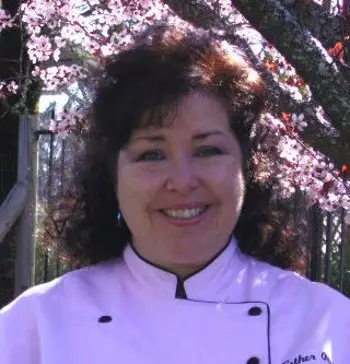
Esther Oertel, the "Veggie Girl," is a personal chef and culinary coach and is passionate about local produce. Oertel owns The SageCoach Personal Chef Service and teaches culinary classes at Chic Le Chef in Hidden Valley Lake. She welcomes your questions and comments; e-mail her at
Follow Lake County News on Twitter at http://twitter.com/LakeCoNews and on Facebook at http://www.facebook.com/pages/Lake-County-News/143156775604?ref=mf .
People often spot young wild animals they think are orphaned or need help. In most cases they are neither, and should be left alone.
In 2008, more than 500 fawns were turned into California rehabilitation facilities by well-meaning members of the public, the Department of Fish and Game reported. Many of these fawns were healthy and did not need to be disturbed.
Once a fawn is removed from its mother, it can lose its ability to survive in the wild, officials reported. The same danger applies to most animals, including raccoons, bears, coyotes and most birds.
Disease is another reason that wild animals should not be handled. Wild animals can transmit diseases that can be contracted by humans, including rabies and tularemia, and also carry ticks, fleas and lice, the agency reported.
People improperly handling young wildlife is a problem across the nation, most commonly in the spring, when many species are caring for their young offspring, according to the report.
“People frequently pick up young wild animals because they believe they have been orphaned or abandoned and need to be saved,” said Nicole Carion, the Department of Fish and Game's statewide coordinator for wildlife rehabilitation and restricted species.
“However, in the vast majority of cases the parents are still caring for their offspring and the attempt to ’rescue‘ the young animal all too frequently results in harm,” Carion said. “Even though California has many capable rehabilitation centers, people need to understand that humans cannot provide the survival training or the perfect diet provided naturally by their wild mothers.”
The responsibility for intervention should be left to Department of Fish and Game personnel or permitted wildlife rehabilitators.
It is illegal to keep orphaned or injured animals for more than 48 hours in California. People can call a rehabilitator, who will determine whether there is a need for a rescue. Rehabilitators are trained to provide care for wild animals so they retain their natural fear of humans and do not become habituated or imprinted.
For more information, visit DFG’s wildlife rehabilitation Web site at www.dfg.ca.gov/wildlife/rehab/facilities.html.
Remember: Wildlife belongs in the wild. As wildlife experts say: “If you care, leave them there.”
Follow Lake County News on Twitter at http://twitter.com/LakeCoNews and on Facebook at http://www.facebook.com/pages/Lake-County-News/143156775604?ref=mf .

The California Employment Development Department reported Friday that Lake County's May unemployment rate was 17.1 percent, down from 18.6 percent in April. The county's May 2009 unemployment rate was 14.7 percent.
Lake County's May unemployment rate ranked it No. 48 among the county's 58 counties, according to the report. The county's labor force rose from 25,340 people to 25,800 in May, when 4,400 people were out of work, 300 less than the previous month.
Statewide, unemployment totaled 12.4 percent in May, down a notch from 12.5 percent in April but up from 11.3 percent in May 2009, the state reported. The unemployment rate is derived from a federal survey of 5,500 California households.
The US Bureau of Labor Statistics reported that the nation's unemployment was 9.7 percent in May, down from 9.9 percent in April.
The state's lowest unemployment rate in May was found in Marin, where joblessness totaled 7.9 percent, while the highest was 27.5 percent in Imperial County, according to the Employment Development Department.
Lake's neighboring counties posted the following rates and state rankings: Glenn, 15 percent, No. 38; Mendocino, 10.8 percent, No. 13; Napa, 9 percent, No. 4; Sonoma, 10 percent, No. 9; and Yolo, 11.7 percent, No. 23.
Upper Lake was the county area with the lowest unemployment in May – 8.9 percent – while the highest unemployment locally was in Clearlake Oaks, where joblessness totaled 25.2 percent, according to detailed state labor data.
The following unemployment rates were reported for other areas of the county, from highest to lowest: Nice, 24.7 percent; city of Clearlake, 24.3 percent; Lucerne, 17.9 percent; Kelseyville, 17.4 percent; Middletown, 17.2 percent; city of Lakeport, 16.4 percent; Cobb, 15.3 percent; Lower Lake, 14.3 percent; Hidden Valley Lake, 14.1 percent; north Lakeport, 13.6 percent.
California gains jobs in May
The Employment Development Department reported that California has gained jobs in each of the first five months of 2010, with gains over the period totaling 95,900 jobs.
Nonfarm jobs in California totaled 13,905,500 in May, an increase of 28,300 over the month, according to a survey of businesses that is larger and less variable statistically. The survey of 42,000 California
businesses measures jobs in the economy. The year-over-year change (May 2009 to May 2010) shows a decrease of 244,700 jobs (down 1.7 percent).
The federal survey of households, done with a smaller sample than the survey of employers, shows an increase in the number of employed people during the month. That survey estimated the number of Californians holding jobs in May was 16,062,000, an increase of 48,000 from April, but down 182,000 from the employment total in May of last year.
The number of people unemployed in California was 2,277,000 – down by 21,000 over the month, but up by 212,000 compared with May of last year the state reported.
EDD’s report on payroll employment (wage and salary jobs) in the nonfarm industries of California totaled 13,905,500 in May, a net gain of 28,300 jobs since the April survey, according to the report. This followed a gain of 25,400 jobs (as revised) in April.
Six categories – manufacturing; information; professional and business services; leisure and hospitality; other services; and government – added jobs over the month, gaining 46,200 jobs, the state reported. Government posted the largest increase over the month, adding 30,000 jobs, all in federal government.
Four categories – construction; trade, transportation and utilities; financial activities; and educational and health services – reported job declines in May month, down 17,900 jobs. The report showed that trade, transportation and utilities posted the largest decline over the month, down by 9,600 jobs.
One sector, mining and logging, recorded no change over the month, the state reported.
In a year-over-year comparison – May 2009 to May 2010 – nonfarm payroll employment in California decreased by 244,700 jobs, down 1.7 percent, according to the Employment Development Department. Three industry divisions – information; educational and health services; and government – posted job gains over the year, adding 37,000 jobs.
Educational and health services recorded the largest increase over the year on a numerical percentage
basis, up 24,500 jobs, a 1.4 percent increase. The state reported that information posted the largest increase over the year on a percentage basis, up 2.0 percent, a gain of 8,900 jobs.
Eight categories – mining and logging; construction; manufacturing; trade, transportation and utilities; financial activities; professional and business services; leisure and hospitality; and other services – posted job declines over the year, down 281,700 jobs, the state reported.
The report showed that trade, transportation and utilities employment showed the largest decline over the year on a numerical basis, down by 82,300 jobs, a decline of 3.1 percent. Construction employment showed the largest decline over the year on a percentage basis, down 12.8 percent, down 80,800 jobs.
In May, there were 675,201 people receiving regular unemployment insurance benefits during the May survey week, according to the Employment Development Department. When federal unemployment insurance extensions are included, the total is 1,461,349 people receiving benefits, compared to 729,211 in April and 839,960 last year.
At the same time, the state reported that new claims for unemployment insurance were 70,439 in May, compared with 83,896 in April and 67,579 in May of last year.
E-mail Elizabeth Larson at
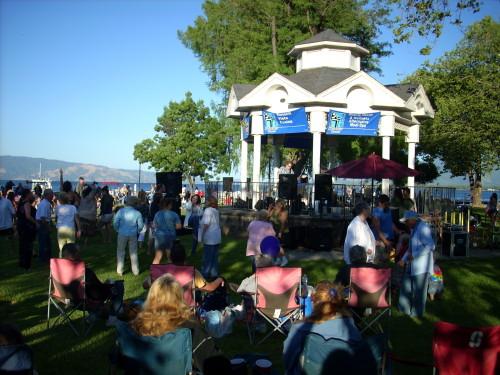
LAKEPORT – Dancing and enjoying the company of friends and family, residents and visitors gathered at Library Park to enjoy the Lakeport Summer Concert Series on Friday night.
Held every Friday evening in the summer, from 6:30 p.m. to 8 p.m., the Summer Concert Series, which is free of charge, is popular with all ages.
On Friday evening, the American Rock band Swinging Chads energized the crowds and got many in the mood to dance.
The series started June 11, and will end on Aug. 13, when local favorites The Lost Boys end the series for the summer.
For the complete concert schedule, visit www.kxbx.com.
E-mail Terre Logsdon at
Education
Health
Business
Obituaries
Veterans
Recreation
Religion
Arts & Life
Government & Politics