 How to resolve AdBlock issue?
News
The Mendocino County Sheriff's Office reported that 76-year-old Eugene Bright of Boonville was located shortly before 12:30 p.m. on Christmas Eve.
Bright, who had been reported missing the previous day by a neighbor, was found near his residence but on a neighbor's property, said Capt. Kurt Smallcomb.
Smallcomb said Bright was transported to Ukiah Valley Medical Center for observation due to his exposure to the weather conditions.
Follow Lake County News on Twitter at http://twitter.com/LakeCoNews , on Facebook at http://www.facebook.com/pages/Lake-County-News/143156775604?ref=mf and on YouTube at http://www.youtube.com/user/LakeCoNews .
Pacific Gas & Electric spokesman JD Guidi said the outage was reported at approximately 7:21 p.m. Sunday.
He said the area affected stretched north of Middletown along Highway 29, and along the Butts Canyon Road to the Napa County line.
Also affected were Cobb, a small area of Kelseyville and one resident who reported losing power in Clearlake Park, Guidi said.
Guidi said 975 customers were impacted in Cobb, 63 in Kelseyville, one in Clearlake Park and 1,376 in Middletown.
By around 10:30 p.m. approximately 674 Middletown customers had their power restored, he said.
Guidi said the cause was still under investigation, with PG&E crews working as quickly and safely as possible to get power restored.
He said power was expected to be restored to the remaining 1,322 customers at around 6 a.m. Monday.
E-mail Elizabeth Larson at
The National Weather Service's Sacramento office issued a special weather statement Sunday for most of the state's northern half, including Lake County, that warned of a storm system developing in the Gulf of Alaska.
It's expected to start with light rain and snow over the northern half of the Sacramento Valley and surrounding mountains on Monday night before moving on, with rain resulting in lower elevations and mountain snow falling over the south and east during the day on Tuesday, the agency said.
The National Weather Service said the front will move through the interior part of the state on Tuesday night, with moderate to sometimes heavy precipitation possible. Gusty winds may occur in the Central Valley, with ridgetop winds up to 50 miles per hour.
Snow levels will drop Tuesday night but go down more on Wednesday, with forecasters predicting a drop to about 2,500 feet over southern Lake County, with a couple of inches of snow possible at that level, up to 2 feet above 6,000 feet.
Showers are forecast to continue on Wednesday around Northern California. The National Weather Service said colder air filtering into Northern California will lower snow levels, and hail and sleet could result.
E-mail Elizabeth Larson at
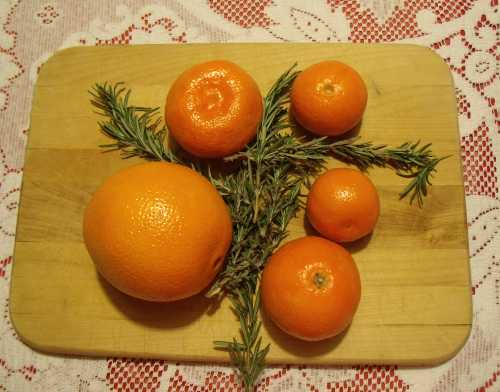
Did you get a tangerine or orange in your Christmas stocking this year? The tradition of putting these fruits in the toes of Christmas stockings dates back many centuries.
When I was growing up, my siblings and I always found a round orange globe – usually a tangerine with leaves attached – waiting for us at the very bottom of our stockings, and I’ve continued the tradition with my own children through the years.
The grandfather of one of the guests at our Christmas table received an orange each year during childhood Christmases in Switzerland in the late 1800s. This was an exciting event for the grandfather – as well as for his siblings, who each received their own orange – and he tried to make the exotic treat last through the days following Christmas.
Some say that the tradition of giving citrus fruit at Christmas stems from its being a rarity in northern climes, making it a special holiday indulgence, while others point to a legend involving Saint Nicholas.
Saint Nicholas, also known as Nikolaos of Myra, was a fourth century bishop who inspired the folk legend of Santa Claus. He lived in what is now modern day Turkey.
The story goes that Saint Nicholas was passing through a village and overheard talk about a poor man who had three daughters and no money. Wanting to help them in secret, he crept into their home at night and left a bag of gold in each daughter’s stocking, which were hanging on the mantle to dry before the fire.
Not only does this legend provide a reason for the origin of Christmas stockings, it is said that the oranges or tangerines left in the toes of them represent the bags of gold that Saint Nicholas left for each daughter.
Whether or not this legend is the reason for the practice, these colorful fruits are intertwined with the memories of many a Christmas.
Oranges are members of the genus citrus which also includes lemons, grapefruit and limes. They began as a sour fruit in China and were cultivated there by 2500 B.C. Since then, oranges and other citrus fruits have been grown in ever-widening areas throughout the world.
Currently Brazil is the main cultivator of oranges, with the U.S. in second place.
There are three main types of oranges: sweet oranges, bitter oranges and Mandarins, which include the many varieties of tangerines.
Sweet oranges include navel oranges, Valencia oranges and blood oranges.
Navel oranges have a mutation that causes them to develop a second, smaller orange – a conjoined twin, so to speak – at its base. Inside the peel, this appears as a set of smaller segments. From the outside, it looks like a human navel, which is the reason for its name.
It’s a very sweet orange, perfect for eating out of hand.
Valencia oranges, a late season fruit, become more popular when navels are out of season. They’re grown especially for making juice.
The blood orange has deep red pigmentation in its flesh. When squeezed, it produces a dark burgundy-colored juice, spawning its moniker. These typically appear in markets in late December, and I’m always happy to see them, as their season is short-lived.
As the name implies, the taste of bitter oranges prevents them from being eaten out of hand like sweet oranges. Rather, they are used in cooking – such as for making marmalade – or as orange flavor in a variety of products.
Bitter oranges include the Seville orange, used for marmalade and to flavor orange liqueurs; the bergamot orange, the oil from which is used to flavor Earl Grey tea; and the chinotto orange, which is used in Italian bitters and in Campari, an aperitif.
I found it interesting that Seville oranges come mainly from decorative trees planted in the city of that name in Spain. They’re harvested and sent to Britain for marmalade making. Since they have a higher pectin content than sweet oranges, they’re prized for this purpose.
Finally, we come to the largest category of oranges, that of Mandarins. There are a large number of subgroups within the Mandarin orange category, including tangerines, which has its own long list of varieties.
The Satsuma, a special Mandarin from Japan, is one of my favorites. My sons called them “easy peels” when they were young because the outer skin is loose and comes so easily off the flesh. They’re often harvested with stems and leaves intact, making for a nice presentation when placed in a bowl.
The hybrid tangelo, of which there are several different types, is a cross between a tangerine and a grapefruit (or a pomelo, its extra-large cousin, which is also known as the Chinese grapefruit). The Minneola may be the best known variety, but I’m partial to the ugli fruit.
This poor thing is so named because it’s considered, well, ugly. It may have been crossed with a bitter orange. Depending on the variety, it can look a bit like a large, bumpy lime. Its flesh is often light yellow in color and is mildly acidic.
Tangerines are quite popular this time of year because of their association with Christmas, as well as their season. During a visit to the grocery store last week, I found four varieties available in the produce department.
Tangerine varieties include Dancy, Fairchild, Honey and Sunburst, to name a few.
Clementines are sometimes marketed as “cuties” because of their small size. They’re known to be the smallest variety of tangerine; however, a recent article in the London Times sang the praises of a cherry tomato-sized tangerine, which is purported to be quite sweet.
These tiny tangerines been grown in China for more than 1300 years. They’re finding their way to England with the hopes that the tradition of giving tangerines at Christmastime will be resurrected through such a unique offering.
One of the loveliest attributes of citrus fruit in the orange family as far as I’m concerned is the scent of their skin. When I zest oranges in my cooking classes, I joke that if I were wealthy, I’d pay someone to walk near me zesting an orange at all times. It’s a beautiful scent, as well as one of my go-to ingredients in cooking.
Orange blossom water (also known as orange flower water) adds a delicate flavor to foods cooked with it. It’s often used to flavor desserts (such as French madeleines and Mexican wedding cakes) and is a traditional component in the cuisines of the Middle East.
If you can eat many of these lovely fruits this winter, please do. They’re rich with nutrients that support our immune system and stave off colds and flu, such as vitamin C. Just one orange provides the recommended daily dose of it.
In addition, this nutrient dense fruit packs over 170 different phytonutrients and more than 60 flavonoids, many of which have been shown to have anti-inflammatory, anti-tumor and blood clot inhibiting properties, as well as strong anti-oxidant effects.
Oranges are also full of dietary fiber, especially when eaten raw.
In addition to being eaten out of hand or used for juice, orange segments are fantastic tossed in a salad or used in Asian-inspired stir-fried dishes. They’re especially good when paired with ginger.
As I was researching this column, I ran across a wonderful-sounding recipe by Michael Chiarello for tangerine mayonnaise. The mayonnaise was presented as an accompaniment for grilled asparagus, but, according to Chiarello, “it tastes great on all sorts of vegetables and on poached fish, and can be used to bind a chicken salad or as a sandwich spread.” Chiarello's Web site can be found at http://www.napastyle.com/custserv/custserv.jsp?pageName=Bio .
The recipe calls for gray salt, a type of culinary salt mined in France on the coast of Brittany. Grey salt is moist and unrefined and retains a light gray (almost purple) color because of the clay in the salt flats where it’s collected. Kosher salt or coarse sea salt may be substituted instead.
Tangerine mayonnaise
2 cups freshly squeezed tangerine juice
1 tablespoon coarsely chopped fresh tarragon
1 egg yolk
Gray salt and freshly ground pepper
1 cup pure olive oil
Put the tangerine juice in a small non-reactive saucepan and bring to a boil.
Cook until reduced to 1/2 cup. Let cool to room temperature.
Combine the reduced juice, tarragon, egg yolk, and salt and pepper to taste in a blender and blend until well mixed.
With the machine running, add the 1 cup olive oil, at first by drops and then, as mixture emulsifies, in a thin, steady stream until all the oil is incorporated.
Taste for seasoning.
Scrape into a jar, cover, and refrigerate until needed. You should have about 1 to 2/3 cups mayonnaise, which will keeps two to three days, refrigerated.
Chef Chiarello’s note: Every cook has insecurities. One of mine is mayonnaise. I always get a little anxious until I see it coming together in the blender. If the mayonnaise is too thick, thin it, with the machine running, by pulsing in a little cool water.
Esther Oertel, the “Veggie Girl,” is a culinary coach and educator and is passionate about local produce. Oertel teaches culinary classes at Chic Le Chef in Hidden Valley Lake, Calif., and The Kitchen Gallery in Lakeport, Calif., and gives private cooking lessons. She welcomes your questions and comments; e-mail her at
Follow Lake County News on Twitter at http://twitter.com/LakeCoNews , on Facebook at http://www.facebook.com/pages/Lake-County-News/143156775604?ref=mf and on YouTube at http://www.youtube.com/user/LakeCoNews .

On Aug. 1, 2010, an entire hemisphere of the sun erupted. Filaments of magnetism snapped and exploded, shock waves raced across the stellar surface, billion-ton clouds of hot gas billowed into space. Astronomers knew they had witnessed something big.
It was so big, it may have shattered old ideas about solar activity.
“The Aug. 1 event really opened our eyes,” said Karel Schrijver of Lockheed Martin's Solar and Astrophysics Lab in Palo Alto, Calif. “We see that solar storms can be global events, playing out on scales we scarcely imagined before.”
For the past three months, Schrijver has been working with fellow Lockheed-Martin solar physicist Alan Title to understand what happened during the “Great Eruption.”
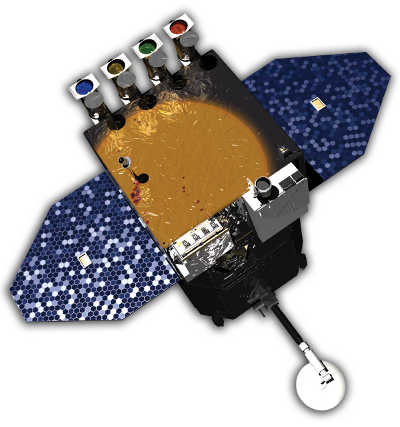
They had plenty of data: The event was recorded in unprecedented detail by NASA's Solar Dynamics Observatory and twin STEREO spacecraft. With several colleagues present to offer commentary, they outlined their findings at a press conference today at the American Geophysical Union meeting in San Francisco.
Explosions on the sun are not localized or isolated events, they announced. Instead, solar activity is interconnected by magnetism over breathtaking distances. Solar flares, tsunamis, coronal mass ejections – they can go off all at once, hundreds of thousands of miles apart, in a dizzyingly-complex concert of mayhem.
“To predict eruptions we can no longer focus on the magnetic fields of isolated active regions,” said Title, “we have to know the surface magnetic field of practically the entire sun.”
This revelation increases the work load for space weather forecasters, but it also increases the potential accuracy of their forecasts.
“The whole-sun approach could lead to breakthroughs in predicting solar activity,” said Rodney Viereck of NOAA's Space Weather Prediction Center in Boulder, Colo. “This in turn would provide improved forecasts to our customers such as electric power grid operators and commercial airlines, who could take action to protect their systems and ensure the safety of passengers and crew.”
In a paper they prepared for the Journal of Geophysical Research (JGR), Schrijver and Title broke down the Great Eruption into more than a dozen significant shock waves, flares, filament eruptions, and CMEs spanning 180 degrees of solar longitude and 28 hours of time. At first it seemed to be a cacophony of disorder until they plotted the events on a map of the sun's magnetic field.

Title describes the Eureka! moment: “We saw that all the events of substantial coronal activity were connected by a wide-ranging system of separatrices, separators and quasi-separatrix layers.”
A “separatrix” is a magnetic fault zone where small changes in surrounding plasma currents can set off big electromagnetic storms.
Researchers have long suspected this kind of magnetic connection was possible. “The notion of 'sympathetic' flares goes back at least three quarters of a century,” they wrote in their JGR paper. Sometimes observers would see flares going off one after another – like popcorn – but it was impossible to prove a link between them. Arguments in favor of cause and effect were statistical and often full of doubt.
“For this kind of work, SDO and STEREO are game-changers,” said Lika Guhathakurta, NASA's Living with a Star Program Scientist. “Together, the three spacecraft monitor 97 percent of the sun, allowing researchers to see connections that they could only guess at in the past.”
To wit, barely two-thirds of the August event was visible from Earth, yet all of it could be seen by the SDO-STEREO fleet.
Moreover, SDO's measurements of the sun's magnetic field revealed direct connections between the various components of the Great Eruption – no statistics required.
Much remains to be done. “We're still sorting out cause and effect,” said Schrijver. “Was the event one big chain reaction, in which one eruption triggered another – bang, bang, bang – in sequence? Or did everything go off together as a consequence of some greater change in the sun's global magnetic field?”
Further analysis may yet reveal the underlying trigger; for now, the team is still wrapping their minds around the global character of solar activity.
One commentator recalled the old adage of three blind men describing an elephant – one by feeling the trunk, one by holding the tail, and another by sniffing a toenail. Studying the sun one sunspot at a time may be just as limiting.
“Not all eruptions are going to be global,” noted Guhathakurta. “But the global character of solar activity can no longer be ignored.”
As if the sun wasn't big enough already …
Dr. Tony Phillips works for the National Aeronautics and Space Administration.
Follow Lake County News on Twitter at http://twitter.com/LakeCoNews , on Facebook at http://www.facebook.com/pages/Lake-County-News/143156775604?ref=mf and on YouTube at http://www.youtube.com/user/LakeCoNews .
Two deadly incidents instigated by North Korea in 2010, most recently the shelling of South Korea’s Yeonpyeong Island Nov. 23, have raised military tension on the peninsula to its highest level in many years.
But the provocations, said the commander of U.S. Forces in Korea, haven’t weaken a commitment by the United States to expand base infrastructure so that, perhaps by 2020, all married service members ordered to Korea will be able to bring their families at government expense.
Army Gen. Walter L. “Skip” Sharp, who also commands United Nations Command and Combined Forces Command in Korea, explained in a phone interview that “tour normalization” – an effort to expand the number of “command-sponsored” families in South Korea – must level off now at 4600 families, up from 1800 when Sharp assumed command in June 2008.
Sharp said he remains “passionate” about expanding command sponsorship even more so that, one day, assignments to Korea are as accommodating to military families as duty in Germany or Japan.
But base infrastructure will need to grow, particularly the capacity of Department of Defense dependent schools, Sharp said. It could be two years before the number of families here can continue to climb, he added.
Sharp also explained his recent decision to move from a “first-come, first-served” policy on command sponsorship in Korea to a new job-based priority list.
The intent, he said, is to improve readiness by ensuring that personnel in leadership billets, or with critical skills, can stay for at least two-year tours by authorizing them to bring along their families.
Most of the 28,500 U.S. service members in Korea still serve 13 months “unaccompanied” tours.
About 1500 families live there without command sponsorship. That means they paid their own travel costs, they only can live off base and their children attend Department of Defense schools on a space-available basis. If no space is available, the children must be home-schooled or enrolled in expensive private schools.
In 2008, Defense Secretary Robert Gates first approved a plan to expand command-sponsorship in Korea. The response from families was more enthusiastic than expected, forcing Sharp last month to cap the number of command-sponsored families at the existing level of 4600. He estimates 10,000 married members still serve here without families.
The only reason for this, Sharp said, “is because we haven’t been able to build the infrastructure to accommodate them.”
A plan is due to Gates by March on building infrastructure and reaching full tour normalization in Korea at an affordable pace, given tighter budgets.
Having more families in Korea “has made a huge difference,” Sharp said. He listed four gains, putting operational effectiveness at the top. More families means longer stays and lower turnover and that improves readiness.
It “greatly increases our capability,” said Sharp. “I don’t have to train a new soldier, sailor, airman or Marine every year, which is what we’ve been doing [in Korea] really since 1953.”
Second, Sharp said, “it greatly reduces stress on our families. We have enough deployments or unaccompanied tours around the world, in Iraq and Afghanistan. And there is absolutely no reason to have it here in Korea,” apart from limits imposed by current infrastructure.
Third, it “sends a huge signal of our commitment to the Republic of Korea,” Sharp said.
When the North Koreans and Chinese see U.S. forces building infrastructure and U.S. families staying longer, it underscores how vital South Korea is to the United States. That in turn encourages China to advise the North Koreans “not to do anything stupid,” Sharp said.
Finally, he said, tour normalization will give future U.S. leaders more capable units in South Korea for possible deployment “to somewhere else in the world. Obviously our first commitment is always to the defense of the Republic of Korea … But who knows what this part of the world is going to look like in several years.”
Sharp said the recent rise in tensions hasn’t dampened his, or Secretary Gates,’ enthusiasm full tour normalization in Korea. In fact, he said, “in some sense” it makes it “even more important to us because [of] the ability to increase capability of our units by keeping folks here longer.”
Evacuation of families does remain a major concern, he said. It’s part of the impetus for current plans to relocate and consolidate Army units south of Seoul, primarily at Camp Humphreys. Being nearer to a transportation hub there will ease the evacuation challenge “significantly,” Sharp said.
“We watch very closely what’s going on in North Korea, obviously. We see nothing happening that is any indication that North Korea is planning on getting ready to go to war,” said Sharp.
But evacuation plans are solid and exercised twice a year, he said.
Sharp ordered commands throughout South Korea to hold town hall meetings to explain the new command-sponsor policy, which took effect Nov. 30. The old first-come, first-served wait list for families had grown to 1,000.
Sharp conceded that some families near the top were disappointed.
“They perceive their chances of getting command sponsorship getting reduced, when they thought they were pretty close,” he said. “We are working that, individual by individual, and making accommodations as we can. I’m not naïve enough to think we will be able to satisfy all of them.”
The intent, however, is improved readiness. As command-sponsored families leave Korea, those newly designated for command sponsorship now will mostly be families of member filling Category 1 and 2 billets.
Category 1 personnel fill the top 500 officer and enlisted billets. Category 2 are most other officers plus senior enlisted in unit leadership roles and anyone having critical skills or who needed more intensive training before reporting to Korea, such as pilots and linguists.
Category 3 includes everyone else assigned to Korea. Sharp said the goal is that 10 percent of 4600 command-sponsored families be chosen from this lowest priority category, using the first-come, first-served method.
To comment, send e-mail to
Follow Lake County News on Twitter at http://twitter.com/LakeCoNews , on Facebook at http://www.facebook.com/pages/Lake-County-News/143156775604?ref=mf and on YouTube at http://www.youtube.com/user/LakeCoNews .