 How to resolve AdBlock issue?
News
CLEARLAKE, Calif. – The Rotary Club of Clearlake is preparing for its primary fundraiser of the year.
The annual “Seafood Boil and Auction” will be held on Saturday, Feb. 26, at the Clearlake Senior/ Community Center on Bowers Road.
Doors open at 5:30 p.m.; dinner served at 6:30 p.m.
“This is a well-attended event with people coming from all around the lake as well as from out of the area to participate,” Marvin Carpenter, promotional chairman said.
The $60 ticket price includes salad, bread, tri-tip, single lobster tail plus an all-you-can-eat seafood boil including crab, shrimp, fish, clams, mussels, crawfish, sausages, corn-on-the-cob and potatoes.
Dinner tickets also include dessert, two cocktail beverage tickets and limitless soft drinks, bottled water and coffee. Shannon Ridge Winery will be offering wine tasting from 6 p.m. to 7 p.m. for an additional charge as well.
“This is our primary fundraiser of the year. We depend on the proceeds from the event to ensure that our club can continue the many wonderful contributions we make to the community,” Carpenter said.
“We maintain the baseball fields, give away dictionaries to our third graders and award scholarships to our college-bound high school seniors,” Carpenter said. “We also support a Rotaract Club at the college and an Interact Club at Carlé High School, which will provide the primary servers for the Seafood Boil.”
The Rotary Club of Clearlake also was instrumental in the creation of the athletic field at Lower Lake High School, participated in the development of Austin Park and continues involvement in projects benefiting Southshore Little League, Big Brothers and Sisters, the senior/community center building and Anderson Marsh Historical State Park.
The club also participates in a student foreign exchange program and is assisting with funding for the Safe House project for homeless teens.
“In addition, there are numerous contributions made annually of both dollar contributions and contributions of time to service projects by the Rotary membership, which is comprised of local business persons,” Carpenter said. “We’ve also been involved in many international projects through Rotary International, which has existed since 1905. The motto of Rotary is ‘Service Above Self’ and we have made a difference in our community following that motto.”
The event will include live and silent auctions. Rotary Club President Terry Stewart will once again be serving as the evening’s auctioneer.
Advance ticket purchase is advised as the event usually sells out before the date.
To buy tickets or contribute auction items contact any Rotarian or call Ginger Kite at 707-349-0122, Serena Stona at 70-994-0294 or Marvin Carpenter at 707-994-5650.
Checks payable to Rotary Club of Clearlake may be sent to PO Box 549, Clearlake, CA 95422. Credit card purchase is also available.
Follow Lake County News on Twitter at http://twitter.com/LakeCoNews , on Facebook at http://www.facebook.com/pages/Lake-County-News/143156775604?ref=mf and on YouTube at http://www.youtube.com/user/LakeCoNews .
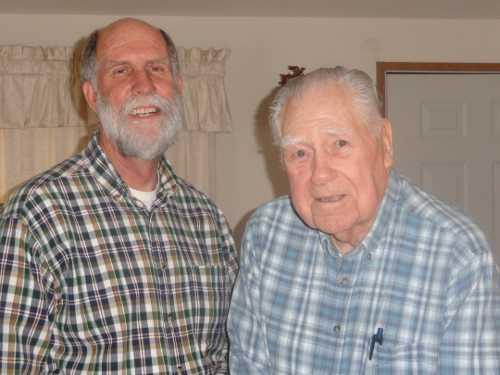
LAKEPORT, Calif. – The Westside Community Park Committee recently received donations totaling $10,000 from local supporters, the committee has announced.
A gift of $5,000 was made by an anonymous donor in memory of Emilia Gahret.
“The donor wished to contribute to a lasting community endeavor that Mrs. Gahret would have supported,” said Committee Financial Officer Jeff Havrilla.
The second donation, also in the amount of $5,000, was made by Henry Anderson of Lakeport, a member of the local Pearl Harbor Survivors Association chapter.
“Anderson has been a financial supporter of the park since construction first began in the late 1990s,” Havrilla said. “His continued support is greatly appreciated.”
These funds will be used to finish the portion of Westside Community Park’s phase two development that is currently under construction.
Havrilla said the committee plans to have three soccer fields, a regulation baseball field and a Little League field completed by this fall.
The park is accessed from Parallel Drive via Westside Park Road in Lakeport.
In announcing these donations, Havrilla said, “The majority of the funds used to construct the park have come from individuals in our community. This truly is a grassroots community effort.”
The Westside Community Park Committee consists of 17 community members. The officers, in addition to Havrilla, are Dennis Rollins, chair; Hugh Mackey, vice chair; and Carol Thorn, secretary.
Anyone wishing to contribute to the park construction can do so by sending a tax-deductible contribution to Westside Community Park Committee, 440 Main St., Lakeport, CA 95453.
Information about the park can be obtained by calling Dennis Rollins at 707-349-0969.
Follow Lake County News on Twitter at http://twitter.com/LakeCoNews , on Facebook at http://www.facebook.com/pages/Lake-County-News/143156775604?ref=mf and on YouTube at http://www.youtube.com/user/LakeCoNews .
LOWER LAKE, Calif. – With months of preparation and coaching behind them, some of the county's best young minds will be putting their wits to the test in the county's annual Academic Decathlon competition.
The Lake and Mendocino College-Going Initiative Academic Decathlon will take place on Saturday, Jan. 29, and Saturday, Feb. 5, at Lower Lake High School.
This event is modeled after the Olympics by stimulating academic achievement and honoring “athletes of the mind.”
Approximately 75 high school students from 8 teams in Lake, Mendocino and Colusa counties will compete, and each county will send their top-scoring team to the state competition.
The first portion of the competition – not open to the public – will take place Jan. 29 and will consist of a series of academic assessments including written tests in eight subjects, an interview, prepared and impromptu speeches, and an essay. Fifty volunteers from the community will judge these competitions.
This will be followed by the Feb. 5 Super Quiz and awards ceremony. The public is invited to attend on Saturday, February 5, at 3:45 p.m., in the new Lower Lake High School Gym.
In addition to the Super Quiz and awards ceremony, five Lodge at Blue Lakes Scholarships in the amount of $250 each will be awarded.
The Lower Lake High School jazz band and concert choir, The Blue Notes, will perform, and there will be a Poster and Poetry contest display.
Additionally, there will be a 50/50 raffle with proceeds going to the winning Lake County team to help with travel to the state competition.
Sponsors of the event include The Lodge at Blue Lakes, Rosa d’ Oro, Steele, Fetzer, Moore Family, and Six Sigma Wineries, University of California San Francisco, Lake County Office of Education and Cecil’s Take N Bake Pizza.
For information on the Lake and Mendocino Academic Decathlon, please visit www.lakecoe.org/cgi or call 707-262-4162.
Follow Lake County News on Twitter at http://twitter.com/LakeCoNews , on Facebook at http://www.facebook.com/pages/Lake-County-News/143156775604?ref=mf and on YouTube at http://www.youtube.com/user/LakeCoNews .
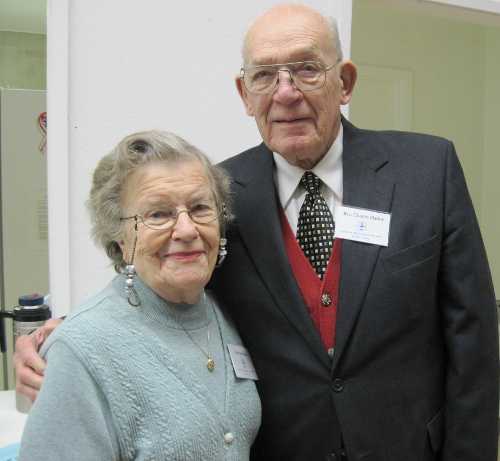
CLEARLAKE, Calif. – It was a moment of simple kindness that turned out to be the beginning of an important and lasting friendship.
A young Charles Harlow arrived in 1949 at Crozer Theological Seminar in Chester, Penn., to take his place at the school.
The father of two had traveled cross country from Portland, Oregon, with wife, Marian, and their two children who became sick with chicken pox. Harlow's children and wife stayed with his mother-in-law on the East Coast as he went on to report to Crozer.
When he arrived at seminary, Harlow was late, had no money and was worried, as he had only six months left on his GI Bill for school.
The first person he met was a young man three years his junior who also was a student there.
The young man's name was Martin Luther King Jr.
“He put his hand out and said, 'May I help you?'” Harlow, 85, and now a resident of Clearlake, recalled.
Together the two young men made their way up to the main lodge, King helping tote his fellow seminarian's bags.
It was the start of a deep and true friendship, one in which the two young men would discuss spirituality and God, faith and humanity.
They wrote papers, studied and prayed together. And Harlow, like other of King's friends, would watch King's majestic and ultimately tragic trajectory as a leading voice in the nation's civil rights movement.
To friends like Harlow, King would remain “Martin,” a man who when he prayed did so “as if he had a personal acquaintance with God,” and cared enough for people to risk – and ultimately lose – his life, a fear his friends had had for him for many years.
King was in Harlow's prayer chain – as was his wife, Coretta – exchanging occasional letters and phone calls with Harlow until King's life was ended by an assassin's bullet on April 4, 1968. He was 39 years old.
While the assassin may have cut short the life of the dreamer, the dream survived, with King leaving his imprint on the nation's heart. The civil rights movement of which he was a part would continue forward under the leadership of many young men and women who shared his vision, ultimately impacting the sensibilities of people of all ethnicities.
Harlow was one of those who worked for equality, a man who says he's radical “but not really” and points out that Jesus of Nazareth never demanded worship, but asked people to follow him on his difficult path, which included loving one's enemies.
“It's far easier to worship Jesus than listen to him,” said Harlow.
Harlow, now retired from ministry with the United Church of Christ, shared his memories of King with Lake County News in an interview on Sunday, the same day that he spoke at the Unitarian Universalist Congregation of Lake County in what one member described as a mesmerizing talk.
Different backgrounds, but a heart for truth
Harlow and King had very different backgrounds, but intellect and interest brought them together.
King was the son and grandson of ministers, raised in the faith and devout. He was a man of huge intellect matched by an equally deep spirit. But the world in which he was born judged him more by the color of his skin than by his abilities.
Harlow was a young white man from the streets of Chicago. He wasn't raised a Christian which, he reflected, was in many ways a benefit. He said it meant he didn't have to unlearn beliefs that may have made his journey of faith more challenging.
“I didn't have anything to unlearn other than the streets,” he said.
At 16 he found himself in the Marines, stationed in the South Pacific before Pearl Harbor.
One night he was standing watch in a village, recalling, “the moon was bright, bright, and the beams of the moon showed the buildings below me.”
The church there was made from pounded sea shells, “and it just glistened” in that bright moonlight, he said.
Harlow was speaking that night to a native man about his belief in Christianity. The man told him that accepting the faith “means that I can stand up and be me.” Harlow said that, to a young man from the streets, that meant something – that he didn't have to be ashamed of who he was.
He started reading and got a New Testament from a chaplain. When he asked where to start, the chaplain suggested the earliest book, written by the Apostle Mark.
“I ran into the Jesus I wanted to follow,” said Harlow.
Later, he came to California on a hospital ship after having taken ill. He recovered, met his future wife Marian – they would raise three children together – and decided he wanted to go to college, although he hadn't attended high school.
He would go on to attend business college and college, with Harlow deciding to attend the seminary, which he did from 1949-1953. King was reportedly at the seminary from 1948 to 1951.
During their time together at seminary, Harlow said he and King talked about Harlow's service in the Marines, as well as more otherworldly questions.
“We talked back and forth a lot about spirituality – what was it, what is it,” Harlow said.
They also would study religious leaders and world figures like Mahatma Gandhi, an important influence for King, according to Harlow.
King was an excellent student, “I mean top drawer,” said Harlow, adding that while he was good, King surpassed him.
“He was always seeking out new approaches to life and to meaning,” Harlow said.
Harlow today remembers that the young King enjoyed life, always was attired in the best suits, and disappeared every weekend to visit Philadelphia.
Later, after seminary, they would exchange letters, Harlow noting regretfully that he didn't keep King's letters, not realizing how famous he would someday become.
King also called him once to ask him to come to Selma, Alabama, where King led marchers in March of 1965. Harlow said he couldn't get there because of his other responsibilities, which he said saddened him.
Harlow and other of King's friends from seminary kept in touch. “We all knew what was happening with him,” said Harlow, including the threats against King and the fears for his safety.
Working the dream
Even as a young seminarian, it was clear that King had big goals. “He wanted to help people be free, everybody knew that. How, nobody knew, neither did he,” said Harlow.
An important lesson King taught the world is how one can make a dream reality. “He worked his dream,” said Harlow. “Not many people work their dream. They just dream.”
Harlow added that a dream “has to have a working edge on it,” otherwise it's mythological, and he believes people are responsible for their dreams and goals, which he said are part of the miracle process of life in which everyone participates.
He pointed out that the original version of King's famed speech given at the Lincoln Memorial as part of the March on Washington in August 1963 hadn't contained the words “I have a dream.”
King was only supposed to speak about eight minutes, and it wasn't until the speech was under way that he decided to improvise and use the “I have a dream” theme. Harlow said it came from a stump speech – much as most ministers, including Harlow, have – that King had given at churches all over the South.
“He had a deep caring process in his life,” said Harlow. “He really cared, and that's a tough one because a lot of people voice terms of caring, but that's all it is.”
King put his life on the line in caring for others, Harlow said. “Not many people find that comfortable.”
He remembered King trying to calm people in January 1956 after his home was bombed in the wake of the Montgomery bus boycott, telling people not to react in violence because they shouldn't allow themselves to lower their expectations.
“He called me one time and I said, 'Martin, is your life insurance paid up?' And he said, 'I don't have any life insurance',” Harlow remembered.
King was aware of the dangers, as did those who knew him. But Harlow believed that King had confronted the idea of his death and was able to walk free of it. Based on their conversations, Harlow said, “Death wasn't bothering him.”
The day before his death, on April 3, 1968, King delivered his “I've Been to the Mountaintop” speech in Memphis, Tenn., in which he referenced threats and warned of “some difficult days ahead.”
“But it doesn't matter with me now,” King said. “Because I've been to the mountaintop. And I don't mind. Like anybody, I would like to live a long life. Longevity has its place. But I'm not concerned about that now. I just want to do God's will. And He's allowed me to go up to the mountain. And I've looked over. And I've seen the promised land. I may not get there with you. But I want you to know tonight, that we, as a people, will get to the promised land. And I'm happy, tonight. I'm not worried about anything. I'm not fearing any man. Mine eyes have seen the glory of the coming of the Lord.”
Today, in light of so much strife worldwide – and especially in the wake of the recent assassination attempt on an Arizona congresswoman and the murders and attempted murders of several of her constituents – Harlow said King's message remains one of peace.
“The bottom line for Martin's life was nonviolence,” said Harlow, imagining that if King had lived – he would have been 82 on Jan. 15 – that he would have been actively engaged in the anti-war movement, and trying to help people live peaceful, meaningful lives.
While some people may want to wait to change the world, said Harlow, “There is no better time to build a peaceful place than right now.”
Special thanks to Kathy Windrem of the Unitarian Universalist Congregation of Lake County for her help in contacting Dr. Harlow for this story, as well as for her picture that accompanies the article.
E-mail Elizabeth Larson at

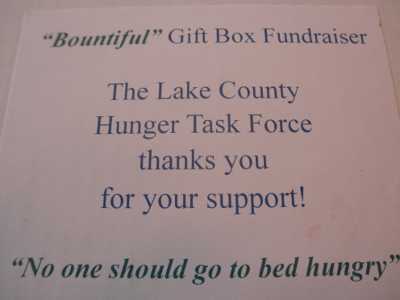
The goal was to sell 100 boxes at $40 each and it was achieved.
“From the outset, the response was incredible,” said organizer Michelle Scully. “We received emails for orders the very first day.”
The gift boxes contained two layers of Comice pears and apples, a bottle of Lake County wine and walnuts.
“We were blown away by the immediate response of Six Sigma Ranch and Winery,” said Scully. “The very first day Christian Ahlmann offered us all the white wine we would need.”
Wonderful red wines were donated by Brassfield and Wildhurst Wineries as well as local growers Randy Krag and Erica Lundquist who made a personal donation of Steele Wine produced from their Round River Farm.
“People stated whether they wanted their gift box to contain red or white wine, so the surprise was in which winery the wine would be from. It was awesome to know that people would be receiving product of such high quality,” said Scully.
Paula Bryant, community relations director of Umpqua Bank in Lakeport, expressed enthusiasm for the project early on and offered the bank's use as the delivery site.
“Umpqua Bank always strives to support our local communities,” Bryant said. “By purchasing the 'Bountiful boxes' it gave us the opportunity to give wonderful Lake County grown products to our customers as well as being able to support a very worthwhile cause. We certainly hope this program will be continued every holiday season.”
Scully said of the bank, “Umpqua's enthusiasm helped us realize early on that this idea could be successful.”
The staff at Umpqua continued their community support in small ways as well. “It was so cold the day of the deliveries we were freezing in the parking lot where we'd set up the deliveries so they'd be easier for people to pick up,” Scully said. “Everyone in the bank was super kind and they brought us hot coffee to take the chill off.”
Little did they know how successful the Bountiful boxes would be – the total amount raised for the HTF was $4,766. Donations were made in addition to box sales.
Lorrie Gray of the HTF was amazed at the support. “Michelle Scully and Scully Packing, the Lake County Winegrape Commission and its members, Lake County Walnuts and Seely Farm Stand established a limit of 100 'Bountiful boxes,' and all were sold within a brief two-week span. The revenues gained from this wonderful collaboration will help our community garden program, as well as our canning program for many years to come.”
Amazingly, demand exceeded supply, Scully said. “We could have sold more boxes if we had continued on past the Dec. 17 delivery date but we’d pretty much wrapped it all up by then.”

Gray added, “It is gratifying to live in a place where such generosity exists. The public response to this effort was overwhelming. Lake County produce of all kinds makes 'eating local' a no-brainer. We have some of the best fresh food in the world at our doorstep, and folks responded to that.”
Scully seconded Gray's observations. “Lorrie and I met a couple of years ago when we were serving together on a committee. Over time we realized that although our life experiences and direction of approach might be different, we shared a common passion – the issue of hunger.”
She said the HTF approaches that issue by helping people grow and preserve their own food.
“We're on the farming side in our family business and to me, those of us in farming are in it to feed people,” Scully said. “It's a natural relationship, just approached from different angles. I'd much rather work with someone towards a common goal than sit around talking about how we're different.
Scully called Gray “a wonderful person and she knows how to get things done,” adding, “I appreciate that in a person. There's so much need and anguish in the world, it's easy to become overwhelmed by that pain and not know where to begin.”
She added, “Although this project is just a drop in the bucket as far as that goes, I keep a quote from Mother Theresa in my head which says 'If you can’t feed a hundred people, then just feed one.' In my mind I sort of thought of each box as one person.”
So the question is: Is this a one-time effort or will it be back again next Christmas season?
“People's heartfelt response to the project just touched me deeply,” Scully said. “The best part, beyond almost $5,000 being raised, was that it was just a win-win for everyone. Everyone we had contact with was happy about the boxes – happy to purchase them, happy to know what a good cause the funds were going towards, and happy to give them. People who received them were thrilled to receive them.”
She said the feedback they received was that people were dismayed at how commercial Christmas gifting had become. “They were thrilled to give a gift that did something positive for their community.”
Scully said most people do want to help, to reach out, and they are just looking for an avenue to do so that speaks to them personally. “It was a wonderful experience and it created a network of people who want to remain connected for future efforts,” she said.
So to answer the question, Scully said they're definitely considering bringing the boxes back for Christmas 2011.
“But first I want to ensure that all the producers who donated their products are in a position to continue on with that,” she said. “I do think it’s an idea that can sustain itself and accomplish two very worthwhile goals – supporting a beneficial hunger outreach in our community and showing off our awesome Lake County products too.”
Follow Lake County News on Twitter at http://twitter.com/LakeCoNews , on Facebook at http://www.facebook.com/pages/Lake-County-News/143156775604?ref=mf and on YouTube at http://www.youtube.com/user/LakeCoNews .

LAKE COUNTY, Calif. – Two of Lake County’s most active and visible conservation groups – the Lake County Land Trust and the Chi Council for the Clear Lake Hitch – are working toward complementary goals in an effort to protect the natural beauty and wildlife of Clear Lake.
Longtime Lake County conservationist Peter Windrem – instrumental in the 2004 passing of the Northern California Coastal Wild Heritage Wilderness Act, the 1984 creation of the Snow Mountain Wilderness Area in the Mendocino National Forest, and president of the Chi Council for the Clear Lake Hitch – spoke last week about the historical and environmental importance of the hitch, also known as the chi, a large minnow endemic to Clear Lake.
“It’s as spectacular as any salmon run,” Windrem said to the Hidden Valley Lake Rotary Club about the yearly upstream migration of the hitch to spawn, which typically occurs in March.
“I’ve been giving talks about the hitch for several years,” Windrem continued, noting its precipitous decline in Clear Lake in the last 20 years, in an attempt to raise awareness of its plight and save the species from extinction.
That goal dovetails conspicuously with the land trust's recently-identified No. 1 priority, the Big Valley Wetlands project, an effort to protect a nearly five-mile stretch of largely undeveloped shoreline extending south of Lakeport to just west of Clear Lake State Park.
According to Lake County Land Trust President Peter McGee, part of the goal of the Big Valley Wetland project is the protection of Adobe Creek and Kelsey Creek, two tributaries that feed into Clear Lake and still experience significant yearly chi migration.
“The acquisition of these lands is like a pipe dream,” McGee said, adding, “It’s going to be a piece-by-piece deal that’s going to take 150 years.”
The land trust, which manages the 123-acre Rodman Slough Preserve at the north end of Clear Lake, identified the Big Valley Wetlands project as their No. 1 priority after facilitating the Bureau of Land Management’s purchase of the Black Forest on the northeast side of Mt. Konocti.
The group also owns and operates Rabbit Hill, a seven-acre preserve located in Middletown and acquired in 1999.
McGee, who said the land trust has some 400 members, noted his organization has just finished a biological assessment survey of the Big Valley Wetlands project area, and recently finalized a priority list for the property involved in the conservation site.
“We’re still at step one,” McGee said, “but we’re making progress.”
Noting the cooperative nature of the land trust in working with landowners and stakeholders to achieve common goals, “You don’t want people to be frightened; you want people to buy into the goals,” McGee said.
“It’s not a conservative/liberal thing,” McGee said about county conservation efforts, adding, “It cuts across the political spectrum.”
Both McGee and Windrem cite the extinction of the splittail – another fish endemic to Clear Lake – in the 1970s as cause for concern about the plight of the chi, with Windrem adding, “the hitch is on an extinction trajectory.”
In his talk, Windrem mentioned six potential causes for the steep decline in the hitch population: creek levees built in the 1950s which caused gravel backup in the streams; gravel mining in the 1950s and 1960s; weirs built in Clear Lake tributaries to protect bridge footings and inhibit chi from swimming upstream to spawning grounds; the introduction in the 1960s of the non-native silversides, which eat
zooplankton, a primary chi food source; the introduction, also in the 1960s, of Florida largemouth bass, which eat chi during their spring migration; and the introduction in the 1980s of threadfin shad, which also eat zooplankton.
Windrem noted that, unlike salmon, chi cannot jump over barriers to travel upstream, and need clean, plentiful gravel beds to lay their eggs.
“Everything that harmed the hitch was introduced because of economic gain,” Windrem said, calling it “a death sentence.”
In addition to removing or modifying barriers in creeks that would allow the hitch to reach historic spawning grounds, Windrem cited completion of the Middle Creek Restoration Project as a goal beneficial to the chi, saying it “could be extremely helpful because it would give more area for protection of the young hitch and protect them better against those predators.”
He also noted local American Indian tribal involvement in protecting this natural resource. “The tribes have been aggressively seeking some grant funding through the U.S. Fish and Wildlife Service,” he said, adding “that has happened just recently, within the last three or four years, so that’s encouraging.”
Windrem called the plight of the hitch urgent. “We will lose something terribly important about Clear Lake and our history if we lose the hitch.”
“The hitch are, in many respects, like lots of other species that are under assault,” Windrem said, “and how we try to deal with that and save them is what we as humans are having to do around the globe, and this is ours. This is ours.”
For more information about the hitch and the Chi Council for the Clear Lake Hitch, visit http://lakelive.info/chicouncil/index.html, where you can sign up to receive email updates about the spring chi migration.
For more information about the Lake County Land Trust, go to www.lakecountylandtrust.org/index.htm, where you can obtain volunteer information or donate online.
Follow Lake County News on Twitter at http://twitter.com/LakeCoNews , on Facebook at http://www.facebook.com/pages/Lake-County-News/143156775604?ref=mf and on YouTube at http://www.youtube.com/user/LakeCoNews .
Education
Health
Business
Obituaries
Veterans
Recreation
Religion
Arts & Life
Government & Politics