 How to resolve AdBlock issue?
News
LAKEPORT, Calif. – Lake County Vector Control District said Monday that it postponed an aerial larvicide treatment between Clear Lake State Park and south Lakeport due to weather.
District Manager Dr. Jamie Scott said no new date has been set for the aerial spraying, which will be done with the use of a crop duster.
Scott said the district was conducting the spraying because it has detected large numbers of mosquito larvae in the standing water in this area, and they want to reduce the number of adult mosquitoes that will hatch out in the warmer weather.
The treatment will include the use of Aquabac, which is based on the naturally occurring soil bacterium, Bacillus thuringiensis israelensis (Bti). It is registered with the Environmental Protection Agency for the control of larval mosquitoes in nearly all aquatic habitats.
For additional information contact the Lake County Vector Control District at 707-263-4770 or visit the district's Web site at www.lcvcd.org.
Follow Lake County News on Twitter at http://twitter.com/LakeCoNews , on Facebook at http://www.facebook.com/pages/Lake-County-News/143156775604?ref=mf and on YouTube at http://www.youtube.com/user/LakeCoNews .
POINT ARENA, Calif. – A North Coast teenager has found himself in trouble after displaying an air soft pistol in a public place in such a manner that law enforcement believed it was a real handgun.
The 14-year-old male from Point Arena was arrested Sunday, according to a report from Capt. Kurt Smallcomb of the Mendocino County Sheriff's Office.
Shortly before 5 p.m. Sunday Mendocino County Sheriff Deputies were dispatched to an area of the Point Arena Elementary School regarding a male subject observed with a handgun, Smallcomb said.
Smallcomb said the person who made the report told deputies that he had observed an individual pointing a handgun around as if he was going to shoot someone.
The first deputy on scene located a subject matching the given description on the school grounds, and saw a black-colored handgun in his hand, Smallcomb said.
Smallcomb said the deputy pointed his firearm at the teen and told him to put down the gun. The male subject didn't obey the command but instead ran around the corner of a building before coming back with it still in his hand.
The deputy repeated his command to put the gun down and for the teen to get on the ground, which he eventually did, with the deputy then handcuffing him, Smallcomb said.
When the deputy further inspected what he believed to be a handgun he found that it was a black colored Umarex "HK USP" air soft-style pistol, which Smallcomb said was nearly identical to an actual firearm.
After the arrest the deputy discovered the subject was 14 years old, said Smallcomb.
He said charges for display of an imitation firearm in a public place are pending. The completed portion of the investigation will be forwarded to the district attorney for review.
Smallcomb said the agency wanted to advise the general public that display or exposure of a imitation type firearm is not only dangerous, but it is also against the law.
Follow Lake County News on Twitter at http://twitter.com/LakeCoNews , on Facebook at http://www.facebook.com/pages/Lake-County-News/143156775604?ref=mf and on YouTube at http://www.youtube.com/user/LakeCoNews .
LUCERNE, Calif. – Northshore Fire Protection District's chief said he'll hang up his gear officially this summer.
Jim Robbins, 59, said he will be retiring on June 30.
By the time of his retirement Robbins will have spent 38 years as a fire chief.
He has been chief of the Northshore Fire Protection District since 2006, after the districts on the Northshore – Upper Lake, Nice, Clearlake Oaks and Lucerne – finished their consolidation process.
Prior to that, he was chief of the Lucerne Fire Department beginning in 1973.
Robbins, who grew up in the county, started with the district in 1967, when – at age 16 – he began as a junior fireman.
Northshore Fire is the largest fire protection district by geographic size in the state, at 350 square miles. Robbins said the district currently has 26 full-time and part-time paid firefighters and another 62 volunteers.
He said the district's board is going out to an open selection process.
“We would hope to have somebody selected prior to me leaving so I can at least work with them for a couple of months to go over things, how we run things around here,” Robbins said.
Robbins, whose wife Leah also is a Northshore firefighter, said he plans to continue living in the county following his retirement.
In other district news, Robbins said Battalion Chief Pat Brown has been promoted to the deputy chief position.
The appointment of Brown, a longtime firefighter with the district, is permanent, Robbins said.
The position had been unfilled since Gary Saylor retired some time ago, Robbins added.
E-mail Elizabeth Larson at
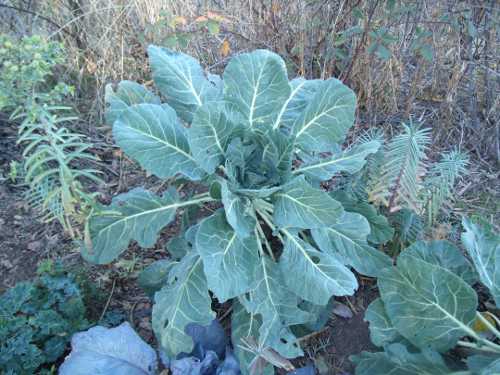
While it may be too late to lock in your luck for 2011 if you didn’t eat collards on the first day of the year, amazing health benefits are provided by this plant year round nonetheless.
Along with vegetables such as broccoli, cabbage, cauliflower, Brussels sprouts and its closest cousin, kale, collard greens are members of the brassica oleracea (also known as cruciferous) family of edible plants.
Its cultivar group name – acephala – means “without a head” in Greek, referring to the mass of loose green leaves that contrast with the compact, tightly-knit core of leaves that form the head of its relative, the cabbage.
It’s been said that collards are an extroverted version of cabbage, growing outward, rather than holding itself in.
Like kale, collards are prized for their ornamental qualities in landscapes. They’re known for their huge presentation of leaves, with a single plant able to grow as much as four feet high and five feet wide. An individual leaf, in fact, can cover a full square foot.
A cold weather crop, the flavor of collard greens is enhanced by frost, and its peak of season is now, between January and April. Fall collard plants can readily survive winter temperatures and produce again in the spring.
While a staple in the cuisine of the American South, collards also enjoy popularity in diverse parts of the world, including Brazil, Portugal, Egypt, Ethiopia and Kashmir, a region in the northwestern portion of the Indian subcontinent.
They’re cultivated on almost every continent.
In Portugal and Brazil, they’re a main component of a popular soup known as caldo verde (green broth), as well as an accompaniment to fish and pork dishes. Caldo verde is considered a national dish and is served daily.
The juice of the collard plant is consumed in these countries as a believed remedy for gout, circulation problems and bronchitis.

Both the leaves and roots are utilized in the cuisine of Kashmir. They may be cooked separately or together, often with meat, fish or cheese. The leaves are cooked in a soup with rice, and both leaves and roots are fermented to make pickles in the winter.
In Egypt, collard greens are cooked in a garlicky soup with starchy taro root, and in Ethiopia, they’re prepared in a spicy fashion with plenty of pepper.
According to botanists, the collard plant has remained the same for more than 2000 years and some consider it a type of kale. The differences between the two include leaf shape, length of stem, color and flavor. Kale is bitterer than its cousin, the deep green collard, which has a milder, somewhat smokier flavor.
Both collards and kale preceded modern-day cabbage. All are descendents of the wild cabbage, which is surmised to have originated in Asia Minor (modern day Turkey) and along the Mediterranean in Greece, and is thought to have been consumed since prehistoric times.
Collard greens have been cultivated since the ancient Greek and Roman civilizations. Interestingly, the Greeks ate only the stalks and avoided the leaves, while the Romans were found of collard leaves and cultivated more than 400 cabbage varieties.
Eventually, by the first century A.D., collards wended their way into other areas of Europe. They were introduced into the U.S. early in our history and were growing prolifically in Virginia by 1619, which marks their first written mention related to our nation.
They are the quintessential vegetable of the American South and, perhaps more than any vegetable other than okra, are strongly associated with that region.
It’s traditional there to simmer them slowly in liquid with salty meats like a ham hock, salt pork or smoked turkey, a practice that dates back to the time of the African slaves, when plantation owners gave them inferior cuts of meat, such as pigs’ feet, and the tops of turnips and other greens.

Walt Petersen and Kevin Knupp have traveled far and wide to study winter storms.
They never dreamed that the most extraordinary one they'd see – featuring freakish thundersnow, a 50-mile long lightning bolt, and almost a dozen gravity waves – would erupt in their own back yards. The storm hit Huntsville, Alabama, on the evening of Jan. 9.
“This incredible storm rolled right over the National Space Science and Technology Center where we work,” said Knupp. “What luck!”
Both Knupp and Petersen work at a Huntsville, Alabama, research center known as the National Space Science and Technology Center that houses scientists from NASA, UA-Huntsville, and other entities.
Knupp is a professor of atmospheric science and director of severe weather research at University of Alabama, Huntsville.
Petersen is an atmospheric scientist at NASA's Marshall Space Flight Center. He leads a NASA-funded group that travels around the world gathering precipitation data that will support a network of Earth-monitoring satellites being developed by NASA called the Global Precipitation Measurement (GPM) mission.
The snowstorm provided an excellent opportunity for Petersen's team to take detailed measurements of precipitation and use those observations as a type of database or model to simulate what the constellation of GPM satellites would see from space. By combining the observations at the ground with those of the polarimetric radar, Petersen's team expects to learn a great deal about the processes responsible for creating the snowfall, and more accurately measure the water content of the snow from space and the rate at which that snow-water equivalent accumulates on the ground.
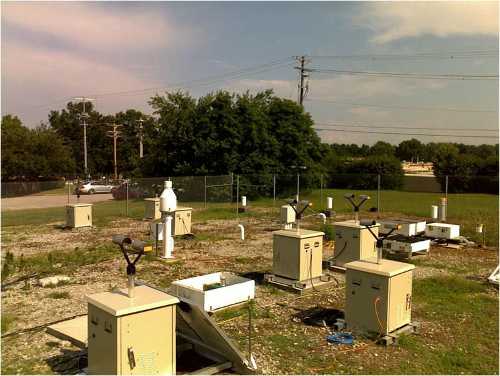
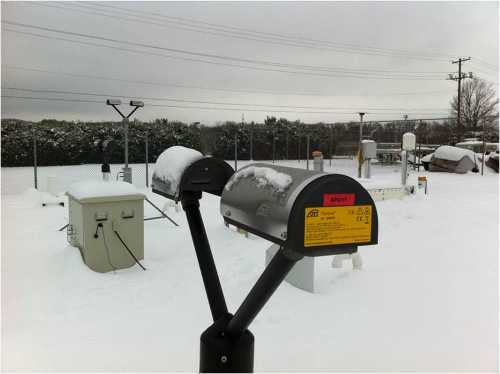
Snowstorms usually slip in silently, with soft snowflakes drifting noiselessly to Earth. Yet this Alabama snowstorm swept in with the fanfare of lightning and the growl of thunder.
Eyewitness Steve Coulter described the night's events: “It was as if a wizard was hurling lightning behind a huge white curtain. The flashes, muted inside thick, low hanging clouds, glowed purplish blue, like light through a prism. And then the thunder rumbled deep and low. This was one of the most beautiful things I've ever experienced.'”
It was a once-in-a-lifetime scene for anyone lucky enough to see it, but especially enthralling to scientists seeking the keys to nature's unique displays of power. Petersen and Knupp, with the help of graduate students from the University of Alabama-Huntsville, had their research equipment primed and ready.
From his at-home workstation, Petersen can monitor lightning detector networks and control radars, which he used to measure and record the storm.
But when the storm first hit his response was a little less scientific: “I was so excited that I ran outside in my house slippers to take pictures,” he recalled.
At around 10:30 p.m., he heard the first rumble of thundersnow. “My first thought was, 'excellent, a bonus!'”
What made this snowstorm act like a thunderstorm? Petersen explains:
“You rarely have lightning in a snowstorm. But in this case, some unique conditions set the stage for it. Moist air at the bottom of the storm was lifted up, rapidly forming snow and ice. Some of the snow even grew in pellet forms called 'graupel,'” he said.
Snowflakes and ice pellets of different sizes ascended at different rates – and they began to exchange charges.
The process isn't fully understood, but it could be a result of particles rubbing together (like wool socks on carpet). As the cloud charged up, it began to act less like an ordinary winter snowstorm and more like a summer thunderstorm.
It's no coincidence that the thundersnow was accompanied by massive roller coasters of air known as gravity waves. These waves are similar to waves in the ocean, but roll through the air instead of water.
“There was a nearly constant, uniform progression of gravity waves, starting at Monte Sano, a small mountain a few miles east of us, and moving westward, right over our building,” said Knupp, who spent most of the storm's duration with his eyes riveted on instrument displays inside the team's mobile X-band radar van.
“An easterly flow of air on the other side of the mountain ridge bumped into and was pushed over Monte Sano, forming 11 separate waves, about one per hour,” Knupp said.
He believes the clockwork up and down motion of the waves created variations in the updrafts responsible for the heavy snow, leading to the charge separation that generated lightning.
Unfortunately, he was knee-deep in computer displays instead of snow when the storm's most impressive lightning bolt set the sky aglow.
“This bolt reached from the tower on Monte Sano Mountain all the way to Molton, Alabama, about 50 miles away,” said Knupp. “And I missed it.”
Was he disappointed?
“I felt cheated, but it was worth the trade off. I learned some interesting things.”
Spoken like a true scientist.
Dauna Coulter works for the National Aeronautics and Space Administration.
Follow Lake County News on Twitter at http://twitter.com/LakeCoNews , on Facebook at http://www.facebook.com/pages/Lake-County-News/143156775604?ref=mf and on YouTube at http://www.youtube.com/user/LakeCoNews .
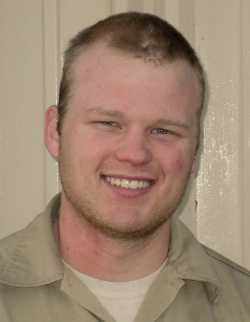
LAKE COUNTY, Calif. – California Conservation Corps member Chris Thomas was honored earlier this month in Washington D.C. as a Corpsmember of the Year.
Thomas, 23, is the son of Jean Bolding of Clearlake Oaks.
He received his award from the national Corps Network organization along with five other corpsmembers.
Thomas is the only recipient from California.
In Washington, Thomas spoke to several hundred representatives of corps programs and federal agencies at the Corps Network annual forum. His remarks prompted several job offers and expressions of interest in future employment.
Thomas also had a chance to visit Capitol Hill, meeting Rep. Wally Herger (R-Chico) and House Speaker John Boehner.
Thomas has been with the CCC in Chico since April 2009. He joined the program after serving three tours with the Marines in Iraq and Afghanistan. He was wounded twice during that time.
While in the CCC, Thomas was promoted to crewleader and worked on natural resource projects for the U.S. Forest Service, the Bureau of Land Management, the Department of Water Resources and California State Parks.
On the weekends, he typically participated in community activities and logged more than 350 hours of volunteer hours.
The Corps Network, an umbrella organization for service and conservation corps throughout the country, is based in Washington, D.C. and funded the travel and expenses for Thomas’ trip.
The California Conservation Corps is a state agency hiring young men and women, ages 18 to 25, for a year of natural resource work and emergency response.
Follow Lake County News on Twitter at http://twitter.com/LakeCoNews , on Facebook at http://www.facebook.com/pages/Lake-County-News/143156775604?ref=mf and on YouTube at http://www.youtube.com/user/LakeCoNews .
Education
Health
Business
Obituaries
Veterans
Recreation
Religion
Arts & Life
Government & Politics