 How to resolve AdBlock issue?
News
LOWER LAKE, Calif. – A local school has been named among the top schools in the North Coast region and a finalist in the annual Governor's Fitness Challenge, which works to encourage young people to be more physically active.
Lower Lake Elementary School is in the competition to win a fitness center if it comes out ahead in the challenge, which runs through the end of May.
As of Tuesday, April 26, the school was leading the North Coast region with 83,946 active days recorded, officials said. An active day is one in which a student is active for at least 30 minutes.
The school's next closest competitor in its region was Harvest Middle in Napa, which had 59,480 active days.
Governor’s Council on Physical Fitness and Sports Chairman Jake Steinfeld said the council will award three $100,000 Live Positively Fitness Centers to California schools that participate in the 2011 Governor’s Fitness Challenge, and make a special effort to promote physical activity for students during the month of May – California’s Fitness Month.
“When it comes to fitness, I’m a big believer in giving schools the tools,” he said. “We started the Governor’s Challenge this year offering three fitness centers as our grand prizes. Now, thanks to Coca-Cola’s Live Positively Initiative, we’re able to double that to 6.”
Steinfeld thanked the company for stepping up “at a time when our state government is being forced to slash budgets.”
He said he hopes the new fitness centers will be an incentive for all California children to be active during the month of May, a month in which most schools implement state mandated academic testing.
“When kids are active they feel better about themselves, they have more confidence and they do better in school,” Steinfeld said. “That’s a big reason why we started the Governor’s Challenge, because academics and fitness go hand in hand.”
One Northern, Central, and Southern California school will each be selected to receive a Live Positively Fitness Center award.
Officials said winning schools will be selected from a group of finalists based on participation in the 2011 Governor’s Challenge and based on essays describing what each school has done to help its students “live positively” by promoting physical activity during the month of May.
California State Superintendent of Public Instruction Tom Torlakson, a longtime proponent of physical activity, was the leader in establishing May as California Fitness Month when he was in the California State Assembly and the California State Senate.
Torlakson said he is taking on a leadership role with the Governor’s Fitness Challenge because of the proven benefits of physical activity.
“Research shows that physically active students are in better health, have greater confidence and self-esteem and perform better academically,” said Torlakson. “I encourage all California students to take the Governor’s Fitness Challenge and engage in an active, healthy lifestyle.”
The other top 10 Northern California schools ranked by region include the following.
Bay Area: FAME Public Charter, Fremont, 134,061 active days; Ruskin Elementary, San Jose, 132,419 active days; Sunset Ridge Elementary, Pacifica, 132,419 active days; Holbrook Elementary, Concord, 82,757 active days.
Gold Country: Waterford Middle, Waterford, 77,986 active days; Osborn Elementary, Turlock, 75,980 active days; Great Valley Academy, Modesto, active days 74,486; and Tuolumne Elementary, Modesto, 69,485 active days.
Follow Lake County News on Twitter at http://twitter.com/LakeCoNews, on Facebook at http://www.facebook.com/pages/Lake-County-News/143156775604?ref=mf and on YouTube at http://www.youtube.com/user/LakeCoNews.
Employees and courthouse visitors were evacuated following the receipt of a threat that a bomb would go off in the building at around 10:30 a.m., according to Sheriff Frank Rivero.
Rivero said the threat was phoned in to the County Counsel's Office.
He said the caller said to “leave the marijuana people alone.”
At 10 a.m. the Lake County Planning Commission had been scheduled to hold a hearing on a medical marijuana dispensaries ordinance.
A perimeter was set up around the building with Lakeport Public Works barricading off the streets, according to Lakeport Police Chief Brad Rasmussen.
Rivero said a bomb sniffing dog from the Department of Defense was sent in to help clear the building.
No explosives were found and the building was reopened to employees and the public at around 1 p.m., officials reported.
The sheriff's office reported that the investigation into the incident is continuing.
A full story will follow later tonight.
E-mail Elizabeth Larson at
The 2011 report, which includes lists of the nation's most polluted metropolitan areas, was released Wednesday.
For several years Lake County has been ranked a top clean air county, and this year it was ranked No. 6 for cleanest counties based on year-round particle pollution.
Of the 25 counties on that list, the only California counties listed were Lake and San Benito.
The No. 6 ranking was an improvement over the No. 10 ranking the county received in the 2010 report. It 2009 Lake County was ranked No. 3 nationwide.
The report showed that Lake County received an “A” for having no high ozone days from 2007 to 2009, but received a “B” grade for having two high particle pollution days, also in the 2007 to 2009 time frame.
That latter grade was likely influenced by the Walker Fire and other regional forest fires in 2008 which caused several local air quality warnings during the summer months.
In California, in addition to Lake County, those receiving “A” grades overall were Humboldt, Marin, Mendocino, San Francisco, San Mateo, Santa Cruz, Siskiyou and Sonoma.
The report found that the majority of American cities most-polluted by ozone (smog) or year-round particle pollution (soot) have improved, showing continued progress in the cleanup of deadly toxics, thanks to the Clean Air Act.
Though progress has been made, the American Lung Association said some members of Congress are working to weaken the Clean Air Act and public health protection it provides.
The Lung Association's annual air quality report, available at www.stateoftheair.org, reveals that just over half the nation – 154.5 million people – live in areas with levels of ozone and/or particle pollution that are often dangerous to breathe.
State of the Air 2011 finds the Clean Air Act is working. All metro areas in the list of the 25 cities most polluted by ozone showed improvement over the previous report, and 15 of those cities experienced the best year yet. All but two of the 25 cities most polluted with year-round particle pollution improved over last year's report.
However, only 11 cities among those most polluted by short-term spikes in particle pollution experienced improvement.
“State of the Air tells us that the progress the nation has made cleaning up coal-fired power plants, diesel emissions and other pollution sources has drastically cut dangerous pollution from the air we breathe,” said Charles D. Connor, American Lung Association president and chief executive officer. “We owe our cleaner air to the Clean Air Act. We have proof that cleaning up pollution results in healthier air to breathe. That's why we cannot stop now. Half of our nation is still breathing dangerously polluted air. Everyone must be protected from air pollution.”
The State of the Air 2011 report grades cities and counties based, in part, on the color-coded Air Quality Index developed by the U.S. Environmental Protection Agency (EPA) to help alert the public to daily unhealthy air conditions.
The 12th annual release of the Lung Association's report uses the most recent EPA data collected from 2007 through 2009 from official monitors for ozone and particle pollution, the two most widespread types of air pollution.
Counties are graded for ozone, year-round particle pollution and short-term particle pollution levels. The report also uses EPA's calculations for year-round particle levels.
The report identified Honolulu, Hawaii and Santa Fe-Espanola, N.M. as the cleanest cities – the only two cities in the nation that were among the cleanest for year-round particle pollution and also had no days when ozone and daily particle pollution levels reached unhealthy ranges.
The report also found that one in five Americans breathe dangerous levels of deadly particle air pollution.
Nearly 60 million Americans (19.8 percent) live in counties with too many unhealthy spikes in particle pollution levels, and 18 million people live with unhealthy year-round levels of particle pollution.
Particle levels can spike dangerously for hours to weeks on end (short-term) or remain at unhealthy levels on average every day (year-round).
“Particle pollution kills,” said Norman H. Edelman, M.D., American Lung Association chief medical officer. “When you breathe these microscopic particles, you are inhaling a noxious mix of chemicals, metals, acid aerosols, ash and soot that is emitted from smokestacks, tailpipes, and other sources. It is as toxic as it sounds and can lead to early death, asthma exacerbations, heart attacks, strokes and emergency room visits in substantial numbers. Science clearly has proven that we need to protect the health of the public from the dangers of particle pollution.”
Only 10 counties received an “F” for year-round particle pollution, a reflection of progress made under the Clean Air Act. Bakersfield, Calif. tops both lists of cities most-polluted by short-term and annual particle pollution. Bakersfield and Hanford, Calif. were the only two cities where year-round particle levels worsened over the previous report.
State of the Air 2011 finds that nearly half the people in the U.S. (48.2 percent) live in counties that received an “F” for air quality due to unhealthy ozone levels.
Ozone (smog) is the most widespread air pollutant, created by the reaction of sunlight on emissions from vehicles, power plants and other sources.
When ozone is inhaled, it irritates the lungs. It can cause immediate health problems and continue days later. Ozone can cause wheezing, coughing, asthma attacks and even premature death.
Lists of the most polluted cities follow.
Nation's most polluted cities
Most ozone-polluted cities
1. Los Angeles-Long Beach-Riverside, Calif.
2. Bakersfield-Delano, Calif.
3. Visalia-Porterville, Calif.
4. Fresno-Madera, Calif.
5. Sacramento-Arden-Arcade-Yuba City, Calif.-Nev.
6. Hanford-Corcoran, Calif.
7. San Diego-Carlsbad-San arcos, Calif.
8. Houston-Baytown-Huntsville, Texas
9. Merced, Calif.
10. Charlotte-Gastonia-Salisbury, N.C.-S.C.
Cities most polluted by short-term particle pollution
1. Bakersfield-Delano, Calif.
2. Fresno-Madera, Calif.
3. Pittsburgh-New Castle, Pa.
4. Los Angeles-Long Beach-Riverside, Calif.
5. Salt Lake City-Ogden-Clearfield, Utah
6. Provo-Orem, Utah
7. Visalia-Porterville, Calif.
8. Birmingham-Hoover-Cullman, Ala.
9. Hanford-Corcoran, Calif.
9. Logan, Utah-Idaho
9. Sacramento-Arden-Arcade-Yuba City, Calif.-Nev.
Cities most polluted by year-round particle pollution
1. Bakersfield-Delano, Calif.
2. Los Angeles-Long Beach-Riverside, Calif.
2. Phoenix-Mesa-Glendale, Ariz.
2. Visalia-Porterville, Calif.
5. Hanford-Corcoran, Calif.
6. Fresno-Madera, Calif.
7. Pittsburgh-New Castle, Pa.
8. Birmingham-Hoover-Cullman, Ala.
9. Cincinnati-Middletown-Wilmington, Ohio-Ky.-Ind.
10. Louisville-Jefferson County-Elizabethtown-Scottsburg, Ky.-Ind.
10. Modesto, Calif.
Follow Lake County News on Twitter at http://twitter.com/LakeCoNews, on Facebook at http://www.facebook.com/pages/Lake-County-News/143156775604?ref=mf and on YouTube at http://www.youtube.com/user/LakeCoNews.
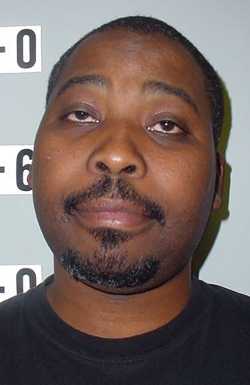
LAKE COUNTY, Calif. – An investigation into a report of suspected child abuse by sheriff’s deputies Wednesday afternoon resulted in the arrest of a Lake County Code Enforcement officer.
Rod Ian Hilliard, 37, was booked into the Hill Road Correctional Facility for felony willful cruelty to a child, with bail set at $25,000, according to Capt. James Bauman of the Lake County Sheriff's Office.
Shortly after noon on Wednesday, April 27, deputies responded to Kelseyville High School when school staff reported a 17-year-old female student had been injured from an incident that occurred at her home the previous night, Bauman said.
When deputies arrived, they confirmed that the student had in fact sustained significant bruising on her leg and arm, according to Bauman's report.
Further investigation by deputies revealed that on Tuesday afternoon Hilliard, the alleged victim’s father, arrived at their Kelseyville home to find a male friend of the victim’s at the house. Bauman said the friend was told to leave and Hilliard returned to work.
Later that night after Hilliard had returned home from work, he allegedly broke the victim’s cell phone and other items before retrieving a belt from his room and striking the victim several times as punishment for having the boy at the house, Bauman said.
Hilliard was contacted Wednesday afternoon and asked to respond to the school. Bauman said that shortly after Hilliard arrived at the school he was arrested.
Bauman said Lake County Child Protective Services responded to the school to take custody of the alleged victim, and also retrieved the girl's 7-year-old brother from a day care facility.
Hilliard remained in custody at the jail Wednesday night, according to jail records.
Follow Lake County News on Twitter at http://twitter.com/LakeCoNews, on Facebook at http://www.facebook.com/pages/Lake-County-News/143156775604?ref=mf and on YouTube at http://www.youtube.com/user/LakeCoNews.

The US Geological Survey said the quake occurred at 10:43 a.m.
Its epicenter was located one mile north northwest of The Geysers geothermal steamfield, five miles west southwest of Cobb and seven miles west northwest of Anderson Springs, the survey reported.
Survey data showed the quake was recorded at a depth of 2.2 miles.
The US Geological Survey received a dozen shake reports, including reports from Kelseyville, Lakeport and Middletown, several from areas of Sonoma County such as Cloverdale and Santa Rosa, and one from San Francisco.
A 3.4-magnitude quake occurred two miles north northeast of The Geysers on April 23, as Lake County News has reported.
E-mail Elizabeth Larson at
Education
Health
Business
Obituaries
Veterans
Recreation
Religion
Arts & Life
Government & Politics