 How to resolve AdBlock issue?
News
Over the four-day period that ended Sunday, Northshore Fire had been up Elk Mountain Road several times to respond to injuries that resulted both from fights and car crashes, according to Battalion Chief Steve Hart.
Early Sunday morning an individual was assaulted at the Oak Flat campground. “We went up there to retrieve the patient,” said Hart.
During the several days of activity, they also responded to a rollover crash in the area, Hart said.
A possible contributor to the increased level of calls is a large amount of activity at local campgrounds, he said.
“The fire chief said the campgrounds are full for unknown reasons,” said Hart. “Nice weekend, nice weather, people are staying close to home.”
He added, “I think we better get used to this,” especially with the Memorial Day weekend around the corner. “I hope next weekend isn't as bad.”
On Sunday there also was a huge number of dirt bikes traveling between Upper Lake and Bartlett Springs, according to Hart.
“I've never seen that many. Never,” he said. “There was literally hundreds.”
Hart said that the bikers didn't cause any problems. “Not one.”
E-mail Elizabeth Larson at
Wild West Day
The 18th-annual Wild West Day, held in downtown Upper Lake on from 7 a.m. to 5 p.m. Saturday, June 4, is a Western-themed street festival and wearing costume is encouraged.
With Old West skits, a parade, pancake breakfast, tri-tip barbecue, wagon rides, and country music, Wild West Day is a family-friendly event and all ages can enter contests for best beard, bonnet, and costume.
Established in 1854, the town of Upper Lake once was a former stagecoach stop along the route from Sacramento to Mendocino and today features the restored Tallman Hotel, which is listed on the California Register of Historic Resources as a Point of Historical Interest, a re-created Blue Wing Saloon & Café next door, and a former livery that is now home to an antique plumbing business.
Also along Upper Lake’s Main Street, visitors will find a local wine tasting bar, antiques, and collectibles from all over the world, local crafts, and fine art from throughout Northern California, as well as household necessities, pet care items, gifts and home décor.
Wild West Day in Upper Lake is sponsored by the Upper Lake Community Council for community projects and the Northshore Fire Protection District. Admission is free. Call 707-275-2000 for more information.
Middletown Days
In the south county, June 17-19, Middletown Days – a tradition for 50 years – returns for three days of family fun and features a ranch rodeo, live music, craft and food booths, children’s activities and more.
Friday features a team roping event in the evening and Saturday begins with a parade at 10 a.m. and ends with a dance at 8:30 p.m. Sunday features the gymkhana.
Established in 1870, Middletown, midway between Lower Lake and Calistoga, is surrounded by outlying ranches, vineyards, and The Geysers, the largest geothermal energy source in the world.
Middletown balances Old West charm and forward-thinking businesses with a vision for a sustainable world, including Harbin Hot Springs, one of the oldest operating hot springs resorts in California, Hardester’s Market, Boar’s Breath Restaurant and more.
Middletown Days is held at Middletown Central Park, 15299 Central Park Road. Admission is free; small fee for dance on Saturday night. Team Roping on Friday begins at 5 p.m.; parade on Saturday begins at 10 a.m. and gymkhana at 9 a.m. on Sunday. Call 707-994-1954 for more information.
For information about guided trail rides, the 82nd-annual Lake County Rodeo on July 8 and 9, and other equestrian activities, contact the Lake County Visitor Information Center at 800-525-3743 or www.lakecounty.com.
For visitor information, contact the Lake County Visitor Information Center at 800-525-3743 or www.lakecounty.com.
Follow Lake County News on Twitter at http://twitter.com/LakeCoNews , on Facebook at http://www.facebook.com/pages/Lake-County-News/143156775604?ref=mf and on YouTube at http://www.youtube.com/user/LakeCoNews .
Sen. Mark Leno (D-San Francisco) introduced SB 932 in February.
On May 10, the bill passed the Senate Environmental Quality Committee.
According to the Legislative Counsel's Digest, the bill would require cell phone retailers to prominently display – in their stores, on Web sites and on cell phone packaging – the radiofrequency energy emitted by the phones.
Because cell phones emit a form of radiation called radiofrequency energy, the Federal Communications Commission (FCC) has established maximum exposure limits in order to prevent any possible health effects from this energy source, Leno's office reported.
Currently, information on the computer-modeled estimate of radiation released by each cell phone – a value known as the Specific Absorption Rate (SAR) – is found in fine print in packaging.
“Buried somewhere around page 80 of your cell phone manual is a notice that tells you your phone emits radiofrequency energy and that holding it directly against your body could lead to exposure levels exceeding federal limits,” said Leno. “These advisories are clearly important and need to be posted where consumers can read them without the help of a magnifying glass.”
“The cell phone industry seems to be afraid that consumers might actually read their manuals and become informed about the proper way to use their phones,” said Renee Sharp, California director of the Environmental Working Group, which supports the bill. “We’re glad to see that, at least so far, the California Legislature doesn’t agree with them.”
Some members of the wireless industry have reportedly argued that the requirements would violate their free speech right.
However, Devra Davis, PhD, MPH, and president of the Environmental Health Trust, said major tech-savvy governments around the world, including Israel and France, are requiring that the SAR be posted on cell phones.
“They are also requiring that people be given simple information about reducing directed-microwave radiation from cell phones to their brains and bodies, and taking special precautions with children,” Davis said. “Evidence that cell phone radiation can have biological impacts has grown over the past two decades; this is why so many nations have issued precautionary advice, along with major cancer centers such as MD Anderson and the University of Pittsburgh.”
On May 17, the bill was read and amended for a second time, and ordered to a third reading, according to legislative records.
The bill now would require the following warning: “This device emits radiofrequency energy. Consult the user's manual for additional information on safe use.”
Removed from the required language was this warning: “Do not hold or carry it directly against the body when connected to a network or you may be exposed to levels greater than the safety limit established by the Federal Communications Commission.”
SB 932 will next be heard on the Senate floor.
Follow Lake County News on Twitter at http://twitter.com/LakeCoNews , on Facebook at http://www.facebook.com/pages/Lake-County-News/143156775604?ref=mf and on YouTube at http://www.youtube.com/user/LakeCoNews.
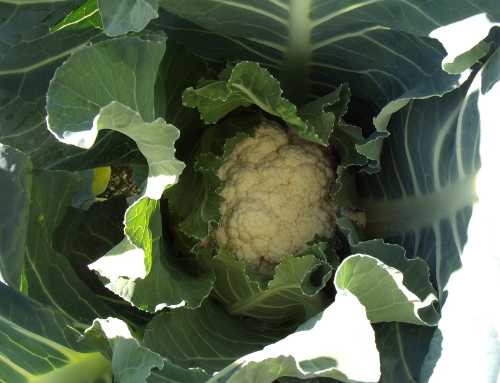
This week’s title is a reference to a quote by Mark Twain: “Cauliflower is nothing but cabbage with a college education.”
If the witty Mr. Twain meant that advanced degrees won’t alter humble roots, he may not be too far from the truth.
Cauliflower is a descendant of wild cabbage native to the coastal regions of western and southern Europe.
Along with relatives such as cabbage, broccoli, collards, Brussels sprouts, kale, bok choy, radishes and mustard, cauliflower is a member of the family of plants known as brassicas, all containing powerful phytochemicals that possess proactive health benefits.
Plants from this genus are sometimes called cole crops, a term derived from the Latin word for stem or cabbage. They’re also known as cruciferous vegetables because of the resemblance their four-petaled flowers bear to a Greek cross.
The head of the cauliflower, composed of bunches of tiny florets on clusters of stalks, is known as the curd. (Appropriate, in my opinion, because of its resemblance to curds formed in cheese making.)
Cauliflower draws its name from the Latin word for cabbage, “caulis,” and flower, a nod to its unique place in a family of plants known mainly for their green leafiness.
In addition to the creamy white color we commonly see, there are cauliflower varieties that sport lime green, purple or orange heads. Colored cauliflower is generally sweeter and more strongly flavored than its white cousins, and the orange variety has the added benefit of being rich in beta-carotene.
As a cold weather crop, cauliflower is generally available in the fall and winter; however, a spring crop is grown in mild climates and should be available at local farmers’ markets.
The best cauliflowers are those consumed within a few days of picking, making these venues perfect spots for purchase. If you can find a head still surrounded with its large, protective leaves, all the better.
Because of its delicate taste, cauliflower works well when paired with foods with strong flavors, such as pungent cheeses, garlic, curry, mustard, lemon, pepper, cumin, anchovies and the like.
In contrast to this, it’s also a favorite with rich, comforting ingredients like cream, butter and mildly-flavored cheeses for applications such as a casserole with béchamel sauce, steamed florets with a cheesy topping or baked with butter and bread crumbs.
Roasted cauliflower is a favorite treat of mine, ranking right up there with gooey chocolate desserts. The process of roasting brings out an amazingly sweet nutty flavor and there’s nothing like it.
While I enjoy roasted cauliflower as is, it may be pureed (on its own or with potatoes) for an especially comforting yet healthy food. Using cauliflower in mashed potatoes adds nutrition and reduces the amount of carbohydrates consumed. A dab of hearty mustard, garlic or sharp cheese is a nice addition to the mixture.
Roasted cauliflower may be pureed for thickness with mild white beans, such as cannelloni, and used as a spread – either warm or cold, on toasted slices of baguette.
When pureed and heated with a bit of broth, roasted cauliflower makes a creamy and flavorful soup. It can be finished, if desired, with some half and half or cream, but that’s not a necessity.
A simple sauce of Dijon mustard, lemon juice and sour cream or yogurt is a perfect way to dress up lightly-steamed cauliflower. These flavors also work when making a dip for raw cauliflower florets.
One of the most creative uses of cauliflower I’ve seen is to boil it with broccoli until very tender, and then further cook the veggie pair with olive oil, garlic, thyme, a bit of reserved cooking water and, if desired, a few hot peppers until tender enough to mash.
This mixture is then piped into tubes of uncooked cannelloni pasta, which are baked until tender in a white sauce with basil and mozzarella cheese. My mouth is watering just thinking of it.

Cauliflower is popular in Indian cooking, and an especially tasty take on this cuisine is to fry them after dipping in a batter seasoned with curry and cumin.
A unique cooking method to achieve maximum creaminess is to use milk, either dairy or almond, as a medium for gently cooking the florets on the stove top.
Cauliflower is an excellent source of vitamins C and K, contains an array of other vitamins and minerals and is a good source of dietary fiber. It has antioxidant, anti-inflammatory and detoxifying benefits and is a very good source of omega 3 fatty acids.
The phytonutrients present in cauliflower as a member of the brassica family provide a variety of health benefits, including protection against heart disease, cancer and diabetes.
A powerful cancer-fighting phytonutrient, sulforaphane, is responsible for the unpleasant smell that cauliflower and its vegetable cousins emit when cooking; however, its positive health benefits far outweigh that unpleasantness.
When buying cauliflower, choose heads that are firm with compact florets. Stay away from those which have developed brown spots on the curd. The surrounding leaves should be green with no sign of yellowing.
Cauliflower may be stored, unwashed and uncooked, in the fridge for 3 to 5 days when tightly wrapped. Cooked cauliflower will generally keep for 1 to 3 days.
Today’s recipe is a basic one for roasting cauliflower, simple yet immensely delicious, an important one to have in your repertoire. Grating fresh Parmesan cheese on the finished product is optional. Enjoy!
Roasted cauliflower
1 head of cauliflower, rinsed and patted dry
2 or 3 cloves of garlic, peeled and coarsely minced
Lemon juice from half a lemon
Extra virgin olive oil
Coarse salt and freshly ground black pepper
Fresh Parmesan cheese for grating, optional
Preheat oven to 400 degrees F.
Cut cauliflower into florets and put in a single layer in an oven-proof baking dish.
Toss in the garlic.
Squeeze lemon juice over the cauliflower, drizzle each piece with olive oil, and sprinkle with salt and pepper.
Roast cauliflower in the oven, uncovered, for 25 – 30 minutes, or until the top is lightly brown. The cauliflower should be soft and fork tender.
Remove from oven and sprinkle generously with Parmesan, if desired.
Serve immediately.
Makes about four servings.
Esther Oertel, the “Veggie Girl,” is a culinary coach and educator and is passionate about local produce. Oertel teaches culinary classes at Chic Le Chef in Hidden Valley Lake, Calif., and The Kitchen Gallery in Lakeport, Calif., and gives private cooking lessons. She welcomes your questions and comments; e-mail her at
Follow Lake County News on Twitter at http://twitter.com/LakeCoNews , on Facebook at http://www.facebook.com/pages/Lake-County-News/143156775604?ref=mf and on YouTube at http://www.youtube.com/user/LakeCoNews .
The quake occurred at 1:53 a.m., according to the US Geological Survey.
It was centered six miles west of Lakeport and 12 miles southeast of Ukiah at a depth of 2.9 miles, the agency reported.
Twenty-four shake reports from five zip codes – Lakeport, Hopland, Ukiah, Forestville and Martinez – had been submitted to the survey by 2:30 a.m.
E-mail Elizabeth Larson at

In commemoration of the 150th anniversary of the founding of Lake County this year, Lake County News is publishing a series of historical stories about the county, its people and places. In this week's story, Camisha Knowlton describes a story from the Mauldin files about the Lower Lake Stone Jail.
The Lower Lake Stone Jail was built in 1876 and is known as the smallest jail in the United States.
It is located on the corner of Highway 29 and Main Street in Lower Lake.
One of Lower Lake’s first stone masons, Stephen Nicolai, built the jail from local materials with the help of John and Theodore Copsey.
The Copsey brothers, thrilled with the completion of the jail’s construction, celebrated in one of the local saloons and became rather rowdy. Hence, the brothers became the jail’s first occupants but didn’t remain so for long.
The Copseys realized that they had not yet fastened the wooden roof down and, being tall men, they were able to lift up the roof and escape.
There is some speculation as to whether John and Theodore got themselves arrested for the sole purpose of being the jail’s first occupants. It would make sense since only they knew that if they were put in jail, they would not have to remain there.
One may wonder why a jail was needed for such a small town. The population in Lower Lake was at 1,000 people and quicksilver mining was at its peak. The Sulphur Bank Mine began mining quicksilver in 1874, and as there were jobs available, more people were drawn to Lake County.
The combination of steady income, liquor and disagreements made this one of the wildest times for Lake County.
As the population continued to grow, crime rose with it. There became an urgent need for civil order, so plans to build the jail began to unfold.
The Lower Lake Stone Jail, although small, has seen quite a bit of action in its time.
Chinese workers at the mines usually smoked opium in moderation. One incident is recorded where moderation went out the window and five Chinese men, extremely high on opium, were thrown into the Lower Lake Stone Jail all at one time.
There was never a guard or watchman for the jail, even when there were occupants. The jail also was without a sanitary facility of any kind and food and water were only provided when absolutely necessary.
After some time, the little jail was closed. For years after it served the county as a gasoline storehouse.
In later years, some townspeople wanted to get rid of it entirely. The Civic Club, Luncheon Club and Native Sons of the Golden West came to the rescue and saved the little building.
It became a California Historic landmark on Oct. 2, 1962.
For more information about the Lake County Sesquicentennial, visit www.lc150.org, join the celebration at https://www.facebook.com/home.php#!/pages/Lake-County-Sesquicentennial/171845856177015 and follow it on Twitter at http://twitter.com/LakeCo150 .
Follow Lake County News on Twitter at http://twitter.com/LakeCoNews , on Facebook at http://www.facebook.com/pages/Lake-County-News/143156775604?ref=mf and on YouTube at http://www.youtube.com/user/LakeCoNews .