 How to resolve AdBlock issue?
News
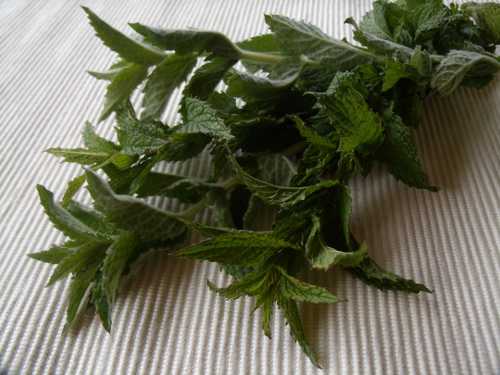
I visited a Kelseyville home yesterday to give vegetarian cooking lessons and left with a generous helping of fresh herbs from the garden there, a fragrant combination of peppermint, flowering thyme, oregano and sage.
The cab of my little truck smelled heavenly as I plied my way home.
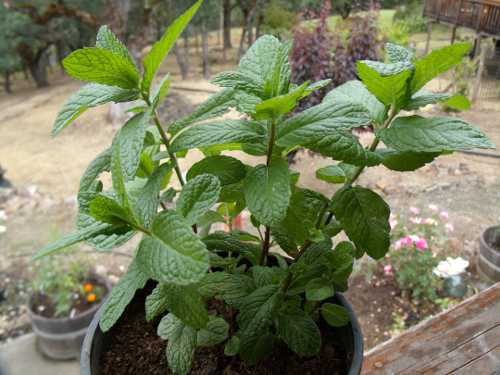
The generosity of this client, as well as the rapidly spreading potted spearmint on my deck, provided the seed of inspiration for today’s mint musings. A steaming mug of fresh peppermint tea made from today’s bounty is proving to be fine fertilizer.
(Technically, an herbal infusion such as the one I’m enjoying should be referred to as a tisane, but the word tea is so delightfully comforting.)
Mint is popular in a wide swath of cuisines around the world, from Europe to Africa to Asia to the Americas.
More than 20 years ago I had my first Moroccan restaurant experience, complete with low tables, floor cushions for seating, hot lemony washcloths and communal eating from one bowl sans utensils (providing the reason for the washcloths).
All of this was interesting, but I was mesmerized by the tea ritual that took place at the beginning of each meal. Experienced wait staff poured hot, sweet minty tea from a great height into waiting cups below. Not once did I see an errant drop from those tall, silver urns splatter awry.
In Morocco, mint tea is an icon for hospitality and such a ritual is essential for welcoming a guest into one’s home. If you’d like to make mint tea Moroccan style at home, instructions for this are included below with my regular recipe offering for the week.
As to my simple peppermint tisane, simply pour hot water over a tablespoon or so of fresh peppermint leaves in a mug.
Mint cools us down from the inside out, and imbibing beverages containing this herb helps when the weather is hot; hence the popularity of mint tea in Morocco.
An alcohol-free Mojito-style cooler may be made by muddling mint with a bit of sugar in the bottom of a glass before adding fresh lime juice and sparkling water. Ice and a good stir are all that’s needed before enjoying.
Mint is a delightful addition to another citrus cooler, lemonade. Allow fresh sprigs to infuse in the pitcher, or add a sprig to individual glasses.
Water infused with mint is wonderfully refreshing. Simply add mint sprigs to a pitcher of water and allow it to cool in the fridge for an hour or so. The longer it infuses, the stronger the flavor. The mint may be lightly “spanked” prior to adding to the water, meaning it’s hit against the palm of the hand to release its essential oils.
If desired, peeled, seeded cucumber spears may be added to the water. Not only is this is a delightful flavor combination, but cucumber heightens the cooling effect of the beverage.
The combination of mint, yogurt and cucumber, three cooling foods, is found in the cuisines of a variety of hot countries, such as those in the Middle East, North Africa and India.
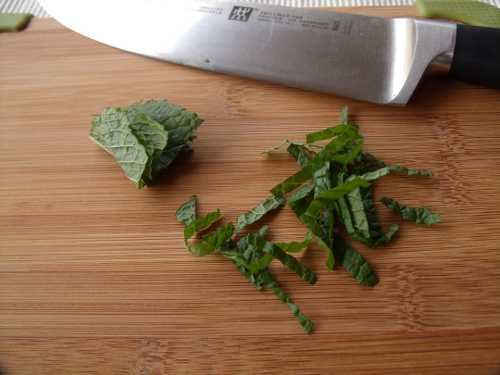
In addition, mint is a main ingredient in salads of these lands, such as tabbouleh of the Middle East, a favorite salad of mine and a fresh companion of another favorite, hummus.
To make tabbouleh, fresh vegetables such as cucumber, scallions and tomato are added to bulgur wheat along with generous helpings of chopped parsley and mint. Olive oil and fresh squeezed lemon juice complete the mixture.
Its fresh herbal taste and crunchy texture provide a nice contrast to the smooth creaminess of hummus and they’re perfect together in a pita.
In addition to cucumbers, mint is paired with vegetables as diverse as carrots, peas, potatoes, beets and beans. Fruits such as melons, strawberries and raspberries benefit from the addition of mint.
I add fresh mint to peas, flavor cooked carrots with mint and honey, toss sliced beets with mint and orange zest, and making a soup of fresh peas and mint is on my culinary to-do list.
Mint is a flavor component in the cuisines of Southeast Asia, such as that of Thailand and Vietnam. Along with Thai basil and cilantro, mint flavors the fresh spring rolls of those countries. I love how the strong herbal tastes of the three herbs work together to excite and refresh the palate.
There are over 30 species of mint, with spearmint and peppermint being the most popular and accessible. Fresh spearmint has a milder flavor than the stronger, more pungent peppermint.
Like other herbs (thyme and basil, for example), some mints have overtones of other flavors, such as chocolate, cinnamon, pineapple and bergamot mints.
It is generally accepted that if the mint variety isn’t noted in a recipe, spearmint should be used.
This hardy Mediterranean herb holds a place in Greek mythology, where it’s said that mint was once the nymph Mentha. She angered Pluto’s wife Persephone, who turned her into this aromatic plant. While Pluto couldn’t undo Persephone’s spell, he softened it a little so that the more Mentha was tread upon, the sweeter her smell would be.
Mint, which is rich in vitamins A and C, is a popular home remedy for ailments ranging from abdominal and digestive problems to headaches and fevers to insomnia, toothaches and bad breath.
It also contains a wide array of essential minerals, such as manganese, copper, iron, potassium and calcium.
Today’s recipe is a favorite hot weather salad, Tzatziki (pronounced tah-zee-kee), combining yogurt, cucumber and mint.
Tzatziki hails from Greece, where such cooling food is welcome in the bright sunshine of that country.
Other versions of tzatziki are flavored with fresh thyme or dill, and either of these herbs may be added along with the mint, if desired. Enjoy!
Tzatziki: Greek cucumber yogurt salad
2 medium cucumbers (English or Armenian preferred), peeled*, seeded and thinly sliced
2 cups plain Greek yogurt
2 cloves garlic, smashed, then finely diced
Juice of half a lemon (or more to taste)
Fresh mint, large handful, chopped
Fresh dill or thyme to taste, chopped, optional
Freshly ground black pepper & salt to taste
*If using English, Armenian or other thin-skinned cucumbers, peeling and seeding is unnecessary.
Combine the yogurt, garlic and lemon juice in a bowl.
Add cucumber to yogurt mixture and combine well.
Add mint, using more or less depending upon taste; blend.
Add dill or thyme, if using, and add salt and pepper to taste.
Adjust lemon juice and seasonings, if needed.
Note: Greek yogurt is thicker than other yogurts and if unavailable, use regular plain yogurt drained in the fridge for 8 hours or overnight. To do this, line a colander with cheesecloth or paper towels, add yogurt, then place colander over bowl for drainage. This method creates a thick Greek-like yogurt. (The volume reduces with this method; two cups of yogurt become one after draining.)
Recipe by Esther Oertel.
Moroccan mint tea
2 teaspoons of gunpowder tea
1 bunch of fresh mint
2 tablespoons of sugar
Boil a kettle of water. Put the tea in a teapot. Pour a little bit of boiled water from the kettle into the teapot. Swirl it around with the tea to wash the tea. Pour out the water. Then fill the teapot with boiled water. Put the teapot back on the stove on a low flame, until the tea starts to simmer. Watch it closely so that it doesn’t boil over! Take the teapot off the stove and add the mint and sugar. Moroccans tend to take their tea very sweet, but you may choose to add less sugar.
Recipe courtesy of Moroccan cooking site www.fescooking.com
Esther Oertel, the “Veggie Girl,” is a culinary coach and educator and is passionate about local produce. Oertel teaches culinary classes at Chic Le Chef in Hidden Valley Lake, Calif., and The Kitchen Gallery in Lakeport, Calif., and gives private cooking lessons. She welcomes your questions and comments; e-mail her at
Follow Lake County News on Twitter at http://twitter.com/LakeCoNews , on Facebook at http://www.facebook.com/pages/Lake-County-News/143156775604?ref=mf , on Tumblr at http://lakeconews.tumblr.com/ and on YouTube at http://www.youtube.com/user/LakeCoNews .
The quake, which occurred at 3:55 p.m., was centered two miles east of The Geysers, four miles southwest of Cobb and four miles west northwest of Anderson Springs, according to a preliminary report from the US Geological Survey.
It was recorded at a depth of 2.3 miles, the survey reported.
The US Geological Survey received a large number of shake reports – 85 shake reports from 18 zip codes just before 2 a.m. Sunday.
Reports came from Clearlake, Lower Lake and Middletown, from around Sonoma and Napa counties, and as far away as Sonoma County, records showed.
A 3.3 magnitude earthquake was reported near The Geysers on May 9, as Lake County News has reported.
E-mail Elizabeth Larson at
A free grand opening event is scheduled for Sunday, June 12, from 11 a.m. to 3 p.m.
Stroll along the center trail of the 107-acre County Park to view the sculptural expressions of award-winning artists, as well as local schools and community groups.
Bring a picnic lunch and enjoy your meal at one of the tables located through out this naturally scenic park.
Visitors will enjoy the sculpture walk as well as the beauty of the park that is also home to many types of wildlife.
The park is located at 21435 Dry Creek Cutoff, Middletown, California and is open daily from dawn until dusk.
The Trailside Nature Preserve Park is accessed via Dry Creek Cutoff off of State Route 175. Sensible shoes and water are recommended.
Admission to the Sculpture Walk is free.
Please visit www.ecoartsoflakecounty.org or call 707-928-0323 for more information.
Follow Lake County News on Twitter at http://twitter.com/LakeCoNews , on Facebook at http://www.facebook.com/pages/Lake-County-News/143156775604?ref=mf , on Tumblr at http://lakeconews.tumblr.com/ and on YouTube at http://www.youtube.com/user/LakeCoNews .
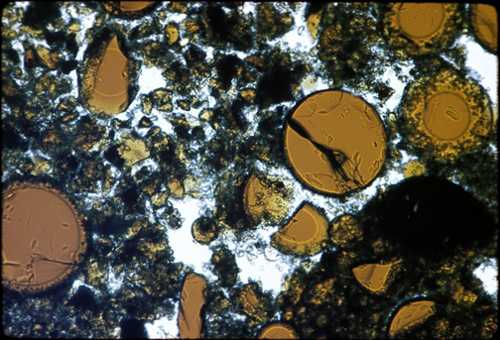
MOFFETT FIELD, Calif. – A team of NASA-funded researchers has measured for the first time water from the moon in the form of tiny globules of molten rock, which have turned to glass-like material trapped within crystals.
Data from these newly-discovered lunar melt inclusions indicate the water content of lunar magma is 100 times higher than previous studies suggested.
The inclusions were found in lunar sample 74220, the famous high-titanium “orange glass soil” of volcanic origin collected during the Apollo 17 mission in 1972. The scientific team used a state-of-the-art ion microprobe instrument to measure the water content of the inclusions, which were formed during explosive eruptions on the moon approximately 3.7 billion years ago.
The results published in the May 26 issue of Science Express raise questions about aspects of the “giant impact theory” of how the moon was created.
That theory predicted very low water content of lunar rock due to catastrophic degassing during the collision of Earth with a Mars-sized body very early in its history.
The study also provides additional scientific justification for returning similar samples from other planetary bodies in the solar system.
“Water plays a critical role in determining the tectonic behavior of planetary surfaces, the melting point of planetary interiors and the location and eruptive style of planetary volcanoes,” said Erik Hauri, a geochemist with the Carnegie Institution of Washington and lead author of the study. “I can conceive of no sample type that would be more important to return to Earth than these volcanic glass samples ejected by explosive volcanism, which have been mapped not only on the moon but throughout the inner solar system.”
In contrast to most volcanic deposits, the lunar melt inclusions are encased in crystals that prevent the escape of water and other volatiles during eruption.
“These samples provide the best window we have on the amount of water in the interior of the moon where the orange glass came from,” said science team member James Van Orman of Case Western Reserve University in Cleveland.
In a 2008 study led by Alberto Saal of Brown University in Providence, R.I., the same team reported the first evidence of water in lunar volcanic glasses. They used magma degassing models to estimate how much water was originally in the magmas before eruption.
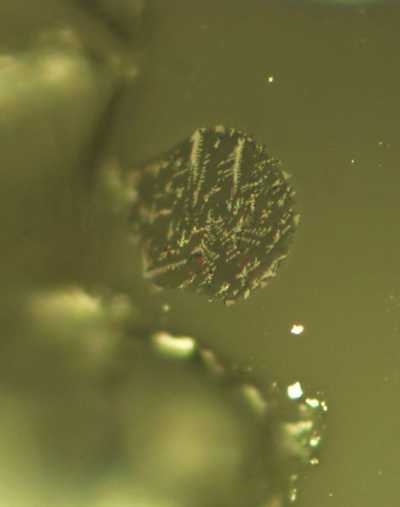
Building on that study, a Brown undergraduate student, Thomas Weinreich, searched for and found the melt inclusions. With that data, the team measured the pre-eruption concentration in the magma and estimated the amount of water in the moon's interior.
“The bottom line is that in 2008, we said the primitive water content in the lunar magmas should be similar to lavas coming from the Earth's depleted upper mantle,” Saal said. “Now, we have proven that is indeed the case.”
The study also puts a new twist on the origin of water-ice detected in craters at the lunar poles by several recent NASA missions.
The ice has been attributed to comet and meteor impacts, but the researchers believe it is possible that some of the ice came from water released by the eruption of lunar magmas eons ago.
The paper entitled, “High Pre-Eruptive Water Contents Preserved in Lunar Melt Inclusions,” was written by Hauri, Weinreich, Saal, Van Oman and Malcolm Rutherford of Brown. The research is funded by NASA's Lunar Advanced Science and Exploration Research and Cosmochemistry Programs in Washington, the NASA Lunar Science Institute (NLSI) at the agency's Ames Research Center at Moffett Field, Calif., and the Astrobiology Institute at Ames.
The NLSI is a virtual organization enabling collaborative, interdisciplinary research in support of agency lunar science programs. The researchers are members of NLSI teams from the Southwest Research Institute in San Antonio and Brown. The institute uses technology to bring scientists together around the world, and it is comprised of seven competitively selected U.S. teams and several international partners. NASA's Science Mission and Exploration Systems Mission Directorates in Washington fund the institute.
For more information about the NLSI, visit http://lunarscience.nasa.gov.
Follow Lake County News on Twitter at http://twitter.com/LakeCoNews , on Facebook at http://www.facebook.com/pages/Lake-County-News/143156775604?ref=mf , on Tumblr at http://lakeconews.tumblr.com/ and on YouTube at http://www.youtube.com/user/LakeCoNews .
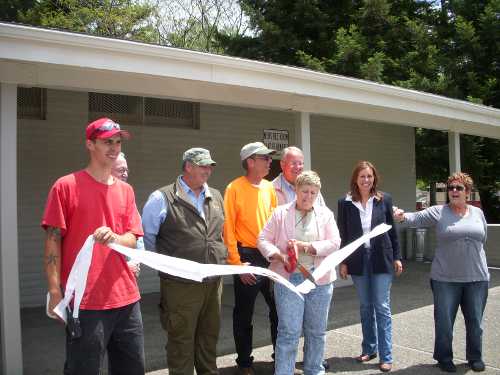
LAKEPORT, Calif. – City officials gathered on Friday afternoon to celebrate a significant overhaul and facelift for Library Park's restroom facilities.
Over the last two months the building, which sits next to the Carnegie Library, has been the focus of a project to improve the facility and make it more user-friendly – both to visitors and residents.
The project got some of its impetus from the city's Parks and Recreation Committee, which worked with Public Works Director Doug Grider to get it off the ground.
Mayor Suzanne Lyons, a member of the committee, also lobbied for moving the project forward.
Lyons, on hand for the ribbon – or, in this case, toilet paper – cutting on Friday afternoon to officially reopen the restrooms, said the facilities had been less than welcoming, and downright dirty, before the renovation got under way.
Grider said the building – which had new paint and floors two years ago – was a common target of graffiti, and someone even broke a sink off the wall in the men's bathroom. “The restrooms typically get hammered.”
With the building having been so frequently targeted, and with the city in tight financial straits, at one point Lyons said there was a consideration about taking the building down entirely and using portable restrooms.
However, a 2002 state parks bond provided the nearly $120,000 that made it possible to carry out the work, much of which was done by Lakeport Public Works staff, said Grider.
“We said, we'll give it one more try,” said Lyons, noting that the Lakeport Main Street Association also urged the city to maintain and fix the building.
The renovation of the building – erected in the late 1970s – included completely revamped interiors; a lowered, sheetrock ceiling; new floors; new paint and new recycled plastic partitions, Grider said.
Grider said the renovation also has several energy- and water-saving measures built into it. Those include solar tubes that use the sun to light up the interior so lights don't have to run all day, and new sinks and toilets that operate on sensors and are metered to cut down on water use. New hand dryers are expected to arrive next week.
The building now is compliant with the Americans with Disabilities Act, Grider said, with the men's and women's restrooms each having one wheelchair-accessible stall.
On the building's exterior, its former brown color has been replaced by an off-white that is close to the color of the Carnegie Library – the final coat was drying Friday afternoon – and it has a new roof, Grider said.
“Everything's brand new,” he said.
Lyons said she'd heard some car clubs hadn't wanted to use Library Park for shows because of the bathrooms, so it's hoped that the renovation will help attract tourism in addition to serving residents better.
This summer, “There's going to be a lot of happy concert goers,” Lyons said.
Grider said the city hired Bruce Brower to manage the project, with Frank Totorica and his crew doing the plumbing work.
The project moved quickly – it started in March and was completed within two months. “This thing was on high speed,” Grider said.
The bathrooms will be open during the day and closed at 5:30 p.m. unless there are special events, Grider said. When the building is closed, visitors will be able to use facilities at First and Third streets.
Lyons said the city plans to hold a slogan context to engage the community in keeping the bathrooms in good shape, and also wants to find volunteers to help police them, in addition to the monitoring Grider's staff carries out.
“We want to create community ownership, that's what we're after,” said Grider.
He said he wants to communicate that the funds that went into the project aren't the city's – but the community's.
“This is taxpayer money that did this,” he said of the project. Anyone who damages it is just cheating themselves and others, he added.
E-mail Elizabeth Larson at
Education
Health
Business
Obituaries
Veterans
Recreation
Religion
Arts & Life
Government & Politics