 How to resolve AdBlock issue?
News
The software, known as “California's Highway Safety Improvement Program (HSIP) Application and Evaluation Tool for Local Roadways,” provides Caltrans a better way to analyze safety projects submitted by local agencies and award funding to those projects that will increase roadway safety the most.
The application determines which projects offer the greatest potential of reducing fatalities and injuries on California’s local roads.
With the assistance of the HSIP tool, Caltrans awarded $75 million in federal funding to 179 safety projects statewide in Fiscal Year 2010-11.
The agency said these projects will save lives and provide a projected $743 million in safety benefits as a result of fewer vehicle crashes, injuries, and fatalities on local roads.
Included on the list is a $132,400 project on Lakeshore Boulevard between Ashe Street and Lange Street to install colored asphalt concrete in the bike lanes, upgrade edge lines and construct a small traffic circle.
“We strive to be the leader in roadway safety,” said acting Caltrans Director Malcolm Dougherty. “Safety is our highest priority and an essential component of every one of our state and local projects. This award for our Highway Safety Improvement Program drives us to continue efforts on innovative solutions that improve the safety of California’s roads for everyone.”
Under Caltrans’ direction, the University of California Berkeley Safe Transportation Research and Education Center also contributed to the creation of the HSIP Tool.
The National Roadway Safety Awards is a biennial competition sponsored by the U.S. Department of Transportation and the Roadway Safety Foundation to recognize roadway safety achievements that move the nation “toward zero deaths” on highways and local roads.
Follow Lake County News on Twitter at http://twitter.com/LakeCoNews, on Tumblr at www.lakeconews.tumblr.com, on Facebook at http://www.facebook.com/pages/Lake-County-News/143156775604?ref=mf and on YouTube at http://www.youtube.com/user/LakeCoNews .

The California Board of Equalization's recent report showed that the total value of state-assessed and county-assessed property rose to $4.382 trillion for 2011-12, an increase of $11.6 billion, or 0.3 percent, from the previous year.
In addition, the value of county-assessed property increased by $5.3 billion, or 0.1 percent, to $4.297 trillion, while the value of state-assessed property, mainly privately owned public utilities and railroads, totaled $85.3 billion, an increase of $6.3 billion or 8.0 percent, the agency reported.
Lake County Assessor-Recorder Doug Wacker said each year he’s required to determine what the coming year’s tax roll will be.
For the coming 2011-12 year, he’s estimating it to be $6.64 billion, which translates into a growth rate of negative 1.33 percent, slightly better than the negative 1.5 percent the county roll experienced in 2010-11.
It’s a big change from tax roll growth seen earlier in the decade. Wacker said the county had seen 12- to 14-percent increases in some years.
“I don't see any real upward movement yet,” he said.
Wacker added that he hopes that land values start to improve soon, but cautioned, “It could be a couple more years yet. I hate to say it but it could be.”
He said the state has seen property value ups and downs since Proposition 13 was passed in the 1970s, including a slump in the 1990s, “but nothing to this degree.”
Lake's neighboring county of Colusa showed the highest year-to-year percentage increase, 19.5 percent, which the Board of Equalization said is largely related to utility assessments – which comprise more than one-third of the Colusa County's assessment roll – and was driven by the construction of a new power plant in the county.
The report showed that 20 counties posted year-to-year increases in assessed value, although jumps in value like those seen in Colusa County were not the norm, with only Kern, Madera and Trinity counties showing growth of more than 2 percent.
Thirty-eight of California's 58 counties experienced year-to-year declines in value, with Plumas County posting the largest decline, 5.3 percent. It was the only county declining by more than 5 percent, the state said.
The Central Valley, hard hit by the foreclosure crisis over the last several years, showed concentrated value declines.
The Greater Sacramento Area had a 2.9 percent decline, while the North San Joaquin Valley declined by 2.7 percent. The Southern San Joaquin Valley posted a 1.4-percent assessment value growth, which was attributed to the 2.4 percent growth experienced by Kern County.
California's 15 coastal counties, which account for over 60 percent of the state's total assessed valuations, gained 0.9 percent, while the state said that valuations in the 43 inland counties fell 0.6 percent, Southern California assessed values increased 0.7 percent and the San Francisco Bay Area’s values rose by 0.3 percent.
Of the 12 counties with rolls exceeding $100 billion, seven counties posted an increase in assessed value, while values in five counties fell. The Board of Equalization said values increased in the counties of San Mateo and Orange (1.0 percent), Santa Clara (0.9 percent), San Francisco (0.5 percent), San Diego (0.4 percent) and Alameda (0.1 percent).
Declines in value include the counties of Sacramento (-3.7 percent), Riverside (-1.2 percent), San Bernardino (-0.5 percent), Contra Costa (-0.4 percent), and Ventura County, which was only down slightly, virtually unchanged by percentage, according to the Board of Equalization.
Los Angeles County, with the largest assessment roll at $1.079 trillion, increased by 1.4 percent, up $15.0 billion over 2010-11, the state said.
Wacker and his staff have been proactive – and especially busy – with property reassessments under the Property 8 program since valuations locally began to drop in 2008.
While the tax roll closed in July, community members have until Nov. 30 to contact Wacker’s office to challenge their property valuation.
Wacker estimated his staff conducted more than 10,000 of the reviews last year.
“Our staff has been doing more of those than anything,” explained Wacker, adding that it’s becoming more of a challenge because his staff of 15 has been reduced by about a position and a half due to attrition, and budget cuts are keeping the jobs dark.
“We’re definitely going to have our hands full,” he said.
E-mail Elizabeth Larson at
Arrested were Pablo Juan Arredondo, 29; Jose Antonio Rico, 31; Francisco Martinez Rico, 25; and Gerardo Rico Martinez, 24, according to a Monday report from Lakeport Police Chief Brad Rasmussen.
Rasmussen said that at 11 p.m. this past Saturday, Nov. 12, Lakeport Police Department units assisted by Lake County Sheriff’s Office deputies, California Highway Patrol officers and California State Parks rangers were dispatched to investigate the report of a large physical fight occurring at TJ’s Downtown Bar and Grill in Lakeport.
The first arriving Lakeport Police officer observed approximately 25 persons outside of the location with three separate physical fights, each involving numerous subjects and occurring at the same time, Rasmussen said.
He explained that the officer was contacted by TJ’s staff members who pointed out a group of four male subjects and identified them as assaulting both staff and patrons inside of the bar.
The officer approached the four subjects and ordered them to stop and go to the ground. Rasmussen said the subjects became verbally abusive and refused to follow the officer’s commands.
He said the officer made further attempts to control the four subjects who began resisting, obstructing and verbally and physically challenging him. At one point when two of the subjects advanced on the officer he discharged his Taser, striking one of them before they all fled the area, Rasmussen said.
Assisting units located the subjects in the area of Will-O-Point and all four were arrested for public intoxication, battery and obstructing or resisting a peace officer, according to Rasmussen.
Followup investigation determined that four TJ’s staff members were battered and injured by the four aforementioned subjects while investigating a report that they had harassed female customers. Rasmussen said the injuries consisted of lacerations, contusions, bite wounds and a broken finger.
The investigation of this incident is ongoing and anyone with information is asked to contact Officer Jarvis Leishman at the Lakeport Police Department, 707-263-5491.
Follow Lake County News on Twitter at http://twitter.com/LakeCoNews, on Tumblr at www.lakeconews.tumblr.com, on Facebook at http://www.facebook.com/pages/Lake-County-News/143156775604?ref=mf and on YouTube at http://www.youtube.com/user/LakeCoNews .
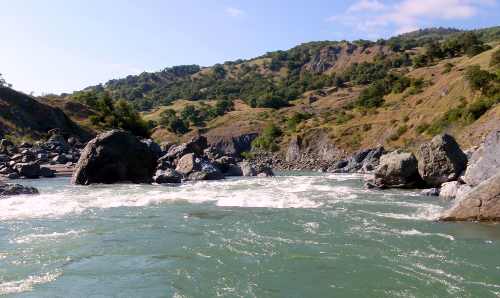
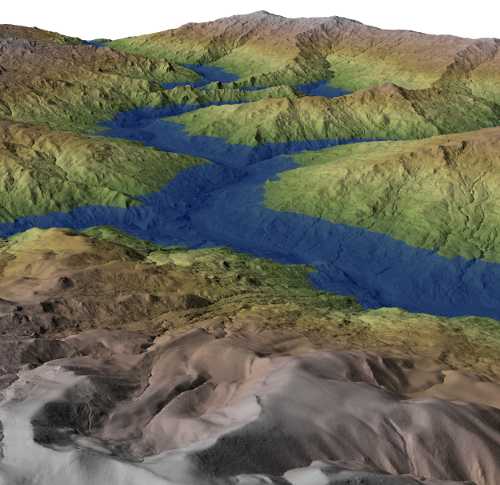
NORTH COAST, Calif. – A catastrophic landslide 22,500 years ago dammed the upper reaches of Northern California's Eel River, forming a 30-mile-long lake which has since disappeared.
However, a new report said that landslide left a living legacy found today in the genes of the region's steelhead trout.
Using remote-sensing technology known as airborne Light Detection and Ranging (LiDAR) and hand-held global-positioning-systems units, scientists recently found evidence for a late Pleistocene, landslide-dammed lake along the river.
Today the Eel river is 200 miles long, carved into the ground from high in the California Coast Ranges to the river's mouth in the Pacific Ocean in Humboldt County.
The evidence for the ancient landslide, which, scientists say, blocked the river with a 400-foot-wall of loose rock and debris, is detailed this week in a paper appearing on-line in the journal Proceedings of the National Academy of Sciences.
The research provides a rare glimpse into the geological history of this rapidly evolving mountainous region.
“This study reminds us that there are still significant surprises to be unearthed about past landscape dynamics and their broad impacts,” said Paul Cutler, program director in the National Science Foundation's Division of Earth Sciences, which funded the research. “For example, it provides valuable information for assessing modern landslide hazard potential in this region.”
It also helps to explain emerging evidence from other studies that show a dramatic decrease in the amount of sediment deposited from the river in the ocean just offshore at about the same time period, says lead author of the paper Benjamin Mackey of the California Institute of Technology.
“Perhaps of most interest, the presence of this landslide dam also provides an explanation for the results of previous research on the genetics of steelhead trout in the Eel River,” Mackey said.
In that study, scientists found a striking relationship between two types of ocean-going steelhead in the river – a genetic similarity not seen among summer-run and winter-run steelhead in other nearby waterways.
An interbreeding of the two fish, in a process known as genetic introgression, may have occurred among the fish brought together while the river was dammed, Mackey said.
“The dam likely would have been impassable to the fish migrating upstream, meaning both ecotypes would have been forced to spawn and inadvertently breed downstream of the dam. This period of gene flow between the two types of steelhead can explain the genetic similarity observed today.”
Once the dam burst, the fish would have reoccupied their preferred spawning grounds and resumed different genetic trajectories.
“The damming of the river was a dramatic, punctuated event that greatly altered the landscape,” said co-author Joshua Roering, a geologist at the University of Oregon.

“Although current physical evidence for the landslide dam and ancient lake is subtle, its effects are recorded in the Pacific Ocean and persist in the genetic make-up of today's Eel River steelhead,” said Roering. “It's rare for scientists to be able to connect the dots between such diverse phenomena.”
The lake formed by the landslide, the researchers theorize, covered about 18 square miles.
After the dam was breached, the flow of water would have generated one of North America's largest landslide-dam outburst floods.
Landslide activity and erosion have erased much of the evidence for the now-gone lake. Without the acquisition of LiDAR mapping, the lake's existence may have never been discovered, the scientists said.
The area affected by the landslide-caused dam accounts for about 58 percent of the modern Eel River watershed. Based on today's general erosion rates, the geologists believe that the lake could have filled in with sediment within about 600 years.
“The presence of a dam of this size was unexpected in the Eel River, given the abundance of easily eroded sandstone and mudstone, which are generally not considered strong enough to form long-lived dams,” Mackey said.
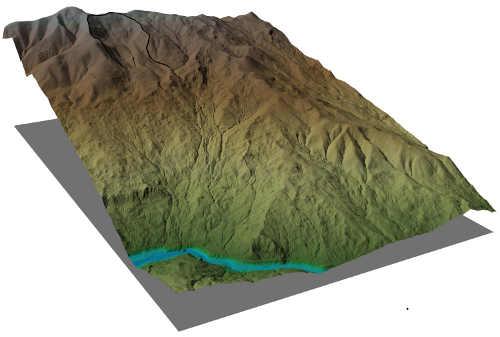
He and colleagues were drawn to the Eel River – among the most-studied erosion systems in the world- – to study large, slow-moving landslides.
"While analyzing the elevation of terraces along the river, we discovered they clustered at a common elevation rather than decreased in elevation downstream paralleling the river profile, as would be expected for river terraces," said Mackey.
“That was the first sign of something unusual, and it clued us into the possibility of an ancient lake,” Mackey said.
The third co-author on the paper is Michael Lamb, a geologist at the California Institute of Technology.
The National Center for Airborne Laser Mapping also provided LiDAR data used in the project.
Follow Lake County News on Twitter at http://twitter.com/LakeCoNews, on Tumblr at www.lakeconews.tumblr.com, on Facebook at http://www.facebook.com/pages/Lake-County-News/143156775604?ref=mf and on YouTube at http://www.youtube.com/user/LakeCoNews .

The campaign’s overall goal is to reduce the number of alcohol-involved collisions and people killed and injured in these crashes through enhanced enforcement and a public awareness campaign.
“California has made great strides in reducing the number of people killed or injured as a result of DUI,” said CHP Commissioner Joe Farrow. “We will continue our efforts in educating the public and arrest those who choose to endanger themselves and others.”
In 2009, the number of alcohol-involved collisions in California accounted for 14 percent of the total number of crashes reported in the state, the CHP reported.
As a result of the more than 8,600 alcohol-involved collisions, 754 people were killed and another 11,764 others were injured, the agency said.
The IDEA program will provide funding that will allow the CHP to conduct sobriety and driver license checkpoints, DUI task force operations and deploy proactive DUI enforcement patrol operations statewide.
The CHP also will conduct local traffic safety presentations in an effort to reach thousands of people throughout California. Additionally, funding is provided for a statewide media campaign.
“We will be tracking the progress of this anti-DUI program for positive results, as we work toward our goal of removing impaired drivers from California’s roadways,” added Farrow.
Funding for this program was provided by a grant from the California Office of Traffic Safety through the National Highway Traffic Safety Administration.
Follow Lake County News on Twitter at http://twitter.com/LakeCoNews, on Tumblr at www.lakeconews.tumblr.com, on Facebook at http://www.facebook.com/pages/Lake-County-News/143156775604?ref=mf and on YouTube at http://www.youtube.com/user/LakeCoNews .
Education
Health
Business
Obituaries
Veterans
Recreation
Religion
Arts & Life
Government & Politics