 How to resolve AdBlock issue?
News
SACRAMENTO – On Tuesday Gov. Jerry Brown released a list of more than 700 unnecessary bureaucratic reports currently required by law and called on the state Legislature to eliminate them in order to streamline government and reduce waste.
“It wastes a lot of time and money to write, track and file these reports,” said Gov. Brown. “Government should be focused on providing information that is actually helpful to taxpayers, not on checking boxes to meet outdated bureaucratic requirements.”
In December 2011 Governor Brown issued Executive Order B-14-11 which directed state agencies and departments to audit all reports that they must submit to the Legislature and identify those that are not of significant value.
Examples identified in this audit include:
- A biennial report, required by 1966 statute, by the Department of Boating and Waterways on the status of their operations.
- An annual report by the Australian Government on their annual kangaroo harvest, which the Department of Fish and Game is required to track and transmit to the Legislature.
- An annual report by the Department of Transportation on the use of waste tires.
- A monthly report on response and recovery activities tied to the 1989 Loma Prieta earthquake.
Of the 718 reports identified overall, 375 require legislative action to eliminate.
On Tuesday Gov. Brown directed the state Department of Finance to ask the state legislature to end reporting requirements. The text of the Department of Finance letter is below.
The Department of Finance will direct the Legislative Counsel to stop tracking of the remaining 343 reports, which will effectively end agency and department production requirements.
A list of reports which can be eliminated by the Legislative Council Bureau can be found at http://gov.ca.gov/docs/Legislative_Reports_Proposed_For_Elimination_-_LCB_Action.pdf . The reports which require legislative action can be found at http://gov.ca.gov/docs/Legislative_Reports_Proposed_For_Elimination_-_Leg_Action.pdf .
Following is the text of Director Matosantos’ letter to Secretary of the Senate Gregory Schmidt and Chief Clerk of the Assembly E. Dotson Wilson:
April 17, 2012
Mr. Gregory Schmidt
Secretary of the Senate
Mr. E. Dotson Wilson
Chief Clerk of the Assembly
As part of his ongoing effort to make government more effective, the Governor issued Executive Order B-14-11 in December 2011. Agency secretaries and department directors were instructed to prepare a list of all reports that they are required to submit to the Legislature, and identify those that may no longer be of significant value to the Legislature.
The Department of Finance (Finance) provided state agencies and departments instructions to assist them in identifying and reporting their respective lists of legislative reports to Finance. Finance provided guidelines for agencies and departments to consider in determining if their legislative reports are no longer considered of significant value, including:
- Whether the report is the result of a specific budget bill and the required information is no longer timely or relevant;
- Whether the report is still relevant or necessary given a change in law or circumstances;
- Whether other sources of information or other reports provide the same or similar information; and
- Whether interested parties continue to rely on the report, or whether there are other public interests in continuing to prepare the report.
Finance has reviewed the legislative reports submitted by agencies and departments and compiled a list identifying more than 700 legislative reports believed to be no longer of value or are one-time reporting requirements that have already been completed. Of this amount, 375 reports require legislative action to eliminate. For the remainder, we will be contacting the Legislative Counsel Bureau to have them deleted from their website that tracks outstanding reports.
We are providing this list of reports to the Legislature for its consideration and respectfully request legislative action to eliminate them.
If you have any questions concerning this letter, please contact David Botelho, Chief, Office of State Audits and Evaluations, at (916) 322-2985.
Sincerely,
ANA J. MATOSANTOS
Director
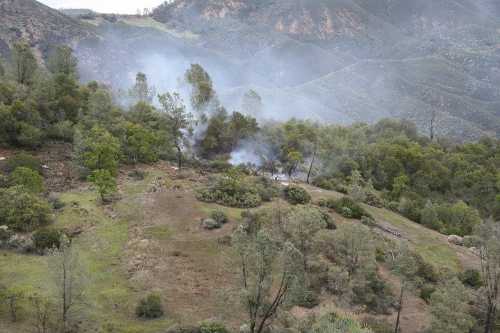
MIDDLETOWN, Calif. – A controlled burn on Monday afternoon got out of control, with local firefighters called to put the blaze out.
The fire was reported at 21100 Jerusalem Grade Road at around 3:20 p.m., according to radio reports.
South Lake County Fire Battalion Chief Scott Upton said the fire started on the vacant piece of property when the owner was burning to clear the land.
Upton said the fire ultimately burned about an acre.
He said South Lake County Fire and Cal Fire responded with a total of three engines, a hand crew and a water tender.
Firefighters had to hike about half a mile in just to reach the fire, around which they cut a control line, Upton said.
Despite the recent rains, the fire spread quickly, he said.
“It’s just deceptively dry this year,” Upton noted.
As he was leaving the scene Upton also came upon a vehicle crash at Jerusalem Grade and Canyon Road.
The California Highway Patrol reported that the crash was a hit and run, with the blue and tan Ford Explorer that was found off the roadway having been abandoned. No injuries were reported.
Email Elizabeth Larson at
SACRAMENTO – Advocates of justice from across the nation today gathered on the steps of the State Capitol to decry the impending crisis in California’s judicial branch spurned by years of budget cuts.
The group came together to identify the impacts budget cuts have had on the public’s access to justice prior to a joint informational hearing by the Senate Judiciary Committee and the Senate Budget and Fiscal Review Committee, Subcommittee No. 5 on Corrections, Public Safety and the Judiciary.
“The civil justice system is the bedrock and foundation of our democratic freedoms,” said Senator Noreen Evans (D-Santa Rosa), Chair of the Senate Judiciary Committee. “It serves as a beacon for disadvantaged communities, a pillar for businesses, a shield for domestic violence survivors, and a safety net for children, veterans and seniors.”
“We in the judicial branch accept our responsibility to help address the state’s ongoing fiscal crisis” said Chief Justice Cantil-Sakauye. “But we also are mindful of our duty to ensure that 38 million Californians are assured their rights under our constitution, that businesses and residents are provided lawful means to settle disputes, and that those accused of crimes are prosecuted fairly and expeditiously.”
California, the nation’s largest judicial branch, alone has seen its budget cut by 30 percent the last four years with another $125 million slated for “trigger” cuts if new revenues or tax proposals are not realized.
In the past, cuts have been offset by one-fixes including tapping local reserves, fund transfers, fee increases, service reductions and court closures.
With those measures, California hoped to save $480 million, but the resulting economic losses will include more than $1.6 billion in lost state and local taxes due to layoffs and decreased sales, according to the American Bar Association 2011 report Crisis in the Courts: Defining the Problem.
“As a result of the nation’s deep recession and the decline in state revenue, California’s courts have endured years of drastic cuts,” said Senator Loni Hancock (D-Oakland). “Unless we reverse this trend and approve new revenue, our courts will face additional cuts, further limiting people’s access to the judicial system. The courts are our third branch of government and ultimately, where access is delayed, justice is denied.”
“The court system, the justice system protects all of us,” said David Boies, co-chairman of the American Bar Association Task Force on Preservation of the Justice System. “Without that kind of protection, you can’t have commerce. Without that protection, you’re not going to have liberty. Without that kind of protection, we’re not going to have safety,” Boies said.
Cuts that began in the 2009-2010 budget resulted in courts being closed one day per month. Subsequent cuts have resulted in 25 counties reducing court staffing and services.
Because of continued cuts, some counties have had to close courtrooms entirely including San Diego Superior Court, San Joaquin Superior Court and Ventura Superior Court.
Other courts have closed entire court branches, including Butte, San Joaquin, San Luis Obispo, San Diego, Sonoma and Stanislaus Counties.
Self-help and family law assistance services have also been reduced or shuttered in courts throughout the state.
"Unlike a toll road where you may have an alternative, this is something we depend on as an equal co-branch of government to provide us with the constitutional protections that we think everyone deserves regardless of their ability to pay,” said Theodore B. Olson, co-chairman of the American Bar Association Task Force on Preservation of the Justice System.
"Our justice system is the cornerstone of our democracy,” said Jon Streeter, President of the California Bar Association. “It is a grave mistake to treat it like an executive branch agency and downsize it for expedience it in troubled economic times. The independence of the judiciary is at stake.”
Through Senator Evans’ Web site, members of the public are invited to share their stories on how access to justice has been impacted by these budget cuts.
The link to submit stories, live feed of the hearing, background papers and a chart on superior court service reductions to date by county are available at http://sd02.senate.ca.gov/access-to-justice .

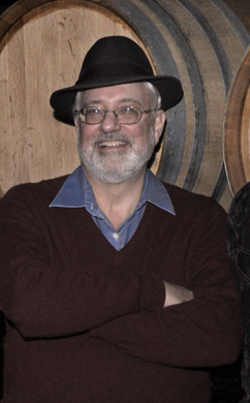
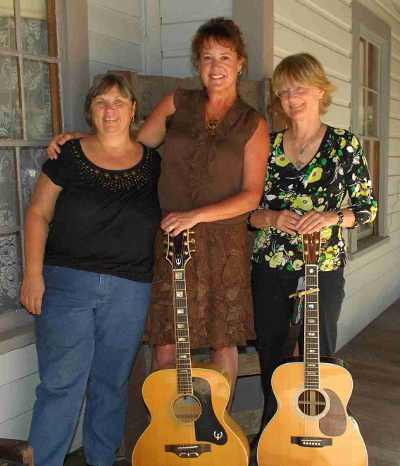
LAKEPORT, Calif. – Lake County Live! returns to the Soper-Reese Community Theatre on Sunday, April 29, at 6 p.m.
The fourth outing of this locally produced show will feature Three Deep, consisting of Jill Shaul Anna McAtee and Sarah Tichava, the flamenco guitar duo Austin and Owens, and local keyboard artist David Neft.
Lake County Live! has rapidly become a popular venue for local talent, performing live in the theater with an audience and broadcast live on Lake County Community Radio KPFZ 88.1 FM.
“We’ve had a great time with our first three shows, and look forward to number four with all the same enthusiasm and talent from our previous shows,” said creator and producer Doug Rhoades.
The show is supported by the Soper-Reese Community Theatre, KPFZ and Lake County News, www.lakeconews.com .
“Our next show will again feature great local talent, as well as the return of Ladies of the Lake, our recurring soap opera featuring Suna Flores, Kris Andre, Pamela Bradley and Vicky Parish Smith. Richard Smith, Mitchell Hauptman and Nick Reid will join us again for our program on April 29, giving our audience a great show and a glimpse of what goes into producing a live radio show,” said Rhoades.
Tickets for the next show are available at the Soper-Reese box office on Fridays from 10:30 a.m. to 5:30 p.m. and at the Travel Center in Lakeport, as well as on line at www.soperreesetheatre.com .
Information about the show or questions can be directed to
SACRAMENTO – The Department of Water Resources (DWR) on Monday estimated it will be able to deliver 60 percent of requested State Water Project (SWP) water this year.
This is up from the 50 percent delivery estimate – or allocation – announced on Feb. 22.
Originally, DWR projected in November that it would be able to supply 60 percent of the slightly more than 4 million acre-feet of SWP water requested, but a dry December, January and February dropped that figure to 50 percent.
Monday’s increase is due to an unusually wet March and higher-than-average reservoir storage carried over from last winter.
“This is good news for our water supply as we approach summer’s peak-demand period,” said DWR Director Mark Cowin. “But we must remember that we still had a dry winter despite a partial recovery in March, and we need to be prepared for a potentially second consecutive dry year in 2013, when reservoir storage would be reduced.”
A 60 percent allocation is not unusually low.
Wet conditions last year allowed the SWP to deliver 80 percent of the slightly more than 4 million acre-feet requested by the 29 public agencies that supply more than 25 million Californians and nearly a million acres of irrigated farmland. An acre-foot is 325,851 gallons of water, enough to cover one acre to a depth of one foot.
The final allocation was 50 percent in 2010, 40 percent in 2009, 35 percent in 2008, and 60 percent in 2007.
The last 100 percent allocation – difficult to achieve even in wet years due to pumping restrictions to protect threatened and endangered fish – was in 2006.
Last month’s allocation-boosting storms came after unusually dry conditions up and down the state.
Much of California’s water comes from the mountainous country from Shasta Lake in the north to the American River in the south.
DWR’s precipitation gages covering this area recorded an impressive 130 percent of average rainfall in October, but only 43 percent in November, four percent of average in December, 84 percent of average in January, and 38 percent of normal in February. March, however, came in at 228 percent of normal.
Precipitation gages in the San Joaquin basin recorded125 percent of the average monthly precipitation for October, 32 percent for November, zero percent for December, 80 percent for January, and 35 percent for February. March recorded 110 percent of normal.
The mountain snowpack shows a north-to-south variance in this winter’s weather patterns. Water content in the statewide snowpack is only 68 percent of normal for the date, whereas the reading in the northern ranges is 101 percent of normal.
Reservoir storage remains high, largely due to carryover from last winter.
Lake Oroville in Butte County, the State Water Project’s principal reservoir, is at 110 percent of average for the date (88 percent of its 3.5 million acre-foot capacity).
Lake Shasta north of Redding, the federal Central Valley Project’s largest reservoir with a capacity of 4.5 million acre-feet, also is at 110 percent of average (93 percent of capacity).
Statewide snowpack readings from electronic sensors are available on the Internet at http://cdec.water.ca.gov/cgi-progs/snow/DLYSWEQ .
Electronic reservoir level readings may be found at http://cdec.water.ca.gov/cdecapp/resapp/getResGraphsMain.action .
THIS STORY HAS BEEN UPDATED WITH ADDITIONAL DETAILS ABOUT THE ARREST AND INVESTIGATION.
LAKE COUNTY, Calif. – The local woman who died in a fatal crash early Sunday morning has been identified.
Jennifer Clark, 31, of Clearlake was the victim in the crash, according to Sgt. Steve Brooks of the Lake County Sheriff’s Office.
Clark was the passenger in a 1984 Chevrolet El Camino driven by 27-year-old Danny Fields II of Clearlake when the crash occurred sometime between 5 a.m. and 7 a.m. Sunday, according to the California Highway Patrol.
Fields was driving southbound on Highway 29 north of Highway 53 near Lower Lake when his car went off the road, traveled down an embankment and hit a walnut tree, the CHP reported.
Fields then reportedly left the scene, was picked up by an unidentified driver and dropped off at the Tower Mart in Lower Lake. The CHP said Fields’ parents were contacted, and they picked him up from the Tower Mart and transported him to St. Helena Hospital Clearlake.
It was the hospital that contacted the CHP shortly before 9 a.m. Sunday to notify the agency that a traffic collision involving Fields had taken place.
The Lake County Sheriff’s Office, which assisted in the investigation, discovered Fields’ vehicle less than 20 minutes after the hospital reported the crash. Clark was found inside the vehicle and pronounced dead, the CHP said.
A blood sample was taken from Fields, as CHP investigators suspect that the crash may have been the result of driving under the influence. That blood sample has been sent to the California Department of Justice lab for analysis, according to CHP Sgt. Rick Okazaki.
Fields, who sustained major injuries in the crash, was placed under arrest for felony driving under the influence and felony hit and run causing death or injury, Okazaki said.
However, Fields was released after his arrest due to the extent of his injuries. That doesn’t preclude the CHP from refiling charges if the investigation concludes Fields was at fault, Okazaki said.
Fields is still hospitalized, Okazaki said.
Officer Joe Wind said Monday that the investigation is continuing, with officers speaking to witnesses in an effort to fully understand what took place.
“They’re busy working on different leads,” he said.
Email Elizabeth Larson at