 How to resolve AdBlock issue?
News
The California Office of Traffic Safety (OTS) is calling upon bicycle riders and motorists alike to be cautious during May, National Bicycle Safety Month, and every other month during the year.
The total number of bicycle deaths in California have remained flat for the last two reporting years, while injuries have increased 4.6 percent.
Encouragingly, deaths and injuries for bicycle riders under age 15 have continued to fall.
OTS partners with other state departments, bicycle advocates and local agencies in an ongoing, multi-faceted campaign for bicycle safety through the California Strategic Highway Safety Plan.
“Bike Month is a great occasion for Californians, whether out with friends or family or on their own, to strap on a helmet, hop on a bike, and see just how fun and welcoming our streets and bike paths have become,” said Christopher J. Murphy, director of the Office of Traffic Safety. "Californians now see biking as a real transportation option. The key is to ensure that biking is safe for everyone."
Bicycles are associated with more childhood injuries than any other consumer product except automobiles.
Child bicycling deaths can increase 45 percent above the month average in the summer. More adults are choosing bicycles, both for commuting to work and for exercise.
Learning how to ride a bike is a rite of passage in childhood, and often reintroduced to adults.
Here are some important things for you or your child to consider before jumping on that bike:
Helmets – Every time, every trip
- Make it a rule: every time you and your child ride a bike, wear a bicycle helmet that meets the safety standards developed by the U.S. Consumer Product Safety Commission. It’s your main source of protection in a crash or spill.
- If your child is reluctant to wear a helmet, try letting him or her choose their own.
- Make sure the helmet fits and that everyone knows how to put it on correctly. A helmet should sit on top of the head in a level position, and should not rock forward, backward or side to side. The helmet straps must always be buckled but not too tightly.
- EYES check: Position the helmet on your head. Look up and you should see the bottom rim of the helmet. The rim should be one to two finger-widths above the eyebrows.
- EARS check: Make sure the straps of the helmet form a "V" under your ears when buckled. The strap should be snug but comfortable.
- MOUTH check: Open your mouth as wide as you can. Do you feel the helmet hug your head?
The right bike
- Ensure proper bike type, size and fit. Get help from an expert or read up on your own before choosing a bike. Bring your child along when shopping for a bike for them. Buy a bicycle that is the right size for the child, not one he will grow into. When sitting on the seat, the child’s feet should be able to touch the ground.
- Make sure the reflectors are secure, brakes work properly, gears shift smoothly and tires are tightly secured and properly inflated.
Ride safe
- Ride wisely. You are a vehicle. Learn and follow all laws.
- Be predictable. Act like a driver of a motor vehicle.
- Be visible. See and be seen at all times.
- Stay focused. Stay alert.
Drive safe
- Motorists need to safely share the road.
- Don’t crowd bicyclists.
- Keep an eye out for bicyclists, as well as motorcycles and pedestrians.
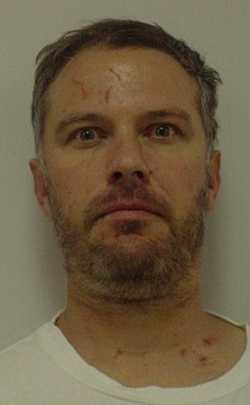
COBB, Calif. – A Cobb man is being held on $1 million bail for allegedly killing his girlfriend.
James Michael Carpy, 44, was arrested following the discovery on Friday of his girlfriend's dead body in their Cobb home, according to Capt. Chris Macedo of the Lake County Sheriff's Office.
The name of the 33-year-old victim has not been released by the sheriff's office. Macedo said the woman's name is being withheld pending notification of family members.
At 6:52 p.m. Friday Lake County Sheriff’s deputies were dispatched to a residence on Hogan Hill Lane on Cobb on the report of a suspicious death, Macedo said.
The reporting party advised dispatchers that he had arrived at his daughter’s house and found her deceased, according to Macedo.
When deputies arrived on scene they located an unidentified female lying on the floor inside the residence. Deputies determined that woman was in fact deceased, but Macedo said the deputies were not able to determine the possible cause of her death.
Macedo said the deputies contacted the woman's father, who had found her, and he informed them that he went to his daughter’s residence to check on her as he had not heard from her since Thursday evening.
The woman's father informed sheriff’s deputies that his daughter lived at the residence with her boyfriend, Macedo said.
The man went to the Hogan Hill Lane residence with his girlfriend and his other daughter. He reported that Carpy answered the door, according to Macedo.
Macedo said the victim's father entered the residence and found his daughter deceased in a rear bedroom. The father then told his girlfriend to go to the neighbor’s house and call 911.
After interviewing the victim's father deputies contacted Carpy inside the residence, Macedo said. Carpy was detained without incident and transported to the Lake County Sheriff’s Office for questioning.
After questioning, Carpy was arrested and booked at the Lake County Hill Road Correctional Facility for murder and inflicting corporal injury on a spouse or cohabitant, with bail set at $1 million, Macedo said.
Lake County Sheriff’s detectives were summoned to the scene to conduct the investigation, which is ongoing, Macedo said. He said no further information on the case will be released until Monday, May 7.
Anyone with information on this case is asked to call the Lake County Sheriff’s Office at 707-263-2690.
THE U.S. GEOLOGICAL SURVEY ON SATURDAY AFTERNOON UPGRADED THIS QUAKE’S MAGNITUDE FROM 4.3 TO 4.5.
COBB, Calif. – A 4.5-magnitude earthquake was reported early Saturday morning near The Geysers geothermal steamfield.
In its preliminary report, which was reviewed by a seismologist, the U.S. Geological Survey said the quake occurred at 2:23 a.m.
The quake's epicenter was located three miles east of The Geysers, three miles southwest of Cobb, four miles west northwest of Anderson Springs and 24 miles north of Santa Rosa at a depth of 1.7 miles, according to the report.
It was quickly followed by more than a dozen smaller aftershocks, the largest of which was 2.3 in magnitude, according to the U.S. Geological Survey.
Several residents of the Cobb area reported on Lake County News' Facebook page that they had been awakened by the quake, which some also reported seemed to last longer than usual.
Within a half-hour of the quake taking place the U.S. Geological Survey had received more than 70 shake reports from 23 zip codes.
Responses came from Clearlake, Hidden Valley Lake, Kelseyville, Lower Lake and Middletown, as well as areas in Napa and Sonoma counties, and the Bay Area, with responses coming from as far away as Sacramento and San Francisco.
The last time a quake of similar magnitude was reported in the Cobb area was on Feb. 12, when a 4.3-magnitude quake – also located three miles east of The Geysers – occurred, as Lake County News has reported.
Email Elizabeth Larson at
LAKE COUNTY, Calif. – A man who was convicted of first degree murder for a 1987 shooting has been denied parole for the second time.
On Tuesday, May 1, the Board of Parole Hearings denied parole for Edward Keefe Crawford, age 53, according to the Lake County District Attorney's Office.
Chief Deputy District Attorney Richard Hinchcliff attended the lifer hearing at California State Prison-Solano to argue against Crawford’s release.
Crawford was prosecuted in 1988 by then-Lake County District Attorney Stephen Hedstrom, who now is a Lake County Superior Court judge.
A jury found Crawford guilty of first degree murder for the killing of 28-year-old Glenn Shoemaker. Judge Robert L. Crone Jr. sentenced Crawford to 27 years to life.
Crawford's minimum eligible parole date was Sept. 17, 2006. Tuesday's parole hearing was Crawford’s second.
The murder was investigated by retired investigator Carl Stein at the Lake County Sheriff’s Office.
According to investigative reports Crawford and codefendant Jon Christ took Shoemaker for a boat ride on Sept. 19, 1987, and stopped at a secluded spot on the shoreline.
Christ reportedly told a witness prior to the incident that they were taking Shoemaker for a one-way boat ride, according to the investigation.
When the three got out of the boat, the victim was shot six times, including twice in the back, with .22-caliber handgun. Shoemaker's body was found 11 days later.
Crawford and Christ both reportedly bragged or confessed to others that they had killed Shoemaker, officials said.
The motive reported at the time was that Shoemaker had recently stolen the same handgun that he was shot with from Christ, and Christ got the gun back and was angry about the theft.
During the investigation Crawford admitted shooting Shoemaker but claimed it was an accident. Crawford claimed Christ gave him the gun, told him it was unloaded and told him to scare Shoemaker with it.
Crawford claimed when he pulled the trigger to scare Shoemaker the gun discharged twice into the victim, then Christ shot the victim four more times.
Christ also was convicted of the murder and sentenced to 31 years to life in prison, the District Attorney's Office reported.
During his time in prison, Crawford gave officials differing versions of the motive for the murder.
In 1991 Crawford told prison officials he shot Shoemaker because Shoemaker had allegedly molested Crawford’s child.
In 2007 Crawford said he and Shoemaker went water skiing. When they stopped to use the bathroom, an argument ensued over stolen property, Shoemaker stabbed Crawford in the arm and Crawford shot Shoemaker.
In January 2012 Crawford said he killed Shoemaker because Shoemaker had molested his neighbor's children.
At his parole hearing on May 1, Crawford claimed he killed Shoemaker because Shoemaker was a child molester. Crawford claimed he confronted Shoemaker about the alleged molestation and Shoemaker stabbed him.
Crawford admitted it was never proven Shoemaker was a child molester, and stated he shot Shoemaker because he was really angry at him.
During his time in prison – where he has been since 1988 – Crawford has made no effort to address his alcohol, drug or anger issues, the District Attorney's Office said.
Crawford had taken no drug or alcohol addiction classes and had not participated in any anger management or alternatives to violence classes.
He also was caught making alcohol in prison twice, and admitted he had been placed in administrative segregation in prison for his own protection for not paying a $100 drug debt for heroin he purchased from other prisoners while in prison.
At the parole hearing Tuesday – which lasted more than two and a half hours – Hinchcliff asked the Board of Prison Hearings to deny Crawford parole on the grounds that he still presented an unreasonable risk of danger to the public if released.
Although Crawford claimed to be remorseful at the hearing, the Board of Prison Hearing commissioners agreed that Crawford still posed an unreasonable risk of danger to the public and denied him parole for at least 10 years, the District Attorney's Office reported.
Crawford’s next parole hearing will be in 2022, officials reported.
Married persons, and registered domestic partners, need to consider how much control they want to allow one another – acting alone – over their community property assets.
This is important when creating their powers of attorney, wills and joint trust.
The analysis involves three time periods: First, while both are alive and competent; second, when one spouse becomes incompetent while the other is alive; and, third, after the first spouse dies while the surviving spouse remains competent.
First, what authority do they want to give each other independently to control community property assets – both those inside and outside of a joint trust, as relevant – while both are competent? Should either spouse alone be allowed to make gifts without the other’s participation or consent?
This issue can be thorny in blended families when one spouse wants to help his or her child(ren) and the other spouse may not be quite as enthusiastic.
Second, if and when one spouse becomes incompetent, what authority should the other spouse then have over community property assets? Should the competent spouse be authorized to change their community property assets into his or her own separate property to qualify the incompetent spouse for Medi-Cal eligibility?
California law requires each spouse’s consent to name death beneficiaries of the community property non probate assets – retirement accounts, annuities and life insurance.
Does the couple want the competent spouse to be able to change designated death beneficiaries on such assets to reflect unforeseen changed family circumstances? If so, each spouse’s durable power of attorney should be drafted to enable the other spouse to do so.
Third, after the first spouse dies, what authority should the surviving spouse have over the couple’s community property assets?
If they want the surviving spouse to have complete control, then the surviving spouse will need to be granted legal authority over the decedent’s one half interest in the community property assets after death.
In that regard, let us consider assets inside their joint trust and their other non probate assets.
Even if their trust says the surviving spouse may amend and revoke the trust, case law shows that such provision should not be depended upon to allow the surviving spouse to amend or revoke the trust with respect to the deceased spouse’s one-half interest in the joint trust’s community property assets.
Rather, the joint trust should either provide that any community property assets are included in the surviving spouse’s sole trust, or that the joint trust would grant the surviving spouse a power of appointment over the deceased spouse’s one-half interest in community property assets.
Next, let us consider the death benefits on any retirement accounts, annuities and life insurance policies titled in the surviving spouse’s name, which are either wholly or partially community property.
The deceased spouse has a community property interest in such assets. For the surviving spouse to change who receives the death proceeds it is necessary for the deceased spouse, while alive, to have given the surviving spouse written authority over the deceased spouse’s interest. This is typically accomplished through a will.
Otherwise, failing such authority in the deceased spouse’s will, any changes made by the surviving spouse are only partially effective; that is, only effective over the surviving spouse’s own one-half interest in the community property and any separate property interest of the account only.
The foregoing limitation, however, does not apply to the surviving spouse’s ERISA qualified retirement plans (i.e., pensions and 401(k) plans).
Federal law allows the participant spouse exclusive control to name death beneficiaries.
Lastly, the foregoing approach requires the drafting attorney to strike the right balance between flexibility and caution.
Doing so entails imposing sensible limitations that curtail flexibility in order to prevent undesired results.
Dennis A. Fordham, attorney (LL.M. tax studies), is a State Bar Certified Specialist in Estate Planning, Probate and Trust Law. His office is at 55 First St., Lakeport, California. Dennis can be reached by e-mail at
WILLITS, Calif. – On Friday Caltrans issued a statement regarding “misconceptions and misinformation” it said is being circulated about the Willits Bypass project, which is at the heart of a lawsuit filed earlier this week.
Caltrans said the $210 million dollar highway improvement project will relieve congestion, reduce delays and improve safety for traffic currently passing through Willits.
On Tuesday, the Center for Biological Diversity, Willits Environmental Center, Redwood Chapter of the Sierra Club and Environmental Protection Information Center filed a lawsuit in federal court against Caltrans, the Federal Highway Administration and U.S. Army Corps of Engineers, alleging that the National Environmental Policy Act and Clean Water Act were violated in approving the project, as Lake County News has reported.
The groups alleged that the four-lane freeway would hurt wetlands, salmon-bearing streams and endangered plants.
Caltrans said in a Friday statement that the federal lawsuit has not put the project on hold, and the agency plans to keep the project on schedule.
The bypass project is anticipated to go out to bid on May 14 and a mandatory pre-bid meeting will be held June 13 for all contractors who wish to submit bids or participate as subcontractors, Caltrans reported.
Current traffic counts in Willits show that a four-lane bypass will meet traffic needs, and that a two-lane bypass will not be sufficient, Caltrans reported.
Caltrans said it thoroughly investigated two-lane alternatives prior to selecting the four-lane bypass. The selection process involved rigorous involvement and analysis by traffic engineers and other traffic specialists with extensive experience in planning roadways and projecting traffic needs.
The data showed – and continues to show, even with current fluctuations in traffic counts – that a two-lane bypass would provide insufficient traffic service in terms of congestion and delays, which also affect traffic safety, Caltrans said. A four-lane bypass, in contrast, will relieve congestion and delays for decades to come
The 2006 environmental document has been revalidated and supplemented to keep it compliant with State and Federal environmental protection laws. Caltrans' 2006 Environmental Impact Report/Environmental Impact Statement (EIR/EIS) substantiates the need to provide a four-lane bypass around the city of Willits.
In order to ensure the viability of its conclusions as time has passed, and as several project and funding changes have occurred, Caltrans conducted several revalidations of its 2006 environmental analyses. On all but one occasion, Caltrans' analysis revealed that the 2006 EIR/EIS remained valid and did not require supplementation.
When a state-listed threatened plant species, North Coast semaphore grass, was discovered in the bypass area during field studies, Caltrans prepared and circulated a supplemental EIR in 2010 to assess potential impacts and protective measures for the plant. Caltrans firmly stands behind our 2006 environmental documents, our revalidations, and Supplemental EIR as fully compliant with state and federal environmental protection laws.
Caltrans works with local transit authorities when developing highway projects. The agency said it examines public transit options when considering alternatives to freeway projects. Although Caltrans facilitates public transportation systems by administering public funds to local transit authorities, the actual building of transit facilities is not within its legal limitations.
The majority of local and regional community members do not support the continued reliance on existing roadways where congestion results in daily delays, according to Caltrans.
The project's mitigation measures will increase the overall quality of fisheries habitat in the area, the agency said. These headwaters of the Eel River will not only be preserved by a detailed plan to minimize impacts during construction; the mitigation being funded due to this project will greatly increase the overall quality of fisheries habitat in this area.
Culverts on Haehl and Upp Creeks are being removed and two culverts on Ryan Creek will be replaced with natural bottom culverts. Removal of the culverts at Haehl and Upp Creeks will open the headwater sections of those creeks to spawning fish, Caltrans said.
Installing natural bottom culverts on Ryan Creek will allow summering juvenile Southern Oregon-Northern California Coasts Coho salmon, a species designated as threatened, to seek summer rearing habitat and greatly increase the species long-term survival outlook, according to Caltrans.
Along all creeks within the mitigation properties, invasive non-native plants will be removed and replaced with native plants. Caltrans said fencing also will be installed along all of the creeks within the mitigation properties keep cattle out of the creeks and riparian zones increasing water quality and fisheries habitat.
Agencies which reviewed and approved the project mitigation measures are California Department of Fish and Game, National Marine Fisheries Service, North Coast Regional Water Quality Control Board, U. S. Environmental Protection Agency. U. S Army Corps of Engineers and the U. S. Fish and Wildlife Service.