 How to resolve AdBlock issue?
News
Life is not static and neither should be anyone’s living trust.
Adjustments have to be made when compelling circumstances arise which necessitate alternative approaches.
For that reason a well drafted living trust should provide contingency planning alternatives.
Unforeseen circumstances could relate to the settlors themselves, to the trust assets, or to the beneficiaries.
Let us consider some possible scenarios and how a trust could be drafted to provide suitable alternative solutions.
First, the settlor's own circumstances could dramatically change.
A settlor might require admission into a skilled nursing home and wish to apply for Medi-Cal assistance to help pay the costs.
In that case, the settlor’s trust might authorize gifting of assets to family in order to accelerate his or her eligibility and/or to preserve the gifted assets against eventual estate recovery by Medi-Cal of assets exempt for eligibility purposes only after then settlor dies.
Second, the assets that are available to distribute to the beneficiaries could be significantly different than those the settlor owned when he or she drafted the trust.
Some or all of the important original trust assets that were specifically devised may have been given away, sold, and new ones acquired.
Also, debts owed by the decedent may wipe out a large portion of the estate leaving much less to be distributed to any beneficiaries who receive a percentage of the remaining trust estate.
For these reasons, a trust may provide alternative distribution schemes consistent with the decedent’s wishes should the estate be dramatically changed.
Third, the beneficiaries own life situations at the time of distribution may be significantly different.
That is, some beneficiaries may have died, may be receiving needs based SSI or Medi-Cal benefits, may have debt issues, may be involved in a divorce, may be incarcerated or otherwise incapable of managing their own affairs. Thus, the trust may authorize the trustee to pursue more appropriate alternatives.
Specifically, in the case of a deceased beneficiary, the trust may permit the trustee to distribute to alternative beneficiaries if a primary beneficiary, who survived long enough to inherit, has died prior to receiving the full inheritance – such alternative beneficiaries could either be named in the deceased settlor’s trust instrument or, if authorized, in the deceased beneficiary’s own will pursuant to a power of appointment.
In regards to a beneficiary receiving SSI/Medi-Cal, the trust could redirect the inheritance into a special needs trust to assist such beneficiary.
In the case of beneficiaries who have creditor or divorce issues, the trust could authorize the trustee to withhold all or part of distribution for any period of time up to an including the beneficiary’s entire lifetime and to utilize the withheld inheritance to assist the beneficiary.
Lastly, regarding a beneficiary who is incarcerated or otherwise incapable of managing an inheritance, the trust may authorize that the trustee either retain and manage the inheritance in further trust or use the inheritance to purchase a single premium annuity for the beneficiary (to stretch out the payments over the beneficiary’s lifetime or term of years).
As more time passes since when the trust was drafted the more changes occur and the more likely it becomes that the original plan as conceived will become either partially or completely inappropriate given the new circumstances.
It is, therefore, only good planning to draft flexibility into a trust to allow the trustee maneuvering room to respond to unforeseen circumstances.
Needless to say, the foregoing discussion underscores why one’s estate plan should be reviewed by an attorney periodically – at least every five years – and sometimes sooner if events necessitate in order to make necessary adjustments to ensure its continued appropriateness.
Dennis A. Fordham, attorney (LL.M. tax studies), is a State Bar Certified Specialist in Estate Planning, Probate and Trust Law. His office is at 55 First St., Lakeport, California. Dennis can be reached by e-mail at

In England it is known as the "Plough," in Germany the "Great Cart," and in Malaysia the "Seven Ploughs." Since humanity first turned its eyes skyward, the seven northern hemisphere stars that compose the "Big Dipper" have been a welcome and familiar introduction to the heavens.
"I can recall as a kid making an imaginary line from the two stars that make up the right side of the Big Dipper's bowl and extending it upward to find the North Star," said Scott Bolton, principal investigator of NASA's Juno mission to Jupiter from the Southwest Research Institute in San Antonio. "Now, the Big Dipper is helping me make sure the camera aboard Juno is ready to do its job."
Launched on Aug. 5, 2011, the solar-powered Juno spacecraft is 279 days and 380 million miles (612 million kilometers) into its five-year, 1,905-million-mile (3,065-million-kilometer) journey to Jupiter.
Once there, the spacecraft will orbit the planet's poles 33 times and use its nine instruments to image and probe beneath the gas giant's obscuring cloud cover to learn more about Jupiter's origins, structure, atmosphere and magnetosphere, and look for a potential solid planetary core.
One of those instruments, JunoCam, is tasked with taking closeups of the gas giant's atmosphere.
But, with four-and-a-half years to go before photons of light from Jupiter first fill its CCD (charge-coupled device), and a desire to certify the camera in flight, Juno's mission planners took a page from their childhood and on March 21, aimed their camera at a familiar celestial landmark.
"I don't know if it's the first space-based image of the Big Dipper but, as it was taken when we were well beyond Mars orbit, it's probably from the farthest out," said Bolton. "But much more important than that is the simple fact that JunoCam, like the rest of this mission, works as advertised and is ready for its day in the sun – around Jupiter."
Juno's name comes from Greek and Roman mythology. The god Jupiter drew a veil of clouds around himself to hide his mischief, and his wife, the goddess Juno, was able to peer through the clouds and reveal Jupiter's true nature.
NASA's Jet Propulsion Laboratory, Pasadena, Calif., manages the Juno mission for the principal investigator, Scott Bolton, of Southwest Research Institute in San Antonio.
The Juno mission is part of the New Frontiers Program managed at NASA's Marshall Space Flight Center in Huntsville, Ala. JunoCam was developed and is operated by Malin Space Science Systems in San Diego. Lockheed Martin Space Systems, Denver, built the spacecraft. JPL is a division of the California Institute of Technology in Pasadena.
More information about Juno is online at http://www.nasa.gov/juno and http://missionjuno.swri.edu/ .
DC Agle is with NASA's Jet Propulsion Laboratory in Pasadena, Calif.
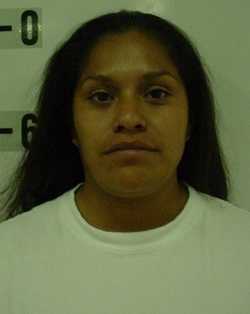
LAKEPORT, Calif. – A Lakeport woman was arrested early Friday for allegedly stabbing her boyfriend.
Krissandra Burrows, 26, was arrested for assault with a deadly weapon with great bodily injury and domestic violence, according to Sgt. Jason Ferguson.
On Thursday shortly before 6 p.m. a Lakeport Police Department sergeant responded to Sutter Lakeside Hospital to contact an assault victim, Ferguson reported.
The victim, a 42-year-old Lakeport man, reported he was stabbed multiple times in the left hand and right thigh by an unknown Hispanic male subject on the north side of Library Park, according to Ferguson.
Ferguson said the alleged victim was unable to provide any further information regarding the suspect who stabbed him.
A search of the parklands revealed no evidence to suggest a stabbing had in fact occurred at the location provided by the alleged victim, according to Ferguson.
During the course of the evening officers developed information which led to a potential suspect and location where the stabbing occurred, he reported.
Ferguson said officers responded to 250 15th St. and identified evidence of a crime scene outside the residence.
Officers contacted Burrows, the alleged victim’s girlfriend, and through followup investigation learned that Burrows allegedly stabbed the victim in a domestic violence disturbance, Ferguson said.
Ferguson arrested Burrows, who was transported to the Hill Road Jail where she was booked.
Bail was set at $25,000 and she remained in custody early Saturday, according to jail records.
LAKEPORT, Calif. – Due to more delays and procedural issues, jurors heard less than two hours of testimony on Thursday in the trial of two men for a fatal June 2011 shooting that killed a child and wounded five others.
Paul William Braden, 22, and Orlando Joseph Lopez, 24, are on trial for allegedly shooting into a crowd of people at the Lakeshore Drive home in Clearlake of Desiree Kirby and Ross Sparks on the night of June 18, 2011.
The shooting killed Kirby’s 4-year-old son Skyler Rapp, and wounded Kirby and Sparks, his brother Andrew, and friends Joseph Armijo and Ian Griffith.
On Thursday Kevin Stone, 29, a former codefendant of Braden and Lopez, briefly take the stand.
Stone’s preliminary hearing was held last fall along with Braden’s and Lopez’s.
He was held over for trial on the charges but last November reached a plea agreement with District Attorney Don Anderson that allows him to plead to charges of conspiracy to commit a robbery, a special allegation of being armed at the time of the crime and being an accessory after the fact in a homicide.
Anderson said previously that the agreement was contingent on Stone testifying in the trial.
Testimony on Thursday began with Lindy Degiorgis of Clearlake, currently in custody at the Lake County Jail on a bench warrant and a drug charge.
Degiorgis said her friend Curtis Eeds, who lived next door to Kirby and Sparks, was at her home hanging out with her and some other friends and family members that evening. She described his behavior as nothing out of the ordinary.
She said it was just getting dark when they heard what, at first, they thought were firecrackers. Degiorgis said it was her father who suggested that it sounded like gunshots.
Degiorgis said she clearly heard five gunshots.
When her father suggested it was gunfire, not firecrackers, Eeds jumped up, saying it sounded like it was at his house a short distance away. Degiorgis said Eeds looked “freaked out” and ran off to his house.
He didn’t come back that evening. “The cops were there and held him,” she said.
Clearlake Police Sgt. Martin Snyder’s testimony followed Degiorgis’, taking up the rest of the morning session.
Snyder, who was off duty the night of the shooting, was called to the scene by police dispatch.
He said he secured a burgundy-colored Nissan Axxess, which Crystal Painchaud testified on Wednesday belonged to her but had been loaned to her cousin, Leighann Painchaud, and Stone, who was dating Leighann Painchaud at the time.
Crystal Painchaud and her friend, Tyreshia Celestin-Willis, both said in court on Wednesday that they found the vehicle abandoned several blocks from the crime scene following the shooting. When Painchaud looked inside, she saw a green shotgun shell.
Stone is alleged to have driven Braden and Stone to the shooting scene in the vehicle.
The vehicle was towed to the Clearlake Police Department to be processed and secured, Snyder said.
Shortly before 5:30 a.m. Sunday, June 19, 2011, Snyder, Evidence Technician Victoria Estrella and a police volunteer returned to Sparks’ and Kirby’s home to process the crime scene, having secured the necessary search warrants.
Pictures Estrella took at the scene showed buckshot holes scattered across the exterior of the apartment building where Kirby and Sparks lived with their children.
Snyder said the damage to the apartment building’s siding was consistent with 15-pellet double ought buck shotgun ammunition.
On Eeds’ side of the fence police recovered three green expended shotgun shells. Near the apartment they recovered a shotgun wad, and Snyder said it was common for a wad to travel a distance such as that from the fence to the building, which pictures showed was about 20 to 30 feet. Snyder said pieces of several other wads also were found.
Police recovered three pellets; two of them were found outside the apartment, one 15-shot, one nine shot, and another nine-shot was found inside the apartment’s kitchen, Snyder said.
A picture of the apartment’s interior showed several large bloodstains on the carpet, and numerous evidence placards which Snyder said marked areas where they swabbed for blood samples.
The building’s exterior showed numerous pellet entry holes and Snyder said the apartment’s interior walls showed exit holes. Anderson showed the jury a picture of one such area of the wall where the pellets had passed through to the interior.
The netting on the playpen where Kirby’s and Sparks’ baby daughter had been sleeping at the time of the shooting also showed what Snyder said were holes from shotgun pellets.
Snyder testified that he was able to read the markings on the exterior of two of the three recovered shotgun shells. Those two readable shells showed writing indicating they were double-ought 15-pellet shells.
Asked about where shotgun shells usually eject, Snyder said it depends on the manufacturer, but most on the market today eject the shells on the righthand side, with the shells consistently falling two to three feet from the weapon.
After breaking for lunch early, the trial reconvened and Stone was brought into the courtroom in handcuffs and a jail uniform, his hair shaved close.
Stone’s attorney, Komnith Moth, was in attendance as his testimony began.
Stone said he had lived in Lake County off and on for eight years, having moved here from Santa Rosa. In Santa Rosa he worked as an electrician, and did auto detailing after he arrived in Lake County.
Under Anderson’s questioning, Stone admitted to having a past criminal history, including a December 2009 conviction for receiving stolen property. At the time of the shooting, he also had pending cases involving driving on a suspended license, methamphetamine possession, domestic violence and probation violations.
“You’ve had a big involvement in this case, have you not?” Anderson asked, regarding the murder case.
Stone acknowledged that he had, and that he was present during the shooting and afterward fled to Santa Rosa.
He had arranged with Clearlake Police Officer Mike Ray to turn himself in, but Stone said he didn’t show up.
“Why did you flee Lake County?” Anderson asked.
“‘Cause I heard there were people looking to kill me,” Stone said, adding, “That was the initial reason.”
He said he didn’t turn himself in because Ray appeared with a second officer he didn’t trust.
Stone would be arrested in Santa Rosa on July 1, 2011, along with Leighann Painchaud. He has remained in custody ever since.
Anderson, in his questioning, noted that a holding order was issued for Stone on Oct. 17, 2011, following the preliminary hearing. Stone and Moth began negotiations with Anderson’s office on Nov. 3, 2011. Stone said he met with Anderson three to four times while negotiating a plea agreement that included his testimony.
At that point in the proceedings Moth got up and left the courtroom with no explanation.
Shortly thereafter, Judge Doris Shockley stopped the proceedings.
“I want him back here,” she said of Moth.
A nearly hour-long recess was called shortly before 2 p.m., with part of that time involving an in-chambers discussion with Shockley and all of the attorneys, including Moth, who returned later.
When the jurors were brought back in, Shockley told them that an important procedural issue had arisen, and the court needed to address it before hearing any more testimony.
Shockley ordered the juror to return on Friday morning, with the caveat that they should call in Thursday evening to see if testimony was going to proceed Friday.
Anderson told Lake County News on Thursday evening that the procedural issues dealt with discovery documents. He said he could not say much more than that.
He said it was decided Thursday night that testimony would not continue on Friday, and that instead the attorneys would work on jury instructions.
He said testimony will resume on Wednesday, May 23, when two California Department of Justice experts will take the stand.
Stone will return to the stand on Thursday, May 24, Anderson said.
Email Elizabeth Larson at
The California Highway Patrol and 265 local law enforcement agencies issued over 57,000 tickets in April to drivers who were using a hand-held cell phone or texting, according to a report from the California Office of Traffic Safety.
The agency said another 3,800 citations were handed out for other distracted driving violations in April. This number is up from the 52,000 tickets issued in April of 2011.
The CHP and OTS praised the cooperation of hundreds of state and local agencies and the reaction of the public to the second annual “It’s Not Worth It!”enforcement and awareness campaign as part of the national Distracted Driving Awareness Month.
“Unfortunately, we’re seeing that the problem of cell phone use for talking and texting while driving is not going away anytime soon,” said OTS Director Christopher J. Murphy. “There are those who understand the dangers and have curtailed their use, while others think the hazards apply to everyone else but them. We can’t stop until we convince everyone that they are putting their own life and others around them at risk with this perilous behavior.”
Use of cells phones and texting while driving is a problem in Lake County, too.
“We do see it here and the officers do take appropriate action when they see it,” said Sgt. Dave Stark of the California Highway Patrol's Clear Lake Office.
Stark said local CHP officers in April wrote 38 citations for violations of Vehicle Code 23123(a), which states, “A person shall not drive a motor vehicle while using a wireless telephone unless that telephone is specifically designed and configured to allow hands-free listening and talking, and is used in that manner while driving.”
Stark said local officers wrote another two citations for violations of Vehicle Code 23123.5(a), which states, “A person shall not drive a motor vehicle while using an electronic wireless communications device to write, send, or read a text-based communication.”
In addition to the enforcement efforts, the OTS continued the “It’s Not Worth It!” public awareness campaign with TV and radio commercials, the Caltrans changeable message signs over highways, DMV messaging in field offices, plus Internet, social media and other outreach.
The “Don’t Be a Distracted Driving Zombie” theme this year emphasized how up to 37 percent of brain functioning needed for driving gets switched to cell phone talking, making the driver severely lacking in ability to safely drive.
Recently OTS released the results of their second statewide cell phone observational survey that showed more than 10 percent of drivers were talking or texting while driving, representing hundreds of thousands of drivers at any given time.
Especially troubling are the cell phone use figures showing drivers 16-25 years of age talking or texting at a rate of 18 percent, up from 9 percent in 2011.
The “It’s Not Worth It!” campaign will continue with both enforcement and public awareness efforts. The State’s Strategic Highway Safety Plan is developing tactics to combat distracted driving, such as formulating plans to increase the data and research available to more accurately understand and combat the problem.
With the lives of hundreds of Californians at stake, the message will continue to be that any phone call or text message can wait until you reach a safe place to stop.
Following a few uncomplicated steps would go a long way in keeping you safe from distracted driving:
- Put your cell phone out of reach when you get in the car so you won’t be tempted to use it.
- Mention on your outgoing voice mail message that you can’t answer because you might be driving.
- Don’t call or text anyone when there is a good chance that they may be driving.
- If you must call or text, pull into a parking space.
- The ability to safely multi-task while driving is myth.
- Never eat, groom, program a GPS, check Facebook, run an app, read or otherwise allow your full attention to leave the task of safely driving.
Something strange is about to happen to the shadows beneath your feet.
On Sunday, May 20, the Moon will pass in front of the sun, transforming sunbeams across the Pacific side of Earth into fat crescents and thin rings of light.
It's an annular solar eclipse, in which the Moon will cover as much as 94 percent of the sun.
Hundreds of millions of people will be able to witness the event. The eclipse zone stretches from southeast Asia across the Pacific Ocean to western parts of North America.
In the United States, the eclipse begins around 5:30 pm Pacific Daylight Time. For the next two hours, a Moon-shaped portion of the sun will go into hiding. Greatest coverage occurs around 6:30 p.m. Pacific Daylight Time.
Because some of the sun is always exposed during the eclipse, ambient daylight won't seem much different than usual. Instead, the event will reveal itself in the shadows. Look on the ground beneath leafy trees for crescent-shaped sunbeams and rings of light.
Near the center-line of the eclipse, observers will experience something special: the "ring of fire." As the Moon crosses the sun dead-center, a circular strip or annulus of sunlight will completely surround the dark lunar disk. Visually, the sun has a big black hole in the middle.
The "path of annularity" where this occurs is only about 200 miles wide, but it stretches almost halfway around the world passing many population centers en route: Tokyo, Japan; Medford, Oregon; Chico, Calif.; Reno, Nevada; Albuquerque, New Mexico, and Lubbock, Texas. In those locations the ring of fire phenomenon will be visible for as much as four and a half minutes.
"The ring of sunlight during annularity is blindingly bright," cautioned NASA's leading eclipse expert Fred Espenak of the Goddard Space Flight Center. "Even though most of the Sun's disk will be covered, you still need to use a solar filter or some type of projection technique. A #14 welder's glass is a good choice. There are also many commercially-available solar filters."
Many astronomy clubs will have solar-filtered telescopes set up for public viewing.
Through the eyepiece of such an instrument, you can see the mountainous lunar limb gliding by dark sunspots and fiery prominences. It's a beautiful sight.
Be absolutely sure, however, that any telescope you look through is properly filtered. Magnified sunlight can cause serious eye damage even during an eclipse.
A safe and fun way to observe the eclipse is to use your own body as a solar projector. For example, try criss-crossing your fingers waffle-style. Rays of light beaming through the gaps will have the same shape as the eclipsed sun.
Or just stand under that tree. The sight of a thousand ring-shaped sunbeams swaying back and forth on a grassy lawn or sidewalk is unforgettable.
Dr. Tony Phillips works for the National Aeronautics and Space Administration.