 How to resolve AdBlock issue?
News
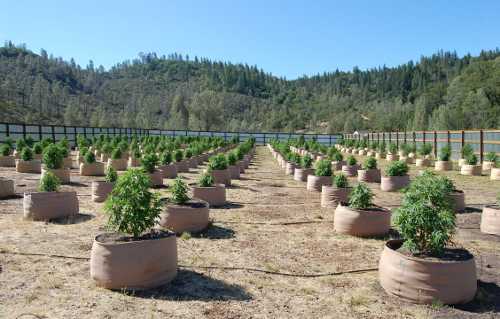
MIDDLETOWN, Calif. – Compliance checks of several marijuana grow sites in the Middletown area on Thursday resulted in two arrests and the seizure of 399 marijuana plants.
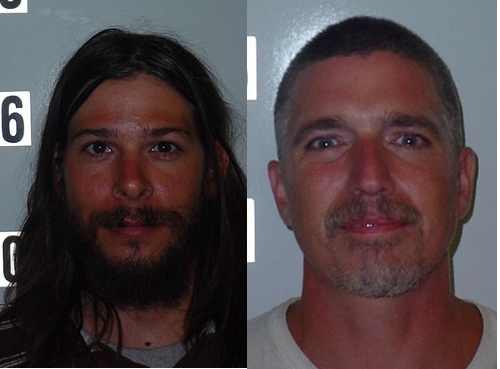
Michael Joseph Simon, 30, and 41-year-old Peter Jefferson Wainwright, both from Santa Rosa, were arrested in the operation, according to Sgt. Steve Brooks.
The Lake County Sheriff’s Narcotics Task Force, along with personnel from Lake County Code Enforcement, conducted the marijuana compliance checks on six locations in the Middletown and Lower Lake area, Brooks said.
As a result, 399 marijuana plants were eradicated and seized. Brooks said the seized marijuana was located on property with no structures.
Three other residences were warned that they were out of compliance. They were given a 48-hour notice by Lake County Code Enforcement to remove the excessive plants, he said.
The first residence had 84 marijuana plants, Brooks said, while the second residence had 80 marijuana plants and the third residence had 90 marijuana plants.
Brooks said detectives located Joseph and Wainwright at an address on Saint Helena Creek Road in Middletown. Both men said they were growing medical marijuana for patients from the Los Angeles and Orange County areas, as well as for themselves. They told detectives that they had approximately 300 marijuana plants growing on the property.
There was no residence on the property and both suspects appeared to be staying in a motor home, Brooks said.
Detectives located 303 marijuana plants inside a large metal fenced compound. A water line was followed from the compound several hundred yards to a well, which had been illegally drilled next to a spring, Brooks said. A large hole was located near the motor home where the suspects had been dumping human waste.
Both Simon and Wainwright consented to a search of their motor home, where detectives located a 40-caliber semi automatic pistol and a substantial amount of methadone, for which neither Simon nor Wainwright had a prescription, Brooks said.
Both subjects were arrested for possession of a controlled substance, cultivation of marijuana and being armed while committing a drug offense. Both were transported to the Lake County Hill Road Correctional Facility and booked.
Bail for each of the men was set at $15,000. Jail records indicated both posted the required percentage of bail and were released.
The Sheriff’s Narcotics Task Force can be contacted through its anonymous tip line at 707-263-3663.
LAKE COUNTY, Calif. – New information supplied by a death row inmate may soon lead investigators to Lake County in search of the bodies of 14 murder victims.
The latest development in the “Speed Freak Killers” case also has raised concerns that – in addition to the two men who ultimately were convicted of the horrifying series of murders – there may be two other suspects who were involved.
Wesley Shermantine, now 46, and his partner in the crimes, Loren Herzog, were dubbed the “Speed Freak Killers” because the killings they carried out – which took place over a 15-year period, ending with their arrests in 1999 – had been fueled by methamphetamine.
Since the start of this year, information Shermantine has supplied to authorities has led to the discovery of the remains of what are believed to be numerous, previously unknown victims of the pair.
Originally it was believed the men were responsible for about 15 murders, but officials now estimate the pair’s victims could number more than 70. A March San Francisco Chronicle article, quoting an inmate who claimed to have spoken to Herzog in prison, put the possible victim count as high as 112.
Within the last month, Shermantine revealed that the bodies of another 14 murder victims are located in Lake County’s Cow Mountain area.
Sacramento bounty hunter Leonard Padilla – who has been working with Shermantine on the release of information – said Shermantine brought up the Cow Mountain area about four weeks ago, but offered no specifics about where in that area the bodies were located.
Padilla told Lake County News that he called Sheriff Frank Rivero on Tuesday about the situation.
“I contacted the sheriff and said, ‘Hey, here’s what I got,’” Padilla said.
Sgt. Steve Brooks of the Lake County Sheriff’s Office told Lake County News that the agency had received some information about the case, but the sheriff’s office has not made any other details available so far.
New legislation aids the search
The public revelation about the possible burials on Cow Mountain came in tandem this week with Gov. Jerry Brown’s signing of AB 2357, a bill authored by Assemblymember Cathleen Galgiani (D-Stockton), whose district had been home to several of the pair’s murder victims.
Galgiani’s bill, in effect until next Jan. 1, allows for the secretary of the California Department of Corrections and Rehabilitation to temporarily remove an inmate from prison “for the purpose of permitting the inmate to participate in or assist with the gathering of evidence relating to crimes,” according to the bill’s language.
It took effect as an urgency statute immediately upon the receiving the governor’s signature.
“It’s a lot to take in all at once,” Galgiani said of the case during an interview with Lake County News on Thursday.
She said she was working to connect with state Sen. Noreen Evans and Assemblyman Wes Chesbro – who represent Lake County in the state Legislature – as well as county leaders, in the wake of the newest revelations that bodies might be found here.
“I don’t want to have families in your area going through what we’ve been going through,” she said.
Padilla said he’s not sure what happens next, but he believed the matter is now in the hands of the California Department of Corrections and Rehabilitation as to whether it takes the initiative. He also suggested he could seek a court order to move forward the possibility that Shermantine is brought to Lake County.
Jeffrey Callison, press secretary for the California Department of Corrections and Rehabilitation, said the agency had no comment on whether or not Shermantine was set to be transported to Lake County to aid the investigation.
“If it were happening it would be an investigation and we don’t comment on any ongoing investigation in that way,” Callison said.
The Ukiah office of the Bureau of Land Management oversees the Cow Mountain Recreation Area, where Shermantine and Herzog reportedly used to go hunting.
David Christy, a spokesman for the Bureau of Land Management’s Central California Unit – which includes the Ukiah office – told Lake County News that by midweek the agency hadn’t received any requests to excavate in the recreation area.
However, he said the BLM would cooperate if it did receive such a request.
The San Joaquin County Sheriff’s Office – which has been the lead agency pursuing Shermantine’s information and recovering evidence of additional murder victims based on his directions – did not return a message seeking comment on Thursday.
So far, no possible identities have been offered for the victims said to be buried in Lake County – with which Shermantine and Herzog weren’t previously linked. The information offered by Shermantine so far hasn’t made clear if the victims he claims are buried there were from the county or were brought here from other areas.
Galgiani said numerous jurisdictions around the state are reassessing missing persons cases as possible homicides in light of Shermantine’s revelations.
The California Attorney General’s Missing and Unidentified Persons Unit database lists six Lake County residents.
Two of those individuals – Steven William Branston, 20, who was last seen in Lakeport in August 1996, and Robert Blair Sturgill, 30, last seen in Lucerne in 1990 – disappeared during the time frame of the murders Shermantine and Herzog committed.
However, in previous interviews with Lake County News about local missing persons cases, local law enforcement suggested Branston actually was spotted out of state at one point after he was last seen locally.
Local authorities have not yet reported if they will try to link any local missing persons cases to Shermantine and Herzog.
A destructive trail around California
Shermantine and Herzog were arrested in March 1999.
Shermantine was convicted of killing four people – Paul Cavanaugh, Howard King, Chevelle Wheeler and Cyndi Vanderheiden. He received the death penalty in May 2001 and was sent to San Quentin State Prison.
Herzog was sentenced to 78 years in to life in December of that same year for three of the murders. However, in 2004 an appeals court overturned Herzog’s conviction, finding his confession was coerced.
He later reached an agreement with prosecutors to plead to voluntary manslaughter in Vanderheiden’s death, and being an accessory in the murders of Henry Howell, King and Wheeler, besides drug charges. Altogether, he received a 14-year sentence, with credit for six years he already had served.
Herzog was paroled in 2010. He had been scheduled for release back to Galgiani’s Central Valley district.
Galgiani worked to stop Herzog’s release from High Desert State Prison in Susanville, but after exhausting all recourses to stop his parole she was able to force his release to a trailer on prison grounds.
Herzog died in January at age 46. He hung himself after Padilla informed him that Shermantine was about to release the locations of some of the additional murder victims for which they had not been tried.
Galgiani credited Padilla with helping get Shermantine to divulge the information about the additional murder victims. Early on, Shermantine was asking for money, and Padilla provided him with a reported $33,000 to cover restitution and some other expenses.
Shermantine has written Galgiani several letters. In one she received May 30, Shermantine told her that between three inmates – including himself, with the other two not being named – there were 14 victims that he could help locate, in an area where he used to hunt.
She said he didn’t specifically mention Cow Mountain in that letter. In the weeks since, however, that was the area where he told Padilla the 14 bodies would be found.
Asked if she thinks that Shermantine and Herzog had accomplices, Galgiani said yes. “I’ve always believed that.”
Padilla said Shermantine named two men – whose first names are Jason and Marcus – who were accomplices to him and Herzog.
Like Padilla, Galgiani believes Shermantine is telling the truth, pointing out that the maps he’s drawn and the letters he’s written have helped lead authorities to human remains, including 1,000 bone fragments and pieces of clothing and jewelry found in February in an abandoned well near Linden.
Galgiani said one of her constituents went to visit Shermantine in San Quentin, with the woman asking about the location of her child’s remains. “He promised her he would return her baby to her, and he did,” said Galgiani.
“No family member should have to beg to have their child back because law enforcement won’t act,” she added.
An appeal for federal assistance
Galgiani’s issues with law enforcement are particularly pointed at the Federal Bureau of Investigation. She said the San Joaquin County Sheriff’s Office, which had concerns over security issues, halted attempts to take Shermantine to burial sites.
The murders ultimately could involve 21 counties around California as well as communities in Nevada. Galgiani said authorities in Reno are investigating the possibility that a young woman who disappeared in 1996 was one of the pair’s victims.
Because of the multiple jurisdictions involved, in February and March Galgiani personally appealed to FBI Director Robert Mueller, asking that the FBI reopen its 1999 serial murder case on Shermantine and Herzog, and provide support from its Evidence Recovery Team in the search for victims.
“I request that the FBI, as evidenced by its history, exercise its leadership and expertise in these cases to address the continuing suffering of the victim families in Northern California. I believe it is the domain of the FBI to step in and assist, and work collaboratively with local law enforcement agencies, particularly given the complexities of this case, so that families may finally bring their loved ones home,” she wrote in the February letter.
In March, she followed up in another letter, pointing out to Mueller that Congress granted the FBI the authority to investigate serial killings upon the request of a law enforcement agency “with investigative or prosecutorial jurisdiction.”
In April, Galgiani received a letter from Jayne Challman, chief of the FBI’s Violent Criminal Threat Section.
Challman told Galgiani that a representative from the FBI’s Sacramento Field Office attended a Jan. 20 meeting at the San Joaquin County Sheriff’s Office, at which time it was determined that the jurisdiction remained with local law enforcement, “as no federally predicated offense exists at this time.”
Challman continued, “At the time of this letter, no change has occurred in the legal status, and the jurisdiction of the case remains with local authorities within California.”
The letter stated that the San Joaquin County Sheriff’s Office had requested support from the FBI’s Evidence Response Team, “and plans are underway to provide the proper assistance in terms of both manpower and equipment.”
Galgiani said she doesn’t believe Shermantine is going to stop trying to give information to bring the victims home.
She said family members of missing people all over the region are being left to wonder if their loved ones are among the victims.
“This is not going away,” Galgiani said. “I’m not letting it go.”
Email Elizabeth Larson at
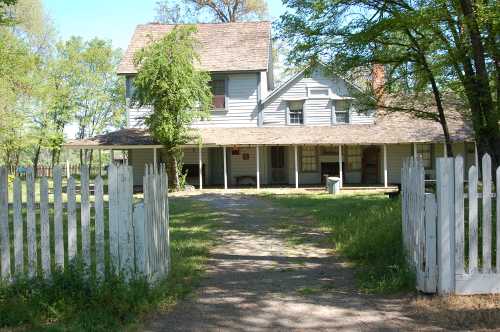
LOWER LAKE, Calif. – Anderson Marsh State Historic Park turns 30 years old this year and the Anderson Marsh Interpretive Association is hosting a celebration to honor this milestone.
Everyone is invited to attend the event which will be held on Saturday, Aug. 11, from 8:30 a.m. until noon at the park, which is located off of Highway 53 between Lower Lake and the city of Clearlake.
AMIA has planned a number of activities to commemorate the anniversary of the park, which was officially dedicated in October of 1982.
Starting at 8:30 a.m. a guided nature walk will be held for those wishing to enjoy a moderate summer walk through the park. Participants are asked to meet in the parking lot at 8:15 p.m.
Then, at 10 a.m. enjoy “Music on the Porch,” and a Ranch House open house.
Don Coffin, an AMIA board member and local musician will be “pickin’ and singin,” and AMIA volunteers will be in the Ranch House to share their knowledge about the history of the historical ranch house and those who lived there.
At 10:45 a.m. Sector Superintendent Bill Salata will open the ceremonies, followed by AMIA President Roberta Lyons, who will present certificates of appreciation to outstanding donors, volunteers and members.
Dr. John Parker, who was instrumental in the founding of the park, will give a history of the park and why it is so important that we preserve and maintain this Lake County treasure for future generations.
There will also be an update on the efforts by AMIA to keep the park open and accessible to the public.
Then, from 11:15 a.m. until noon there will be more music, refreshments and an anniversary cake.
This will be a chance to get together, talk with park supporters and enjoy a morning at the park.
NORTHERN CALIFORNIA – Mop up is continuing in a vast area of the Mendocino National Forest where a wildland burned for a week and a half.
The Mill Fire, contained on Wednesday at 29,502 acres, began on Saturday, July 7, in the Colusa County side of the forest, 10 miles west of Stonyford.
A cause has not yet been reported for the fire, which has cost $15.4 million to date.
Forest officials said a new incident team took over command of the fire.
Approximately 536 personnel remained on the incident on Thursday, with crews working on patrol, mop up and repairs, with assessments on forest health also under way, the incident team reported.
Incident managers said that increasing temperatures and humidity are expected to result in smoke inside the fire lines, which is normal after a fire. Crews will be prepared to respond.
The team anticipates continuing to hold public meetings on the incident, as necessary, at the Stonyford Grange.
Closure orders for the fire area remain in effect, meaning bow hunters won’t be able to access that part of the forest for the recently opened archery season, the Mendocino National Forest reported.
All roads and trails in the recreation area outside Stonyford on the south portion of the Grindstone Ranger District also are still closed, as are the forest areas of Fouts Springs, Bonnie View and Board Camp Springs, and campgrounds within the Upper Letts Lake area.
The Bureau of Reclamation will reopen the East Park Reservoir near Stonyford on Friday. The reservoir was closed due to air quality conditions and the firefighting effort.
Email Elizabeth Larson at
The California Department of Water Resources (DWR) has released the 2011 State Water Project (SWP) Delivery Reliability Report.
The 2011 report is the latest in a series of reports on the delivery reliability of California’s State Water Project, the largest state-built and operated water and power system in the United States.
“California faces a future of increased population growth, coupled with the potential for water shortages and pressures on the Delta,” states the summary.
Water from Clear Lake eventually makes its way to the Delta. Clear Lake empties into Cache Creek, which leads to the Yolo Bypass, which in turn sends water into the Sacramento River. The river empties into the Sacramento-San Joaquin Delta.
The newest report updates estimates of current (2011) and future (through 2031) SWP deliveries, taking into account pumping restraints to protect Delta smelt, salmon, and other fish species as well as variations in precipitation and impacts of climate change.
The perspective applied assumes no significant changes will be made to convey water past the Sacramento-San Joaquin Delta or to store the more variable runoff expected with climate change.
“This report is written primarily with the public in mind,” stated DWR Director Mark Cowin. “As a result, it not only provides updated information about the SWP’s water delivery reliability, but is also designed to educate Californians about the SWP and its operations.”
The SWP provides at least some of the water consumed by 25 million Californians and used to irrigate about 750,000 farmland acres. Of SWP water deliveries, about 70 percent goes to cities and 30 percent to farms.
Due to increased public interest in pumping water from the Delta, Cowin noted that a new chapter focuses specifically on SWP exports at the system’s Harvey O. Banks Pumping Plant in the Delta.
The report documents that the SWP continues to be subject to delivery reductions caused by fishery agency Biological Opinions intended to safeguard threatened and endangered fish.
Analysts noted that population growth and recent-year legislation on water conservation are among key factors underscoring the importance of accurately assessing the SWP’s reliability of deliveries.
California’s population has grown rapidly in recent years.
From 1990 to 2005, the state’s population increased from about 30 million to about 36.5 million. Based on this trend, California’s population could exceed 47.5 million by 2020.
By 2050, the population could rise to nearly 60 million – virtually double the 1990 population – according to trends cited in the 2009 Update to the California Water Plan.
Legislation in recent years has focused on encouraging conservation and cutting water use. The Water Conservation Act of 2009 requires that the State of California reduce urban per capita water use statewide by 10 percent by the end of 2015 and 20 percent by the end of 2020.
The 2011 State Water Project Delivery Reliability Report is available online at http://baydeltaoffice.water.ca.gov or can be downloaded below.
DWR has issued these reliability reports since 2002.
DWR is legally required to prepare and distribute this report to all SWP contractors (those with contracts to purchase SWP water), city and county planning departments, and regional and metropolitan planning departments in the SWP’s service area.
2011 SWP Final Delivery Reliability ReportNICE, Calif. – Caltrans said the construction of a roundabout on Highway 20 at the Nice-Lucerne Cutoff Road in Lake County will require a detour from July 23 to early September.
Nice-Lucerne Cutoff Road will be closed at Highway 20, and signs will be in place to direct traffic along Stokes Road.
Access to Sentry Market from Highway 20 will remain open by taking Stokes Road and turning right onto the Nice-Lucerne Cutoff.
The historic collision rate at this intersection is over five times higher than the statewide average for similar intersections, according to Caltrans.
Caltrans said the $4.6 million safety project – the total estimated cost at completion – will reduce the number and severity of collisions, provide sidewalks, and median islands constructed near the roundabout will provide refuge for pedestrians, allowing them to cross one direction of traffic at a time.
It also will lower vehicle emissions by lessening idle times compared to a traffic signal.
The contractor is Granite Construction Inc. of Ukiah.