 How to resolve AdBlock issue?
News
LAKEPORT, Calif. – On Wednesday the trial began for a Lakeport man who allegedly stabbed to death his elderly neighbor in November 2007 because he believed – wrongly – that the man had just gotten out of prison for child molestation.
Ivan Garcia Oliver, 34, is charged with the murder of 67-year-old Michael Dodele on Nov. 20, 2007, at Western Hills Mobile Home Park on Lakeshore Boulevard outside the Lakeport city limits.
The charges against Oliver include murder, burglary, elder abuse and several special allegations relating to committing a crime against an elder, causing great bodily injury, personally using a deadly weapon and using information from the Megan’s Law sex offender registration Web site to commit a felony. Oliver has pleaded not guilty to all counts.
Oliver is alleged to have confronted Dodele a few days after he and the park’s manager, Lacey Kou, found Dodele listed on the Megan’s Law Web site.
Chief Deputy District Attorney Richard Hinchcliff explained to the jury that Dodele’s entry on the Web site, which was worded similarly to the legal statute, can be confusing; the conviction was for a charge that of “oral copulation on a child under 14 or by force.”
He said Oliver took that to mean Dodele was a child molester; however, Dodele had committed the crime by force on an adult female.
Hinchcliff presented evidence of Oliver telling a witness that sex offenders needed to be “done away with” and taking a printout of the Megan’s Law sex offender registration that showed Dodele around to his neighbors, warning them he was a child molester.
In the days before Dodele’s killing, Oliver would confront another man at the mobile home park about being a child molester – that man wasn’t, either – and in the hours before Dodele was killed, Oliver also allegedly attacked a young man because of his sexuality.
Oliver – who has a previous conviction for a stabbing in Southern California – allegedly stabbed Dodele 60 times in the trailer where Dodele had been living a short time after being released from Atascadero State Prison.
Defense attorney Stephen Carter argued that Oliver and Dodele had been in a fight, that Oliver came out on top and was wrongly charged with murder. Carter suggested that Oliver was acting out of concern for his young son.
Hinchcliff told the jury during opening arguments on Wednesday that Dodele had been convicted in the late 1970s of three counts of rape and counts of attempted rape of adult women. In 1987, he was convicted of one count of rape and forced oral copulation, and spent 20 years in state prison.
He suggested that Oliver had cut himself while stabbing Dodele and tried later to claim those cuts as defensive wounds, despite never mentioning them in four interviews with sheriff’s detectives. Oliver tried to clean up his own blood from inside the trailer, and took a blanket belonging to Dodele and a bottle of bleach from the home.
It was Oliver’s girlfriend, who had a 4-year-old son with Oliver and was living with him at the mobile home park, who called 911 after Oliver came home, acting bizarrely and bleeding, Hinchcliff said.
Detectives found Oliver in possession of Dodele’s cell phone, and when they went to Oliver’s home, found the screen over a bathroom window pushed out and two knives out in the yard, according to Hinchcliff.
He said jurors also would hear tapes played of interviews with Oliver, who told investigators he went to Dodele’s home “with murder on his mind.”
During his brief opening arguments, Carter said Oliver was in a “great state of anxiety,” and was under the impression that Dodele was trying to hurt his child.
Carter said Oliver went to talk to Dodele and Dodele pulled a knife. A fight ensued and Oliver was charged with murder.
“Please withhold judgment until the end, as I’m sure you can,” Carter said.
Witnesses recount events leading to Dodele’s death
The witnesses presented to the jury on Wednesday explained how Dodele came to Lake County after being released from prison, having had the help of his sister and son in getting set up in a new home.
Several neighbors who had witnessed Oliver allegedly going in and out of Dodele’s trailer on the morning of his death also were presented.
One of the witnesses on Wednesday was Monica Bojorquez, who in November 2007 was living as a male and going by the name, Israel, but who has since transitioned to a transgender female.
She said that she was living with her mother and aunt at the trailer next door to Dodele. Bojorquez said she didn’t know either Dodele or Oliver well.
A few days before Dodele’s death, she said Oliver came to her home to tell her family that Dodele was a child molester.
Then, a few hours before Dodele was stabbed to death, Oliver asked Bojorquez’s mother, Silvia, to send her over to see him. When Bojorquez went into Oliver’s home, Oliver locked the door, took off his shirt and began punching and kicking Bojorquez. Oliver’s girlfriend helped Bojorquez get out of the trailer.
Bojorquez said she did not remember telling an investigator that Oliver had used anti-gay epithets during the attack.
She said she saw Oliver later that morning as he was going in and out of Dodele’s trailer, as did her aunt and mother, who also testified on Wednesday.
Brenda Bojorquez, Monica Bojorquez’s aunt, confronted Oliver at his home about his attack on her niece. A short time later, Oliver came to their home and told them he was going to burn down their trailer.
Another witness, Henry Smith, said Oliver – who he didn’t know – confronted him a few days before Dodele’s death, asking if Smith was a child molester. Smith said Oliver was acting crazy and seemed like he was on drugs, with Carter moving to have the drug comment stricken. Judge Arthur Mann agreed.
Smith said Oliver acted nervous and violent, like he wanted to fight, and Smith was trying to get him to calm down. “If I was 25 years younger, I wouldn’t give a damn, I would have knocked him on his butt,” said Smith.
Lacey Kou, the mobile home park’s manager, said she worked at a preschool where Oliver’s son attended. She had gotten to know Oliver, and suggested him as a tenant for a space next door to hers.
Kou estimated that two to three days before Dodele’s death Oliver reported to her that he had seen a car park near the park’s grassy area where children were playing; the car suddenly sped off when he tried to approach it.
“He was concerned about the possibility of anyone coming to the park and taking a child or harming a child because there were so many children,” she said.
She mentioned the Megan’s Law Web site to Oliver, and they looked it up at her home. They found there were many registered sex offenders living along Lakeshore Boulevard in Lakeport, but one name popped out – that of Dodele.
Kou was surprised by the find, as was Oliver, who she additionally described as being “disturbed” by the information. “That made him feel unsafe.”
She contacted the park owner, and she also printed out Dodele’s Web site entry for Oliver. Hinchcliff presented that same printout in court, asking if Kou had read the Web site disclaimer warning about the potential for mistaken identities, which she acknowledged she had.
The park’s owners set up a meeting to speak with Dodele; that meeting was scheduled for the same day that he died, Kou said.
Kou and Oliver had decided to talk to people in the park, but she decided to hold off until the park’s owners made a decision. She said she wasn’t aware that Oliver was going around the park telling people Dodele was a child molester.
Carter questioned Kou about Dodele initially putting in a rental application under the name Michael Salta. She said Dodele never showed her an identification card, claiming he recently had lost it, and that he had lived in Southern California and his home burned. His sister confirmed the story to the park’s owners.
She said Oliver never told her that Dodele tried to touch, or had touched, his son.
He also hadn’t made that statement to Lena Wilson, Kou’s mother, who was the day’s last witness.
She said Oliver told her that he didn’t believe sex offenders could be rehabilitated, and he wanted Dodele gone. She recalled telling an investigator that Oliver wanted sex offenders “need to be done away with.”
Wilson said Oliver became increasingly agitated in the days after he looked at the Megan’s Law Web site. She said she called the sheriff’s office to tell them about the situation.
In the meantime, she said Oliver was trying to round up a posse at the park in response to Dodele. “He was on a rampage,” she said, leading her to call the sheriff’s office again.
“He was telling the other tenants there, ‘We’ve got to get this guy out of here,” and other tenants were going to Kou asking for something to be done, Wilson said.
Testimony will resume at 10 a.m. Thursday.
Email Elizabeth Larson at
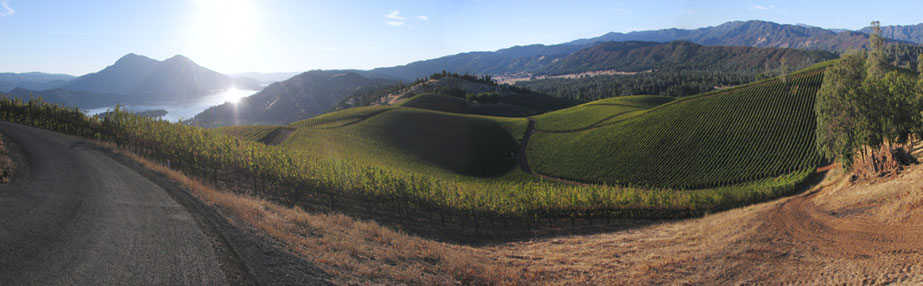
LAKE COUNTY, Calif. – The Lake County Winery Association will host its eighth-annual Lake County Wine Adventure this weekend.
Join the adventure form 10 a.m. to 5 p.m. Saturday, July 28, and Sunday, July 29.
The Wine Adventure Weekend provides a festive atmosphere in which guests can explore Lake County’s “high elevation” wine region, with the county’s stunning scenery – including valley and mountain vineyards, as well as sparkling Clear Lake – as a backdrop.
During this two-day passport-style event, attendees can sample award-winning wines from numerous participating wineries plus mouth-watering hors d’oeuvres.
Held at more than 30 wineries and tasting rooms throughout Lake County, many of the locations offer barrel tastings, music, art exhibits and winery tours.
As part of the event, on Saturday, Shannon Ridge Vineyards & Winery invites the community to join in celebrating the opening of its new tasting room at 13151 E. Highway 20 in Clearlake Oaks. The opening takes place from 10 a.m. to 5 p.m.
From 11:30 a.m. to 4:30 p.m. both days of the Wine Adventure, Brassfield Estate Winery will host performances by local musician/songwriters Lindy Day and Native American Music Awards nominee Kevin Village Stone, who will team up with R&B/soul vocalist Kayla Bell.
After visiting participating wineries, wine “tourists” will become eligible for a raffle drawing.
Purchase of two-day Adventure ticket, $45 day of event, includes tasting at participating wineries, a logo wine glass, wristband, and a four bottle wine bag.
For more information call 800-595-9463 or visit www.lakecountywineries.org .
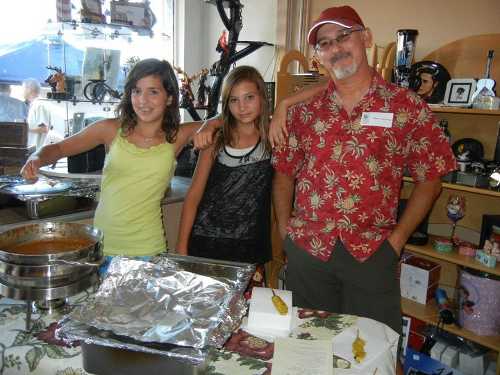
LAKEPORT, Calif. – The 16th annual food and wine event, A Taste of Lakeport, will once again pair premium Lake County wines with gourmet food from local purveyors.
Taking place along three blocks of Main Street in downtown Lakeport on Friday, Aug. 17, the food and wine tasting runs from 5 p.m. to 8 p.m., with street dance following until 10 p.m.
Event tickets are $30 in advance, $35 at the door, and include all activities and a souvenir wine glass. A $15 ticket is available for food tasting only.
An expected 20 wineries will offer tastes from fine wines either produced in Lake County or made from grapes grown in the county. Twenty local restaurateurs and caterers will provide tasty bites matched to the wine being poured.
To keep the fun going, live music will play throughout the tasting by Polecat Rodeo and The Hip Replacements.
A great antique car collection will be on view as well. After 8 pm, the party turns into a lively street dance under the stars with music by the Jimmy Z band.
Tickets are on sale now at these outlets:
- Soper Reese Community Theatre online at www.soperreesetheatre.com , or at the box office on Fridays from 10:30-5:30, 375 S. Main, Lakeport, 707-263-0577;
- The Travel Center, 1265 S. Main, Lakeport, 707-263-3095;
- Lake County Chamber of Commerce, 875 Lakeport Blvd., Lakeport, 707-263-5092;
- Hillside Honda, 460 S. Main, Lakeport, 707-263-9000;
- Clearlake Chamber of Commerce, 3425 Bowers Road, Clearlake (cash or check only);
- Doni’s Occasion Station, 6140 E. Hwy 20, Lucerne (cash or check only).
Proceeds from The Taste of Lakeport benefit the Lakeport Main Street Association and its work toward the continuing revitalization and renovation of downtown Lakeport.
Major sponsors for the Taste of Lakeport include Hillside Honda, Savings Bank of Mendocino County, North Lake Medical Pharmacy, Lakeport Ford, Coldwell Banker Towne & Country Real Estate, The Record Bee, KXBX 98.3FM, Q106 105.9FM, John H. Tomkins Tax consultants, Sutter Lakeside Hospital and Golden Gate Meat Company. The event is also supported by Lakeport Senior Center Meals on Wheels Thrift Store, Clearlake Club, IE Truss, Gossett Alarm, Mendo-Lake Credit Union, Marymount College and Watershed Books.
For more information contact LMSA at 707-243-8843,
NORTHERN CALIFORNIA – The unveiling of the Bay Delta Conservation Plan resulted in several groups and California members of Congress expressing their opposition to the plan.
On Wednesday, Gov. Jerry Brown and Secretary of the Interior Ken Salazar announced that they intend to move forward with construction of a massive tunnel system underneath the Sacramento-San Joaquin Delta, ultimately shipping water south and economically and environmentally devastating the region.
The members of Congress rejected the proposal by criticizing the void of scientific support as well as the utter lack of regard for current and future water rights for Northern California, and the likelihood that the plan will likely cause economic and environmental harm to the Bay-Delta and Northern California.
“A plan this reckless will not succeed,” said Rep. Jackie Speier (D-San Mateo).
The coalition of representatives have called on the U.S. Department of the Interior to include the input of the Bay-Delta communities, demanding a seat at the table as the BDCP has moved forward.
Congressman Mike Thompson (D-St. Helena), who represents Lake County in the House of Representatives, said the proposed Bay Delta Conservation Plan missed a golden opportunity to develop sound water policy, instead choosing politics over science.
“It will cost jobs, harm our environment and is a bad deal for Northern California,” he said. “All that we’ve insisted on is that any BDCP be based on sound science. Given the announced preferred alternative, this was apparently too much to ask. Before making irreversible decisions, we need a transparent, comprehensive and impartial discussion, with all stakeholders at the table, on how this would impact the farmers, fishers and businesses that depend on the Delta for their livelihoods. Today’s announcement ignores the needs of Northern California and will devastate our economy.”
“I am troubled by the tone of today’s announcement,” said Rep. George Miller (D-Martinez). “If ‘getting it done’ means cutting corners, leaving out details, and getting ahead of the science, we’re not actually getting anything done – we’re just getting into a trap.”
Miller said there are parts of this proposal that are encouraging and are a step forward from previous efforts, but there’s a lot of work left to be done before any final decisions can be made. “Keep in mind what is at stake here – a badly designed plan can harm drinking water supplies, further endanger California’s salmon runs, and ruin the economic livelihood of tens of thousands in the fishing and related industries up and down our coast.”
“To solve California’s water issues, northern California must be part of the decision making process. Unfortunately we were not,” said Rep. Doris Matsui (D-Sacramento). “Imagine if San Francisco decided to build the Golden Gate Bridge without consulting Marin County? The 9,000 cfs facility being proposed is simply not acceptable. It will cause massive impacts in the Sacramento area and suck our river dry. There are still a lot of unaddressed issues, and it is my sincere hope they will be addressed before any BDCP moves forward. This proposal will also put at risk Senior Water rights that Sacramento County and the Delta region hold.”
Rep. John Garamendi (D-Fairfield) said the proposed conveyance facility “could wreak havoc on the Delta and the jobs it sustains and put existing water rights in the Delta and Northern California at risk.”
He said it’s possible for California to solve its water problems, “but the Delta and Northern California counties must be at the table, and it will take a comprehensive, multifaceted approach, not just a piece of plumbing in the Delta. We must address the needs of all Californians by prioritizing storage, conservation, recycling, levee improvements, and habitat restoration. A BDCP without these elements is incomplete at best.”
At the same time, Restore the Delta, Sierra Club, Food & Water Watch, the Planning and Conservation League, the Environmental Water Caucus, Friend of the River, the Pacific Coast Federation of Fishermen’s Associations and a dozen other groups on Wednesday launched their campaign against the “Peripheral Tunnels” with a rally at the State Capitol.
Opponents pointed out “fatal flaws” of the tunnels they said would damage water, the environment, fish, and farming and impose billions of dollars of increases on water ratepayers.
“We oppose the rush to build a project that would exterminate salmon runs, destroy sustainable family farms and saddle taxpayers with tens of billions in debt, mainly to benefit a small number of huge corporate agribusinesses on the west side of the San Joaquin Valley,” said Barbara Barrigan-Parrilla, executive director of Restore the Delta. “This proposal is fatally-flawed.”
The opponents assailed the failure to conduct a cost-benefit analysis of the proposal, and said the costs would fall on water ratepayers.
Kristin Lynch, Pacific Region Director for Food & Water Watch, said, “This project would cost billions upon billions of dollars to give ever-increasing amounts of taxpayer and ratepayer subsidized water to corporate agriculture and real estate developers to make millions upon millions in profits. It is the ultimate fleecing of ratepayers and taxpayers.”
Lynch said it’s a fallacy that the plan is the only way to secure reliable water for southern California. “There are no guarantees that southern California residents will receive more water. As an indication to the contrary, LA Dept. of Water and Power is already projecting increased rates for decreased water consumption. How much will rates need to increase if this project moves forward?”
Zeke Grader, Pacific Coast Federation of Fishermen’s Associations and the Golden Gate Salmon Association, said, “History clearly shows those who covet salmon water in California will take as much of it as they can get away with. They’ve done it time and again. They’ve been reined in a bit since pumping restrictions designed to keep salmon and other fish from going extinct went into effect starting in late 2008.”
Bill Jennings, executive director of the California Sportfishing Protection Alliance, said the tunnels represent a massive transfer of wealth from north to south, with two-thirds of Delta water exports going to support 0.3 to 0.4 percent of the California population and economy on the westside of the San Joaquin Valley, while less than a third goes to areas representing two-thirds of the state’s population and economy.
“Why would anyone choose to sacrifice family farms on prime farmland in the Delta in order to send subsidized water to grow subsidized crops on the impaired soils of Westside plantations, whose owners live in Pacific Heights and Beverly Hills?” he asked. “Why would we use two and a half times the water to grow an almond in the Westside of the Valley than is required to grow an almond in Butte County?”
Caleen Sisk, Chief and Spiritual Leader of the Winnemem Wintu Tribe, said, “The common people will pay for the tunnels and a few people will make millions. It will turn a once pristine Delta waterway into a sewer pipe. It will be bad for the fish, the ocean and the people of California.”

KELSEYVILLE, Calif. – Two new additions to the Lake County Quilt Trail were added to Main Street in Kelseyville. Summer Winds at 4135 Main St. and Birds Nest at 3925 Main St. were recently installed.
Each quilt block is 4-feet by 4-feet in size and fits snugly over the storefronts’ entrances.
Summer Winds can be seen on the 90-year-old structure at 4135 Main, home for decades to many Kelseyville families.
In 1985, Dr. Kirk and Quincy Andrus purchased the property and have continuously used the 1,700 square foot facility as medical offices. GPS location: N38° 58’ 38” W122°50’58”
“This community has been our home for 33 years,” Quincy Andrus said. “We raised our family here and established ourselves professionally. The LCQT is another way for our family to participate and support a fun community-project.”
Andrus chose the green and blue colors to represent the renewal of spring and the blue skies of Lake County.
Birds Nest is displayed at 3925 Main St. Built in 1937, the building has been used as a variety/dime store, an annex to the corner bank, and at least two quilt shops. GPS location: N38°58’40” W122°50’18”
Sisters Tina and Robin Kingsley, originally from Sonoma, recently opened the storefront as a retail shop for their online business, www.birdbraindesigns.net . Bird Brain Designs is a working studio that creates stitchery patterns sold in kits.
Visitors are making pilgrimages to visit the store and looking to discover treasures of the LCQT. Birds Nest is the pattern chosen because the owners feel the store has created a nice nest right on Main Street.
For detailed information about the LCQT, visit www.lakecountyquilttrail.com .
A short video introduces the all-volunteer project, provides short descriptions of each quilt and provides a printable map.
For day-to-day updates of the artistic team in action, go to Facebook, https://www.facebook.com/#!/pages/Lake-County-Quilt-Trail/187014251326163 .

LAKE COUNTY, Calif. – June’s unemployment numbers showed a slight improvement in California’s job picture, with Lake County remaining stable at the lowest unemployment rate the county has seen in nearly three years.
The California Employment Development Department reported that California’s unemployment rate dropped to 10.7 percent in June, down slightly from 10.8 percent in May and 11.9 percent in June 2011.
The number of people unemployed in June in California was 1,974,000 – down by 20,000 over the month, and down by 213,000 compared with June of last year, the report said.
Nonfarm jobs in California totaled 14,326,700 in June, an increase of 38,300 jobs over the month, for a total gain of 475,300 jobs since the recovery began in September 2009, according to data released by the California Employment Development Department that’s gathered from two separate surveys.
The Bureau of Labor Statistics reported that the U.S. unemployment rate in June was 8.2 percent, unchanged from May.
In June, Lake County’s unemployment rate was 14.7 percent, the same rate as it registered in May, and down from 16.8 percent in June 2011, according to Employment Development Department statistics.
Lake County’s June rate is the lowest since September 2009, when the county’s unemployment was 14.2 percent.
Dennis Mullins of the Employment Development Department’s North Coast Region Labor Market Information Division said Lake County’s wage and salary employment increased 260 jobs between May and June.
He said Lake County is up 240 jobs in 2012 compared to 2011, with eight industry sectors gaining or holding steady and three declining.
Mullins said year-over job growth occurred in farm, 90; trade, transportation and utilities, 60; professional and business services, 10; private educational and health services, 30; and government, 80.
Industry sectors with no change over the year included financial activities, leisure and hospitality, and other services, Mullins said.
Showing declines over the year were mining, logging and construction, -10; manufacturing, -10; and information, -10, according to Mullins’ report.
Statewide, Marin had the lowest unemployment rate, 6.6 percent, while Imperial had the highest, 28.3 percent, according to the report.
The county’s ranking remained at No. 45 among California’s 58 counties.
Lake's neighboring counties posted the following June unemployment rates: Colusa County, No. 57, 18.1 percent; Glenn, No. 46, 14.8 percent; Mendocino, No. 15, 9.7 percent; Napa, No. 3, 7.8 percent; Sonoma, No. 8, 8.7 percent; and Yolo, No. 24, 10.8 percent.
During the June survey week, 483,445 people received regular unemployment insurance benefits, compared with 515,434 in May and 528,919 in June 2011, the Employment Development Department reported.
The agency said new claims for unemployment insurance were 66,296 in June, compared with 57,545 in May and 74,944 in June 2011.
Surveys show differing employment pictures
A survey of 42,000 California businesses that measures jobs in the economy, and is larger and less variable statistically, showed an increase of 279,100 jobs, or 2.0 percent, from June 2011 to June 2012.
A federal survey of households, done with a smaller sample than the survey of employers, shows a decrease in the number of employed people. It estimated the number of Californians holding jobs in June was 16,484,000, a decrease of 17,000 from May, but up 326,000 from the employment total in June of last year.
EDD’s report on payroll employment (wage and salary jobs) in the nonfarm industries of California totaled 14,326,700 in June, a net gain of 38,300 jobs since the May survey, following a gain of 45,900 jobs, as revised, in May, according to the Employment Development Department.
The report for June said seven categories – construction; trade, transportation and utilities; information; financial activities; professional and business services; leisure and hospitality; and other services – added jobs over the month, gaining 46,600 jobs. Trade, transportation and utilities posted the largest increase over the month, adding 9,400 jobs.
Four categories – mining and logging; manufacturing; educational and health services; and government – reported job declines over the month, down 8,300 jobs, the report showed, with manufacturing
posting the largest decrease over the month, down 4,400 jobs.
Eight categories – mining and logging; construction; trade, transportation and utilities; information; financial activities; professional and business services; educational and health services; and leisure and hospitality – posted job gains over the year, adding 323,600 jobs, the Employment Development Department said.
The report also showed that professional and business services posted the largest gain on a numerical basis, adding 99,800 jobs, up 4.7 percent. Construction and information posted the largest gains on a percentage basis, both up 5.0 percent, adding 27,200 and 21,700 jobs, respectively.
Three categories – manufacturing; other services; and government – posted job declines over the year, down 44,500 jobs, according to the report, with government posting the largest decline on both a
numerical and percentage basis. That category was down by 35,700 jobs, a 1.5 percent decline.
Email Elizabeth Larson at