 How to resolve AdBlock issue?
News
LAKE COUNTY, Calif. – A tired driver is a dangerous and potentially deadly driver, and the California Highway Patrol is joining the National Sleep Foundation in a weeklong campaign to educate motorists during “Drowsy Driving Prevention Week,” Nov. 12-18.
“Fatigued drivers are a safety risk on our roadways,” said CHP Commissioner Joe Farrow. “If you are tired, reaction time and judgment can become impaired. Tired drivers behave similarly to those who are intoxicated.”
According to statistics from the CHP’s Statewide Integrated Traffic Records System, in 2010, the most recent year in which finalized figures are available, there were more than 3,600 collisions in California involving drowsy drivers.
As a result of those collisions 32 people died and more than 2,000 others were injured, the CHP said.
Drowsiness can reduce reaction time, impair judgment and vision, and impact a driver’s attention.
The CHP and the National Sleep Foundation offer the following tips to drivers to reduce their risk of falling asleep behind the wheel:
- Get enough sleep, at least seven to nine hours, to help maintain alertness.
- On long road trips, schedule breaks every couple of hours or every 100 miles.
- When possible, travel with a companion who can take a turn behind the wheel or help keep the driver awake.
- Avoid driving at times when you would normally be asleep.
- Avoid alcohol or medications that cause drowsiness.
- Consume caffeine as it increases alertness.
- When tiredness sets in, exit the highway and find a safe location to park and rest.
“With a few simple precautions drivers can help prevent future tragedies from occurring,” added Commissioner Farrow.

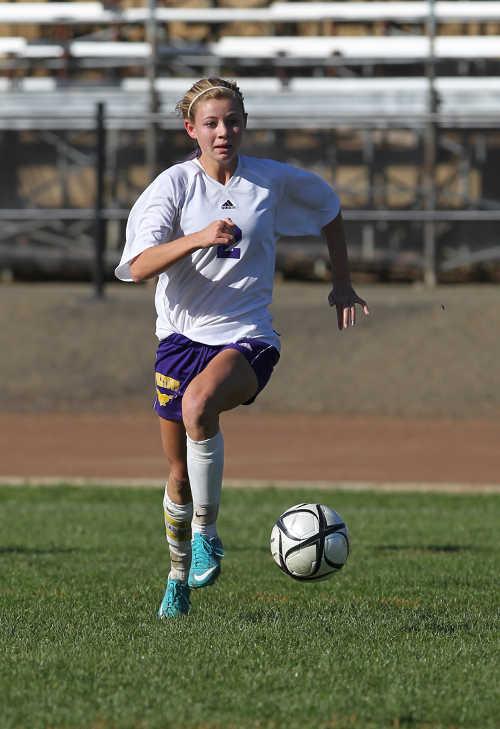
LAKEPORT, Calif. – After an undefeated regular season, Middletown High School’s girls soccer team ran through the North Coast Section Division 3 tournament with wins over Saint Helena and Cloverdale, and then earned the championship crown with a 2-0 victory over the Sonoma Academy Coyotes Saturday afternoon at Clear Lake High School.
As coach Lee Hoage expected, it was a tough battle – quite a different story from when Middletown beat the same team 6-1 two months before.
“They had a passing sequence and a game plan and they executed pretty well, had some speed up there at the top,” Hoage said. “You know they were going to be bringing everything at us. Our defense came up huge and our keeper (Jessie Flynn) came up huge, it could have gone either way there, just back and forth until one team scores, then it just kinda takes the wind out of the sails.”
Hoage added, “I knew there weren’t going to be a lot of opportunities, so I told them on a cross, or you’re in the box, you’d better take advantage of that, you’ve got to be hungry to finish and play super-aggressive when the ball’s down there. In the first half it didn’t seem like we had that energy.”
Both teams hit the crossbar with shots in the opening minutes and had other chances, but it wasn’t until 14 minutes into the second half that Middletown’s leading scorer, junior Hanna Diaz, scored that critical first goal. Ten minutes later, freshman Kaleigh Alves’ shot made it 2-0.
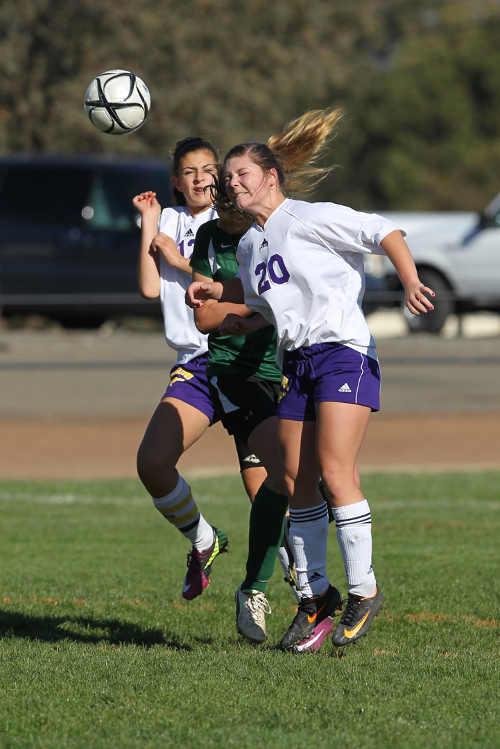
After the game, Diaz said, “Ashley Hart led to my scoring that goal. She’s assisted me all season long; I’ve probably had ten goals off of her throws and passes.”
And then, commenting on what gave Middletown the edge, she added: “We wanted it so much. They wanted it too, but we just wanted it so much more. It’s our first time making it to the finals and we wanted it.”
Diaz was honored by the Santa Rosa Press-Democrat as the Empire small school player of the year last year, and she has a great chance to repeat that honor.
Gone to graduation will be seniors Maria Castaldo, Maddie Kucer (named to the Press-Democrat’s small school all-Empire first team last year), Kelly Wilkinson (Press-Democrat second team last year), Emily Reed, and Alicia Solomon.
Despite these losses, Middletown will return a talented squad to defend their championship next year.
LAKE COUNTY, Calif. – The Lake County animal shelter has a full house of wonderful cats of all ages and varieties – mostly tabbies – ready for new homes this week.
All of them have been spayed or neutered, have had their shots and are ready to join your home.
Cats that are adopted from Lake County Animal Care and Control are either neutered or spayed and microchipped before being released to their new owner. License fees do not apply to residents of the cities of Lakeport or Clearlake.
If you're looking for a new companion, visit the shelter. There are many great pets there, hoping you'll choose them.
The following cats at the Lake County Animal Care and Control shelter have been cleared for adoption (other cats pictured on the animal control Web site that are not listed here are still “on hold”).
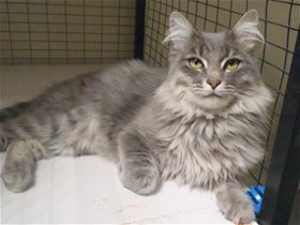
Gray male tabby
This handsome gray male tabby is 2 years old.
He has a fluffy medium-length coat, weighs nearly 9 pounds and has been neutered, so he’s all ready to join a new home.
Find him in cat room kennel No. 11a, ID No. 34357.
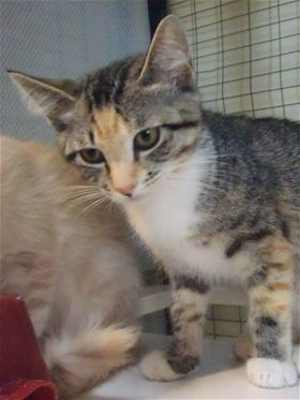
Female torbie kitten
This female kitten is 4 months old.
She has a short torbie-colored coat and gold eyes, weighs 3.6 pounds and has been spayed.
Find her in cat room kennel No. 20a, ID No. 34743.
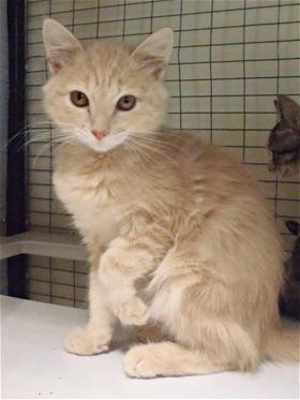
Buff-colored female kitten
This female buff-colored kitten is 4 months old.
She has a long coat, weighs 2.6 pounds and has been spayed.
Find her in cat room kennel No. 20c, ID No. 34792.
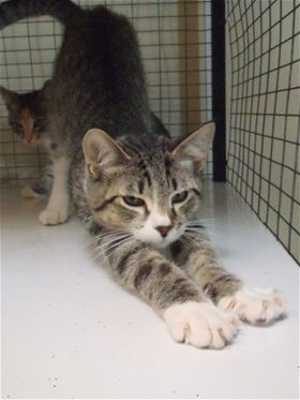
Gray tabby kitten
This gray tabby kitten is 4 months old.
He has green eyes, a short coat, weighs 3.6 pounds and has been neutered.
He’s in cat room kennel No. 20d, ID No. 34746.
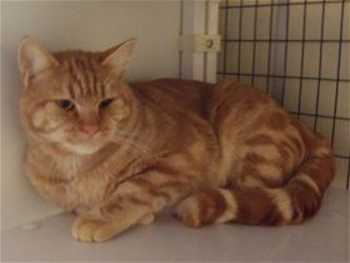
Male orange tabby
This male orange tabby is 1 year old.
He has a short coat, big green eyes and weighs 9.6 pounds. He has been neutered.
Find him in cat room kennel No. 24, ID No. 34782.
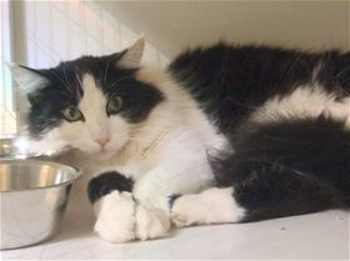
Domestic long hair mix
This black and white female domestic long hair mix cat is 3 years old.
She has green eyes, is of medium size and has been spayed.
She’s in cat room kennel No. 52, ID No. 34632.
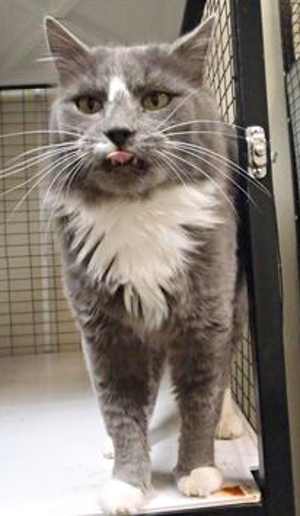
Gray and white domestic long hair
This male domestic long hair mix is 1 year old.
He has green eyes and is a smaller-sized cat. He has been neutered.
Find him in cat room kennel No. 54, ID No. 34655.
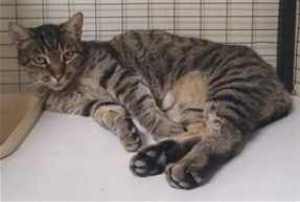
Gray female tabby
This female gray tabby is 4 years old.
She has a short cat, is quite friendly and personable, and has been spayed.
She’s in cat room kennel No. 63, ID No. 34571.
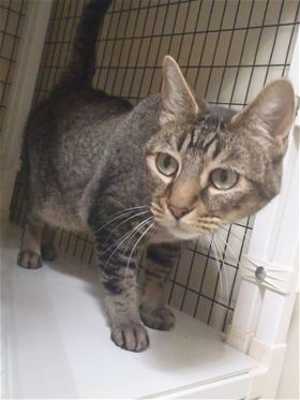
Male gray tabby
This male gray tabby is 1 year old.
He has a short coat and green eyes, and has been neutered.
He’s in cat room kennel No. 100, ID No. 34479.
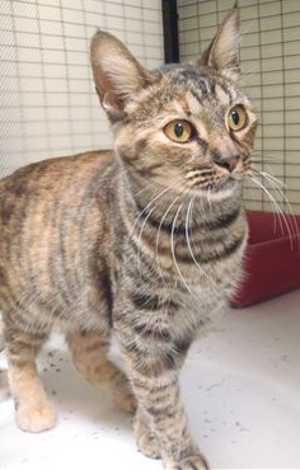
Female torbie
This female torbie is 3 years old.
She has gold eyes, a short coat and weighs 5 pounds. She has been spayed.
Find her in cat room kennel No. 105, ID No. 34742.
Adoptable cats also can be seen at http://www.co.lake.ca.us/Government/Directory/Animal_Care_And_Control/Adopt/Cats_and_Kittens.htm or at www.petfinder.com .
Please note: Cats listed at the shelter's Web page that are said to be “on hold” are not yet cleared for adoption.
To fill out an adoption application online visit http://www.co.lake.ca.us/Government/Directory/Animal_Care_And_Control/Adopt/Dog___Cat_Adoption_Application.htm .
Lake County Animal Care and Control is located at 4949 Helbush in Lakeport, next to the Hill Road Correctional Facility.
Office hours are Monday through Friday, 8 a.m. to 5 p.m., and 1 p.m. to 3 p.m., Saturday. The shelter is open from 10:30 a.m. to 4:30 p.m. Monday through Friday and on Saturday from 1 p.m. to 3 p.m.
Visit the shelter online at http://www.co.lake.ca.us/Government/Directory/Animal_Care_And_Control.htm .
For more information call Lake County Animal Care and Control at 707-263-0278.
Email Elizabeth Larson at
LAKEPORT, Calif. – The men and women who educate and inspire the county’s children were recognized at a special event held last weekend in Lakeport.
The celebration was the 18th annual Lake County Teacher of the Year and Excellence in Education Award Program, held Saturday, Nov. 3, at the Soper-Reese Community Theatre in Lakeport.
Also featured were performances by some of the young people who have benefited from these local teachers, including an original monologue about bullying by Upper Lake High School senior, Jamie Henry; Middletown High School senior Jacob Gill, who played “Blackbird” by the Beatles; and Lower Lake High School senior Jade Holling, who sang, “Do I Make You Proud.”
While the evening celebrated individual achievement, it also recognized the greater effort to educate that involves the gifts of many.
“No one here tonight will be recognized because they stood alone,” said master of ceremonies Doug Rhoades.
Professor Allen Franz of Marymount College, soon to open its third campus at the Lucerne Hotel, noted, “This is a night to celebrate what we have in common,” adding that teachers are some of the most important people in our society.
He recognized Lake County Superintendent of Schools Wally Holbrook for his efforts to expand educational opportunities from kindergarten through all four years of college.
Marymount – the first four-year college to have a campus in Lake County – is the missing piece, Franz said. “This is a real privilege for Marymount to have this opportunity.”
He said they can see a brighter day in the smiles of children and students of all ages. “Education is a vital mission in our society at all times,” Franz said.
Like Rhoades, Franz said that bus drivers, secretaries, janitors, maintenance people and other classified employees are just as important as teachers in achieving the mission of educating children.
Classified employees honored
The first honorees recognized during the evening celebration were classified employees of the year for each of the county’s school districts.
Kelseyville Unified Superintendent Dave McQueen said the district’s classified employee of the year, Deanna Goff, is “always there for the kids.”
Goff works as a kitchen aide at Kelseyville High School. McQueen said she has a willing heart and total dedication to her work on behalf of children.
Konocti Unified Superintendent Donna Becnel honored educational support Holly Ingalls by explaining, “Whatever you need, she is there to give you a hand.”
Ingalls, an educational support paraprofessional at Lower Lake High School, is the district’s loudest athletic fan. She’s versatile and responsible, is the first staffer there and usually works late, and loves the children, especially the difficult ones, Becnel said.
Dave Norris, Lakeport Unified’s transportation, operations and maintenance director, praised Clear Lake High School head custodian Dan Swaney for his expertise, flexibility, skill and work ethic.
Swaney keeps the high school spotless, always has a tool in hand to work on one project or another, and is one of the finest head custodians the district has had, Norris said.
Veronica McGee, a bilingual paraprofessional and translator at Minnie Cannon Elementary School, was honored for being a community leader in her own right, said Middletown Unified Superintendent Korby Olson.
McGee – known for her smiling demeanor – is both dedicated and professional, Olson said.
Shelly Mascari of the Lake County Office of Education presented Sarah Brucker, the 2012 Early Childhood Educator of the Year and the Leading the Field Award recipient.
Mascari said Brucker truly embodies a great childhood educator, and noted it’s a pleasure to work with her.
Unable to attend was Pat McBride, Upper Lake High’s director of maintenance and classified employee of the year.
McBride’s retirement in June left a hole in the staff that’s hard to fill, according to Upper Lake High Principal and Superintendent Pat Iaccino.
High praise for excellent teachers
Also unable to attend the celebration was Matthew Carpenter, Kelseyville Unified’s teacher of the year. Carpenter teaches English at Kelseyville High School.
April Leiferman of Konocti Unified School District brought to the stage Marlene Henry, the district’s teacher of the year.
“I have been waiting for this moment for decades,” said Leiferman, who was happy to honor Henry, who is known for pushing compliments to others.
Henry, she said, has a boundless capacity to love other peoples’ children, purchasing Christmas presents for children whose family circumstances might not have them receiving anything at the holidays.
She also has immense patience, and she spent a year working closely with a child in foster care who had violent propensities. Henry gave up her lunch hours to stay with the child, holding his hand everywhere they went around the school grounds.
For those who work with her, “She is the teacher of our career,” said Leiferman, and for the children who she teachers, she’s the teacher of their lifetime.
Jill Falconer, principal of Terrace Middle School, presented district teacher of the year Stacy Holland, who she called the most amazing teacher on her staff.
Holland has a quiet, humble demeanor, loves her students, arrives early in the morning and works weekends, Falconer said.
“Terrace School is lucky to have her,” Falconer said of Holland.
Upper Lake Middle School Principal Tony Loumena presented teacher Valerie Duncan, who has taught for 30 years.
He said she remains a lifelong learner, is passionate about history – she traveled to Egypt to learn more about that country’s history in order to better teach her students – and always is first in line to mentor new teachers.
“Valerie is rarely off her game,” Loumena said.
Iaccino presented teacher Teresa Dunne, who teaches math to at-risk students.
Dunne came to teaching only recently after having been a business professional, he said.
She successfully wrote a grant this year to expand the offerings of her senior math class, and he said students are amazed by what real math is.
Holbrook presented the inaugural Champion for Education Award to Wilda Shock, who worked on the Lucerne Hotel Education Task Force and also is involved with local literacy efforts.
‘It takes effort’
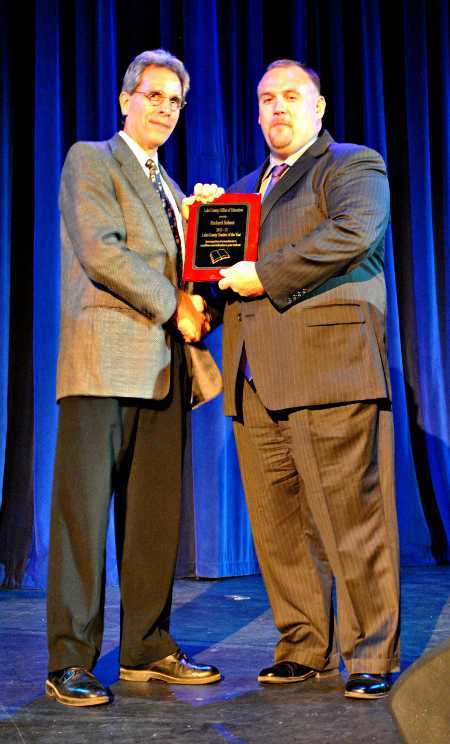
The final honoree of the evening was Lake County Teacher of the Year Richard Schaut, presented by Middletown High School Principal Bill Roderick.
Before Schaut and Roderick came up on stage, Gill played his rendition of “Blackbird” in honor of Schaut, his English teacher.
“He continues to inspire me every day in class,” the teen said.
Schaut, who grew up in the Midwest, started his teaching career 30 years ago in Compton, after graduating from UCLA, Roderick said.
Roderick said Schaut’s classroom usually has music playing, and class may start inside our outside on the school grounds, but what matters most is where it ends.
“He stretches the kids, makes them think,” Roderick said.
Ninety percent of the students who come back to visit the school talk about Schaut, according to Roderick.
Schaut thanked everyone. “It’s been a kick.”
Twenty years ago Schaut was injured and told he would never work again. But he beat that prediction.
One of the most important lessons he teaches is, “You can do it, but it takes effort,” Schaut said.
He said he was humbled after hearing all of the speeches.
For every teacher there, he said there are many more unrecognized who are doing important work.
“The classroom is this really, really special place,” where the past and present gets handed to the future, Schaut said.
Email Elizabeth Larson at
The more time it takes for an earthquake fault to heal, the faster the shake it will produce when it finally ruptures, according to a new study by engineers at the University of California, Berkeley, who conducted their work using a tabletop model of a quake fault.
“The high frequency waves of an earthquake – the kind that produces the rapid jolts – are not well understood because they are more difficult to measure and more difficult to model,” said study lead author Gregory McLaskey, a former UC Berkeley Ph.D. student in civil and environmental engineering. “But those high frequency waves are what matter most when it comes to bringing down buildings, roads and bridges, so it’s important for us to understand them.”
While the study, published in the Nov. 1 issue of the journal Nature and funded by the National Science Foundation, does nothing to bring scientists closer to predicting when the next big one will hit, the findings could help engineers better assess the vulnerabilities of buildings, bridges and other structures when a fault does rupture.
“The experiment in our lab allows us to consider how long a fault has healed and more accurately predict the type of shaking that would occur when it ruptures,” said Steven Glaser, UC Berkeley professor of civil and environmental engineering and principal investigator of the study. “That’s important in improving building designs and developing plans to mitigate for possible damage.”
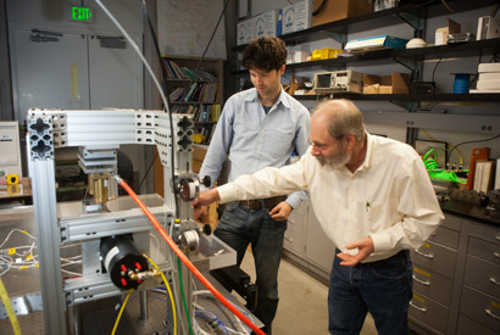
To create a fault model, the researchers placed a Plexiglas slider block against a larger base plate and equipped the system with sensors. The design allowed the researchers to isolate the physical and mechanical factors, such as friction, that influence how the ground will shake when a fault ruptures.
It would be impossible to do such a detailed study on faults that lie several miles below the surface of the ground, the authors said. And current instruments are generally unable to accurately measure waves at frequencies higher than approximately 100 Hertz because they get absorbed by the earth.
“There are many people studying the properties of friction in the lab, and there are many others studying the ground motion of earthquakes in the field by measuring the waves generated when a fault ruptures,” said McLaskey. “What this study does for the first time is link those two phenomena. It’s the first clear comparison between real earthquakes and lab quakes.”
Noting that fault surfaces are not smooth, the researchers roughened the surface of the Plexiglas used in the lab’s model.
“It’s like putting two mountain ranges together, and only the tallest peaks are touching,” said McLaskey, who is now a postdoctoral researcher with the U.S. Geological Survey in Menlo Park.
As the sides “heal” and press together, the researchers found that individual contact points slip and transfer the resulting energy to other contact points.
“As the pressing continues and more contacts slip, the stress is transferred to other contact points in a chain reaction until even the strongest contacts fail, releasing the stored energy as an earthquake,” said Glaser. “The longer the fault healed before rupture, the more rapidly the surface vibrated.”
“It is elegant work,” said seismologist John Vidale, a professor at the University of Washington who was not associated with the study. “The point that more healed faults can be more destructive is dismaying. It may not be enough to locate faults to assess danger, but rather knowing their history, which is often unknowable, that is key to fully assessing their threat.”
Glaser and McLaskey teamed up with Amanda Thomas, a UC Berkeley graduate student in earth and planetary sciences, and Robert Nadeau, a research scientist at the Berkeley Seismological Laboratory, to confirm that their lab scenarios played out in the field.
The researchers used records of repeating earthquakes along the San Andreas fault that Nadeau developed and maintained. The data were from Parkfield, Calif., an area which has experienced a series of magnitude 6 earthquakes two to three decades apart over the past 150 years.
Thomas and McLaskey explored the records of very small, otherwise identically repeating earthquakes at Parkfield to show that the quakes produced shaking patterns that changed depending on the time span since the last event, just as predicted by the lab experiments.
In the years after a magnitude 6.0 earthquake hit Parkfield in 2004, the small repeating earthquakes recurred more frequently on the same fault patches.
“Immediately after the 2004 Parkfield earthquake, many nearby earthquakes that normally recurred months or years apart instead repeated once every few days before decaying back to their normal rates,” said Thomas. “Measurements of the ground motion generated from each of the small earthquakes confirmed that the shaking is faster when the time from the last rupture increases. This provided an excellent opportunity to verify that ground motions observed on natural faults are similar to those observed in the laboratory, suggesting that a common underlying mechanism – fault healing – may be responsible for both.”
Understanding how forcefully the ground will move when an earthquake hits has been one of the biggest challenges in earthquake science.
“What makes this study special is the combination of lab work and observations in the field,” added Roland Burgmann, a UC Berkeley professor of earth and planetary sciences who reviewed the study but did not participate in the research. “This study tells us something fundamental about how earthquake faults evolve. And the study suggests that, in fact, the lab setting is able to capture some of those processes correctly.”
Glaser said the next steps in his lab involve measuring the seismic energy that comes from the movement of the individual contact points in the model fault to more precisely map the distribution of stress and how it changes in the run-up to a laboratory earthquake event.
Sarah Yang writes for the UC Berkeley News Center.
LAKEPORT, Calif. – The county’s animal shelter has a full house of dogs this week needing loving homes.
Chihuahuas, lab and shepherd mixes, pit bulls, a Shiba Inu and a springer spaniel puppy all are available for adoption.
Thanks to Lake County Animal Care and Control’s new veterinary clinic, many of the animals offered for adoption already are spayed or neutered and ready to go home with their new families.
Dogs that are adopted from Lake County Animal Care and Control are either neutered or spayed, microchipped and, if old enough, given a rabies shot and county license before being released to their new owner. License fees do not apply to residents of the cities of Lakeport or Clearlake.
If you're looking for a new companion, visit the shelter. There are many great pets hoping you'll choose them.
The following dogs at the Lake County Animal Care and Control shelter have been cleared for adoption (additional dogs on the animal control Web site not listed are still “on hold”).

Male springer spaniel mix puppy
Another of the springer spaniel mix litter, this male pup is 8 weeks old.
He weighs 5.2 pounds, has a brown and white coat, blue eyes and floppy ears, and he has been neutered.
He’s in kennel No. 3c, ID No. 34689.
Male Chihuahua mix
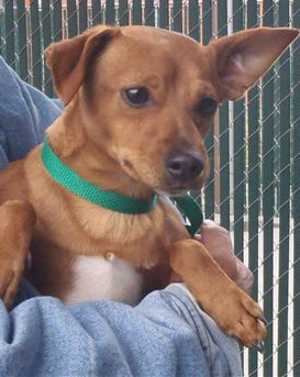
This male Chihuahua mix is 3 years old.
He has a short red coat, weighs 18.6 pounds and has been neutered.
Find him in kennel No. 9, ID No. 34724.
Male husky mix
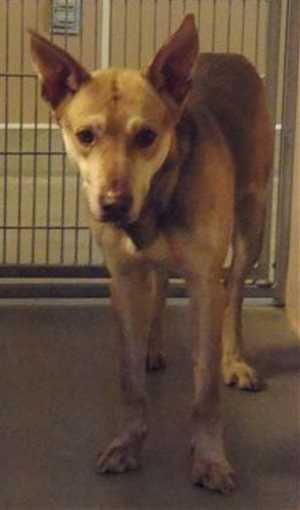
This 4 and a half year old male husky mix would like a new home, preferably not one with livestock.
He has gold eyes and erect ears, a short red and tan coat. He has been altered and weighs 56 pounds.
He's in kennel No. 11, ID No. 32738.

Shiba Inu mix
This male Shiba Inu mix is 15 weeks old.
He has a short red coat, brown eyes and erect ears, and weighs 8.6 pounds. He has been neutered.
Find him in kennel No. 13, ID No. 34783.
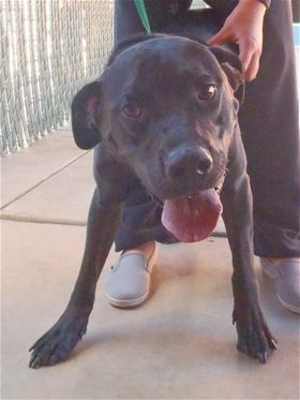
‘Moose’
“Moose” is a 3-year-old Labrador Retriever mix.
He has a short black coat, weighs 66 pounds and has been neutered.
He’s in kennel No. 16, ID No. 34643.
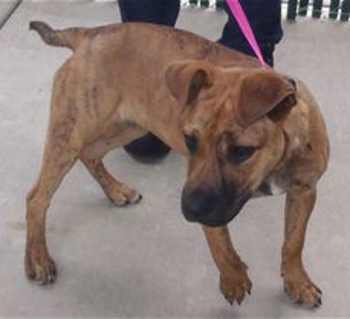
Female pit bull terrier mix
This female pit bull terrier mix is 4 months old.
She has a short brown coat and has not been altered.
She’s in kennel No. 19b, ID No. 34754.
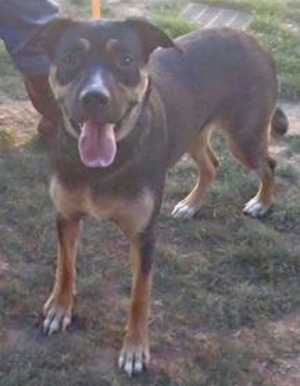
Female shepherd mix
This female shepherd mix is 1 year old.
She has brown eyes and floppy years, and a short black and brown coat. Shelter staff did not report if she had been spayed.
Find her in kennel No. 20, ID No. 34623.
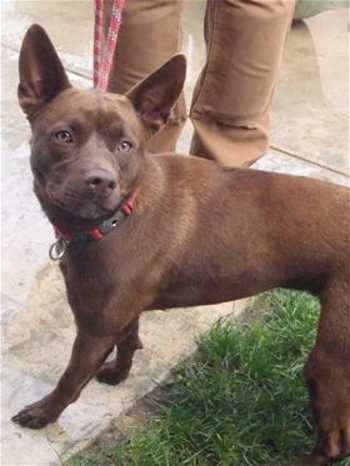
Female cattle dog mix
This female cattle dog mix is 1 year old.
She has a short brown coat, floppy ears and brown eyes, and weighs 39 pounds. She has been spayed.
Shelter staff said she is a jumper (she can top a 6-foot fence) and loves tennis balls.
She’s in kennel No. 24, ID No. 34758.
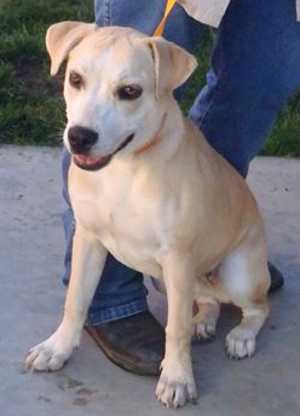
Female shepherd mix
This female shepherd mix is 8 months old.
She has a short fawn-colored coat, gold eyes and floppy ears, weighs nearly 39 pounds and has been spayed.
She’s in kennel No. 25, ID No. 34806.
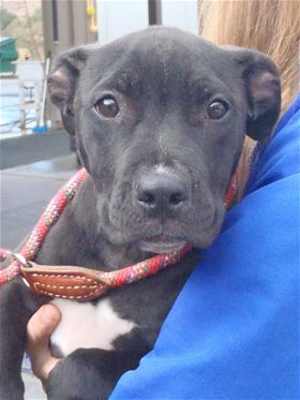
Female pit bull terrier mix
This female pit bull terrier mix is 14 weeks old.
She has a short black coat and floppy ears. Shelter staff did not report if she had been altered.
Find her in kennel No. 27, ID No. 34761.

Male Chihuahua mix
This male Chihuahua mix is 5 years old.
He weighs 9.4 pounds, has a short brown coat and has been altered.
He is in kennel No. 28b, ID No. 34777.
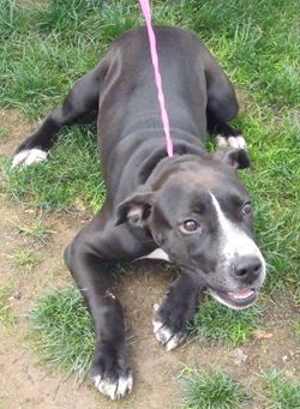
Female pit bull terrier mix
This female pit bull terrier mix is 4 months old.
She has a short black coat, has floppy ears and has not yet been spayed.
She’s in kennel No. 29, ID No. 34753.
Please note: Dogs listed at the shelter's Web page that are said to be “on hold” are not yet cleared for adoption.
To fill out an adoption application online visit http://www.co.lake.ca.us/Government/Directory/Animal_Care_And_Control/Adopt/Dog___Cat_Adoption_Application.htm .
Lake County Animal Care and Control is located at 4949 Helbush in Lakeport, next to the Hill Road Correctional Facility.
Office hours are Monday through Friday, 8 a.m. to 5 p.m., and 1 p.m. to 3 p.m., Saturday. The shelter is open from 10:30 a.m. to 4:30 p.m. Monday through Friday and on Saturday from 1 p.m. to 3 p.m.
Visit the shelter online at http://www.co.lake.ca.us/Government/Directory/Animal_Care_And_Control.htm .
For more information call Lake County Animal Care and Control at 707-263-0278.
Email Elizabeth Larson at