 How to resolve AdBlock issue?
News
Lake County Watershed Protection District to host Clear Lake Integrated Science Symposium Aug. 15-16
The Clear Lake Integrated Science Symposium, or CLISS 2024, will be the first scientific conference to focus on the Clear Lake watershed in more than two and a half decades.
The last dedicated Clear Lake conference in Lake County occurred in 1998.
CLISS 2024 will take place Aug. 15 and 16 at the Robinson Rancheria Conference Center, and feature researchers and practitioners from federal, state, county, and tribal agencies and nonprofit organizations.
This historic symposium will cover the latest developments in water quality monitoring, lake and lakebed management, and conservation and restoration efforts in the Clear Lake Watershed.
Attendees will gain unique insights into ongoing scientific research on issues that deeply concern all county residents: the risks associated with hazardous algal (cyanobacteria) blooms, changes to Clear Lake fish populations, how to get waterway projects approved through local and state permitting processes, the potential for volcanic eruptions, and mitigation strategies for Clear Lake.
While in-person attendance is limited to 250 participants, all sessions will be video-recorded and made available for future viewing on the Lake County Water Resources Department’s YouTube channel. Some portions will likewise be available for remote Zoom Webinar access.
Geneva Thompson, deputy secretary for tribal affairs at the California Natural Resources Agency, will kick off the event with a keynote address.
Thursday morning’s panel sessions will focus on an overview of $13 million in funding allocated by the Blue Ribbon Committee for the Rehabilitation of Clear Lake since 2021 for projects ranging from watershed, lake, and mercury modeling to carp management and environmental education.
Friday morning panels will feature local and state experts discussing fish and waterfowl population trends and changes in Clear Lake, and efforts to prevent and mitigate the negative effects of invasive species like goldfish, invasive mussels, and creeping yellow water primrose.
During afternoon sessions held simultaneously at the Robinson Rancheria Conference Center and the Habematolel Meeting Hall in Upper Lake, scientists and agency staff will cover in-lake, lakeside, landscape and waterway improvement and restoration projects (including “good fire,” or cultural burning), environmental permitting, local geology and stewardship efforts, Clear Lake water quality monitoring and modeling of lake parameters including nutrient loads, depths and currents.
To enhance public engagement with scientists, the symposium is also offering evening programming: a poster session, mixer and reception on Thursday in the Robinson Rancheria Conference Center, the debut of a new documentary film, “Big Lake, Big Science,” and a Science Slam on Friday night at the Soper Reese Theater in downtown Lakeport.
Friday evening’s activities at the Soper Reese Theater are open to families. Accommodations are available for attendees with access and functional needs.
Thanks to over a dozen sponsors including, but not limited to, the Lake County Watershed Protection District, the county of Lake, Yolo County Flood Control and Water Conservation District, Westside Sac Integrated Water Management Plan Committee and the software platform Ex Ordo. Symposium attendance is free with pre-registration on EventBrite.
For any inquiries regarding this update, please contact the Water Resources Department at 707-263-2344 or email at
For more information, please visit the event website: https://www.lakecountyca.gov/1662/Clear-Lake-Integrated-Science-Symposium-.
Links to registration, facebook / social media pages, and Volunteer Registration are available here: https://www.lakecountyca.gov/1662/Clear-Lake-Integrated-Science-Symposium-.
On Thursday, Senate Republicans blocked the consideration and passage of the Tax Relief for American Families and Workers Act, or H.R. 7024, a bipartisan, comprehensive tax legislation containing Rep. Mike Thompson’s disaster tax relief legislation for wildfire victims.
“In the years since the devastating PG&E wildfires in our community, I haven’t met a single person on either side of the aisle who believes it’s right to tax victims on the settlement money meant to help them rebuild their lives. Survivors have been through enough,” said Thompson (CA-04), Ranking Member of the House Ways & Means Subcommittee on Tax.
“While no victim can ever be made truly whole after losing loved ones and cherished belongings, Congress has a responsibility to ensure disaster victims are not taxed on their settlements and to retroactively provide relief for those who have already been unfairly forced to pay. That’s why I co-led an historic petition in the House of Representatives this Spring to force a House vote on my disaster tax relief legislation for a second time and pressure the Senate to act,” Thompson said.
He added, “I’m deeply disappointed that all but three Senate Republicans voted to block the consideration and passage of the bipartisan, comprehensive tax legislation containing my disaster tax relief bill today. I remain determined to deliver this relief to fire survivors and I will never quit working to make this relief a reality. It’s time Senate Republicans step up and help pass my standalone disaster tax bill for victims.”
The bipartisan, comprehensive tax legislation voted on Thursday by the Senate contains Rep. Thompson’s disaster tax relief legislation and passed in the House on Jan. 31 with a strong bipartisan vote of 357 to 70.
In addition to the bipartisan, comprehensive tax legislation, Rep. Thompson co-led an effort with Rep. Greg Steube (FL-17) in May to successfully advance a discharge petition which forced House Speaker Mike Johnson to bring their standalone disaster tax relief legislation, H.R. 5863, the Federal Disaster Tax Relief Act, to the House floor for a vote.
The historic advancement of Rep Thompson and Rep. Steube’s petition marked only the third time a House discharge petition has succeeded in the 21st Century. H.R. 5863 passed the House on May 22 with a strong bipartisan vote of 382 to 7. The Senate has yet to consider or vote on this legislation.
Rep. Thompson has urged Senate leaders Schumer, McConnell, Wyden and Crapo to bring the Federal Disaster Tax Relief Act up for a vote immediately.
“In the years since the devastating PG&E wildfires in our community, I haven’t met a single person on either side of the aisle who believes it’s right to tax victims on the settlement money meant to help them rebuild their lives. Survivors have been through enough,” said Thompson (CA-04), Ranking Member of the House Ways & Means Subcommittee on Tax.
“While no victim can ever be made truly whole after losing loved ones and cherished belongings, Congress has a responsibility to ensure disaster victims are not taxed on their settlements and to retroactively provide relief for those who have already been unfairly forced to pay. That’s why I co-led an historic petition in the House of Representatives this Spring to force a House vote on my disaster tax relief legislation for a second time and pressure the Senate to act,” Thompson said.
He added, “I’m deeply disappointed that all but three Senate Republicans voted to block the consideration and passage of the bipartisan, comprehensive tax legislation containing my disaster tax relief bill today. I remain determined to deliver this relief to fire survivors and I will never quit working to make this relief a reality. It’s time Senate Republicans step up and help pass my standalone disaster tax bill for victims.”
The bipartisan, comprehensive tax legislation voted on Thursday by the Senate contains Rep. Thompson’s disaster tax relief legislation and passed in the House on Jan. 31 with a strong bipartisan vote of 357 to 70.
In addition to the bipartisan, comprehensive tax legislation, Rep. Thompson co-led an effort with Rep. Greg Steube (FL-17) in May to successfully advance a discharge petition which forced House Speaker Mike Johnson to bring their standalone disaster tax relief legislation, H.R. 5863, the Federal Disaster Tax Relief Act, to the House floor for a vote.
The historic advancement of Rep Thompson and Rep. Steube’s petition marked only the third time a House discharge petition has succeeded in the 21st Century. H.R. 5863 passed the House on May 22 with a strong bipartisan vote of 382 to 7. The Senate has yet to consider or vote on this legislation.
Rep. Thompson has urged Senate leaders Schumer, McConnell, Wyden and Crapo to bring the Federal Disaster Tax Relief Act up for a vote immediately.

The California Department of Fish and Wildlife’s Wildlife Officer Academy graduated and pinned badges on 54 new officers in Paradise in Butte County on Thursday.
This group represents the largest academy graduating class in CDFW history.
The academy is certified by California Peace Officer Standards and Training, or POST, and offers training consistent with every law enforcement agency in California.
In 2008, CDFW partnered with Butte College to provide peace officer academy training for prospective wildlife officers.
The college provides CDFW with a state-of-the-art POST-certified academy facility with nearly 50 years of police training history.
“One of the best days of the year for us is adding a graduating class of wildlife officers to CDFW’s Law Enforcement Division,” said Nathaniel Arnold, CDFW deputy director and chief of law enforcement. “It is a pleasure to see 54 eager new officers ready to support our mission to protect California’s natural resources and provide public safety through effective and responsive law enforcement.”
The newly sworn peace officers will soon begin a field training program where they will apply their academy training under the immediate supervision of seasoned field training officers.
Field training with experienced field training officers, or FTOs, is also mandated by POST to ensure new wildlife officers can apply the skills they learned during the academy to real life circumstances.
FTO is the final stage of formal training. Upon successful completion, these officers will begin patrolling California to protect the natural resources of the state.
The wildlife officers will be deployed across the Law Enforcement Division’s programs: regular patrol, marine enforcement, investigation of petroleum spills and response, and cannabis enforcement, to name a few.
The Law Enforcement Division is hiring. For more information about becoming a wildlife officer, visit https://wildlife.ca.gov/Enforcement.

REDDING, Calif. — Completed in April, the Redding Air Attack Base was revamped to simultaneously load up to five tankers, doubling aerial firefighting capabilities across the Western United States.
Fast forward three months to a very busy fire season, and the expanded base is already paying dividends.
“Saturday [July 27, 2024] was the air base’s biggest push yet. Crews loaded 240,638 gallons of fire retardant in about an 8-hour period. That’s 76,000 gallons more than previous records,” said Kelly Mathis, Redding Tanker Base manager for the USDA Forest Service.
Redding Air Attack Base, also known as RAAB, can now simultaneously service five large air tankers — which carry 2,000 to 4,000 gallons of fire retardant or water each.
Crews can fill these in roughly 12 minutes, and smaller 1,000-gallon air tankers in just three minutes.
In addition, a backup generator capable of powering the entire base provides zero power interruption in the event of a power outage, providing nonstop aerial resources for wildfire attack.
And Saturday was a testament to the increased capabilities these upgrades have provided.
“We loaded over 200,000 gallons of retardant onto 12 tankers in roughly eight hours. Had the pressing need not moved south, we would have continued to break records that day,” said RAAB Forest Technician Jaff Engelkes. “Being able to provide support to the troops on the ground has exponentially increased. The capacity to produce, load and send more aircraft and the increased safety for aircraft in and out of the base gives us the ability to provide support as wildfire activity continues to grow.”
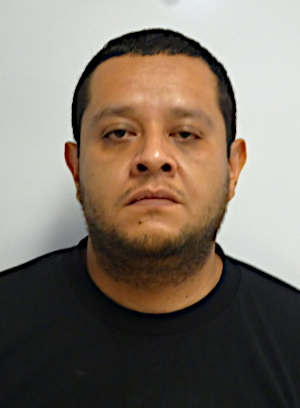
LAKE COUNTY, Calif. — Authorities said Thursday that a Lake County Code Enforcement officer has been arrested in a case involving bribery, extortion and grand theft.
Antonio Chavez Anguiano, 36, of Clearlake, was arrested on Wednesday afternoon.
He was booked into the Hill Road Correctional Facility on felony charges of extortion, soliciting/accepting a bribe and grand theft, and misdemeanor possession of marijuana for sale, the Lake County Sheriff’s Office reported.
Chavez Anguiano, whose jail booking sheet listed him as a Code Enforcement employee, remained in custody on Thursday pending a bail source hearing, the sheriff’s office said.
He is due to appear in court for arraignment on Friday, based on jail records.
In a statement released Thursday morning, Community Development Director Mireya Turner, whose department includes Code Enforcement, said the Community Development Department recently received notification of illegal activity allegedly engaged in by a staff member.
“We immediately notified the Lake County Sheriff’s Office and provided all relevant information,” Turner said, adding that Chavez Anguiano was arrested on Wednesday for felony bribery charges following “an urgent and thorough investigation.”
Lake County Sheriff’s Office spokeswoman Lauren Berlinn confirmed in a Thursday afternoon statement that the Community Development Department notified the sheriff's office “of illegal activity allegedly engaged in by a member of their staff.”
Berlinn said sheriff’s deputies began an investigation and executed a search warrant at Chavez Anguiano’s residence, recovering approximately $19,000 in cash and 35 pounds of processed marijuana, which led to his Wednesday arrest.
Berlinn told Lake County News that the sheriff’s office had at least two prior contacts with Chavez Anguiano going back to the early 2000s.
Lake County Superior Court records four traffic infraction cases between August 2010 and June 2023 that appear to have involved Chavez Anguiano.
“Public trust is a privilege that must be protected, and there are no higher priorities to Community Development leadership than the integrity of our staff and ethical conduct of our work. All appropriate protocols have and will continue to be followed in response to this occurrence. We do not tolerate illegal activity of any kind, and will fully support law enforcement’s efforts to bring justice in this unfortunate situation. The diligence of Lake County Sheriff’s Office personnel, and their support in reviewing and investigating this matter, are greatly appreciated,” Turner said in her Thursday morning statement.
Among other responsibilities, Code Enforcement has been tasked with enforcing the county’s cannabis rules and regulations and ensuring compliance by permitted growers.
So far, county officials have not answered questions about whether this case specifically involved cannabis growers in the county’s program, with the seizure of the processed marijuana suggesting a connection.
Turner said no further public comment would be provided at this time, and Berlinn also would not discuss further details of the case due to the ongoing investigation.
Transparent California, a pay and pension database of public employees in California, shows Chavez Anguiano as having worked as a Lake County Code Enforcement officer in both 2022 and 2023, with total pay and benefits ranging from $60,667.59 in the first year — which may have been a partial year — and $78,645.11 in the second year.
Chavez Anguiano is not the first Code Enforcement or Community Development employee to be arrested in a high profile criminal case.
Between 2008 and 2015, three employees were arrested on charges ranging from marijuana possession and sales, carrying loaded firearms in public, child cruelty and leading Lakeport Police on a high speed motorcycle chase.
Those arrests took place before Turner’s tenure, which began Aug. 31, 2022.
Berlinn said the sheriff’s office is continuing to work closely with Community Development “to ensure all appropriate protocols are met.”
This investigation is still ongoing, Berlinn said, and anyone with information related to this case is asked to contact Sgt. Dennis Keithly via email,
Email Elizabeth Larson at

LAKE COUNTY, Calif. — A Lucerne man has been ordered to stand trial for homicide in the death of a teenage girl authorities said overdosed on fentanyl he supplied to her.
Following a preliminary hearing last week, Judge J. David Markham ordered Joe Nathan Boggs Jr., 27, to stand trial for the Nov. 10 death of 17-year-old Illeanna Makena Frease.
Chief Deputy District Attorney Rich Watson said Boggs is charged with second degree murder, under a theory of implied malice.
Boggs also is charged with possession for sale of a controlled substance, transportation of a controlled substance for sale and furnishing a controlled substance to a minor. An allegation of great bodily injury was dismissed.
Boggs has remained in custody since his June arrest, with bail remaining at $1 million.
More information continues to be developed in the case.
“It’s still considered an ongoing investigation,” said Det. Jeff Mora of the Lake County Sheriff’s Office.
Mora said they are still encouraging people to come forward if they have information about the case.
Watson said there was a family relationship between Frease and Boggs, but the precise nature of it did not come out at the preliminary hearing.
Frease referred to Boggs as “uncle” and he called her “cousin,” and it’s believed they and other family members were living in the same home in Lucerne, Watson said.
Based on testimony at the preliminary hearing, Watson said Boggs supplied Frease with pills on Nov. 9 after she contacted him through Instagram to ask for them two days earlier. She is believed to have met up with other people to supply them with those pills the same day she received them from Boggs.
Then, early on Nov. 10, she contacted Boggs again seeking drugs, Watson said.
He met her and provided the drugs, and she returned home and was seen taking them. Watson said she died later that morning.
Boggs will return to court for arraignment on Aug. 6, at which time it’s expected that a future trial date may be set.
This is the first case involving charges for homicide for a fentanyl overdose.
However, it isn’t expected to be the last.
“Our Major Crimes Unit does intend on working backwards and locating other cases,” Mora said.
Email Elizabeth Larson at