 How to resolve AdBlock issue?
News
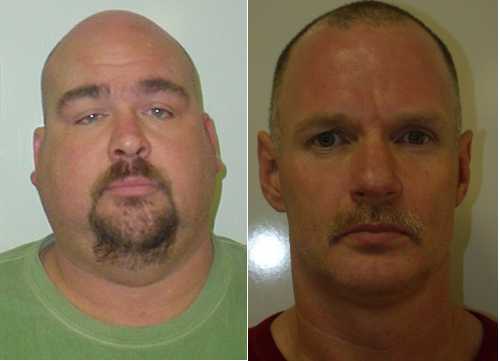
KELSEYVILLE, Calif. – Two local men have been arrested in connection with an assault reported earlier this month.
Leonard Lee Warford, 45, of Lakeport and Raymond Dewey Larson, 44, of Kelseyville were taken into custody separately on charges including robbery and assault, according to Lt. Steve Brooks of the Lake County Sheriff’s Office.
Brooks said that at 6 a.m. Thursday, Jan. 3, sheriff’s deputies responded to the 3500 block of Big Valley Road in Kelseyville for a report of an assault.
The victim reported being assaulted at his place of business by two males who Brooks said were later identified as Larson and Warford.
When deputies arrived they located the victim who had obvious injuries from the assault, Brooks said.
Brooks said the victim told deputies that the suspects entered his business and began beating him, which continued for approximately 10 minutes.
Both suspects were reported to have kicked and struck the victim with their fists as well as striking him with weapons before taking property from the victim’s business, according to Brooks. The men allegedly told the victim that if he reported the incident, he would be dead.
On Monday, Jan. 7, the investigating deputy arrested Warford for robbery and assault with a deadly weapon. Brooks said Warford was transported to the Lake County Hill Road Correctional Facility and booked. His bail was set at $15,000, and jail records indicated that as of Thursday he was no longer in custody.
Brooks said deputies had not been able to locate Larson, who was believed to have fled the area after the incident.
An arrest warrant was issued for Larson for the amount of $100,000, charging him with robbery, assault with a deadly weapon, false imprisonment, theft from a person, burglary and criminal threats, Brooks said.
On Wednesday, a detective with the Lake County Sheriff’s Major Crimes Unit developed information that Larson was in Sonoma County hiding from authorities, Brooks said. The Sonoma County Sheriff’s Office was contacted and provided with the information.
At 5 p.m. Wednesday the Sonoma County Sheriff’s Office was able to locate and arrest Larson on the warrant. He was transported to the Sonoma County Jail and booked.
Lake County Jail records indicated that Larson was booked into that facility Thursday afternoon, with bail set at $100,000.
Jail records show that his court date is set for Jan. 21, with Warford’s set for March 19.

CLEARLAKE, Calif. – A Clearlake Oaks man who walked away from the Lake County Jail’s minimum custody area on Sunday night has been taken back into custody.
David Allen Brown, 22, was arrested in Clearlake Wednesday night, according to Lt. Steve Brooks of the Lake County Sheriff’s Office.
On Wednesday night Lake County Sheriff’s Office patrol deputies contacted officers with the Clearlake Police Department and provided them with information about where Brown might be hiding, Brooks said.
At approximately 11 p.m. Wednesday, deputies and three Clearlake Police officers responded to a residence in the 4000 block of West 40th in the city of Clearlake, where Brown was located and arrested without incident, Brooks said.
Brooks said Brown was transported to the Hill Road Correctional Facility and booked on the charges of escape from custody, which is a felony, and petty theft, which is a misdemeanor.
As a result of state correctional realignment, Brown was in the Lake County Jail serving a four-year sentence for resisting arrest, parole violation, under the influence of a controlled substance, vehicle theft, possession of stolen property and petty theft with prior convictions. He had been due for release this December.
On average, Americans die sooner and experience higher rates of disease and injury than people in other high-income countries, says a new report from the National Research Council and Institute of Medicine.
The report finds that this health disadvantage exists at all ages from birth to age 75 and that even advantaged Americans – those who have health insurance, college educations, higher incomes, and healthy behaviors – appear to be sicker than their peers in other rich nations.
“We were struck by the gravity of these findings,” said Steven H. Woolf, professor of family medicine at Virginia Commonwealth University in Richmond and chair of the panel that wrote the report. “Americans are dying and suffering at rates that we know are unnecessary because people in other high-income countries are living longer lives and enjoying better health. What concerns our panel is why, for decades, we have been slipping behind.”
The report is the first comprehensive look at multiple diseases, injuries, and behaviors across the entire life span, comparing the United States with 16 peer nations – affluent democracies that include Australia, Canada, Japan, and many western European countries.
Among these countries, the U.S. is at or near the bottom in nine key areas of health: infant mortality and low birth weight; injuries and homicides; teenage pregnancies and sexually transmitted infections; prevalence of HIV and AIDS; drug-related deaths; obesity and diabetes; heart disease; chronic lung disease; and disability.
Many of these health conditions disproportionately affect children and adolescents, the report says.
For decades, the U.S. has had the highest infant mortality rate of any high-income country, and it also ranks poorly on premature birth and the proportion of children who live to age 5. U.S. adolescents have higher rates of death from traffic accidents and homicide, the highest rates of teenage pregnancy, and are more likely to acquire sexually transmitted infections.
Nearly two-thirds of the difference in life expectancy between males in the U.S. and these other countries can be attributed to deaths before age 50.
These findings build on a 2011 Research Council report that documented a growing mortality gap among Americans over age 50.
“It’s a tragedy. Our report found that an equally large, if not larger, disadvantage exists among younger Americans,” Woolf said. “I don’t think most parents know that, on average, infants, children, and adolescents in the U.S. die younger and have greater rates of illness and injury than youth in other countries.”
The panel did find that the U.S. outperforms its peers in some areas of health and health-related behavior. People in the U.S. over age 75 live longer, and Americans have lower death rates from stroke and cancer, better control of blood pressure and cholesterol levels, and lower rates of smoking.
Root causes of the problem
This health disadvantage exists even though the U.S. spends more per capita on health care than any other nation. Although documented flaws in the health care system may contribute to poorer health, the panel concluded that many factors are responsible for the nation’s health disadvantage.
The report examines the role of underlying social values and public policies in understanding why the U.S. is outranked by other nations on both health outcomes and the conditions that affect health.
For example, Americans are more likely to engage in certain unhealthy behaviors, from heavy caloric intake to behaviors that increase the risk of fatal injuries, the report says.
The U.S. has relatively high rates of poverty and income inequality and is lagging behind other countries in the education of young people.
However, the panel’s research suggests that the U.S. health disadvantage is not solely a reflection of the serious health disadvantages that are concentrated in the U.S. among poor or uninsured people or ethnic and racial minorities.
Americans still fare worse than people in other countries even when the analysis is limited to non-Hispanic whites and people with relatively high incomes and health insurance, nonsmokers, or people who are not obese.
The report recommends an intensified effort to pursue established national health objectives. It calls for a comprehensive outreach campaign to alert the American public about the U.S. health disadvantage and to stimulate a national discussion about its implications.
In parallel, it recommends data collection and research to better understand the factors responsible for the U.S. disadvantage and potential solutions, including lessons that can be learned from other countries.
“Research is important, but we should not wait for more data before taking action, because we already know what to do. If we fail to act, the disadvantage will continue to worsen and our children will face shorter lives and greater rates of illness than their peers in other rich nations,” Woolf said.
Pledging to work hard despite what he expects will be a difficult process, on Wednesday President Barack Obama introduced a plan to reduce gun violence in the wake of a deadly December school shooting in Connecticut.
In front of an audience that included family members of the victims of the Dec. 14 shooting at Sandy Hook Elementary in Newtown, Conn., Obama signed executive orders initiating 23 separate actions to move the plan forward.
“We can’t put this off any longer,” he said.
He also called on Congress to take action to pass specific proposals right away that will assist with his proposals.
Obama’s actions were spurred by the Newtown shooting, which took the lives of 20 school children and six school staff and faculty.
In introducing the president, Vice President Joe Biden noted that he had “never seen a nation’s conscience so shaken” as the United States’ had been by the Sandy Hook Elementary killings.
Biden and Obama’s cabinet members have been leading the effort to come up with next steps to curb gun violence. In doing so, Biden said they had met with 229 groups.
In a statement reacting to Obama’s plan, the National Rifle Association said keeping children and society safe is its top priority.
“Attacking firearms and ignoring children is not a solution to the crisis we face as a nation. Only honest, law-abiding gun owners will be affected and our children will remain vulnerable to the inevitability of more tragedy,” the group said.
Congressman Mike Thompson, whose district includes the southern portion of Lake County, was appointed last month to chair the House Gun Violence Prevention Task Force.
“The president and our task force agree that we need a comprehensive approach to reduce and prevent gun violence,” Thompson said in a written statement. “Executive action can and should be part of the process, and many of the executive actions announced today will have a positive influence on reducing gun violence. Now it’s time for Congress to step up and do what needs to be done to save lives. Many of the policies that will have the greatest impact on reducing gun violence will require Congressional action.”
Thompson said that during the next several weeks the House Gun Violence Prevention Task Force will examine the president’s proposals and the proposals of others.
“We will continue meeting with stakeholders on every side of this issue. And we will develop a comprehensive set of policy proposals that both respect peoples’ Second Amendment rights and help keep our communities safe from gun violence,” he said.
U.S. Sen. Barbara Boxer (D-CA) said Obama’s “common-sense steps” are a “fitting tribute to the victims of gun violence.”
She added, “The president also rightly called on Congress to do its part to help prevent guns from getting into the hands of the mentally ill and criminals, keep weapons of war and high-capacity magazines off our streets and protect our children while they are at school.”
The plan’s points
Key provisions of Obama’s plan include requiring universal background checks for all gun sales, 40 percent of which don’t have such checks, reinstating the ban on military-style assault weapons and limiting ammunition magazines to 10 rounds.
The president also proposes to create serious punishments for gun trafficking and help communities across the country keep 15,000 cops on the street.
There would also be a return to research on gun violence, including its links to video games and violence in the media, Obama said. “We don’t benefit from ignorance.”
Other important aspects of the plan include making schools safer by putting 1,000 more school resources officers and counselors in schools, and ensuring those schools have emergency plans.
Obama also pledged to improve mental health services, including making sure that students and young adults get the treatment they need.
In his speech Obama said 900 people have died from guns in the month since the Connecticut school shooting.
“Every day we wait, that number will keep growing,” he said.
Obama acknowledged that making the necessary changes will be difficult.
“The only way we can change is if the American people demand it,” he said.
Obama’s full proposal can be read below.
Email Elizabeth Larson at
Toxic chemicals managed, treated or released into the environment from facilities operating in California increased in 2011 when compared to 2010, according to the latest Toxics Release Inventory (TRI) data available from the U.S. Environmental Protection Agency.
“Community Right-to-Know data helps all of us remain aware of the types and amounts of chemicals being used in our neighborhoods,” said Jared Blumenfeld, EPA’s regional administrator for the Pacific Southwest. “It is great to see pollution prevention activities at reporting facilities, and we encourage them to reduce their chemical releases via this method.”
A total of 1,265 California facilities reported a total of 38 million pounds of toxic chemical releases during 2011. California’s total reported on-site and off-site releases increased 10 percent (3 million pounds), when compared to 2010 data.
Data from 2011 in California show:
- Air: Air releases decreased 13 percent (one million pounds) since 2010.
- Water: Water releases increased 10 percent (258 thousand pounds) since 2010.
- On-Site Land: On-site land releases increased 9 percent (2 Million pounds) since 2010.
- Underground Injection: Underground Injection releases decreased 67 percent (2.5 million pounds) since 2010.
- Off-Site Transfers: Total off-site transfers have increased 72 percent (2.5 million pounds) since 2010.
Release data alone are not sufficient to determine exposure or to calculate potential risks to human health and the environment.
TRI data, in conjunction with other information, such as the toxicity of the chemical, the release medium (e.g., air), and site-specific conditions, may be used in evaluating exposures that may result from releases of toxic chemicals.
EPA has a new tracking tool that features facilities that reported they have new pollution prevention (P2) practices that have often reduced their releases of TRI chemicals. The tool can be found at: www.epa.gov/tri/p2 .
The tool can be used to track and compare TRI facility P2 performance, identify facilities that reported reductions in toxic chemical releases due to P2 efforts, identify the P2 measures that were effective for a given industry or chemical, compare waste management practices of facilities within a sector, and view trends in waste management practices for facilities over several years.
In 2012, the EPA reached out to hundreds of communities nationwide through workshops, video-conferences, and webinars to help communities to better use TRI data to protect their environments.
Grassroots partners in environmental justice communities, such as the Center for Community Action and Environmental Justice in Jurupa Valley, California, helped EPA improve its outreach approaches to better serve diverse neighborhoods.
Among the available online resources is the TRI Explorer, http://www.epa.gov/triexplorer , a tool that you can use to see the Toxics Release Inventory (TRI) data. It allows a user to look at data by state, county, or zip code; by chemical; or by industry. It provides maps a user can click on to find TRI facilities, chemicals and industries in a particular area.
For more on the TRI program including additional city, county and facility information, visit http://www.epa.gov/tri and http://www.epa.gov/enviro .
The annual data is from the EPA’s Toxics Release Inventory, one of the EPA’s largest publicly available databases.
The annual TRI reporting began in 1988 after the enactment of the Emergency Planning and Community Right-to-Know Act of 1986. The chemical information in the inventory is calculated by industrial facilities and reported to the EPA.
Total releases include toxic chemicals discharged by facilities to air, water, land, and underground, and the amount transferred off-site for disposal. Pollution controls apply to many of the reported releases. Reporting facilities must comply with environmental standards set by local, state and federal agencies.

LAKE COUNTY, Calif. – Some of Lake County’s brightest students are in their final preparations for this year’s Academic Decathlon competition.
The main part of the competition will take place on Saturday, Feb. 2, at Upper Lake High School.
Academic decathletes will spend the morning testing in music, art, mathematics, language and literature, science, economics and social science.
They will then participate in a Super Quiz Bowl that is open to the public starting at 3:45 p.m., followed by the awards ceremony.
Upper Lake High’s team will be defending its long-running streak as county champions as the other high schools compete to represent the county at the state competition in March.
The Academic Decathlon’s speech and interview portions took place on Saturday, Jan. 12.
Community members came to Upper Lake High to judge more than 70 students, who were rated on their presentation skills, professional appearance and preparedness.
More than 40 volunteers served as judges and ended their day with a group luncheon of decathletes, judges and coaches.
Earlier that week, students participated in their first segment of testing by completing the required essay. This year’s essays will be judged by staff at Mendocino College and Marymount College.
All members of the community are welcome to attend the evening events free of charge.
For more information regarding the Academic Decathlon please contact Tammy Serpa at the Lake County Office of Education,