 How to resolve AdBlock issue?
News
UPPER LAKE, Calif. – In only its second year back in the competition, Kelseyville High School won the Lake County Academic Decathlon Saturday, topping defending champion Upper Lake High.
Kelseyville had not taken part in the competition for a few years, and when it returned last year came in second to Upper Lake, which has won most of the competitions over the last decade.
Kelseyville's Team A – Eduardo Alatorre, Blair Brookes, Jennifer Johnson, Daniel Lucas, Caitlin Meisle, Onnivin Pelzel, Maeve Rixen, David Robinson, Helen Ryan, Amanda Spitzer, Tatiana Taranenko, Maxwell Whitaker – took top honors in this year's competition, which saw all five county high schools participating. Clear Lake High School took third place.
The topic of this year's Academic Decathlon is Russia – its history, culture, literature and scientific achievements.
The competition includes 10 categories of academic discipline – speech, interview, essay, science, economics, music, mathematics, social science, arts, and language and literature. The local competition also has two additional contests in poetry and poster production.
There are three student competition categories determined by grade point average – varsity, scholastic and honors.
In a weekend event last month and continuing in a grueling daylong session on Saturday, students engaged in testing that was not open to the public.
It was the Saturday afternoon Super Quiz – held this year in the Upper Lake High School gym – where the community got the chance to watch students put their year of study and knowledge to the test in the various subject areas.
As quiz master Shelly Mascari of the Lake County Office of Education read off 36 questions, students had just seconds to put down answers about everything from Russian space discoveries to well-loved Russian novels.
State competition rules forbid the printing of specific questions, but suffice it to say, the questions are hard.
Coming out of the Super Quiz, Upper Lake High School Team A placed first, followed by Lower Lake High School in second place and Kelseyville High School Team A in third.
The competition then took a break while the final results were tallied, with the Super Quiz scores combined with the rest of the subjects.
During the awards presentation, Kelseyville High School Team A member Onnivin Pelzel, who received a perfect score in the speech competition, gave his short speech on the amazing qualities of dogs.
Most individual medals – 10 – went to David Robinson, a senior on Kelseyville High School Team A who is in his second year of Academic Decathlon competition. His career goal is to be a cryptographer.
Upper Lake High School Team A's top individual medalist, with eight awards, was Christine Randall, a third year academic decathlete who wants to be a biomedical researcher.
Lake County Superintendent of Schools Wally Holbrook noted during the event that many community members give their time to making the annual event possible.
“Each year our volunteers grow and grow,” he said. “It would be impossible to have a competition like this without the support of our volunteers.”
Teams are listed below, followed by the list of awards.
Clear Lake High School
Superintendent Erin Smith-Hagberg, Principal Steve Gentry, Coach Jim Rogers
Team members: Shao-Jia Chang, Alice Crockett, Joseph Faustino, Carissa Guiling, Asia Jones, Abby Labar, Philip Leighton, Melissa Thibeau, Alyssa Vargo
Kelseyville High School
Superintendent Dave McQueen, Principal Matt Cockerton, coaches Erick Larsen and Heather Koschik
Team A: Eduardo Alatorre, Blair Brookes, Jennifer Johnson, Daniel Lucas, Caitlin Meisle, Onnivin Pelzel, Maeve Rixen, David Robinson, Helen Ryan, Amanda Spitzer, Tatiana Taranenko, Maxwell Whitaker
Team B: Elisa Borg, Preston Herdt, Brandon Huber, Justin Lombardo, Erik Miller, Luiz Perez, Jafeth Silva, Stacy Solgat, Andrew Vonwall
Lower Lake High School
Superintendent Donna Becnel, Principal Jeff Dixon, Coach Nancy Harby
Team: Charles Burk, Ashely Chandler, David Gray, Jimmy Haddan, Ian Lambert, Cinthya Madrigal, Colton Markley, Brian Miller, Laura Onate, Michelle Page, Analy Rincon, Joseph Schofield, Travis Woodland
Middletown High School
Superintendent Korby Olson; Principal Bill Roderick; coaches Patti Jimenez, Jennifer Pyzer and Robin Cara
Team: Taryn Barker, Monique Gibbs, Katy Huggins, BriAnne Nelson, Rebecca Pachie, Mailea Pane, Samuel Peters, Nicholas Santos, Ashley Thompson
Upper Lake High School
Superintendent/Principal Patrick Iaccino; coaches Anna Sabalone and Angel Hayenga
Team A: Krista Coleman, Savanah Fecht, Jamie Henry, Adrien Malicay, Jesus Martinez, Christine Randall, Thomas Santana, Jordin Simons, Arthur Wilkie, Shayla Wyaman
Team B: Anthony Arroyo, David Corter, Byron Garcia, Heather Hankins, Savannah Koppenhaver, David Lopez, Theresa Lopez, Jamie Maddock, Gabriel Ramos, Juan Ruiz, Lyla Seevers
AWARDS
Team awards
First place: Kelseyville High School Team A
Second place: Upper Lake High School Team A
Third place: Clear Lake High School
Poster contest
First place: Travis Woodland, Lower Lake High School
Second place: Laura Onate, Lower Lake High School
Third place: Eduardo Alatorre, Kelseyville High School Team A
Poetry contest
First place: David Robinson, Kelseyville High School Team A
Second place: Tatiana Taranenko, Kelseyville High School Team A
Third place: Onnivin Pelzel, Kelseyville High School Team A
Super quiz team awards
First place: Upper Lake High School Team A
Second place: Lower Lake High School
Third place: Kelseyville High School Team A
Language and literature
First place: Christine Randall, Upper Lake High School Team A
Second place: Helen Ryan, Kelseyville High School Team A
Third place: David Robinson, Kelseyville High School Team A
Arts
First place: Jordin Simons, Upper Lake High School Team A
Second place: two-way tie, Savanah Fecht, Upper Lake High School Team A, and Asia Jones, Clear Lake High School
Third place: Four-way tie, Christine Randall, Upper Lake High School Team A; Alyssa Vargo, Clear Lake High School; Eduardo Alatorre, Kelseyville High School Team A; David Robinson, Kelseyville High School Team A
Social science
First place: Christine Randall, Upper Lake High School Team A
Second Place: Michelle Page, Lower Lake High School
Third Place: Arthur Wilkie, Upper Lake High School Team A
Mathematics
First place: David Robinson, Kelseyville High School Team A
Second place: Asia Jones, Clear Lake High School
Third place: Taryn Barker, Middletown High School
Music
First place: David Robinson, Kelseyville High School Team A
Second place: Christine Randall, Upper Lake High School Team A
Third place: two-way tie, Shao-Jia Chang, Clear Lake High School, and Jimmy Haddan, Lower Lake High School
Economics
First place: Shao-Jia Chang, Clear Lake High School
Second place: two-way tie, Jordin Simons, Upper Lake High School Team A, and David Robinson, Kelseyville High School Team A
Third place: Jesus Martinez, Upper Lake High School Team A
Science
First place: Eduardo Alatorre, Kelseyville High School Team A
Second place: Jesus Martinez, Upper Lake High School Team A
Third place: David Robinson, Kelseyville High School Team A
Essay
First place: Christine Randall, Upper Lake High School Team A
Second place: David Robinson, Kelseyville High School Team A
Third place: Joseph Faustino, Clear Lake High School
Interview
First place: Two-way tie, both with perfect scores – Monique Gibbs, Middletown High School, and Onnivin Pelzel, Kelseyville High School Team A
Second place: Philip Leighton, Clear Lake High School
Third place: Shao-Jia Chang, Clear Lake High School
Speech
First place: Onnivin Pelzel, Kelseyville High School Team A (perfect score)
Second place: Jimmy Haddan, Lower Lake High School
Third place: Philip Leighton, Clear Lake High School
Speech scholarships
The student with the highest score from each school receives a $250 scholarship.
Clear Lake High School: Philip Leighton (sponsored by Lakeport Lions)
Upper Lake High School: Jordin Simons (sponsored by Lakeport Rotary)
Lower Lake High School: Jimmy Haddan (sponsored by Lakeshore Lioness)
Middletown High School: Ashley Thompson (sponsored by Mendo Lake Credit Union and Mike Carillo Concrete)
Kelseyville High School: Onnivin Pelzel, Lake County Friends of Mendocino College
TOP FINISHERS FOR EACH ACADEMIC LEVEL
Alternates
First place: Nicholas Santos, Middletown High School
Second place: Caitlin Meisle, Kelseyville High School Team A
Third place: Maeve Rixon, Kelseyville High School Team A
Varsity
First place: Onnivin Pelzel, Kelseyville High School Team A
Second place: Philip Leighton, Clear Lake High School
Third place: Eduardo Alatorre, Kelseyville High School Team A
Scholastic
First place: David Robinson, Kelseyville High School Team A
Second place: Christine Randall, Upper Lake High School Team A
Third place: Jesus Martinez, Upper Lake High School Team A
Honors
First place: Asia Jones, Clear Lake High School
Second place: Shao-Jia Chang, Clear Lake High School
Third place: Jordin Simons, Upper Lake High School Team A
SECOND HIGHEST SCORING STUDENTS, PER SCHOOL
Upper Lake High School Team A: Jordin Simons
Middletown High School: Ashley Thompson
Lower Lake High School: Jimmy Haddan
Kelseyville High School Team A: Onnivin Pelzel
Clear Lake High School: Shao-Jia Chang
HIGHEST SCORING STUDENTS, PER SCHOOL
Each of the highest scoring students received a $100 scholarship from the Lodge at Blue Lakes.
Upper Lake High School Team A: Christine Randall
Middletown High School: Monique Gibbs
Lower Lake High School: Michelle Page
Kelseyville High School Team A: David Robinson
Clear Lake High School: Asia Jones
Email Elizabeth Larson at
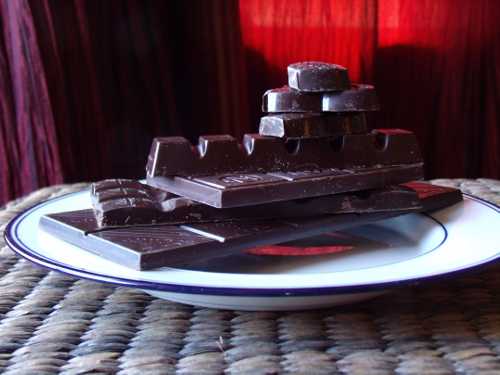
Chocolate.
Even the word evokes feelings of well being.
What better time than February to explore this tasty member of the vegetable kingdom? In just over a week, vast quantities of the confection will be distributed to loved ones in honor of Valentine’s Day, so let’s get the skinny on this rich treat.
Chocolate comes from a pineapple-sized, melon-like fruit that grows in the tropics on the cacao tree. The fruits are also known as pods, and each one holds about 40 cacao (also known as cocoa) beans.
The simple brown seeds that reside within the pods (cocoon-like, in a sweet, sticky white pulp) contain all the ingredients needed to make one of our most beloved food products, chocolate.
Chocolate has been used as a drink for thousands of years, perhaps dating as far back as 1400 B.C.
The Mayans and Aztecs used the beans to produce a fermented, frothy, bitter drink that was used in religious ceremonies, often flavored with chili peppers.
It wasn’t until 1847 that chocolate was made into a solid form.
As with coffee and wine, the area in which cacao beans are harvested, as well as the type of tree on which they’re grown, contribute greatly to their flavor profile. In other words, there’s a terroir associated with chocolate.
Cacao is harvested in Africa, Mexico, Central America, Asia, and in the Caribbean, and areas within each locale offer their own differences in flavor.
For example, beans grown in Madagascar are said to have citrus overtones, in Panama roasted nut flavors, in Trinidad cinnamon spiciness, and in Jamaica subtle notes of pineapple.
Two of the three main types of cacao trees grown in the world, the criollo and the trinitario, are considered to be flavor bean producers. The other type, the forastero, produces what are known as bulk beans, which account for 90 per cent of all cacao beans harvested.
Beans from the forestero tree have a clean, consistent chocolate flavor and provide the basis for most chocolate products. They’re sometimes combined with flavor beans to provide a unique tasting note.
After harvesting the pods and removing the beans, the beans are left in piles to ferment and then dry before going to the factory. It’s the fermentation process that produces the rich cocoa flavor in the beans.
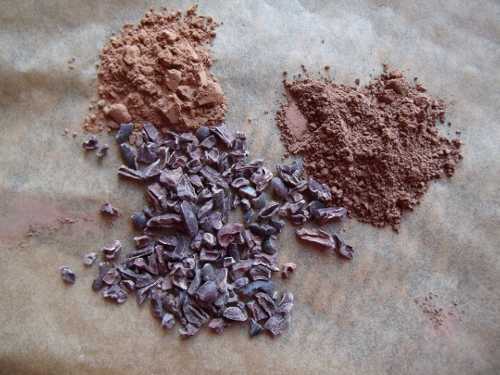
At the factory, the beans are roasted (either quick and hot or low and slow, depending on the flavor desired) and then hulled to remove the “nib” inside, which is what’s used to make chocolate.
The nib is milled to make chocolate liquor, a rich (non-alcoholic) paste that is the base for any chocolate product.
Some of the chocolate liquor is pressed to extract cocoa butter, the ingredient that makes chocolate taste so rich.
Cocoa butter, with a melting point of about 97 degrees, also causes the chocolate to melt on our tongue. We have Swiss confectioner Rodolphe Lindt to thank for pioneering the use of this ingredient back in 1879.
Finally, cocoa powder is ground from what’s left after extracting the cocoa butter.
To make the confection we know as chocolate, these simple ingredients – chocolate liquor and cocoa butter, as well as sugar and a minor ingredient or two, such as vanilla – go through a series of processes (such as conching, which is extensive kneading to develop flavor, and tempering, which is heating and cooling to make chocolate glossy and break with a snap) and become the sweet treat that nearly all of us love.
Milk chocolate has a creamier texture and lighter taste than dark chocolate, which has a more intense chocolate flavor.
Because of the health benefits associated with chocolate – particularly dark chocolate – many chocolate manufacturers are listing the percentage of chocolate liquor on their dark chocolate products now. I’ve seen some as high as 88 per cent chocolate liquor.
While more chocolate liquor means greater health benefits, it also means less sugar, so as the percentage increases, the sweetness of the chocolate decreases.
Bittersweet and semisweet chocolate (of which there is no official difference) must contain at least 35 per cent chocolate liquor.
If you’re cooking with bitter or semisweet chocolate, staying below 60 per cent chocolate liquor is a good idea, unless your recipe calls for a chocolate with a higher percentage, as the dish may turn out more bitter than intended.
Couverture is a term used for chocolates that are extra rich in cocoa butter, such as the brands used by pastry chefs and sold in specialty stores.
White chocolate is so named because it contains cocoa butter but no chocolate liquor. Be cautious if you want the real stuff – there are products such as “white baking chips” that don’t contain a drop of cocoa butter and you can taste the difference!
Cocoa nibs are sold in natural food or specialty stores and they make for a crunchy little treat, full of intense chocolate flavor. (They’re unsweetened, so be prepared!) They can be tossed in salads, added to breads, or even mixed with asparagus and prosciutto for a delicious and interesting side dish.
As to its health benefits, studies indicate that the antioxidant flavonoids in chocolate protect against heart disease, help relax blood pressure, and lower LDL cholesterol.
The consumption of chocolate may subtlety improve cognitive performance. Experiments with chocolate-fed mice suggest that flavanol-rich cocoa stimulates neurovascular activity, enhancing memory and alertness.
Because chocolate stimulates endorphin production, giving a feeling of pleasure, its effects are often compared to being in love.
Chocolate contains serotonin, an anti-depressant, and theobromine, caffeine and other substances which are stimulants.
It would seem chocolate can both relax and energize those who consume it.
Chocolate can be paired with so many things – from fruits such as raspberries or oranges to chicken when used in a mole sauce – that it’s really quite a versatile food.
The recipe below is from a holiday culinary class where lavender was featured. Though lavender season is in early summer, culinary lavender may be purchased at spice stores, specialty food markets, and even online.
Bon appétit! And happy Valentine’s Day, just a little bit early.
Chocolate lavender truffles
1 cup heavy cream
1 teaspoon dried lavender florets
12 ounces bittersweet or semisweet chocolate
1 cup unsweetened cocoa
Grate or roughly chop chocolate and put in heat proof bowl.
Bring cream and lavender to a simmer and simmer for one minute; strain.
Add hot lavender-infused cream to chocolate and stir to melt. Mix well.
Chill at least three hours. You may spread on parchment paper on a baking sheet.
Roll into 1 inch balls and then roll in cocoa.
This recipe makes about 25 truffles, which should be refrigerated until ready to be served.
Recipe by Esther Oertel.
Esther Oertel, a freelance writer, cooking teacher, and speaker, is passionate about local produce and all foods in the vegetable kingdom. She welcomes your questions and comments and may be reached at
NORTH COAST, Calif. – The Russian River watershed has been selected as the first Habitat Focus Area under NOAA’s Habitat Blueprint.
Officials said it's an important step to increase the effectiveness of NOAA’s habitat conservation science and management efforts by identifying places where NOAA offices work to meet multiple habitat conservation objectives on a watershed scale.
The Russian River drains 1,485 square miles, including much of Sonoma and Mendocino counties, and is home to endangered coho salmon, Chinook salmon and threatened steelhead trout.
The river’s once vibrant coho and steelhead runs earned it a reputation as a premiere recreational fishing destination.
But by 2000, coho salmon were virtually extinct from the river and the remaining habitats are badly degraded.
Heavy demand for and competing uses of the river’s water adds to the stress on fish. As a valuable resource for Sonoma and Mendocino County agriculture and viticulture, as well as domestic water supply, water extraction from the river and tributaries can leave fish stranded during periods of critical demand in the spring, summer, and early fall.
Russian River Valley communities also are impacted by frequent flooding. Steep hills and numerous canyons make accurate rainfall predictions and flood forecasts difficult.
NOAA’s expertise in flood and weather forecasting, integrated monitoring, habitat protection and restoration, stakeholder education, and coastal and ocean planning and management will be critical to addressing these issues.
The objectives we have identified in the Russian River include:
- Rebuilding endangered Coho and threatened steelhead stocks to sustainable levels through habitat protection and restoration;
- Improving frost, rainfall, and river forecasts in the Russian River watershed through improved data collection and modeling;
- Increasing community resiliency to flooding damage through improved planning and water management strategies.
Multiple offices within NOAA join an already active community of partners working on these issues in the Russian River watershed.
NOAA’s National Ocean Service, NOAA Fisheries, NOAA Research, and the National Weather Service have begun numerous projects that are expected to yield measurable results in three to five years.
Three restoration projects already underway are opening coho salmon breeding grounds, turning gravel pits into habitat for salmon, and improving habitat to reduce flooding and recover fish populations.
NOAA will now develop an implementation plan for the Russian River and launch the selection process for the next Habitat Focus Area.
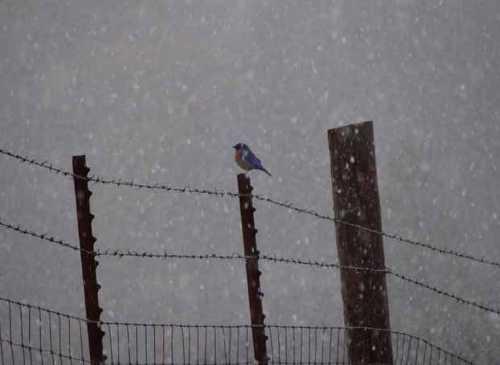
LAKE COUNTY, Calif. – The Redbud Audubon Society sponsors the Christmas Bird Count every year, a tradition that was started decades ago by conservationists in the East who wanted to replace the traditional “Christmas Hunt,” where hundreds of birds of all species were killed, to a practice of counting birds instead.
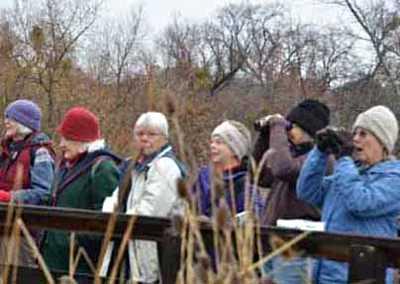
The birders participating in the 2012 Clear Lake Christmas Bird Count – held by the Redbud Audubon Society on Saturday, Dec. 15 – were challenged this year by the weather.
There was a minimum temperature of 26 and a high of 37, partly frozen still water, and strong snow flurries in the early afternoon resulting in one and a half inches of snow at the higher elevations and slippery road conditions throughout the count circle. The east wind was moderate with stronger gusts.
Despite all, counters ended up with 126 species, significantly less than the previous 10-year average of 141 species.
The total number of birds seen was 24,112, again less than the 10-year average of 49,335 birds.
The 10-year average figure is skewed somewhat by the fact that in the years of 2004, 2005 and 2006 there was an unusual high count for many water birds on Clear Lake due to the abundance of food, primarily threadfin shad and silversides.
Also in 2004, there was a boat with two observers on Clear Lake which significantly added to the numbers.
To put this in perspective, in the year 2004 there was a total of 135,312 individual birds counted, more than five and a half times the total number counted this year.
The weather did not discourage the participants, however, with 53 birders in the field and three feeder watchers, significantly higher than the 10-year average of 41 in the field and 3.5 at feeders.
The Redbud Audubon Society was delighted to have 17 first-time observers in the Clear Lake Count. The majority of the participants were Lake County residents, but the group was pleased to have birders join them from Santa Rosa, St. Helena, Napa and Woodland.
The only unusual species seen were nine violet-green swallows, which is just the third time this species has appeared on the count.
The ruddy duck for the second year in a row wins the prize for the most individuals seen at 8,170, a slight increase over a five-year average of 8,068 but dramatically lower than last year’s total of 14,838.
A record high count of 44 was set for the snowy egret, beating out the previous high of 40 in 2005. This can be attributed in part to the fact that there were three kayakers in the Anderson Marsh area for the first time and accessing habitat unseen from land.
Unfortunately, there is an increase in the introduced, invasive Eurasian Collared Dove that this year for the first time equaled the number of the native mourning doves with a count of 94 each.
The Eurasian Collared Dove first appeared on the Christmas Bird Count with six individuals in 2008 and reached 26 last year, and it is expected that there will be dramatic increases of the collared dove in the future while mourning dove numbers will likely decrease.
Anna’s hummingbird showed up in good numbers with a total of 66 only to be outdone by the 67 counted in 1998. Twenty-one of these hummers turned up at a feeder in the Riviera and another 20 were found feeding on the flowers of the common or English Ivy.
The red-breasted nuthatch experienced another high count with a total of 33 individuals but less than the incredible 71 counted in the year 1984.
Its more typical high is in the single digits, but this year is an “irruptive” year for this species as presumably a lack of food on the bird’s normal wintering ground is moving them further south in search of food.
The only species that was seen by all participating groups was the Western Scrub Jay. The big misses were barn owl which has been counted yearly except for a period from l984 through 1988 and Cooper’s Hawk which has been absent only once before in 2001.
The other continued miss is the yellow-billed magpie, which might be permanently absent from the count in the future. It has made the Christmas Bird Count most years since 1989 with the number diminishing since the West Nile Virus epidemic.
The species had a high count of 25 in the 1995 Christmas Bird Count and another high of 17 in 1999. These highs diminished to three in 2008, one in 2009, two in 2010, none last year and again missing this year. Sadly, the High Valley population appears to be extirpated.
The California Thrasher made an historic low count with only one bird seen this year as opposed to a 10-year average of eight birds.
Only one Lincoln's Sparrow appeared as well less than its 10-year average of 5.5 birds. Song sparrow had a low number of 17 which is less than half of it’s 10-year average of 38.
For more information about the Redbud Audubon Society, go to www.redbudaudubon.org .
Darlene Hecomovich is the Christmas Bird Count compiler for the Redbud Audubon Society in Lake County, Calif.
LAKEPORT, Calif. – The county’s animal shelter has had an influx of cats, most of them Siamese, over the past week.
Shelter staff said 13 cats, most of them Siamese, had been brought in recently due to the death of their owner.
Most of the cats have been altered, all are vaccinated.
They range in age from 2 years down to about six months.
During a visit the young cats displayed gentle, friendly and mellow personalities.
Visit them in the cat room at Lake County Animal Care and Control.
To fill out an adoption application online visit http://www.co.lake.ca.us/Government/Directory/Animal_Care_And_Control/Adopt/Dog___Cat_Adoption_Application.htm .
Lake County Animal Care and Control is located at 4949 Helbush in Lakeport, next to the Hill Road Correctional Facility.
Office hours are Monday through Friday, 8 a.m. to 5 p.m., and 1 p.m. to 3 p.m., Saturday. The shelter is open from 10:30 a.m. to 4:30 p.m. Monday through Friday and on Saturday from 1 p.m. to 3 p.m.
Visit the shelter online at http://www.co.lake.ca.us/Government/Directory/Animal_Care_And_Control.htm .
For more information call Lake County Animal Care and Control at 707-263-0278.
Email Elizabeth Larson at
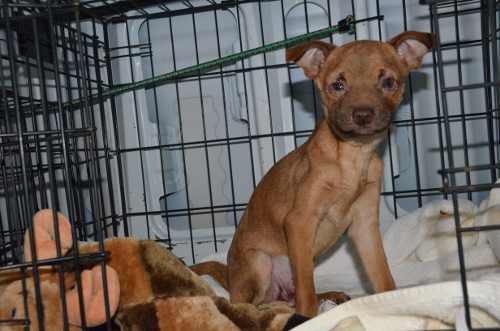
LAKE COUNTY, Calif. – A local animal rescue group is raising funds for an ill and injured dog it took in last month.
January 2013 has been full of activity at the Orphan Dog Ranch, the rescue operated by Lake County Animal Services.
The private nonprofit organization travels over Lake, Mendocino, Sonoma and Marin counties rescuing, rehabilitating and finding homes for dogs.
In late January, they took an owner surrender dog, Gizmo, who was advertised on Facebook by a panicked family member begging for help as he was very ill and there was no money to take him to the vet.
By the time they were allowed to take possession of the dog, he was close to dying.
They treated Gizmo immediately for hypoglycemia and dehydration, since he was having seizures, and he made it through the night.
The next day, they got him in to the vet, where they found he has pyoderma, a severe skin infection that often means something more severe is affecting the dog; two holes in his head that look like he was grabbed by a dog or coyote; a badly bruised groin, possibly from being kicked by human; a torn ligament in a hind leg that is so painful he won’t put the leg down; and multiple infections that they are still hoping will not be resistant to antibiotics.
Donations for Gizmo can be made at http://lakecounty.chipin.com/saving-gizmo . The goal is $2,250.
Follow Gizmo’s progress at http://orphandog.org/saving-gizmo-2/ .
The group said it appreciates community support for its efforts and for Gizmo.
Moon & Stars Botanicals at 6030 E. Highway 20 in Lucerne is holding a fundraiser on Sunday, Feb. 10 at 11 a.m. Proceeds will go toward Gizmo's care and the care of Molly, an abandoned and badly abused dog found in Clearlake.
Anyone who wishes to donate products to sale is welcome to participate; anyone who attends will be able to purchase or donate. Contact Kat at 707-217-6854 for more information about how to donate.
Wine County Village, an Internet company that sells wine accessories, also is doing an ongoing event at https://www.facebook.com/events/335243256580648/ in which 25 percent of all sales go to Gizmo's care.
Lake County Animal Services also continues to take donations through its Web site, http://LakeCountyAnimalServices.org , for all of the animals it seeks to help.
They are on track to meet their goal of homing five dogs a week – with more than 20 adoptions and three foster to adopt placements – but in addition to Gizmo have had a month of medical emergencies.
They have treated nine dogs for canine parvovirus, that hard-to-kill virus that is almost everywhere in the environment and is often fatal to puppies. Two of the nine infected dogs were 7-week-old puppies that were sick enough to have to be placed immediately under veterinary care.
Their story unfolded in a private Facebook group and is documented in the Orphan Dog blog, http://orphandog.org/an-hour-full-of-miracles/ .
When tests for parvovirus are positive, vet bills can add up to thousands of dollars quickly, very scary in a rescue group both for the dogs and for the budget.
Every donation of time, money and energy is gratefully accepted on behalf of all of the dogs that they serve.