 How to resolve AdBlock issue?
News

CLEARLAKE, Calif. – What began on Thursday as an attempt by police to serve an arrest warrant on a Clearlake woman led to additional arrests, the discovery of hazardous materials used for methamphetamine manufacturing and the need to temporarily evacuate nearby residents.
Lt. Tim Celli of the Clearlake Police Department said Candace Marie Conzet, 24, was arrested on the misdemeanor warrant, with 30-year-old Jeremy Lennon Jurek of Clearlake, 34-year-old Edward Jurek of Clearlake and Francian Reinhardt, 38, of Kelseyville also taken into custody on drug-related charges.
At 4:15 p.m. Thursday Clearlake Police officers went to 16224 26th Ave. to serve the warrant on Conzet, Celli said.
When the officers arrived, three subjects exited an attached shed located on the property. He said they were identified as Jeremy Jurek, Reinhardt and a 55-year-old Clearlake resident, the latter being released without charges.
Celli said officers initially detained the subjects for a protective sweep of the property and to look for Conzet, who they didn’t find at that time. However, they found Edward Jurek inside the residence.
During the protective sweep of the property, officers located suspicious items – which they suspected of being associated with the clandestine manufacture of methamphetamine – in a hole dug out in the floor of the attached shed, Celli said.
He said it appeared as though someone dumped the items hastily in an attempt to conceal them, with loose dirt kicked over the top of them. However the items were only partially concealed, and officers reported smelling a chemical odor in the area.
Officers summoned Clearlake Police supervisors to the scene to show them the items that were located. At that point, it was believed the items were associated with the clandestine manufacture of methamphetamine, Celli said.
The scene was secured for safety reasons and preparation of a search warrant. During the investigation it was determined Edward Jurek and Reinhardt were under the influence of a controlled substance and were subsequently arrested, according to Celli.
Celli said statements were secured from Jeremy Jurek that determined that the items were in fact items used for the clandestine manufacture of methamphetamine and that he was responsible for them.
Due to the dangerous conditions of confined space and other public safety concerns, Lake County Fire Protection District was requested to respond to the scene, Celli said.
While officers were on scene, Conzet arrived and was arrested for her outstanding warrant, Celli said. While she was being taken into custody, she violently resisted officers and was additionally charged with felony and misdemeanor resisting or delaying a peace officer.
Due to weather, lighting and other public safety concerns, it was determined that emergency personnel were going to keep the scene secure for the evening and additional resources would return in the morning to process the scene and collect evidence, he said.
Clearlake Police and Lake County Fire Protection personnel coordinated with the Lake County Sheriff’s Department Narcotics Unit, Lake County Environmental Health and Lake County Air Quality Management District personnel to investigate the methamphetamine manufacturing lab, Celli said.
He said nearby residents were evacuated for approximately three hours during the processing of the crime scene. Items associated with the manufacturing of methamphetamine along with samples of the substances were collected for evidence.
A hazardous materials cleanup company later was requested to the scene to assist with safely securing and disposing of toxic items, Celli said.
Jeremy Jurek was booked into the Lake County Jail for felony manufacturing methamphetamine and was being held on Friday on $100,000 bail, Celli said.
Jail records showed that Conzet’s bail is set at $15,000. She remained in custody on Friday afternoon.
Celli said the Clearlake Police Department offered its thanks to all first responders and their agencies that assisted with this investigation to bring this dangerous situation to a safe conclusion.
Anyone with information regarding this investigation is encouraged to contact Det. Ryan Peterson at 707-994-8251.
COBB, Calif. – A 3.1-magnitude earthquake was reported in the Cobb area Friday afternoon.
The quake occurred at 4:02 p.m., according to a preliminary report from the US Geological Survey.
Its epicenter was located one mile north northwest of The Geysers geothermal steamfield, five miles west southwest of Cobb and seven miles west northwest of Anderson Springs, the US Geological Survey reported.
The quake was recorded at a depth of 1.2 miles.
Shake reports can be submitted at http://earthquake.usgs.gov/earthquakes/eventpage/nc71933985#dyfi .
Email Elizabeth Larson at
NORTH COAST, Calif. – Two North Coast credit unions are in the process of considering a merger.
After several months of exploration and thoughtful negotiation, the boards of Fort Bragg Community Federal Credit Union (FBCFCU) and Mendo Lake Credit Union (MLCU) have signed a memorandum of understanding for FBCFCU to consider a merger with MLCU, officials said Friday.
“The combination of our two organizations makes sense from the standpoint of both member service and long term financial stability and helps preserve a truly local cooperative option for financial services in Fort Bragg,” said MLCU Chief Executive Officer Richard Cooper.
Credit union officials said the desired result of this merger process is to combine the energies and resources of the two credit unions to assure the best and most comprehensive credit union services to members on the Mendocino County coast.
As cooperatives, this process is not like the merger of two shareholder controlled institutions where there is a profit motive for either or both parties, credit union officials reported.
Instead, a merger of cooperatives is designed to assure the best in ongoing service to the continuing membership.
As the costs of providing the myriad of financial services that members want and need grows – and as the low interest rate environment continues to challenge earnings – a larger but still moderately sized local institution will be better positioned to provide a higher level of ongoing service.
Should the merger be finalized, officials said the combined organization would be more than $160 million in total assets and serve more than 23,000 members.
Out of that total, the proposed combined Fort Bragg branch of MLCU will have more than $50 million in deposits, more than $26 million in loans and will serve more than 7,000 members.
The proposed merger will provide FBCFCU members a range of new and expanded services, including small business deposit accounts, home equity lines of credit, mortgage loans, manufactured home loans (in parks), recreational vehicle loans, additional deposit account options, insurance services and access to more than 30,000 free CoOp ATM locations located across the US.
Member deposits will continue to be insured to $250,000 by the National Credit Union Share Insurance Fund, a U.S. Government Agency.
As the merging credit union, FBCFCU members will be given an opportunity to vote on the final merger agreement, with a full disclosure of all merger details provided to members prior to the vote.
Pam Merritt, president and chief executive officer of Fort Bragg Community Federal Credit Union, noted in her letter to the membership, “The cost associated with offering the variety of services Mendo Lake Credit Union will be able to offer is much more than a smaller credit union of our size can undertake. The merger of our two credit unions will keep the local credit union ‘feel’ that is so very important to our members and community.”
MLCU has been serving member financial needs since 1959, with offices in Fort Bragg, Ukiah, Lakeport and Clearlake. Should the merger be completed, MLCU will assume FBCFCU’s assets and liabilities, and the continuing credit union will maintain the MLCU name and brand.
In addition, the memorandum of understanding between FBCFCU and MLCU includes a provision for two of the volunteer board members of the FBCFCU to join the volunteer MLCU board of directors.
The proposed expanded Fort Bragg operation of MLCU would offer current employees of the merging credit unions opportunities to stay and grow – with both branch service and back office positions being maintained in Fort Bragg.
Cooper will be the chief executive officer of the continuing credit union, with Merritt retiring at the conclusion of the merger.
Jill Lydick, the assistant manager of FBCFCU, will be staying on with Mendo Lake in a senior management position as will Tracy McDaniel, MLCU Fort Bragg branch manager.
The location of the Fort Bragg office will be carefully reviewed during the merger exploration process. A branch location will be chosen from the two existing CU locations on Main Street and on Franklin Street and then will be specified in any final agreement.
Officials said this proposed partnership will ensure continued stability and vitality and position the continuing credit union for sustained future growth.
The greater capital resources of the combined organization will continue to provide a high level of local service while maintaining the reserves needed for growth and stability in the years to come, credit union officials said.
For more information, visit www.fbcredit.com or www.mlcu.org .
LAKEPORT, Calif. – Issues surrounding the trial date for three men charged in a motorcycle gang fight and their efforts to subpoena the county sheriff for his part in gathering evidence in the case went before a judge this week.
The case involves three Sonoma County Hells Angel Chapter members who last March were ordered to stand trial for allegedly attacking club rivals during a 2011 tattoo convention at Konocti Vista Casino.
Josh Johnson, Nicolas Carrillo and Timothy Bianchi allegedly fought with Michael Burns, a validated Vagos motorcycle gang member, and Kristopher Perkin on June 4, 2011. Another Hells Angel member who was alleged to have been involved, David Dabbs, was not located by law enforcement.
Johnson, Carrillo and Bianchi are charged with felony participation in a criminal street gang, and misdemeanor counts of disturbing the peace and battery. In addition, Bianchi is charged with felony assault with a deadly weapon other than a firearm, and Johnson and Carrillo each face a second misdemeanor battery count.
The three men were in court Tuesday morning for motion hearings in the case.
Michael Clough, Carrillo's attorney, was on hand, as was Bianchi's attorney, Jai Gohel, who made a special appearance on behalf of Johnson as well.
In addition to prosecutor Art Grothe, District Attorney Don Anderson, Deputy County Counsel Lloyd Guintivano, county Human Resources Director Kathy Ferguson and a California Department of Justice attorney were present for the hearing.
The additional presence of county officials was in response to Clough's Pitchess motion to get information from the personnel files of Sheriff Frank Rivero, who had testified during the March 2012 preliminary hearing of the three men, as well as the records of Deputy Gary Frace.
During that March 2012 preliminary hearing, Rivero testified that he had retrieved a surveillance video recording from Konocti Vista Casino because he had a working relationship with the tribal chair due to a crash that had killed a child. However, that fatal crash had taken place nearly two months after the fight and Rivero's efforts to obtain the recording.
Rivero also had testified that no other sheriff's personnel had seen the video recording at the time he retrieved it. However, Frace's testimony contradicted Rivero; Frace said he had seen the video before Rivero received a copy of it from the casino.
Court documents show that Clough also has filed a Pitchess motion to have the court examine Frace's personnel documents.
“To be clear, defendant Carrillo is not alleging misconduct on the part of Deputy Frace,” Clough wrote in one of his filings. Rather, he believes the records will show that Rivero took Frace off of the case and filed a complaint against him, which “supports the defense’s theory that the investigation of the charges against defendant Carrillo was infected and corrupted by the actions of Sheriff Rivero.”
Judge Richard Martin, who presided over the Tuesday court appearance, said it was his impression that the motion hearings in which Clough is seeking Rivero's personnel information would take considerably more than one hour, and as such he needed to reset it.
“There are multiple issues here,” Clough said, adding that he thought some of them could be resolved that morning.
For Clough, one of the issues was whether or not Rivero was to be a witness at the trial, as he was at the preliminary hearing.
The District Attorney's Office has indicated that Rivero is not a material witness and they don't plan to call him to testify. Clough said he's never been involved with a case in which a witness who testified in the preliminary hearing was, months later, not included as a trial witness.
“That, in itself, creates a strong presumption of materiality,” he said of Rivero's testimony at the preliminary hearing.
Based on Clough's case filings, some of the information he's seeking from the District Attorney's Office is material that must be disclosed under the 1963 US Supreme Court Case Brady v. Maryland, which requires the government to disclose any potentially exculpatory evidence to defendants in criminal cases.
In Rivero's case, he has been the subject of a lengthy Brady inquiry by Anderson's office due to allegations that, while working as a deputy in February 2008, he shot at a man holding a can of pepper spray and then lied to sheriff's investigators about his actions.
If Anderson places Rivero on a “Brady” list, his testimony in any criminal case would then be in question.
With the District Attorney's Office not planning on calling Rivero as a material witness, the agency said in responses to Clough's motions that it has no Brady disclosure obligations for Rivero in the Hells Angels case.
Clough, however, had written in his filings that Rivero must testify since he acquired the video recording, a key piece of evidence. He's pursuing the Brady disclosures because he believes that Rivero's confidential files “includes evidence of alleged dishonesty” relating to the February 2008 shooting.
On Tuesday Clough told the court he's been asking for certain discovery materials for a year and a half and it's unlikely that, once he gets them, he will be ready to proceed to trial only a week later. He believed his only option was a time waiver and to push the trial back two to three months.
Clough also is seeking information from the Western States Information Network, which is a federally funded regional information sharing system that provides criminal intelligence information and case and event de-confliction to law enforcement investigations being conducted in Alaska, California, Hawaii, Oregon and Washington, according to the California Attorney General's Web site.
Martin said there were complicated issues with Clough's information requests for both the network and Rivero, and he expected both would take time to work through.
The judge told the group of defendants and lawyers that the only way the case ultimately will be settled is for it to go before 12 jurors. He said they could have all kinds of meetings until then but everyone was entrenched.
It was agreed in court on Tuesday that the trial will be set for May 22, with the motion hearings to be rescheduled for Feb. 27-28.
Clough said he had issued four other subpoenas for people who had not shown up to court, including Rivero.
On Jan. 4, Clough served a subpoena for Rivero's appearance and for his personnel material on Lt. Steve Brooks at the Lake County Sheriff's Office. However, Clough said he had received no response from Rivero.
He also had served subpoenas at the Sonoma County Sheriff's Office and the Santa Rosa Police Department, which also had not responded. Both agencies had been involved in the investigation and assisting with apprehending the men after the fight.
The District Attorney's Office also had refused to give Clough the physical address of gang expert Jorge Gil-Blanco, who he wanted to interview. “I think that is absolutely mandated by the law,” Clough said of his right to the contact information.
Clough said he had tried to serve a subpoena on Gil-Blanco at the San Mateo County Sheriff's Office, but they would not accept service on his behalf.
Grothe said he had spoken to an official at the Santa Rosa Police Department and they had indicated that they had complied in part with the subpoena but had denied another part of the subpoena due to some legal concerns.
Grothe said they had provided Clough with an address and that Gil-Blanco had accepted services through the District Attorney's Office.
He said for Clough to ask for the home address of an expert on the Hells Angels strains credibility.
Clough, in turn, argued that no case law supported him being given only a post office box address. He said it was understandable that Gil-Blanco would not want him to have his home address, and he was only seeking a physical location where he could make contact.
Grothe said he had communicated to Gil-Blanco Clough's desire to interview him. “He declined that.”
Martin said there are procedures in place for the district attorney to make Gil-Blanco available, but whether he wants to speak to the defense is up to him.
Clough, who works in the Bay Area, asked to have Gil-Blanco made available at a San Mateo address. Martin said Clough and Grothe could work it out.
The matter about Rivero not obeying the order to show up to court then came up.
“His counsel is here so I assume something is going on,” said Martin in reference to Guintivano.
Guintivano, however, said the County Counsel's Office had not received any subpoena information relating to Rivero in the case.
Martin asked Clough if he had proof of service. Clough said he personally served the documents at the sheriff's office.
Martin suggested Clough use an investigator to serve the subpoena to Rivero.
The judge then said it may come down to issuing an arrest warrant for the sheriff if he doesn't comply with the subpoena, which Martin said he had the power to do.
“I will only do it if the evidence absolutely supports it,” Martin added.
Clough said that under normal circumstances he would never subpoena a sheriff.
Email Elizabeth Larson at [email protected] . Follow her on Twitter, @ERLarson, or Lake County News, @LakeCoNews.
LAKE COUNTY, Calif. – A North Coast nonprofit is expanding its legal offerings to focus on seniors in Lake and Mendocino counties.
Legal Services of Northern California began offering the new services at the start of the year in order to fill the void left by the closure of the Lakeport-based Senior Law Project.
The Senior Law Project, which had provided free legal services to seniors in Lake and Mendocino counties, closed after 30 years as a result of the retirement of its prime mover, Lakeport attorney Andy Rossoff.
Angelica Millan, managing attorney at Legal Services of Northern California's Ukiah office, said the organization had collaborated with the Senior Law Project and Rossoff on a number of issues critical to the poor and the senior community.
Millan said Legal Services of Northern California has always provided services to the senior community in the areas of housing, public benefits and health.
Now, people over age 60 will be able to get information and advice on consumer rights and senior scamming, debt collection, advanced health care directives, planning for incapacity and elder abuse, Millan reported.
Millan told Lake County News that her organization won't be opening a Lake County office. She said Rossoff had indicated to them that he did most of his work over the phone.
Instead, they are working out arrangements with local nonprofits to use their office space to meet with senior clients in person, and also to allow seniors to use fax machines when needed.
Millan said the reactions from local groups regarding those requests for the use of space and office equipment have been positive.
For more information contact the Legal Services of Northern California Senior Law Project at 707-462-1471 or toll-free at 877-529-7700.
Email Elizabeth Larson at
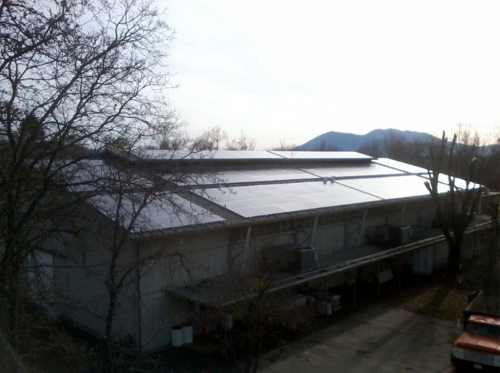
LAKEPORT, Calif. – The Lake County Fair has paid off the outstanding loan on its solar collection systems, known as photovoltaic arrays, several years ahead of schedule.
The loan, for approximately $119,171.01, was to have been paid off in 2018, but unexpected income from the use of the facility as a fire camp in 2012, combined with income from a management contract with the Dixon May Fair, has allowed for the early retirement of the debt, fair Chief Executive Officer Richard Persons reported.
The Lake County Fairgrounds has three solar collection systems, known as photovoltaic arrays, according to Persons.
One system was installed in 2001 with financing from the State Department of Food and Agriculture. The note on that system was paid off in 2011, Persons reported.
Two additional systems were installed in 2006, with financing through the California Fairs Financing Authority, doing business as the California Construction Authority, a joint powers authority whose membership is made up of 76 California fairgrounds and the State of California’s Department of Food and Agriculture. Persons said that financing ultimately came from PNC Equipment Finance LLC.
In 2011 Gov. Jerry Brown announced the elimination of all funding from the state of California for the network of California fairgrounds beginning in 2012, including the Lake County Fair, which is a state agency.
Lake County Fair officials scrambled to close a budget gap of nearly $200,000 for 2012 and maintain the day-to-day operation of the county fairgrounds, laying off 50 percent of the full-time staff, cutting a variety of expenses and raising fees to the public for most services, according to Persons.
Prior to 2012, the fair had an annual operating budget of approximately $750,000, Persons said.
Lake County Fair achieved the goal of operating without state funding for 2012 based solely on internal operations, however, two other unusual but financially beneficial things took place in the fair operation that year.
The first was that the fair entered into an agreement with the Dixon May Fair to provide the services of Persons on a limited term basis.
The second was the use of the fairgrounds by Cal Fire as a fire base camp for both the Wye Fire and the Scotts Fire.
Persons said the fair had budgeted for a cash income before depreciation of $5,057 in 2012, and instead had a cash income of $109,766.16.
Paying off the solar loan early will save Lake County Fair nearly $27,000 a year in payments for each of the next five years, of which nearly $30,000 would have been interest, Persons said.
He said the early payoff will reduce the fair's monthly cash expenses by approximately $2,216.
“Since the fair has a yearly cash flow cycle that is similar to a farm or ranch operation, which often has negative cash flow until the crop is sold, this will make a huge difference,” Persons said. “The fair is really lucky to be in the position where it can pay this off, especially in the current economy.”
Solar collection systems on the Lake County Fairgrounds have reduced the power consumption from the electrical grid by approximately 80 percent each year, Persons said.