 How to resolve AdBlock issue?
News
California Attorney General Kamala Harris praised the passage of a bill she is sponsoring to upgrade and expand California’s prescription drug monitoring program as an important step in combating a serious public health and law enforcement issue.
The bill passed out of the Senate Business and Professions Committee on a 7 to 2 vote.
The Department of Justice’s Controlled Substance Utilization Review and Evaluation System (CURES) program and Prescription Drug Monitoring Program (PDMP) allow authorized prescribers and pharmacists to quickly review controlled substance information and patient prescription history in an effort to identify and deter drug abuse and diversion.
“This legislation will modernize and strengthen the program and provide doctors and law enforcement with a powerful tool to fight prescription drug abuse,” Harris said. “CURES is about making government smarter and more efficient. Senate Bill 809 will help save lives.”
Senate Bill 809 by Senator Mark DeSaulnier (D-Concord) will require all prescribers and dispensers to enroll in and use the system.
“SB 809 allows us to not only save, but strengthen, the CURES program,” said Senator DeSaulnier. “This must be a top priority for California. The technology exists for us to make a real difference in the prescription drug epidemic, and too many lives have been lost for us not to take action. The price to pay is small when there are thousands of lives on the line.”
“Criminal street gangs use the sale of prescription drugs to fund their operations in the United States,” said Chief Dan Drummond of the West Sacramento Police Department. “CURES is a multi-faceted tool that can be used for intervention, prevention, education and ultimately enforcement.”
Attorney General Harris has worked hard to save the CURES program, which had its funding slashed to almost nothing when the Department of Justice took a $71 million budget cut two years ago. She formed a working group with interested parties to push for an improved prescription drug monitoring system.
SB 809 includes a small increase in the provider license fee of 1.16 percent to pay for the annual cost to operate the program and a one-time assessment on health care plans for the upgrade, which will modernize and improve the information gathering and sharing.
In addition, an annual fee on narcotic drug manufacturers who do business in California will pay for two State of California Regional Investigative Prescription Teams. These teams will increase investigation into incidents of prescription drug abuse, pursue organized crime and provide oversight and auditing of prescription pad printers.
Current funding sources are insufficient to operate and maintain CURES. If another source of funding is not identified, the program will be eliminated on July 1, 2013.
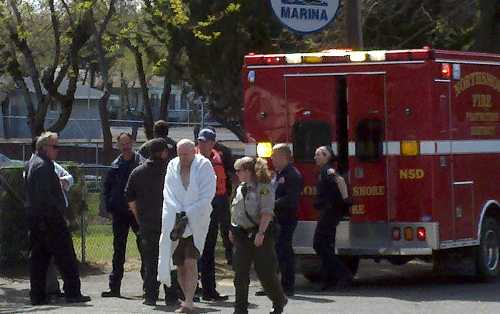
NICE, Calif. – A kayaker was pulled from Clear Lake on Monday afternoon after his boat overturned several hundred yards from shore.
Northshore Fire Protection District personnel were dispatched to the 3800 block of Lakeshore Boulevard and Hudson in Nice just before 1:30 p.m. on the report of a man in the water, according to radio reports.
Pat Brown, the district’s deputy chief, said firefighters arrived to find the overturned kayak and the man about 300 yards offshore.
Initially, firefighters had requested two helicopters – one from the California Highway Patrol and one from the US Coast Guard – to assist with the rescue, said Brown.
However, a State Parks boat from Clear Lake State Park in Kelseyville was able to cross the choppy lake and pick the man up from the water, said Brown, who added that the sheriff’s patrol boat is off duty on Mondays.
Brown said firefighters warmed up the man, whose name was not released, but didn’t end up transporting him.
“He walked home,” said Brown. “He did not want to go to the hospital.”
Brown estimated that winds on the lake were steadily at around 25 miles per hour, with gusts up to 40 miles per hour.
Firefighters were released from the scene just after 3 p.m., according to radio traffic.
Email Elizabeth Larson at
LAKE COUNTY, Calif. – A new group of young adult cats are ready for adoption at the county’s animal shelter.
Cleared for takeoff to new homes are three females and two males, ranging in age from 1 to 2 years, all spayed or neutered and vaccinated.
In addition to spaying or neutering, cats that are adopted from Lake County Animal Care and Control are microchipped before being released to their new owner. License fees do not apply to residents of the cities of Lakeport or Clearlake.
If you're looking for a new companion, visit the shelter. There are many great pets there, hoping you'll choose them.
The following cats at the Lake County Animal Care and Control shelter have been cleared for adoption (other cats pictured on the animal control Web site that are not listed here are still “on hold”).
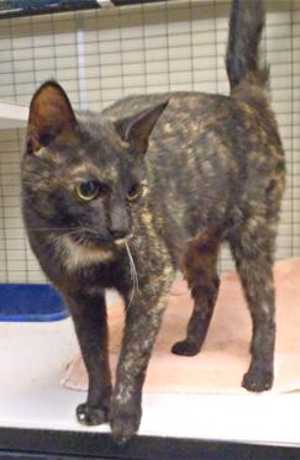
Domestic short hair calico
This female domestic short hair mix is 2 years old.
She has a short calico coat and gold eyes, and has been spayed.
Find her in cat room kennel No. 2, ID No. 36033.
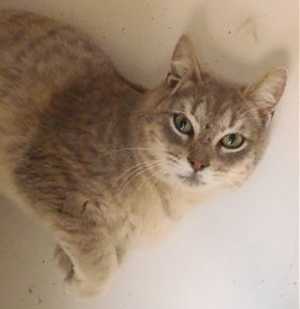
Gray male tabby
This gray male tabby is 2 years old.
He weighs 8 pounds, has a short coat and gold eyes, and has been neutered.
He’s in cat room kennel No. 20, ID No. 35866.
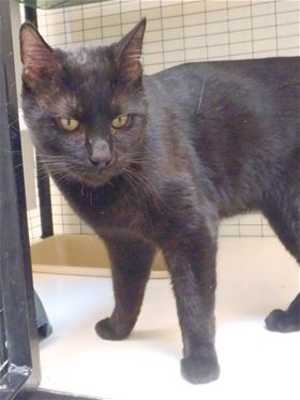
Black male cat
This black male cat is 2 years old.
He weighs 8 pounds, has a short coat and gold eyes, and has been altered.
Find him in cat room kennel No. 49, ID No. 35862.
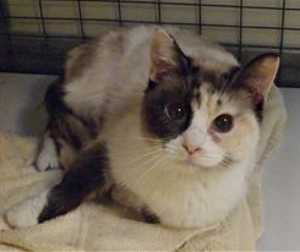
Tortie point Siamese
This female tortie point Siamese is 2 years old.
She has a short multi-colored coat, blue eyes and has been spayed.
Find her in cat room kennel No. 101a, ID No. 35996.
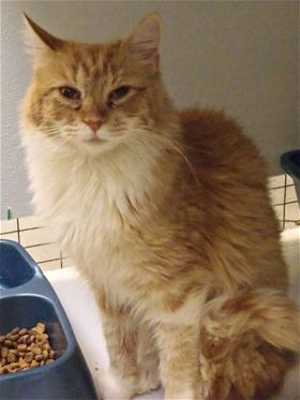
Female orange tabby
This female orange tabby is 1 year old.
She has a medium-length coat and has been spayed.
She’s in cat room kennel No. 101b, ID No. 35998.
Adoptable cats also can be seen at http://www.co.lake.ca.us/Government/Directory/Animal_Care_And_Control/Adopt/Cats_and_Kittens.htm or at www.petfinder.com .
Please note: Cats listed at the shelter's Web page that are said to be “on hold” are not yet cleared for adoption.
To fill out an adoption application online visit http://www.co.lake.ca.us/Government/Directory/Animal_Care_And_Control/Adopt/Dog___Cat_Adoption_Application.htm .
Lake County Animal Care and Control is located at 4949 Helbush in Lakeport, next to the Hill Road Correctional Facility.
Office hours are Monday through Friday, 8 a.m. to 5 p.m., and 1 p.m. to 3 p.m., Saturday. The shelter is open from 10:30 a.m. to 4:30 p.m. Monday through Friday and on Saturday from 1 p.m. to 3 p.m.
Visit the shelter online at http://www.co.lake.ca.us/Government/Directory/Animal_Care_And_Control.htm .
For more information call Lake County Animal Care and Control at 707-263-0278.
Email Elizabeth Larson at
As the weather warms up and mosquitoes become more prevalent, California horse owners are advised to consult their veterinarian to ensure their horse’s vaccination status is current for maximum protection against West Nile Virus.
Even though the disease peaked in California a number of years ago, it remains a risk, according to state officials.
In 2012, West Nile Virus infection was confirmed in 22 California horses, eight of which died or were euthanized. The number of detections was the highest since 2008, the state reported.
In addition, state officials said West Nile Virus infection was confirmed in 479 people in California, also a significant spike over recent years.
“Outbreaks of West Nile Virus are still a risk for horses,” said California State Veterinarian Annette Jones. “Horse owners should contact their veterinarians as soon as possible to make sure their animals’ vaccination status is current. Vaccination will provide optimal protection against the disease.”
Signs of West Nile Virus include stumbling, staggering, wobbling, weakness, muscle twitching and inability to stand.
Horses contract the disease from carrier mosquitoes and are not contagious to other horses or people.
Over the past 10 years, approximately 40 percent of horses infected with West Nile Virus died or were euthanized.
The best way to minimize the threat of West Nile Virus is to control mosquito populations and prevent exposure to them:
- Reduce or eliminate sources of stagnant or standing water that can serve as a breeding ground for mosquitoes, including old tires, buckets, wading pools and other containers.
- Stall horses during peak mosquito periods (i.e., dawn and dusk);
- Use equine-approved mosquito repellents and/or protective horse gear such as fly sheets, masks, and leg wraps;
- Place fans inside barns and stalls to maintain air movement, as mosquitoes cannot fly well in wind.
CDFA is cooperating with the California Department of Public Health to detect and respond to the disease in California. Horses provide an additional sentinel for West Nile Virus disease detection.
For more information, visit http://www.cdfa.ca.gov/ahfss/Animal_Health/WNV_Info.html .
LAKE COUNTY, Calif. – The Lake County Winery Association has announced the 2013 Lake County Wine Competition will take place this July.
This highly anticipated competition exclusively showcases wines that identify Lake County on the label.
The competition will commence on Wednesday, July 10, at Brassfield Estate Winery where a prestigious panel of wine experts from across the country will blind-taste and judge more than 150 wines to select the top finalists in each category.
Ray Johnson, director of Sonoma State University’s Wine Business Institute, assistant director of the San Francisco Chronicle Wine Competition and author of numerous articles and his blog TasteWine, will preside as director for the professional judging.
The community at large will be able to taste the professional judge’s top finalists for each wine category in an exciting new venue this year.
On Aug. 31 the Lake County Winery Association is partnering with the Lake County Fair for the People’s Choice Wine Awards.
On the Saturday night of the fair from 4 p.m. to 7 p.m. the people get to “blind taste” the judges top picks and select the “People’s Choice.”
The Lake County Winery Association is anticipating that the exposure for the winning wines will be the largest in this competition’s history.
Participating wineries are asked to submit their entries by the June 14 deadline.
Entry forms will be sent out late in the month of April – look to receive your competition packet soon.
All Lake County wines made in and outside the county using at least 75 percent Lake County grapes are encouraged to enter.
For more information on entry parameters, call event chair Jacquelyn St. Martin at 707-994-4068 or event co-chair Megan Hoberg at 707-279-4302.
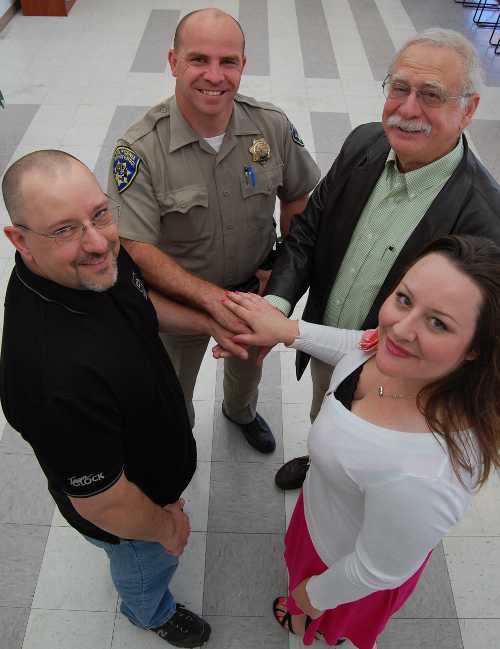
LAKE COUNTY, Calif. – Nicole Newton, a records and communications supervisor for the Clearlake Police Department, and Steve Curtis, a California Highway Patrol officer, never met until last week. But they have one important thing in common: Both had enough heart to donate a kidney.
The beneficiaries of their ultimate acts of humanity were Mark Cooper, a well-known dentist in Clearlake, and Robert Rider, a former police officer who owns a sporting goods store in the same town and lives in Hidden Valley Lake.
They, too, had never met until last week, although, ironically, Cooper is dentist to Rider’s wife, Brianna, and two of the couple’s four sons.
What these two men have in common is undying gratitude to their donors, and the good fortune of having someone close to their family with a “perfect match” and the willingness to go through the surgical process of giving up a kidney.
In Cooper’s case, Newton was a friend of his daughter’s. Curtis and Rider became acquainted while attending Hidden Valley Lake Community Church.
There currently are about 117,000 people across the United States waiting for organ transplants, according to the United Network for Organ Sharing.
Few of those Americans on the national waiting list for a kidney transplant may ever be so blessed.
Receiving a kidney from a live donor is in itself a blessing. The life expectancy for recipients of kidneys from live donors is reported to be significantly longer than in cases where a cadaver kidney is transplanted.
Good fortune aside, both Cooper and Rider experienced no small amount of pain, suffering and anxiety before their successful transplants were performed. Both faced long sessions in dialysis if donors were not found.
“I struggled through the first two months of 2010 with horrible fatigue,” said Rider, a former Santa Rosa Police officer whose career in law enforcement ended with an injury. “I had pain in my neck and chest. Brianna took me to the emergency room (at St. Helena Hospital in Clearlake). They ran all the cardiac tests and didn’t find anything until a biopsy showed I had a renal (kidney) failure.”
Cooper passed a kidney stone 30 years ago. But he was unaware that his kidneys were malfunctioning until undergoing a test measuring how effectively creatinine (vital to the balance of muscular and neuromuscular function) is removed from the blood by the kidneys.
“My creatinine got so high that I started getting headaches and just feeling terrible,” he said. “I was on the donor waiting list for approximately a year. There was concern over how fast my health was deteriorating. Without a new kidney, my understanding was that I would be in dialysis three days a week for three hours at a time. For me, because of my lifestyle, that would be like a century in prison.”
Cooper praised the abiding care he has received from Marc Shapiro, a prominent Lake County physician, who, he said, “monitored every part of my body” for the last 16 years.
For Rider there are “still challenges” at his earlier stage of recovery. “In a transplant one thing leads to another,” he said. “There’s an adjustment. I take a lot of medication – 29 pills a day, which is down from about 50 a day.”
Newton said that since donating her kidney to Cooper she has connected with literally hundreds of individuals willing to be donors of bone marrow, liver or kidneys.
But she added, “I think a lot of people are reluctant to donate kidneys and that’s unfortunate when 18 people a day die waiting for transplants.”
Cooper’s daughter, Jacqueline Snyder, an attorney, became the catalyst to his kidney connection through unflagging determination, little knowing when she took on that role that her friend Newton would fulfill her father’s need.
“Jacqueline looked me in the eye and said, ‘Dad, I’m going to find you a kidney,’” Cooper recalled. “The first thing she did was go on Facebook and say ‘Mark Cooper needs a kidney.’”
Before the search ended with a “find,” Cooper’s need was trumpeted throughout his wide circle of friends and associates.
The Redwood Empire Dental Society, for which he was president, made Cooper’s case a front-page issue in its newsletter.
“It read ‘Mark Cooper needs a kidney’,” he said, “and then when I received the kidney the front page said, ‘Mark Cooper got a kidney.’
“I don’t know if it’s providence or what, but somebody’s looking over me,” said Cooper. “When your kidney fails you (try to) find someone within the family because that’s your best chance of finding a match. But that couldn’t be because the family member might have the same problem. When it shows up later in life as a kidney disease your own kids cannot be the donor. So we had to look outside of the family to get a kidney.”
With Newton’s kidney becoming such a critical part of Cooper’s continued wellness, it has come to have an identity of its own.
The kidney was given a name – “Angelina” – and the first anniversary of the transplant was celebrated on Tuesday, March 26.
At the same time, Cooper and the 31-year-old Newton have developed a familial-style relationship.
Before the transplant, Newton had met Cooper a couple of times. “I wouldn’t say we were close, but I knew him and his wife Janice,” Newton said. “I’d gone over to their house to visit.
“Mark does a lot of things in the community,” she added. “I wanted to donate, but I wanted it to be to someone who took care of themselves. Other than his kidney, he was a very healthy person. That was a very big point.”
Regarding the surgery she underwent in donating the kidney, she said, “People want to make a big deal out of it, but it really wasn’t a big deal. I’m actually healthier today than I was before.”
While Cooper was en route to UC Davis where his transplant procedure was performed, he wrote a letter of gratitude to Newton, promising her to continue in his service to the community and resume his healthy lifestyle.
Healthy lifestyle, indeed.
“My motto came from Auntie Mame,” said Cooper. “Life is a banquet and most poor slobs starve to death.
“Name something I haven’t done,” he challenged. “I’ve flown airplanes, swam across Clearlake, played water polo, I ski, I Rollerblade … ”
At age 61, Cooper also is a member of the board of directors of more community and regional organizations than most people can name.
He opened his dental practice in Clearlake in 1974 straight out of Pacific University in San Francisco and has been an active member of the community ever since.
The 44-year-old Rider and Curtis served together on the board of directors of the aforementioned HVL church before Curtis moved to Arcata. It was during that time that Curtis noticed Rider’s fading health.
“He was sick all the time,” Curtis recalled of the period just before he volunteered for the transplant. “He could barely walk and his kidneys weren’t functioning. He was hoping to get a donor after his doctor told him he was going to have to have a kidney replaced.”
Rider remembered, “Steve just said, ‘Hey, I’d love to fix this if I could.’ He got tested and 11 months later we did the transplant.”
Because he is a veteran of 10 years of active/inactive duty in the Navy, Rider’s transplant was performed at the naval hospital in Portland, Ore. six months ago. He spent two months convalescing at the VA Medical Center in Vancouver, Wash.
Rider expects to be totally recovered in a year.
Asked if he feels closer to Curtis since the kidney transplant, Rider said, “Yeah, well we share the same body parts. And I don’t like the same foods that I did before. Like onions. I used to love them. Now I don’t.”
April is “National Donate Life Month.” To learn more visit www.donatelife.net or www.donatelifecalifornia.org .
Email John Lindblom at