 How to resolve AdBlock issue?
News
The California Fish and Game Commission (FGC) adopted ocean and inland salmon season regulations for 2013 at its Thursday today in Santa Rosa.
Forecasts of abundant Sacramento and Klamath River fall Chinook salmon allowed the commission to adopt long seasons and liberal bag limits.
“California salmon fishermen have endured ‘boom & bust’ seasons over the past decade,” said FGC President Michael Sutton. “The commission is delighted that forecast salmon returns are high enough this year to justify greater catch limits.”
Estimates are that the numbers of returning Sacramento River fall-run Chinook and Klamath River fall-run Chinook salmon will exceed conservation objectives.
“California anglers are looking forward to some excellent salmon fishing opportunities this season,” said Stafford Lehr, CDFW Fisheries Branch Chief. “The ocean abundance and projected inland returns are good for both the Sacramento and Klamath River fall Chinook. The Klamath River fall Chinook ocean forecast is the third highest since 1985.”
The newly adopted ocean salmon sport fishing regulations conform to those adopted by the Pacific Fishery Management Council last week. The opening date in the Klamath Management Zone is May 1. All other zones are currently open.
Complete ocean salmon regulations are posted at: www.dfg.ca.gov/marine/oceansalmon.asp .
On all Central Valley rivers, the daily bag and possession limit is two Chinook salmon.
On the Trinity and Klamath rivers the daily bag limit is three adult Chinook 22 inches or longer and one Chinook jack less than 22 inches. The possession limit is nine adults and three jacks prior to reaching the quota. All anglers must have Salmon Harvest Cards in their possession when fishing for salmon on the Klamath and Trinity rivers.
Key elements of the newly adopted ocean and inland salmon seasons and regulations for Central Valley and the Klamath and Trinity rivers are listed below.
The full regulations package approved by the Commission will be available at www.fgc.ca.gov/regulations/2013/index.aspx .
SACRAMENTO RIVER
Open Aug. 1 through Dec.16 from the Deschutes Road Bridge near Anderson downstream to 500 feet upstream from Red Bluff Diversion Dam.
Open July 16 through Dec. 16 from 150 feet below the Lower Red Bluff (Sycamore) boat ramp to the Highway 113 Bridge near Knights Landing.
Open July 16 through Dec. 16 from the Highway 113 Bridge near Knights Landing downstream to the Carquinez Bridge.
FEATHER RIVER
Open July 16 through Oct. 15 from unimproved boat launch ramp above the Thermalito Afterbay Outfall downstream to 200 yards above the Live Oak boat ramp.
Open July 16 through Dec. 16 from 200 yards above Live Oak boat ramp to the mouth.
AMERICAN RIVER
Open from July 16 through Dec. 31 from Nimbus Dam to Hazel Avenue Bridge.
Open from July 16 through Aug. 15 from Hazel Avenue Bridge to the United States Geological Survey (USGS) gauging station cable crossing near Nimbus Hatchery.
Open July 16 through Oct. 31 from the USGS gauging station cable crossing near Nimbus Hatchery to the Sacramento Municipal Utility District (SMUD) power line crossing the southwest boundary of Ancil Hoffman Park.
Open from July 16 through Dec. 31 from the SMUD power line crossing at the southwest boundary of Ancil Hoffman Park to the Jibboom Street Bridge.
Open July 16 through Dec. 16. from the Jibboom Street Bridge to the mouth.
MOKELUMNE RIVER
Open July 16 through Oct. 15 from Camanche Dam to the Highway 99 Bridge.
Open July 16 through Dec. 31 from the Highway 99 Bridge to the Woodbridge Irrigation District Dam, including Lodi Lake.
Open July 16 through Dec. 16 from the Lower Sacramento Road Bridge to the mouth. (For purposes of this regulation, this river segment is defined as Mokelumne River and its tributary sloughs downstream of the Lower Sacramento Road Bridge, east of Highway 160 and north of Highway 12.)
KLAMATH RIVER
Open to fall-run Chinook salmon fishing from Aug. 15 through Dec. 31 with a daily bag limit of four Chinook salmon, no more than three adult Chinook salmon 22 inches or greater when the take of adult Chinook is allowed and a possession limit of twelve Chinook salmon, no more than nine adults 22 inches or greater when the take of adults is allowed.
The 2013 quota for the Klamath River basin is 40,006 fall-run salmon greater than 22 inches. Once this quota has been met, no Chinook salmon greater than 22 inches long may be retained (anglers may still retain a limit of Chinook salmon less than 22 inches). A weekly CDFW status report will be available by calling 1-800-564-6479.
Open to spring-run Chinook salmon fishing from Jan. 1 through Aug. 14 with a daily bag and possession limit of two salmon. The take of salmon is prohibited on the Klamath River from Iron Gate Dam downstream to Weitchpec from Jan. 1 through Aug. 14.
TRINITY RIVER
Open to fall-run Chinook salmon fishing from Sept. 1 through Dec. 31 with a daily bag limit of four Chinook salmon, no more than three Chinook salmon 22 inches or larger and a possession limit of twelve Chinook salmon, no more than nine adults greater than 22 inches.
The 2013 quota for the Klamath River basin is 40,006 fall-run salmon more than 22 inches long. Once this quota has been met, no Chinook salmon greater than 22 inches long may be retained (anglers may still retain a limit of Chinook salmon less than 22 inches.
A weekly CDFW status report will be available by calling 1-800-564-6479. The Trinity River main stem downstream of the Highway 299 Bridge at Cedar Flat to the Denny Road Bridge in Hawkins Bar is closed to all fishing Sept. 1 through Dec. 31.
Open to spring-run Chinook salmon fishing from Jan. 1 through Aug. 31. The daily bag and possession limit is two Chinook salmon. The take of salmon is prohibited from the confluence of the South Fork Trinity River downstream to the confluence of the Klamath River from Jan. 1 through Aug. 31.
All other regulations for bag and possession limits for trout, salmon and other species, as well as general information about restrictions on fishing methods and gear on the above rivers, are available on the CDFW Web site at www.dfg.ca.gov/regulations .
Summary of PFMC ocean season
The FGC also adopted sport fishing ocean regulations consistent with those adopted April 11 by the Pacific Fishery Management Council.
From the Oregon-California border to Horse Mountain in Humboldt County the season will run from May 1 through Sept. 8. In the Shelter Cove and Fort Bragg areas, the season opened April 6 and will continue through Nov. 10. The minimum size limit in these ports north of Point Arena will be 20 inches the entire season.
Between Point Arena and Pigeon Point, in the San Francisco area, the PFMC set the season to be open seven days per week through Nov. 10, except from June 1 through July 9, when Mondays and Tuesdays will be closed to salmon fishing. The minimum size limit is 24 inches through the end of July, and 20 inches thereafter.
For the areas south of Pigeon Point to the U.S-Mexico border, including Monterey Bay, salmon fishing will continue seven days per week through Oct. 6, except from June 1 through July 9, when Mondays and Tuesdays will be closed to salmon fishing. The minimum size limit will remain 24 inches throughout the season.
The ocean bag and possession limit in California is two salmon of any species except coho. For complete California ocean salmon regulations, please visit the ocean salmon web page at: www.dfg.ca.gov/marine/oceansalmon.asp or call the Ocean Salmon Regulations Hotline, 707-576-3429.
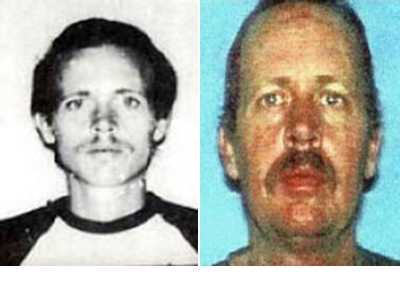
LAKE COUNTY, Calif. – The Federal Bureau of Investigation is asking for the public’s help in identifying several female victims – including one teen from Lake County – who may have been killed by a man who died in prison several years ago.
The FBI is investigating the killings in connection to Curtis Dean Anderson.
Anderson was convicted and sentenced to more than 300 years in prison for crimes including the December 1999 kidnapping and murder of Xiana Fairchild, a 7-year-old Vallejo girl believed to have been his eighth victim, the FBI reported. He was captured after one of his kidnap victims was able to escape.
Anderson was interviewed by FBI agents in November of 2007, the month before he died. At that time he confessed to murdering eight victims in the United States, including Fairchild and 7-year-old Amber Swartz-Garcia of Pinole. Anderson also confessed to two murders in Mexico, but did not provide any information on those victims, the FBI said.
The FBI said Anderson’s first victim was a female runaway in her late teens or early 20s who he allegedly met and killed in late 1984, disposing of her body near a local swimming hole in Marysville.
The second victim was said to be a young female hitchhiker in her late teens, whom Anderson claimed he picked up on a road near the northeast side of Clearlake a few days after the death of the first victim, the FBI Said.
Anderson told investigators that in early 1985 he killed a third victim, also in her late teens, who had been residing in the Marysville area and who was possibly a runaway from Oregon, the FBI said.
The fourth victim was said to have been murdered in November 1986. The FBI said Anderson stated that he met the victim, who was about 21 years old and described as a light-skinned black female, in a bar frequented by blacks in the East Bay, off Interstate-80 on San Pablo Avenue.
He claimed this occurred about 10 days after he was paroled from San Quentin State Prison. Anderson allegedly killed her and disposed of the body in the Oakland hills.
In June 1988, Anderson allegedly killed Amber Swartz-Garcia, who Anderson said was standing on a street in Pinole, Calif., when he physically forced her into his car. He eventually murdered her in Arizona, according to the FBI.
The sixth victim, a Navajo woman about 23 or 24 years of age, was killed sometime in 1988 or 1989, the FBI said. Anderson claimed he picked her up coming out of a bar near Fifth or Sixth Street in Benicia, Calif.. He said he then killed her near Benson, Ariz.
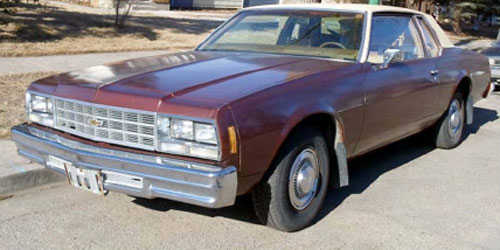
In 1989, at around the same time as the sixth victim was killed, Anderson received a ticket while driving a two-door, brown, 1977 Chevy sedan, the FBI said.
The FBI said that in February or March of 1997, the seventh victim was killed. She was a black/Hispanic female in her early 20s with noticeable "junkie tracks" on her arms who went by the name “Rosie.”
Anderson allegedly met her at “The Bears” bar, which he described as being frequented by Hispanics. This bar was located under Highway 87 in San Jose, Calif., near a bowling alley, the FBI said.
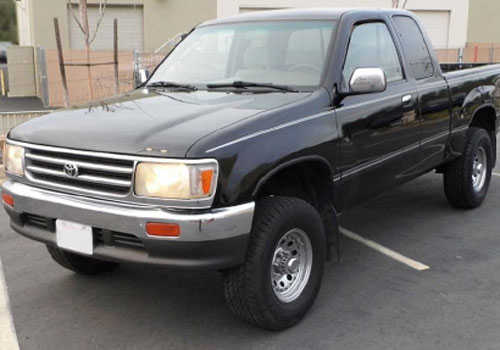
After killing her, Anderson allegedly disposed of Rosie’s body near the Ben Lomand turnoff near Santa Cruz, Calif. During this incident, Anderson stated he had been driving a black Toyota truck from his “parts Company,” the FBI said.
If the public has any information regarding the identity of the alleged victims, please call the FBI San Francisco tip line at 1-800-CALL-FBI (1-800-225-5324).
All calls are confidential and tips can be left anonymously.
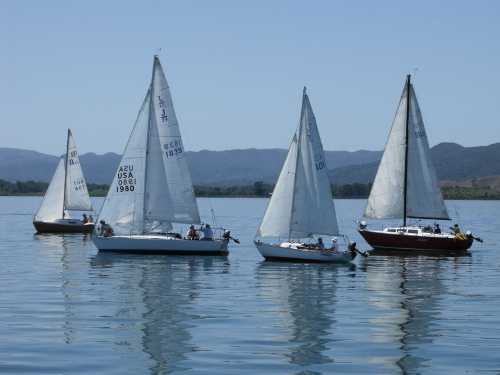
LAKEPORT, Calif. – The Lakeport Yacht Club Spring Regatta will take place this weekend on Clear Lake.
The club said all sailors are welcome to take part in the annual race. The registration fee is $35.
There will be a skipper's meeting at 10 a.m. Saturday at the clubhouse, located by the Fifth Street launch ramp.
There will be signups and racecourse instructions, and handicaps according to the Portsmouth handicap system.
There will be three races on Saturday and two on Sunday, time and weather permitting.
All boats must have current 2013 quagga mussel stickers
A tri-tip dinner will be held on Saturday. The cost will be $17. A continental breakfast will be provided for a small donation.
For further information, please contact Duane Clarke at 707-274-9952.
U.S. Reps. Pete King (R-NY) and Mike Thompson (D-CA) have introduced H.R. 1565, the U.S. House of Representatives’ version of the Manchin-Toomey Public Safety and Second Amendment Rights Protection Act of 2013.
U.S. Reps. Mike Fitzpatrick (R-PA), Pat Meehan (R-PA), Carolyn McCarthy (D-NY) and Peter Defazio (D-OR) joined King and Thompson in co-authoring the legislation.
The King-Thompson legislation is identical to the bipartisan agreement on background checks struck by Senators Joe Manchin (D-WV) and Pat Toomey (R-PA).
“Background checks are the first line of defense against criminals and the dangerously mentally ill getting guns. This bill is comprehensive, it is enforceable, it will save lives, and it will protect the rights of law abiding Americans to own guns. It’s time for Congress to act. The American people are getting a vote in the Senate. They deserve one in the House,” said Thompson and King in a joint statement.
This bipartisan legislation will expand the existing background check system to cover all commercial firearm sales, including those at gun shows, over the Internet or in classified ads. It provides reasonable exceptions for family and friend transfers.
Under the legislation, background checks would be conducted though a federally licensed dealer. Licensed dealers will run background checks on potential buyers and keep records of sales in the same manner as they have for more than 40 years.
Failure to conduct a background check on is punishable by up to five years in prison.
The bill also improves the National Instant Criminal Background Check System (NICS) by incentivizing states to improve their reporting of criminals and the dangerously mentally ill by eliminating unnecessary responsibilities for states and directing future grant money towards creating systems to send records to NICS. The bill will also reduce federal funds to states that do not comply.
Like the Manchin-Toomey legislation, the King-Thompson bill explicitly bans the federal government from creating a registry and makes the misuse of records to create a registry a felony punishable by 15 years in prison.
H.R. 1565 is backed by a number of organizations including the pro gun group, the Citizens Committee for the Right to Keep and Bear Arms, the second-largest gun rights organization in the country. It has also been endorsed by Mayors Against Illegal Guns.
The bill has been referred to the House Committee on the Judiciary and the House Committee on Veterans’ Affairs.
LAKEPORT, Calif. – Lakeport Police believe an arsonist may have attempted to burn a local law office Tuesday morning.
At approximately 7:45 a.m., Lakeport Police responded to a reported vandalism at the Law Offices of Crump, Bruchler and La Velle located at 1175 N. Main St., No. C, the agency reported.
Officer Mike Sobieraj arrived at the scene to discover a significant amount of an unknown type accelerant on the exterior walls, windows, doors and sidewalk leading to the business, according to a Lakeport Police advisory Tuesday afternoon.
According to the report, no other damage was located on the building which led him to believe an unknown person, or persons, attempted to light the business on fire.
Lakeport Police Chief Brad Rasmussen acknowledged that arson was likely but declined to reveal specifics of the case Tuesday afternoon.
“We have evidence indicating someone intentionally tried to light the building on fire,” Rasmussen told Lake County News.
As a precautionary measure, Lakeport Fire was contacted and assisted with the investigation, according to the Lakeport Police report.
Sobieraj collected evidence of the suspected arson attempt at the scene and is investigating the incident, Lakeport Police reported.
Anyone with information is asked to contact the Lakeport Police Department at 707-263-5491.
MIDDLETOWN, Calif. – The California Highway Patrol’s Clear Lake Area office on Tuesday issued a report on a weekend sobriety checkpoint held in the south county.
“The checkpoint was well received by local citizens and hopefully we deterred people from driving impaired,” said CHP Sgt. Rick Okazaki.
The Sunday checkpoint took place from 3 p.m. to 9 p.m. on Highway 29 at Callayomi Street, according to CHP Officer Kory Reynolds.
Reynolds reported that more than 750 vehicles passed through the checkpoint, with 10 sobriety tests given.
He said one person was arrested for driving under the influence. In addition, there were three drug arrests and one arrest on a warrant. Two vehicles were stored following the arrests.
It had been more than a year and a half since the CHP had held its last checkpoint. Reynolds said the last checkpoint occurred in August 2011.
Reynolds said the operations are made possible through grant funding.
Email Elizabeth Larson at