 How to resolve AdBlock issue?
News

LAKEPORT, Calif. – The suspect in a Sept. 8 Clearlake homicide and his three alleged accomplices entered not guilty pleas in court on Tuesday.
Joshua Robert Beavers, 24, charged with the shooting death of 29-year-old Clearlake resident David Ferrell, pleaded not guilty to the 11 counts and numerous special allegations against him during a Tuesday morning court appearance, according to Chief Deputy District Attorney Richard Hinchcliff.
Beavers is charged with murder, attempted murder, assault with a firearm, discharging a firearm in a grossly negligent manner, assault with a semiautomatic firearm and carrying a loaded handgun in a vehicle or public place, according to the court filings.
Charged with one count each of conspiracy for having allegedly helped harbor Beavers and hide evidence are Orlando Esquivel Sr., 48, and his wife, 50-year-old Angel Aileen Esquivel, and Brenden Alicea, 26. Hinchcliff said all three also pleaded not guilty on Tuesday.
Hinchcliff said all four suspects are scheduled to return to court on Oct. 16, at which time their preliminary hearings will be scheduled.
Police said the Sept. 8 shooting was precipitated by a fight that Beavers had been involved in earlier that same day.
Clearlake Police Sgt. Nick Bennett told Lake County News this week that Beavers had been in a fight with Orlando Esquivel's stepson at Ray's Food Place.
Later that day, Beavers, the Esquivels and Alicea are alleged to have driven to the area of 19th and Gardner avenues to look for Esquivel's stepson, according to Bennett.
Bennett said Beavers didn't find the man he was looking for, and at some point he pulled out a .22-caliber semiautomatic handgun and started shooting.
Ferrell, who was standing outside of his home when the shooting started, was struck in the head and killed, according to Bennett.
Regarding the confrontation earlier in the day that led to the shooting, Ferrell “had nothing to do with it,” Bennett said.
The Ferrell family had been celebrating the birthday of their 14-year-old daughter the previous day and still had friends over on the day of the shooting. Gunfire also struck 25-year-old Rachel Patterson, 25, and Paul Cressy, 52, according to police.
Both Patterson and Cressy suffered what police said were not life-threatening injuries. Patterson was treated and released at St. Helena Hospital Clear Lake with a grazing wound to her side, while Cressy was flown to Santa Rosa Memorial Hospital for treatment of a wound to his elbow.
Beavers, the Esquivels and Alicea were detained at a residence on 21st Avenue in Clearlake within hours of the shooting. Police arrested Beavers and Orlando Esquivel not long after taking them into custody.
A police search later that night recovered the handgun Beavers is alleged to have used – as well as a .410 shotgun police said was present at the incident but not used – in some bushes in the area of 16th and Boyles avenues.
Police reported that they arrested Alicea and Angel Esquivel the morning following the shooting.
Bennett said Beavers is from out of the area; it's believed he moved to Clearlake recently, with police having had their first contacts with him in April. Bennett said the three accomplices also are known to police.
All four suspects in the case remain in the Lake County Jail. Beavers' bail remains at $2.9 million, while bail for the Esquivels and Alicea at $250,000 each, according to jail records.
Email Elizabeth Larson at
LAKE COUNTY, Calif. – Lake County Animal Care and Control has a new group of dogs ready to go home with new families.
Dachshund mixes, terriers, a Vizsla-hound mix, a Maltese and a pug are among the breeds available.
Dogs that are adopted from Lake County Animal Care and Control are either neutered or spayed, microchipped and, if old enough, given a rabies shot and county license before being released to their new owner. License fees do not apply to residents of the cities of Lakeport or Clearlake.
If you're looking for a new companion, visit the shelter. There are many great pets hoping you'll choose them.
In addition to the animals featured here, all adoptable animals in Lake County can be seen here: http://bit.ly/Z6xHMb .
The following dogs at the Lake County Animal Care and Control shelter have been cleared for adoption (additional dogs on the animal control Web site not listed are still “on hold”).

'Bear'
“Bear” is a 1-year-old Labrador Retriever mix.
He has a short black coat, weighs 66 pounds and has been altered.
Shelter staff said Bear is very friendly, gentle and mellow, and would make a great family pet, as he's good with kids. He's also scared of cats.
He's currently in foster care, ID No. 37345.

Female wire-haired terrier mix
This female wire-haired terrier mix is 7 months old.
She has a curly black coat, weighs 11 pounds and has been spayed.
She's in kennel No. 15a, ID No. 37850.

Female wire-haired terrier mix
This female wire-haired terrier mix is 2 years old.
She has a curly black coat, weighs 13 pounds and has been spayed.
She's in kennel No. 15a, ID No. 37851.

Male pug
This male pug is 3 years old.
He has a short tan coat and a curly tail, and has been neutered.
He is in kennel No. 18, ID No. 37920.
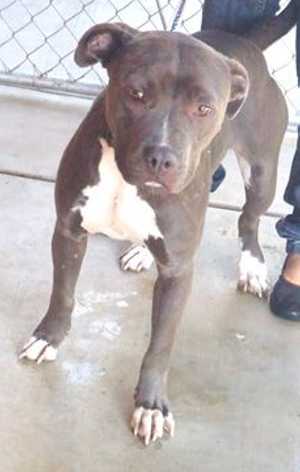
Pit bull terrier mix
This female pit bull terrier mix is of undetermined age.
She has a short gray coat, weighs nearly 44 pounds and has not yet been spayed.
She's in kennel No. 20, ID No. 37919.
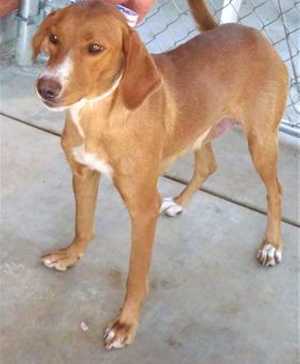
Vizsla-hound mix
This female Vizsla-hound mix is of undetermined age.
She has a short red coat and floppy ears, and has not yet been spayed.
She's in kennel No. 21, ID No. 37929.

Male Maltese mix
This male Maltese mix is 3 years old.
He has a short white coat and floppy ears, weighs 14 pounds and has been neutered.
He's in kennel No. 29, ID No. 37655.

Male dachshund mix
This male dachshund mix is one year old.
He has a short tan coat, weighs nearly 14 pounds and has been neutered.
He's in kennel No. 30a, ID No. 37728.

Male dachshund mix
This male dachshund mix is 14 weeks old.
He has a short Brown coat, weighs 9 pounds and has been neutered.
He's in kennel No. 30b, ID No. 37656.

Female Chihuahua mix
This female Chihuahua mix is two years old.
She has a short tan coat and weighs nearly 10 pounds. Shelter staff did not report if she has yet been altered.
She's in kennel No. 32, ID No. 37808.
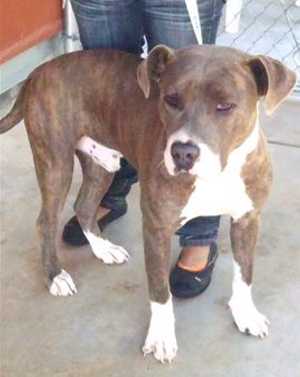
Male pit bull terrier mix
This male pit bull terrier mix is 1 year old.
He has a short blue brindle and white coat, and weighs 60 pounds. Shelter staff did not report if he had been altered.
He's in kennel No. 33, ID No. 37809.
To fill out an adoption application online visit http://www.co.lake.ca.us/Government/Directory/Animal_Care_And_Control/Adopt/Dog___Cat_Adoption_Application.htm .
Lake County Animal Care and Control is located at 4949 Helbush in Lakeport, next to the Hill Road Correctional Facility.
Office hours are Monday through Friday, 8 a.m. to 5 p.m., and 1 p.m. to 3 p.m., Saturday. The shelter is open from 10:30 a.m. to 4:30 p.m. Monday through Friday and on Saturday from 1 p.m. to 3 p.m.
Visit the shelter online at http://www.co.lake.ca.us/Government/Directory/Animal_Care_And_Control.htm .
For more information call Lake County Animal Care and Control at 707-263-0278.
Email Elizabeth Larson at
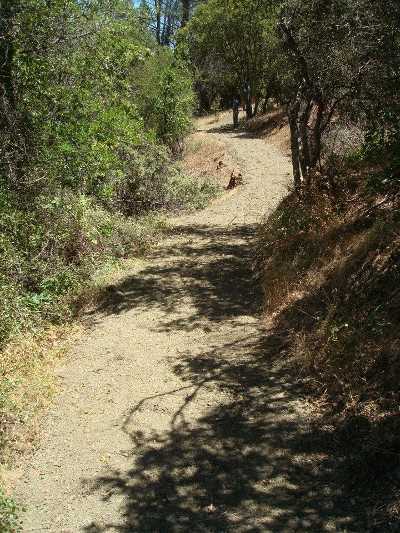
LAKEPORT, Calif. – Volunteers have been busy this summer improving trails at Highland Springs.
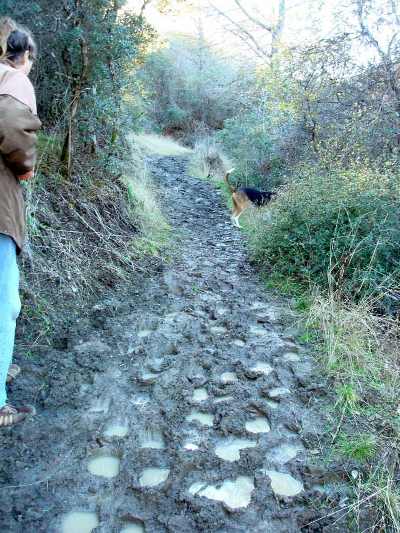
This month the Lake County Horse Council completed summer repairs of approximately 600 feet of the Lake Trail at Highland Springs Recreation Area in Lakeport.
One of the most popular hiking and riding trails in the county, the four-mile Lake Trail, circles the Highland Springs reservoir, and connects to many other trails in the park.
The trail sustained severe damage and erosion secondary to wet weather use and was in danger of being closed permanently due to safety.
The Horse Council applied for and was awarded a national trail grant from the American Quarter Horse Association and Tractor Supply Company in August 2012.
At that time, a team was formed from members of the Horse Council and the Highland Springs Trails Volunteers, to design and organize the trail repair with plans to begin the work after the wet season in the spring of 2013.
The team included LCHC board members Bill Biggs, Scott Bennett, Mike Riley and LCHC President Virginia Vovchuk, in addition to several volunteers who helped with the work.
Available resources were studied as input to the project, including Equestrian Trail Guidelines developed by the University of Missouri-Columbia.
In April, members of The Horse Council, Sierra Club and Highland Springs Trails Volunteers met to get the project started, holding a work day and “Earth Day” potluck.
Guests included conservation organizers of the nearby Berryessa Snow Mountain area, who shared maps and the story of their efforts and results.
The actual trail repair work began in May, on a 350-foot section at the southeast side of the reservoir, under the supervision of the Lake County Water Resources department, which manages the 3,200-acre watershed.
Initially, a SWECO Trail Cat was utilized to re-grade the trail, carefully preserving the original trail footprint and surrounding vegetation. This was followed by placement of geotextile fabric and over 50 tons of road base to the repaired trail area.
Road base was moved from the trail head to the work site with motorized skid steers, then raked into place over the fabric, at a depth of approximately 4 inches.
Budget has been set aside to construct a set of gates that can be closed and locked at both ends of the affected southeast trail section in severe weather. This work will be done after the first rains when the ground is workable for post construction.
With the trail repair completed, the Lake Trail is now open to equestrian and other uses. The team, including Lake County Water Resources personnel, will closely monitor the condition of the repaired section of trail during the coming winter months in order to determine the need for any further adjustments.
“We were happy to contribute to the safety of one of our favorite places to ride and hike. Thanks to the volunteers and suppliers who helped make it happen,” said Virginia Vovchuk, Lake County Horse Council.
A commemorative Trail Ride with members of Clearlake Junior Horseman is planned for fall to acquaint them with the trail and the repair work made possible by the grant.
The Lake County Horse Council thanked the following volunteers and businesses who contributed to this effort: Kirk and Quincy Andrus; Aaron Bell; Bill and Carol Biggs; Scott Bennett; Marty Brookman and Roy Fernandez; Carleene Cady and Wendell Wells; Barbara and John Claiche; Jim Fetzer of Ceago Vineyards; Steve Devoto; Bob and Joel Fischer' Ken Ling; Dave Lowrie; Anna Rose Ravenwoode; Kim and Mike Riley; Karen Sullivan; Braulio Torres and Charlie Torres; Juliana and Alexandra Vidich; Virginia Vovchuk; Peter Windrem; Gary Hansen and Scott De Leon of Lake County Water Resources Department (supervision); Ag Unlimited (fence supplies); RB Peters (road base materials and delivery); and Defatte Equipment Inc. (skid steer rental and delivery).
For more photos and video of the project or more information about the Lake County Horse Council, go to www.lakecountyhorsecouncil.com .
Every year, more than two million people in the United States get infections that are resistant to antibiotics and at least 23,000 people die as a result, according to a new report issued by the Centers for Disease Control and Prevention.
The report, “Antibiotic Resistance Threats in the United States, 2013,” presents the first snapshot of the burden and threats posed by antibiotic-resistant germs having the most impact on human health.
The threats are ranked in categories: urgent, serious and concerning.
Threats were assessed according to seven factors associated with resistant infections: health impact, economic impact, how common the infection is, a 10-year projection of how common it could become, how easily it spreads, availability of effective antibiotics, and barriers to prevention.
Infections classified as urgent threats include carbapenem-resistant Enterobacteriaceae (CRE), drug-resistant gonorrhea, and Clostridium difficile, a serious diarrheal infection usually associated with antibiotic use.
C. difficile causes about 250,000 hospitalizations and at least 14,000 deaths every year in the United States.
“Antibiotic resistance is rising for many different pathogens that are threats to health,” said CDC Director Tom Frieden, M.D., M.P.H. “If we don’t act now, our medicine cabinet will be empty and we won’t have the antibiotics we need to save lives.”
In addition to the toll on human life, antibiotic-resistant infections add considerable and avoidable costs to the already overburdened U.S. health care system.
Studies have estimated that, in the United States, antibiotic resistance adds $20 billion in excess direct health care costs, with additional costs to society for lost productivity as high as $35 billion a year.
The use of antibiotics is the single most important factor leading to antibiotic resistance. Up to 50 percent of all the antibiotics prescribed for people are not needed or are not prescribed appropriately.
Antibiotics also are commonly used in food-producing animals to prevent, control and treat disease, and to promote growth. As in humans, it is important to use antibiotics in animals responsibly.
To help ensure that medically important antibiotics are used judiciously in food-producing animals, the U.S. Food and Drug Administration recently proposed guidance describing a pathway for using these drugs only when medically necessary and targeting their use to only address diseases and health problems.
“Every time antibiotics are used in any setting, bacteria evolve by developing resistance. This process can happen with alarming speed,” said Steve Solomon, M.D., director of CDC’s Office of Antimicrobial Resistance. “These drugs are a precious, limited resource – the more we use antibiotics today, the less likely we are to have effective antibiotics tomorrow.”
The loss of effective antibiotic treatments will also undermine treatment of infectious complications in patients with other diseases.
Many medical advances – joint replacements, organ transplants, cancer therapy, rheumatoid arthritis therapy – are dependent on the ability to fight infections with antibiotics. If the ability to effectively treat those infections is lost, the ability to safely offer people many of the life-saving and life-improving modern medical advances will be lost with it.
To combat this serious health threat, CDC has identified four core actions critical to halting resistance:
- Preventing infections, Preventing the Spread of Resistance: Avoiding infections reduces the amount of antibiotics that have to be used and reduces the likelihood that resistance will develop. Drug-resistant infections can be prevented by immunization, infection prevention actions in healthcare settings, safe food preparation and handling, and general hand washing.
- Tracking: CDC gathers data on antibiotic-resistant infections, causes of infections, and whether there are particular reasons (risk factors) that cause some people to get a resistant infection. With that information, experts can develop strategies to prevent those infections and prevent the resistant bacteria from spreading.
- Improving antibiotic use/stewardship: Perhaps the most important action needed to greatly slow the development and spread of antibiotic-resistant infections is to change the way antibiotics are used. Up to half of antibiotic use in humans and much of antibiotic use in animals is unnecessary. The commitment to always use antibiotics appropriately and safely –only when they are needed to treat disease – and to choose the right antibiotics and to administer them in the right way in every case is known as antibiotic stewardship.
- Developing drugs and diagnostic tests: Because antibiotic resistance occurs as part of a natural process in which bacteria evolve, it can be slowed but not completely stopped. Therefore, new antibiotics always will be needed to keep up with resistant bacteria, as will new tests to track the development of resistance.
For more information about drug resistance and the serious impacts it has on human health, visit www.cdc.gov/drugresistance .
U.S. Reps. Mike Thompson, Frank LoBiondo, Luis Gutierrez, and J. Randy Forbes have introduced bipartisan legislation today that would strengthen Congressional oversight and improve accountability of the Intelligence Community (IC).
The Intelligence Oversight and Accountability Act of 2013, H.R. 3103, requires that any Foreign Intelligence Surveillance Court (FISC) decision, order or opinion that includes a denial of an IC request, a modification of an IC request, or results in a change to any legal interpretation of the Foreign Intelligence Surveillance Act (FISA) be shared with Congress.
“Our government has a responsibility to both protect American lives and our citizens’ civil liberties,” said Thompson (D-CA-05), who represents a portion of Lake County. “This bill helps us meet that responsibility by strengthening Congress’ aggressive oversight of our Intelligence Community. Through the oversight and accountability provided by this bill, we can help make sure our Intelligence Community operates within legal and constitutional boundaries while they continue their brave work to keep Americans safe.”
“The system of checks and balances as envisioned under the Constitution is essential to the protection of our citizens’ interests and role of our government. This bipartisan legislation will further enhance Congressional oversight over the intelligence operations of the executive branch, ensuring legal guidelines are adhered to,” said LoBiondo (R-NJ-02). “We have great respect for the men and women serving in the Intelligence Community and will continue to work to ensure they receive the support they deserve.”
“Our intelligence agencies do critical work to protect our society and way of life and they must have the public trust that comes with vigorous oversight and accountability,” said Gutierrez (D-IL-04). “This bipartisan legislation will facilitate robust oversight and build public trust. Americans expect the government to protect national security and civil liberties with equal vigor. This bill helps us make sure the brave men and women in the Intelligence Community who work to keep America safe can continue that important mission while ensuring compliance with the legal guidelines that we have established.”
“This bipartisan legislation comes at a crucial time when many Americans no longer see their government as a force for good, but rather an invasive institution which has abused the powers its citizens bestowed on it. The security and safety of our nation must not come at the cost of our freedoms or individual liberties as American citizens. This bill will provide much needed oversight and accountability of a system which has run aground of its constitutional authority,” said Forbes (R-VA-04).
Currently, when the FISC or the Foreign Intelligence Surveillance Court of Review issues a decision, order, or opinion, the Attorney General (AG) must determine if the issue considered by the FISC includes a “significant construction or interpretation of the law.”
If the AG determines that the decision is significant, that information must be shared with Congress. However, if the AG determines that the decision is not “significant,” the AG is not required to share the information with Congress.
H.R. 3103 requires the AG to share all FISC decisions, orders or opinions that include a denial of an IC request, a modification of an IC request, or results in a change to any legal interpretation of FISA with Congress.
Removing discretionary elements regarding what Congress should and should not receive from the FISC, will increase the Congressional oversight of Intelligence Community tools and programs to ensure their proper use.
The bill also will allow Congress to properly assess whether information collected pursuant to, or programs authorized by, the PATRIOT Act or the Foreign Intelligence Surveillance Act (FISA), are being implemented in a manner consistent with Congressional intent and are compliant with Congressional notice requirements.
In addition, the bill requires the Department of Justice (DOJ) to include enhanced summaries of the FISC’s decisions, orders, and opinions to make the facts, issues, and legal reasoning involved in these matters more accessible to Congress.
H.R. 3103 has been referred to the House Committee on the Judiciary, on which both Gutierrez and Forbes are senior members, and the Permanent Select Committee on Intelligence (HPSCI), on which Thompson, LoBiondo and Gutierrez are senior members.
The US Geological Survey led a congressional briefing late last week featuring state and regional water stakeholders who spoke about vital uses of comprehensive water information that would be met by the National Water Census called for by the SECURE Water Act of 2009.
Growing populations, increased energy development, and the uncertain effects of a changing climate magnify the need for an improved understanding of water use and water availability. However, no comprehensive and current national assessment of water resources exists.
A report released in April, Progress Toward Establishing a National Assessment of Water Availability and Use, fulfilled a requirement under the 2009 law for the Secretary of the Interior to report to Congress on progress made in implementing the national water availability and use assessment program, also referred to as a National Water Census.
“It’s true in other fields and no less so for water: you can’t manage what you don’t measure,” said Anne Castle, Department of the Interior Assistant Secretary for Water and Science. “The Water Census will quantify water supply and demand consistently across the entire country, fill in gaps in existing data, and make that information available to anyone who needs it – and that represents a huge step forward on the path toward water sustainability.”
The National Academy of Sciences applauded the concept of a Water Census in 2009, suggesting that it would be “an ongoing, effective tool, on a par with the social and economic censuses, that supports national decision making.”
“As competition for water grows – for irrigation of crops, for the production of energy, for use by cities and communities, and for the environment – the need for information and tools to aid water-resource managers also grows,” said Tony Willardson, executive director, Western States Water Council.
“The more accurately we can assess the quantity and quality of our water resources, the better we can know whether our strategies for conserving and improving those resources are actually having the desired beneficial effect,” said Bob Tudor, deputy director, Delaware River Basin Commission. Willardson and Tudor were speakers at the briefing.
A water census is a complex undertaking, which points to why national water availability and use have not been comprehensively assessed in more than 35 years.
Since then, competition for water resources has increased greatly and, in addition to human use, considerably more importance is now attached to the availability of water for environmental and ecosystem needs.
The USGS envisions the water census to be a key ongoing activity that, like the population census mandated by the US Constitution, supports national decision-making in many different ways.
The resources currently available for this census are finite, however. USGS foresees that estimates of flow at ungaged locations and estimates of evapotranspiration will be among the earliest products of the National Water Census.
Providing complete water-use information and adequately assessing the nation’s groundwater resources with respect to water availability will require additional time.
Although the existing data are limited and much work remains to be done, funding over the past two years has allowed important progress. The USGS will continue to work with partner agencies and organizations to maximize the utility of the information for a broad range of uses.
The water census is part of an overarching Department of the Interior (DOI) initiative known as WaterSMART (Sustain and Manage America’s Resources for Tomorrow). Through WaterSMART, the department is working to achieve a sustainable water strategy to help meet the Nation’s water needs. The water census will help inform that strategy.
The USGS is developing plans for the water census in coordination with other federal and non-federal agencies, universities, and other organizations.
Collaboration across agency boundaries ensures that information produced by the USGS can be aggregated with data on other types of physical, social, economic, and environmental factors that affect water availability.
Both the USGS and the U.S. Bureau of Reclamation (USBR) have substantive responsibilities under the Department of the Interior WaterSMART initiative.
One of the geographic focus areas of the water census is the drainage basin of the Colorado River, which covers parts of seven states, delivers water to more than 30 million people, irrigates nearly 4 million acres of cropland in the U.S. and Mexico, and supplies hydropower plants that annually generate more than 10 billion kilowatt-hours.
Increasing population, decreasing streamflows, and the uncertain effects of a changing climate amplify the need for an improved understanding of water use and water availability in this crucial watershed, the USGS reported.