 How to resolve AdBlock issue?
News
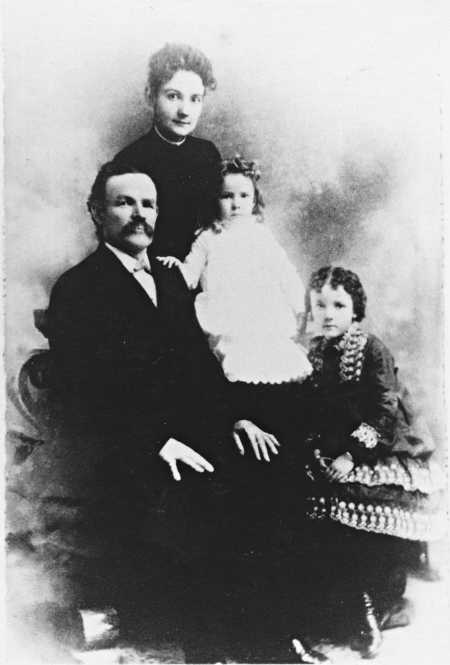
LAKE COUNTY, Calif. – In the 1880s many Italians left their homeland and migrated to the United States looking for land and ways to make a living.
About 80 percent of the Italians who came to California were from the northern provinces. Most of them were men who came to earn money for their families who remained in Italy.
They came as laborers who worked in mining, ranching, vegetable gardening and lumbering as they had done in Italy, while others operated hotels, boarding houses and restaurants. The Italians who came to Lake County followed all of those trades.
Lake County’s early Italian population was small, in contrast with that of some other California counties.
By 1880 a few Italians were living in Lake County, most of them in southern areas from Eastlake to Middletown to the hills west of Lower Lake, a pattern that continued into the 20th century.
In the 19th century some Italians worked briefly in Lake County and later moved on, leaving little mark on the county. Only a few settled here permanently and created lasting businesses.
Italians replaced Chinese workers after the Chinese Exclusion Act of 1882 reduced the supply of cheap Chinese labor in California.
Italian laborers cut wood for the Sulphur Bank Mine and the Great Western Mine. Italian gardeners grew vegetables in the south county.
In 1880 Louis, Jack, Peter and Joseph Deluechi, all gardeners, lived in the Excelsior area near Lower Lake. Peter had 20 acres in Lower Lake planted with grapes in 1889.
Although Peter Deluechi [or Delucchi] and G. W. Munstreti are credited with growing grapes in Lake County in the 1880s, most of the known early-day grape growers and winemakers were not Italian.
One Italian who made a lasting contribution to Lake County’s history was Andrew Rocca, a mining engineer.
Rocca was born in Genoa in 1838 and migrated to the United States at the age of 15. After working at several mines around California he was hired as superintendent of the Great Western Quicksilver Mine near Middletown in 1876. He hired Italian laborers to replace the Chinese who were forced out by the anti-Chinese laws.
Rocca expanded his business ventures into other mines, real estate and water projects, becoming a wealthy man. Eventually the mercury mines were worked out and Rocca’s children all left Lake County.
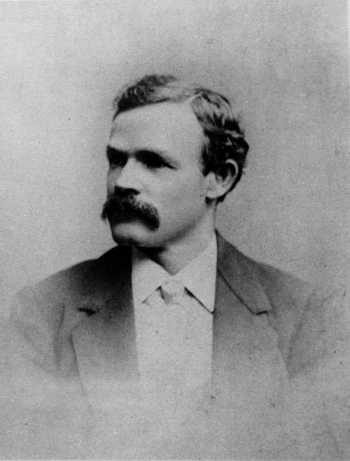
Rocca died in Lake County in 1921. His daughter Helen Rocca Goss wrote about the Rocca family and the mine in her book “The Life and Death of a Quicksilver Mine.”
In the early 1900s, Italian miners at Andrew Rocca’s Helen Mine lived in a boarding house that Rocca’s friend Pasquale Cavagnaro and his family operated for about 20 years.
Some of the Italian surnames from Lake County’s early days are also found in Napa County; among them are Cavagnaro, Traverso, Banchero and Rossi.
Napa County had a large Italian population and it quite possible that some men from Napa County found employment in Lake County.
In 1910 Dr. W. R. Prather’s Adams Springs Resort employed four men named Rossi and one named “Travess,” all born in Italy.
Another permanent Italian immigrant arrived when an Englishman named George Wrey hired Joe Perini to cook at Wrey’s Lake County ranch.
Wrey had met Perini in San Francisco and hired him away from the Palace Hotel. Joe Perini and his wife Josephine Delmonte made Lake County their home and bought a 550 acre ranch in 1901.
The Perini family lived on Perini Road near Lower Lake for decades raising vegetables, grapes and cattle and making wine.
According to Tom Smith of Lower Lake, in an interview recorded in the Mauldin Notes, “Perini’s was known as the Italian Gardens long before Perini’s time. Italians had raised a commercial garden there.”
The Perinis became famous for their large public Italian dinners, a tradition that lasted more than 70 years. Their daughter Theresa continued the family tradition for many years after her parents died. The former Perini ranch is now Snows Lake Vineyard.
Unlike most of Lake County’s early Italian residents who tended to live in southern Lake County, Angelo Biggi, a jeweler and watchmaker, and his family settled in Lakeport in the 1870s. After Angelo and his wife Caterina died, their son Peter and his family were still in Lakeport in 1940.
Another Biggi, Giuliano, emigrated from Italy and was naturalized in 1942. Giuliano is remembered as the founder of Biggi’s Family Camp in Loch Lomond.
Family resorts like Biggi’s attract Italians from around Northern California each August for Ferragosto, an ancient Italian holiday. Food, fun and family all unite for a memorable gathering that has been celebrated in Lake County’s Little Italy near Loch Lomond for almost 100 years.
Steve Magagnini at the Sacramento Bee captured the spirit of Lake County’s Ferragosto in “Body, soul, fed at Italian gathering,” published in the Bee on Sept. 6, 2013.
During the 20th century more people of Italian heritage moved into Lake County, quietly blending into the community and settling all around Clear Lake.
A few of them became well known like long-time game warden Dave Dondero (1874-1967), rancher and county Supervisor Donald Martinelli (1903-1984) and county Supervisor Gene Lovi (1928-2010).
Lake County’s Italian population remains small, with only about 4,700 claiming an Italian background.
Arrivederci!
Jan Cook has lived in Lake County for about 40 years. She works for the Lake County Library, is the editor of the Lake County Historical Society's Pomo Bulletin and is a history correspondent for Lake County News. If you have questions or comments please contact Jan at
LAKE COUNTY, Calif. – Several big dogs are waiting for adoption this week at Lake County Animal Care and Control.
The dogs cleared for adoption range in age from 8 months to 6 years, and come in various sizes, with mixes of Labrador Retriever, shepherd, terrier, heeler and Chihuahua available.
Dogs that are adopted from Lake County Animal Care and Control are either neutered or spayed, microchipped and, if old enough, given a rabies shot and county license before being released to their new owner. License fees do not apply to residents of the cities of Lakeport or Clearlake.
If you're looking for a new companion, visit the shelter. There are many great pets hoping you'll choose them.
In addition to the animals featured here, all adoptable animals in Lake County can be seen here: http://bit.ly/Z6xHMb .
The following dogs at the Lake County Animal Care and Control shelter have been cleared for adoption (additional dogs on the animal control Web site not listed are still “on hold”).
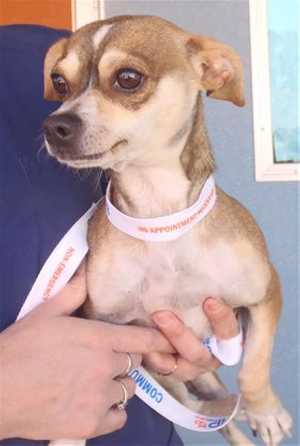
Chihuahua mix
This male Chihuahua mix is of undetermined age.
He has a short tricolored coat. Shelter staff did not report if he had been altered.
He's in kennel No. 4, ID No. 38061.
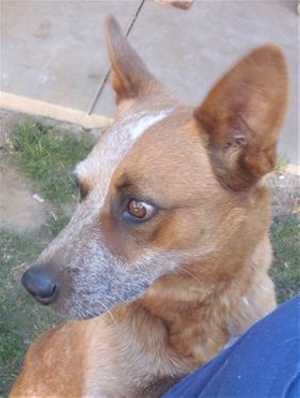
'Bosco'
“Bosco” is a 6-year-old blue heeler mix.
He has a short red and white coat, weighs 52 pounds and has not yet been neutered.
Bosco is in kennel No. 10, ID No. 38063.
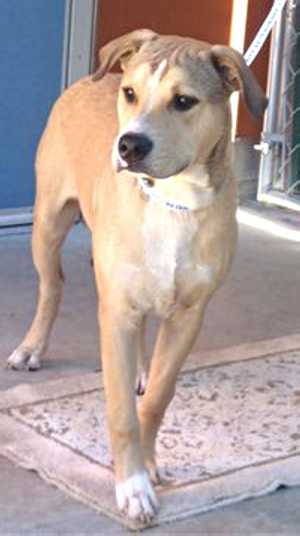
'Lincoln'
“Lincoln” is a 1-year-old male Labrador Retriever-shepherd mix.
He has a short tricolor coat and weighs 52 pounds. It was not reported if he has been altered.
He's in kennel No. 14, ID No. 38164.
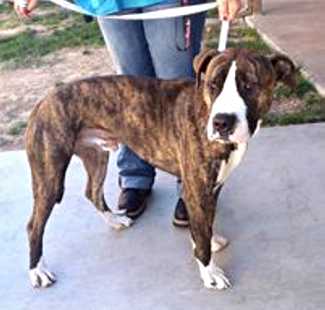
Male pit bull terrier mix
This male pit bull terrier mix is 1 year old.
He has a short brown brindle coat and weighs 64 pounds. Shelter staff did not report if he has been altered.
Find him in kennel No. 15, ID No. 38168.
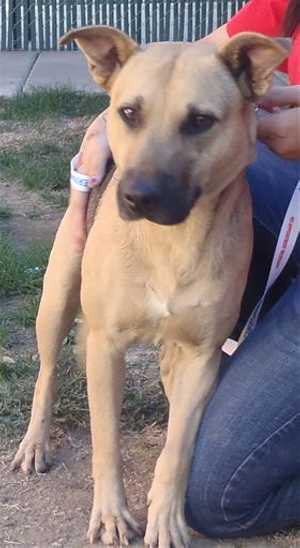
Shepherd mix
This male shepherd mix is 8 months old.
He weighs 44 pounds, has a medium-length tan and black coat, and is neutered.
He's in kennel No. 17, ID No. 38106.
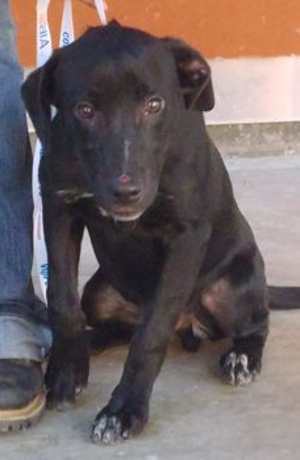
Labrador Retriever-border collie mix
This Labrador Retriever-border collie is 6 months old.
He has a short black coat and weighs nearly 31 pounds. He has not yet been neutered.
Find him in kennel No. 24, ID No. 38191.
To fill out an adoption application online visit http://www.co.lake.ca.us/Government/Directory/Animal_Care_And_Control/Adopt/Dog___Cat_Adoption_Application.htm .
Lake County Animal Care and Control is located at 4949 Helbush in Lakeport, next to the Hill Road Correctional Facility.
Office hours are Monday through Friday, 8 a.m. to 5 p.m., and 1 p.m. to 3 p.m., Saturday. The shelter is open from 10:30 a.m. to 4:30 p.m. Monday through Friday and on Saturday from 1 p.m. to 3 p.m.
Visit the shelter online at http://www.co.lake.ca.us/Government/Directory/Animal_Care_And_Control.htm .
For more information call Lake County Animal Care and Control at 707-263-0278.
Email Elizabeth Larson at

If you've ever whirled a ball attached to a string around your head and then let it go, you know the great speed that can be achieved through a slingshot maneuver.
Similarly, NASA's Juno spacecraft passed within some 350 miles of Earth's surface at 3:21 p.m. EDT Wednesday, Oct. 9, before slingshotting off into space on a historic exploration of Jupiter.
It's all part of a scientific investigation that began with an August 2011 launch.
The mission will begin in earnest when Juno arrives at Jupiter in July 2016.
Bill Kurth, University of Iowa research scientist and lead investigator for one of Juno's nine scientific instruments, the Waves instrument, said that the two years spent moving outward past the orbit of Mars before swinging past the Earth makes the trip to Jupiter possible.
Kurth said Juno was “really smoking” as it passed Earth at a speed of about 25 miles per second relative to the sun.
“But it will need every bit of this speed to get to Jupiter for its July 4, 2016 capture into polar orbit about Jupiter,” said Kurth, who has been involved with the mission since the beginning. “The first half of its journey has been simply to set up this gravity assist with Earth.”
“One of Juno's activities during the Earth flyby will be to make a movie of the Earth-moon system that will be the first to show Earth spinning on its axis from a distance,” said Scott Bolton, principal investigator for the Juno mission from Southwest Research Institute in San Antonio.
Kurth and colleagues UI Professor Don Gurnett and research scientist George Hospodarsky note that the real science will begin when Juno begins orbiting Jupiter some 33 times over the course of a year.
Juno will be the first spacecraft to orbit Jupiter over its poles. The orbit will be highly eccentric, taking Juno from just above the cloud tops to a distance of about 1.75 million miles from Jupiter, every 11 days.
The UI-designed-and-built Waves instrument will examine a variety of phenomena within Jupiter's polar magnetosphere by measuring radio and plasma waves. It's one of nine experiments to be undertaken of the gas giant.
In particular, Juno will explore the solar system's most powerful auroras – Jupiter's northern and southern lights – by flying directly through the electrical current systems that generate them.
“Jupiter has the largest and most energetic magnetosphere, and to finally get an opportunity to study the nature of its auroras and the role radio and plasma waves play in their generation makes Juno a really exciting mission for me,” said Kurth.
Juno's other major objectives are to understand the origin and evolution of the solar system's largest planet by:
- Determining the amount of water and ammonia present in the atmosphere.
- Observing the dynamics of Jupiter's upper atmosphere.
- Mapping the planet's magnetic and gravity fields to learn more about its deep interior including the size of its core.
- Gurnett, a world leader in the field of space plasma physics, says the Juno spacecraft and its unique orbit will expand upon Jupiter data gathered by previous UI instruments.
Juno's destiny is a fiery entry into Jupiter's atmosphere at the end of its one-year science phase as a means of guaranteeing it doesn't impact Europa and possibly contaminate that icy world with microbes from Earth. This would jeopardize future missions to that moon designed to determine whether life had begun there on its own.
The Juno Waves instrument will be the eighth UI instrument to make the trek to Jupiter. Previous Iowa instruments were carried aboard Pioneers 10 and 11, Voyagers 1 and 2, Galileo (including two UI instruments), and Cassini, currently in orbit around Saturn.
The Waves instrument was built at the UI by a group of about a dozen scientists, engineers, and technicians, led by research engineer Donald Kirchner. Terry Averkamp, Chris Piker, and William Robinson assist in the operation of the Waves instrument and in the data processing.
The Juno project is a collaborative enterprise, led by Scott Bolton of the Southwest Research Institute of San Antonio, including the UI and many other organizations and individuals.
NORTH COAST, Calif. – Eighteen days after he was reported missing in the Mendocino National Forest, a Bay Area hunter has been found alive.
Gene Penaflor, 72, was found on Saturday morning by two hunters on the Mendocino County side of the forest, about two and a half miles from where he had last been seen in the Spruce Grove area north Lake Pillsbury on Sept. 24, according to Mendocino County Sheriff Tom Allman.
Allman said the two hunters found Penaflor at the bottom of a ravine. They made a stretcher out of their jackets and poles and carried him up the hill.
About the same time, search teams were arriving in the area to make a weekend-long effort to find him, and the hunters notified them that they had found Penaflor, said Allman.
Penaflor's family said he was an experienced outdoorsman who had hunted in the area for the last seven years. He had last been seen by his hunting partner on the morning of Sept. 24 as he set out to hunt deer.
He never showed up for lunch and did not give an agreed-upon distress signal, his family said.
The following day, a search involving nearly a dozen regional search and rescue and law enforcement agencies – including Mendocino, Lake, Napa, Glenn and Sonoma, among others – as well as a helicopter and search dogs, was launched, but had to be suspended on Sept. 29 due to weather concerns, officials reported.
Allman said a number of search teams came in on Friday for a briefing in order to prepare to continue the search this weekend, at which point they planned to “do everything we could.”
Well over 100 people were involved in the effort, Allman said, including a Monterey County search team that was bringing in its team after landing at the airport at Lake Pillsbury in Lake County.
At the same time, some of Penaflor's family members were in Covelo printing up missing person posters for distribution, Allman said.
But on Saturday, with the search barely under way, the hunters found Penaflor, said Allman.
Penaflor told officials that he while he was out hunting, he fell and lost consciousness. When he fell, he suffered a serious cut on his chin, Allman said.
By the time Penaflor woke up it was foggy. He went downhill and made a bed with leaves and branches, and stayed in that area, which had a water source thanks to a nearby stream, according to Allman.
While Penaflor lost his knife, he had his rifle, and was able to take some small game like squirrels for sustenance. Allman said he also was able to keep a fire going.
When Penaflor was found, he had no broken bones and his chin had healed up, but he was too weak to try to walk out of the area, said Allman.
Allman said Penaflor was airlifted to Ukiah Valley Medical Center, where he was being treated and his family was joining him. It was expected he would be released Saturday evening.
On Saturday Allman visited Penaflor in the hospital. While he was dehydrated, the doctor said Penaflor appeared in good health.
Despite the ordeal, Penaflor was smiling, laughing and in good spirits, said Allman, who called Penaflor “just an amazing man.”
It was a great conclusion to a story that could easily have had a tragic conclusion.
“It's very heartwarming,” Allman said.
Email Elizabeth Larson at
LAKE COUNTY, Calif. – A temporary shutdown of the Electronic Benefits Transfer system for food stamp recipients in California and 16 other states is due to a system issue, not the federal government shutdown, officials said Saturday.
The outage affects those who receive benefits through the Supplemental Nutrition Assistance Program, or SNAP, and the Women, Infants, and Children, or WIC, program, according to Xerox, the company responsible for the system.
On Saturday EBT users noticed that their cards were not working. Xerox said it was the result of a temporary system outage.
The Norwalk, Conn.-based company reported, “During a routine test of our back-up systems Saturday morning, Xerox’s Electronic Benefits Transfer (EBT) system experienced a temporary shutdown. While the system is now up and running, beneficiaries in the 17 affected states continue to experience connectivity issues to access their benefits. This disruption impacts EBT beneficiaries who rely on the system for SNAP and WIC.”
The company did not give an estimated time for having the system restored.
“Technical staff is addressing the issue and expect the system to be restored soon,” the statement continued. “Beneficiaries requiring access to their benefits can work with their local retailers who can activate an emergency voucher system where available. We appreciate our clients’ patience while we work through this outage as quickly as possible.”
That message was slow in getting out to merchants and customers who were dealing with the fallout of the system glitch on Saturday.
Deana Parlet, who along with husband Kenny owns and operates Lakeview Supermarket and Deli, said a number of their customers who use EBT cards were unable to access their benefits on Saturday due to the outage.
“Everyone is panicking,” she said, noting that customers as well as checkers trying to help them were reacting to the issue.
Due to the shutdown, the store wasn't able to get any answers from government officials while, at the same time, trying to reassure customers not to panic, Parlet said.
The Lakeport Safeway also confirmed that its EBT machines were down, with no estimated time of restoration given.
A store spokesperson said they had been calling hourly to get updates on when the system might be restored, and also were getting calls from stores in other counties with concerns about the issue.
Email Elizabeth Larson at
LAKE COUNTY, Calif. – An in-depth investigation into a crash last week that involved a Lake County Sheriff's deputy and resulted in the death of a Clearlake woman is under way, with a full report not expected for several months.
District Attorney's Office and California Highway Patrol representatives told Lake County News on Friday that the involved and complex nature of the crash investigation likely will mean that it won't be completed until sometime early in 2014.
“There's a lot of unusual factors,” including the seriousness of the incident, particularly the young woman's death, said District Attorney Don Anderson.
He said the CHP and its Multidisciplinary Accident Investigation Team, or MAIT, are doing the bulk of the crash investigation.
“I don't anticipate having their report for several months,” said Anderson.
The wreck occurred early on the morning of Thursday, Oct. 3, as a Lake County Sheriff's deputy was responding to a report of a home invasion robbery and pursuit in the Lower Lake area, as Lake County News has reported.
The deputy – whose name has still not been released by the Lake County Sheriff's Office – was traveling at a high rate of speed southbound on Highway 29 when he was involved in a head-on crash half a mile north of Diener Drive that killed 26-year-old Gabriela Rivas Garcia of Clearlake.
Following the crash the deputy, who sustained serious injuries, was flown to an out-of-county trauma center.
The sheriff's office has not responded to requests for an update on the deputy's condition.
Anderson said Friday that the deputy was still hospitalized, but he also didn't have a condition update.
Garcia's funeral took place in Lakeport Friday evening. A fund to help send her body home to her family in Mexico has been set up at Westamerica Bank, account number 0356061267.
Anderson said his office and the CHP, in their investigations, are following the critical incident protocol, which usually is triggered in cases involving law enforcement officers, such as officer-involved shootings and incidents like the crash.
Officer Kory Reynolds, the CHP Clear Lake Area office spokesman, said the MAIT team – based at the CHP Northern Division's Redding headquarters – conducts in-depth and complex investigations on crashes.
He said they use special equipment and investigators who are experts in the complex calculations that go along with trying to understand how collisions occur.
The local CHP office is not involved in MAIT's investigation into the fatal crash, Reynolds said.
The MAIT team had last been involved in a fatal crash investigation in Lake County after a bicyclist was killed near Lower Lake in January, Reynolds said.
With the high profile nature of the case and a deputy being involved, “You definitely want the best looking at it,” he said.
CHP Area Commander Greg Baarts had to make the request for MAIT, which decides if it will take on an investigation based, in part, on its ability to complete the work within a certain timeframe, Reynolds said.
Reynolds said MAIT sent several investigators to the scene that day, while at the same time sending a response team to a shooting investigation in the Trinity River area.
The stretch of Highway 29 in the crash area was closed for much of the day Oct. 3 while the MAIT investigators worked at the scene. Reynolds said he believed they managed to complete their work at the scene as well as the inspection of the vehicles all in one day, noting it usually takes much longer.
Reynolds said the MAIT members do extensive mathematical calculations to determine vehicle speed, trajectory, skidmarks and traction, and other factors as they reconstruct how the crash occurred.
“The coefficient of friction is huge and every roadway is different,” he said.
It results in a lengthy process, he added.
“That’s the main reason it takes so long, there’s so many calculations,” he said.
Reynolds estimated that it would be next February or March before the MAIT report was finished.
“For us, it's not about the time, it's about getting it right for everybody involved,” Reynolds said.
When the report is completed, the MAIT leader will come to Lake County to present it to the district attorney and the Clear Lake Area office will receive a copy, he explained.
Anderson said that once he has that MAIT report in hand, he will finish his own report and make his conclusion in the case.
He said MAIT is attempting to calculate the speed at which the deputy was traveling. It's not clear yet if the deputy, who was traveling with his lights and siren activated, was driving at too high a rate of speed.
That will be an important factor in Anderson's determination as to whether or not the deputy has criminal negligence in the crash.
Other factors to consider will be how much training in high speed pursuits the deputy has had and whether or not the sheriff's office has a policy in place regarding pursuits, according to Anderson.
“It's going to be a very difficult decision to make,” Anderson said.
Email Elizabeth Larson at