 How to resolve AdBlock issue?
News
NORTHERN CALIFORNIA – UC Davis Health System researchers have identified for the first time a biological pathway that is activated when blood sugar levels are abnormally high and causes irregular heartbeats, a condition known as cardiac arrhythmia that is linked with heart failure and sudden cardiac death.
Reported in the Oct. 17 issue of the journal “Nature,” the discovery helps explain why diabetes is a significant independent risk factor for heart disease.
“The novel molecular understanding we have uncovered paves the way for new therapeutic strategies that protect the heart health of patients with diabetes,” said Donald Bers, chair of the UC Davis Department of Pharmacology and senior author of the study.
While heart disease is common in the general population, the risk is up to four times greater for diabetics, according to the National Institutes of Health.
The American Heart Association estimates that at least 65 percent of people with diabetes die from heart disease or stroke and has emphasized the need for research focused on understanding this relationship.
Through a series of experiments, Bers, his UC Davis team and their collaborators at the Johns Hopkins University School of Medicine showed that the moderate to high blood glucose levels characteristic of diabetes caused a sugar molecule (O-linked N-acetylglucosamine, or O-GlcNAc) in heart muscle cells to fuse to a specific site on a protein known as calcium/calmodulin-dependent protein kinase II, or CaMKII.
CaMKII has important roles in regulating normal calcium levels, electrical activity and pumping action of the heart, according to Bers. Its fusion with O-GlcNAc, however, led to chronic overactivation of CaMKII and pathological changes in the finely tuned calcium signaling system it controls, triggering full-blown arrhythmias in just a few minutes. The arrhythmias were prevented by inhibiting CaMKII or its union with O-GlcNAc.
“While scientists have known for a while that CaMKII plays a critical role in normal cardiac function, ours is the first study to identify O-GlcNAc as a direct activator of CaMKII with hyperglycemia,” said Bers.
The research encompassed detailed molecular experiments in rat and human proteins and tissues, calcium imaging in isolated rat cardiac myocytes exposed to high glucose, and assessing whole heart arrhythmias with optical mapping in isolated hearts and in live diabetic rats.
This comprehensive approach allowed Bers and his team to identify the specific site of sugar attachment to CaMKII, along with how that attachment activated CaMKII and caused calcium-dependent arrhythmias.
“Since O-GlcNAc is directly made from glucose and serves as a major nutrient sensor in regulating most cellular processes, it is perhaps not surprising that attachment of this sugar to proteins is emerging as a major molecular mechanism of glucose toxicity in diabetes,” said Gerald Hart, DeLamar Professor and director of biological chemistry at Johns Hopkins University School of Medicine, and one of Bers’ collaborators.
“However, this represents the most clear-cut mechanistic study to date of how high glucose can directly affect the function of a critical regulatory protein,” said Hart. “The Bers group’s findings undoubtedly will lead to development of treatments for diabetic cardiovascular disease and, potentially, therapeutics for glucose toxicity in other tissues that are affected by diabetes such as the retina, the nervous system and the kidney.”
In an additional experiment, the team found elevated levels of O-GlcNAc-modified CaMKII in both hearts and brains of deceased humans who were diagnosed with diabetes, with the highest levels in the hearts of patients who had both heart failure and diabetes.
“Our discovery is likely to have ripple effects in many other fields,” said Bers. “One key next step will be to determine if the fusion of O-GlcNAc to CaMKII contributes to neuropathies that are also common among diabetics.”
In addition to Bers, UC Davis researchers on the study included lead author Jeffrey Erickson (now with the University of Otago in New Zealand), Laetitia Pereira, Lianguo Wang, Amanda Ferguson, Khanha Dao, Florin Despa (now with the University of Kentucky) and Crystal Ripplinger. In addition to Hart, Johns Hopkins University co-authors were Guanghui Han and Ronald Copeland.
The study, titled “Diabetic Hyperglycaemia Activates CaMKII and Arrhythmias by O-Linked Glycosylation,” is available online at http://www.nature.com/nature .
The research was funded by the American Heart Association, National Science Foundation, Fondation Leducq Transatlantic CaMKII Alliance and the National Institutes of Health.
NORTHERN CALIFORNIA – Mendocino County District Attorney David Eyster disclosed late Thursday that a staff prosecutor has been placed on administrative leave pending further police and internal investigations into his role in a shooting in the early Thursday morning hours in downtown Sacramento.
Deputy District Attorney Damon Gardner shot and wounded another man during a physical confrontation about 12:35 a.m. Thursday outside a hotel near the state Capitol, according to Sacramento police.
Gardner has been off work on medical leave from the Mendocino County District Attorney’s Office since mid-August, officials reported.
Sacramento Police said Thursday the investigation is ongoing and no arrests have been made. The shooting victim is being treated for non-life threatening injuries at a Sacramento hospital.
Another Mendocino County deputy district attorney, who was attending a continuing legal education seminar in Sacramento, was a witness to the early Thursday morning shooting, according to police.
County records indicate that Gardner had a permit to carry a concealed weapon.
While the Mendocino County District Attorney’s Office has undertaken its preliminary investigation, Eyster said he will refrain from making any additional comments pending the ongoing investigation by law enforcement authorities in Sacramento.
NORTHERN CALIFORNIA – The Rural County Representatives of California is urging Gov. Jerry Brown to honor the state’s legal and financial obligations to counties related to the Department of Fish and Wildlife’s payment in lieu of taxes.
RCRC requests that the state include current and past due payments in the 2014-15 state budget and resume the annual payment in lieu of taxes – or PILT – payments as legally obliged.
“Counties across the state are doing everything in their power to reduce expenses and tighten budgets to fund critical programs and services for residents,” said Nate Beason, RCRC first vice chair and Nevada County supervisor. “All the while, the state owes 36 California counties more than $17 million in past due PILT payments. The administration has indicated that paying off California’s debts is one of their top priorities. These past due PILT payments are one of those debts.”
The Department of Fish and Wildlife has neglected to make annual PILT payments in more than a decade, according to RCRC.
According to a tally of payments RCRC provided to Lake County News, approximately $17,130,473 is owed by the state to the rural counties RCRC represents, including $1,544,530 for fiscal year 2013-14.
Lake County is owed approximately $199,579 for the 10-year period, and $16,883 for the current fiscal year.
California PILT was established in 1949 to offset adverse impacts to county property tax revenues that result when the State acquires private property for wildlife management areas.
Fish and Game Code Section 1504 specifies that when income is derived directly from real property acquired and operated by the state as wildlife management areas, the Department of Fish and Wildlife shall pay annually to the county in which the property is located an amount equal to the county taxes levied upon the property at the time title was transferred to the state.

LAKE COUNTY, Calif. – A vehicle stop Wednesday morning resulted in three arrests and the seizure of marijuana and methamphetamine.
Arrested following the stop were Jonetta Marie John, 24, of Lakeport; August Chester Mota, 22, of Santa Rosa; and Yunuen Yadira Ojeda, 31, of Lakeport, according to Lt. Steve Brooks of the Lake County Sheriff's Office.
At 4:30 a.m. Wednesday a deputy was patrolling in the Upper Lake area and heading westbound on Highway 20 when he noticed a Buick sedan driving westbound in front of him, Brooks said.
The deputy noticed the vehicle was speeding and in violation of other vehicle code violations, and activated his emergency lights to conduct an enforcement stop, according to Brooks.
Brooks said the vehicle continued to travel southbound on Highway 29 at a slower speed, but failed to yield. The deputy could see four occupants inside the vehicle making furtive movements, as if they were trying to hide items.
The driver of the vehicle drove past several suitable locations to pull over, before turning onto Tule Lake Road. The vehicle continued approximately 100 yards, as each of the passengers continued making furtive movements, Brooks said.
Prior to the vehicle coming to a complete stop, the occupant positioned in the rear passenger seat opened the door and fled down an embankment. The occupant was described as a male Caucasian adult, approximately 25 years old, wearing a dark hooded sweatshirt and beige shorts, according to Brooks.
Brooks said the deputy had the remaining three occupants exit the vehicle. He contacted the driver of the vehicle, who was identified as John, who he noticed exhibited signs of being under the influence of a controlled substance.
The deputy also contacted Mota and Ojeda, who Brooks said were the remaining passengers in the vehicle. The deputy noticed that both Mota and Ojeda also exhibited signs of being under the influence of a controlled substance.
The deputy conducted a search of the vehicle and located two capped syringes and a metal spoon. The spoon contained a white residue, consistent in appearance to methamphetamine. He also located a paper bindle containing a white crystalline substance, which was also consistent in appearance to methamphetamine, according to Brooks.
A small amount of marijuana was located in the vehicle. All of the aforementioned items were seized as evidence. Deputies conducted an extensive search of the area for the individual who ran from the vehicle, with negative results.
John was arrested for possession of a controlled substance, being under the influence of a controlled substance and driving without a license. Mota was arrested for being under the influence of a controlled substance and possession of marijuana. Ojeda was arrested for being under the influence of a controlled substance and possession of controlled substance paraphernalia. All three were transported to the Lake County Hill Road Correctional Facility and booked, Brooks said.
The Sheriff’s Narcotics Task Force can be contacted through its anonymous tip line at 707-263-3663.
LAKE COUNTY, Calif. – Following a 16-day federal government shutdown, Congress on Wednesday approved legislation to fully restore services, with President Barack Obama signing the bill within hours of its passage.
The White House issued a statement reporting that said Obama signed H.R. 2775, the “Continuing Appropriations Act, 2014,” which provides fiscal year 2014 appropriations for projects and activities of the federal government through Jan. 15, 2014.
The statement said the effective time for the continuing resolution begins on Oct. 1.
H.R. 2775 also extends the nation's debt limit through Feb. 7, 2014, the White House said.
Lake County's two members of Congress, Mike Thompson and John Garamendi, faulted radicals in Congress for causing the shutdown, with both men calling for a cooperative, bipartisan way forward rather than a continuation of political brinksmanship.
The US Senate passed the bill 81-18 on Wednesday. After that vote, House Speaker John Boehner issued a statement saying that House Republicans would not block the bipartisan agreement.
“In addition to the risk of default, doing so would open the door for the Democratic majority in Washington to raise taxes again on the American people and undo the spending caps in the 2011 Budget Control Act without replacing them with better spending cuts. With our nation's economy still struggling under years of the president's policies, raising taxes is not a viable option,” he said.
However, Boehner indicated that the fight centering on the Affordable Care Act – one of the sticking points that had led to the shutdown – was not over.
“Our drive to stop the train wreck that is the president's health care law will continue,” he said. “We will rely on aggressive oversight that highlights the law's massive flaws and smart, targeted strikes that split the legislative coalition the president has relied upon to force his health care law on the American people.”
The House's Wednesday night vote, which came earlier than anticipated, passed the legislation 285-144, with 198 Democrats and 87 Republicans approving it, according to a voting tally from Thompson's office.
Thompson's office reported that the bill requires income verification for recipients of subsidies under the Affordable Care Act’s exchanges, provides back pay to furloughed federal workers and requires a bipartisan, bicameral budget conference to come up with long-term spending plans by Dec. 13.
Since the shutdown, federal services that had been shut down locally included the Mendocino National Forest's offices and campgrounds, and the Lake Family Resource Center had to curtail services to families in need due to impacts on its federal funding, as Lake County News has reported.
In other parts of Garamendi's district, his office said that more than 1,000 civilian employees at Travis and Beale Air Force bases were furloughed; more than 200 workers at the US Department of Agriculture's Davis headquarters were furloughed and service centers were closed, meaning farmers couldn’t get loans and other services; the Sacramento, Colusa and Sutter National Wildlife Refuges were closed; and the Dixon Stand Down for struggling veterans had to scramble for money when a Department of Labor loan was delayed.
Thompson said the bipartisan agreement brings “this reckless and unnecessary government shutdown and default crisis to an end.”
He blamed “Tea Party radicals” for keeping the government closed because they are obsessed with derailing health care reform, a fight he said they have lost nearly 50 times in Congress, once in a national election and once in the Supreme Court.
“The negative impacts of this strategically planned crisis have been staggering,” he said. “It has cost our economy $4.8 billion. It has prevented Congress from focusing on important national issues such as job creation, gun violence prevention, immigration reform, the Farm Bill, a balanced budget, economic growth and fiscal responsibility. It has eroded the faith people have in our institution of representative government, both at home and around the world. And it achieved nothing.”
He said the deal avoids the worst, adding, “It’s far from the best we could have done.”
Rather than governing “from crisis to crisis,” Thompson said the best way to get the nation's debt and deficit under control “is through a balanced approach that cuts spending, requires everyone to pay their fair share, creates jobs, and protects the longevity of important programs like Social Security and Medicare.”
Garamendi expressed his concern that while “economic freefall” was averted, “the real damage has already been done to our economy, millions of Americans’ livelihoods and investor confidence.”
He said the compromise once again kicks the can down the road, “although at least this time we will have a Budget Conference Committee where hopefully members of Congress actually interested in governance can negotiate, hash out our differences and pass a lasting budget. That’s a process I’ve been calling for since April. If it is once again derailed by extremists inside and outside of Congress, we’ll face another manufactured crisis in January.”
Garamendi said the Tea Party's action over the last three years – which he called “the reckless hostage taking of the American economy” – “is unprecedented in modern times.” He said it is harming the nation's economic recovery, destroying jobs and making international investors wonder if the United States is as safe a place to invest as it once was.
He said there are reasonable voices on both sides of the aisle that should be heard.
Moving forward, Garamendi said he's hoping the Budget Conference Committee will form a rational, bipartisan framework for funding the government.
“We can use this process to develop budgets that responsibly manage the long-term challenge of our deficit while also protecting our most vulnerable and making sure the government invests in priorities like education, infrastructure, research, and setting the stage for American manufacturing,” Garamendi said. “These are the building blocks of a healthier economy capable of creating good jobs.”
Email Elizabeth Larson at
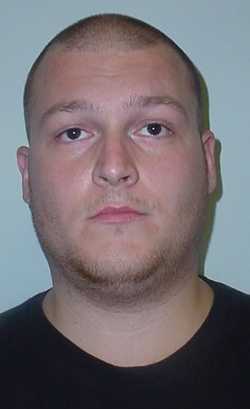
LAKE COUNTY, Calif. – A Lucerne resident has been arrested for allegedly stabbing a man during an Oct. 12 fight.
Jason Michael Arreaga, 28, was in Lake County Superior Court for arraignment on Wednesday afternoon, according to Chief Deputy District Attorney Richard Hinchcliff.
Arreaga is charged with assault with a deadly weapon and assault causing serious bodily injury, Hinchcliff said.
Arreaga was arrested on Sunday morning in connection to the assault the night before on 37-year-old James Martin, an out-of-county resident, Hinchcliff said.
The incident occurred at the Driftwood Lounge, located at 6914 E. Highway 20 in Lucerne, at around 10 p.m. last Saturday, as Lake County News has reported.
Hinchcliff said the men appeared to have been in a verbal argument that escalated into a physical fight, at which point Martin was stabbed.
Late on the night of the stabbing, another man, Donald Russell Duggan, 57, of Lucerne, was arrested in connection to the case. However, Hinchcliff said Duggan isn't being charged at this point.
“I don't think there is sufficient evidence,” Hinchcliff said.
Jail records showed that Duggan has been released from custody.
On Wednesday defense attorney Tom Quinn was appointed to represent Arreaga, who Hinchcliff said is scheduled to return to court next week for appearance of counsel and entry of plea.
Arreaga remains in custody with bail set at $75,000, according to jail records.
Email Elizabeth Larson at